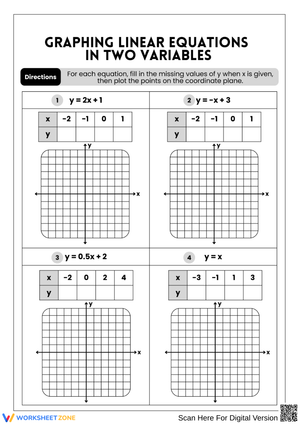
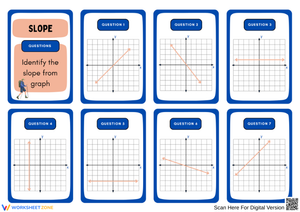
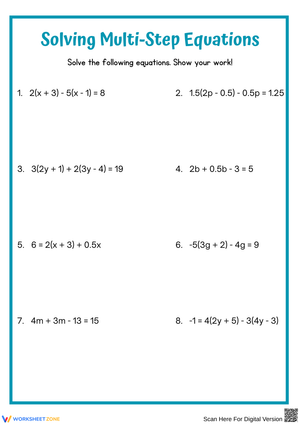
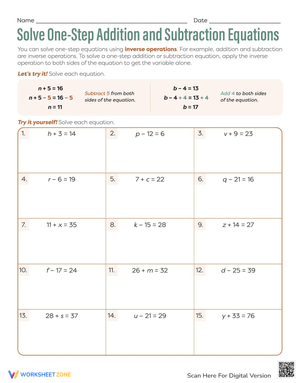
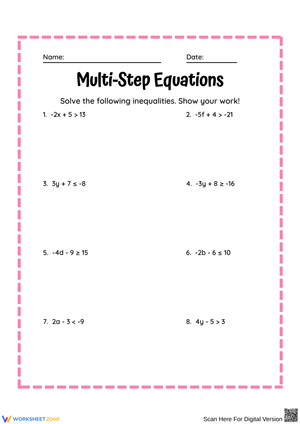
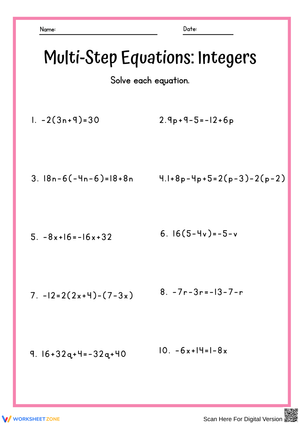
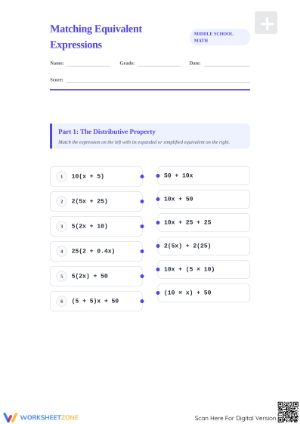
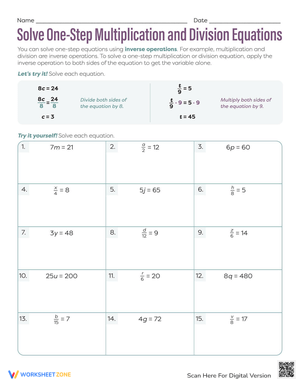
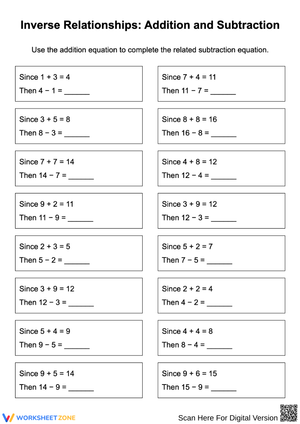
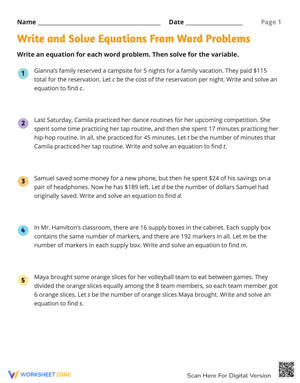
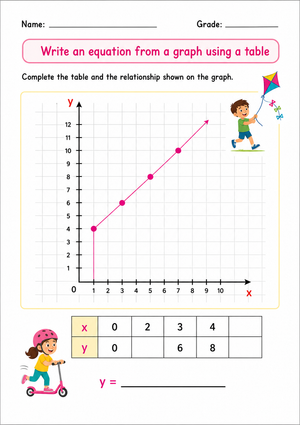
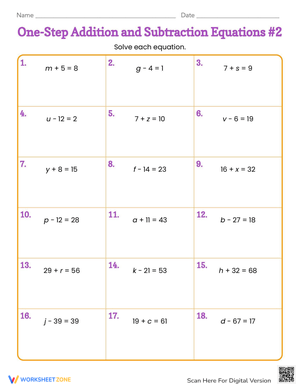
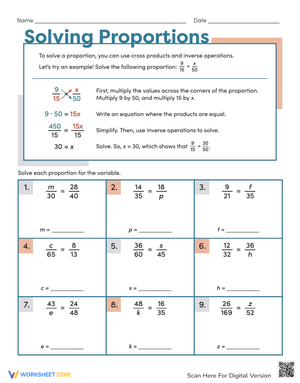
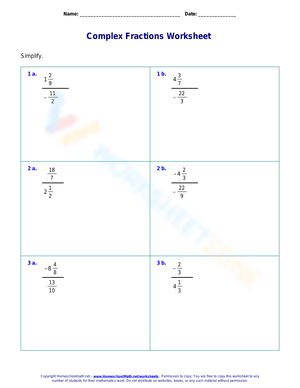
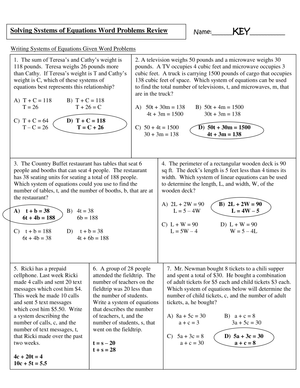
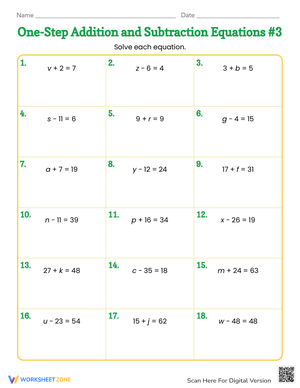
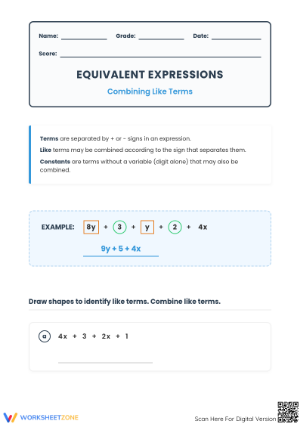
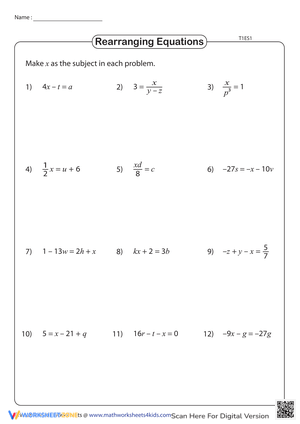
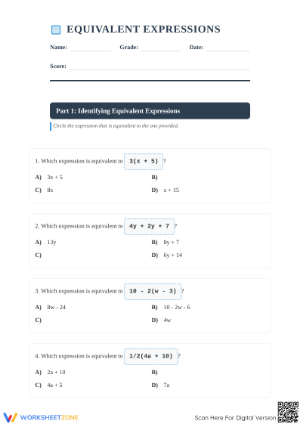
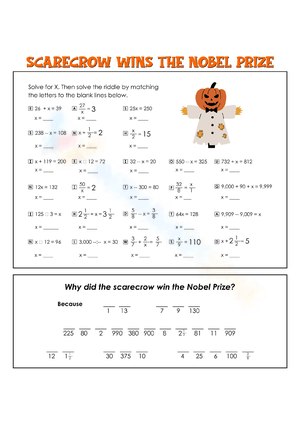
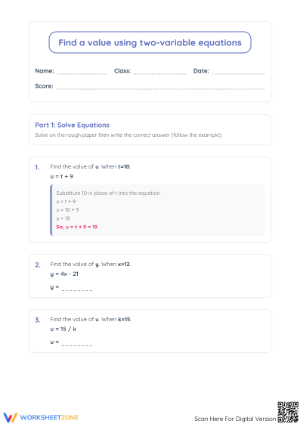
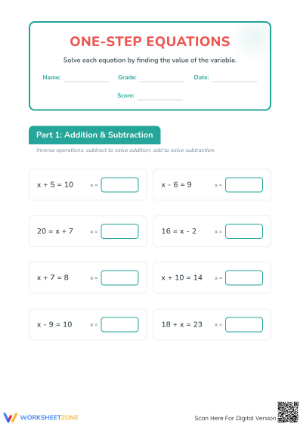
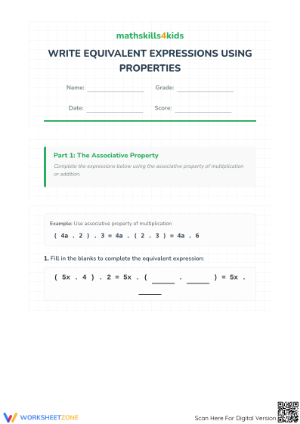
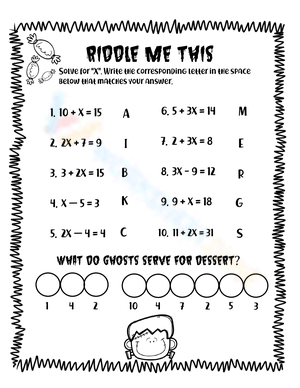
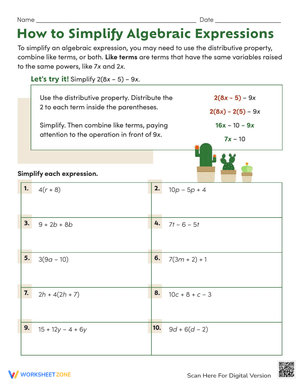
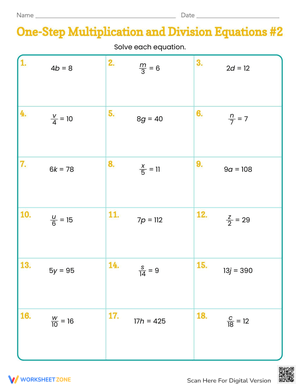
These equations worksheets for 6th grade cover the full span of what the expressions and equations domain actually demands — one-step solving, solution verification, decimal and fraction contexts, equation writing from word problems, and error analysis — all in print-ready format that moves from a teacher's folder into a lesson without additional setup. Grade 6 is when students make a genuine shift from arithmetic thinking to algebraic reasoning, and repeated exposure to equations in varied forms is what makes that shift stick rather than fade by October.
The Specific Skills Each Worksheet Targets
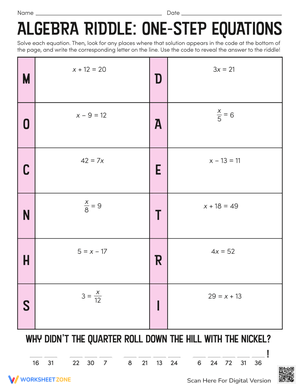
The set follows a progression that mirrors how most 6th grade units actually unfold. Early worksheets focus on one-step equations — using all four operations to isolate a variable with whole numbers. Later resources bring in decimals and fractions, which reveal whether students understand inverse operations or are simply pattern-matching with familiar integers. Each worksheet also includes at least one task type beyond direct solving, so teachers get more diagnostic information without needing a separate assessment.
- One-step equations with whole numbers, using addition, subtraction, multiplication, and division
- True-or-false solution checks — substituting a given value to determine whether it satisfies the equation
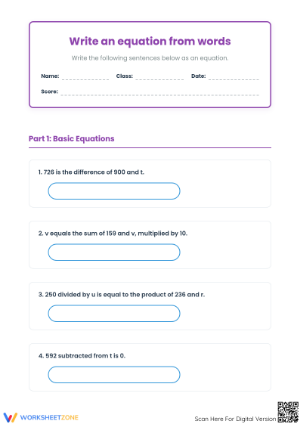
- Equation writing — reading a short situation, assigning a variable, and translating the relationship into algebraic form before solving
- Decimal and fraction equations — same inverse-operation logic, less familiar numbers
- Error analysis prompts — worked examples containing a deliberate mistake for students to locate and correct
- Word problems that require identifying the unknown and building the equation from the context, not just solving one that is already written
That last skill — constructing an equation from a word problem rather than executing a pre-written one — is where most 6th graders stall. Including it regularly across the unit, rather than saving it for the test, makes a real difference in what students can do without prompting.
Frequent Student Errors Worth Watching For Before You Assign
The most predictable mistake at this level is performing the same operation rather than the inverse. A student solving x + 9 = 14 will add 9 to both sides and get x = 23 — applying the "do the same thing to both sides" rule without understanding that the goal is isolation through undoing. The solution-verification tasks on these worksheets expose this immediately. When a student writes x = 23 and then checks 23 + 9 = 14, the contradiction surfaces without teacher intervention, and the student has to confront the error directly.
A second recurring issue involves equation orientation. Students who handle x + 5 = 12 without hesitation will freeze or guess when they see 5 + x = 12 or 12 = x + 5. Each worksheet deliberately rotates variable placement so students build flexibility instead of depending on a single template they have memorized. This is worth flagging explicitly during the first modeling session so students hear the language before they encounter it independently.
With fraction equations, a common breakdown involves applying the wrong operation entirely. Faced with a situation like x divided by 3 equaling 7, many students subtract 3 or add 3 rather than multiplying both sides by 3. That specific error pattern shows up consistently enough that it warrants a direct discussion — not just a marked-wrong response on the returned worksheet.
Recommended Lesson-Planning Strategies for Getting the Most From These Worksheets
The most efficient approach is to match each worksheet's skill focus to the lesson's instructional moment. On the day you model one-step addition equations, a focused worksheet with ten to twelve items gives students the immediate practice they need before the concept drifts. Midway through the unit, a mixed worksheet combining direct solving with a word problem and a solution check tells you far more about understanding than another set of identical exercises.
A few routines that hold up across different classroom configurations:
- Monday warm-ups: a focused set of four or five one-step equations brings students back after the weekend without heavy cognitive demand.
- Exit tickets: two or three problems pulled from the relevant worksheet, collected at the door, give a fast read on whether the day's target actually landed.
- Math centers: independent worksheets with clear, familiar directions allow students to work without waiting for guidance — especially useful when you are pulling a small group on the side.
- Sub folders: a sequenced set of worksheets that students can work through with minimal oral instruction is worth building in advance. Coverage plans fall apart at the worst moments.
- Reteaching cycles: because each worksheet targets a discrete skill, you can hand the appropriate one to a student who missed a concept without sorting through a mixed packet.
One habit worth building from the first day of the unit: require students to verify at least one answer per worksheet by substituting it back into the original equation. That takes three minutes, but it changes the task from finding a number to proving a number — which is what algebraic thinking actually requires.
These equations worksheets for 6th grade also serve as an efficient formative tool when teachers assign the same worksheet before and after a lesson. Comparing a student's pre-attempt to their post-attempt makes growth concrete in a way that a single grade cannot.
Standard Alignment
The worksheets address Common Core State Standards 6.EE.A and 6.EE.B, which cover applying properties of operations to write equivalent expressions, understanding equations as statements of equality, and solving equations of the form x + p = q and px = q for nonnegative rational values of p, q, and x. Standard 6.EE.B.5 specifically requires students to substitute values into equations or inequalities to determine whether a given number makes the statement true — which maps directly to the solution-verification tasks throughout the set. Standard 6.EE.B.7 addresses solving real-world problems by writing and solving equations, connecting to the equation-writing and word problem worksheets.
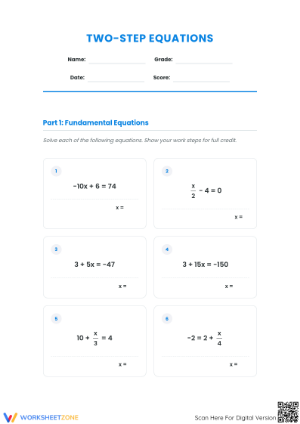
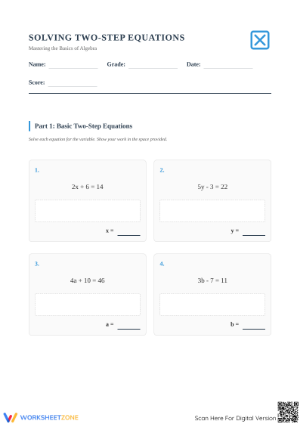
These standards sit at the beginning of the Grade 6 progression for a reason. Proportional relationships, two-step equations, and linear functions in 7th and 8th grade all depend on students arriving with a flexible, working understanding of what equations mean and how to manipulate them. Time spent on this domain in 6th grade is not review — it is the foundation that determines whether students can keep pace two years later.
Differentiating These Worksheets Across Ability Levels
For students who need more support, begin with whole-number one-step equations only and keep the variable on the left side for the first several sessions. A worked example at the top of the worksheet, with each inverse operation labeled clearly, reduces cognitive load enough that struggling students can focus on the procedure instead of decoding an unfamiliar format. Assign a portion of the problems, check in, and release to independent work only when the student has demonstrated the first few correctly.
For students ready to move further, the same worksheets open up in different directions. After solving and verifying, ask those students to write a word problem that the original equation could represent. That sequence — solve, check, create — takes a standard practice item and pushes it into genuine mathematical authorship. No separate resource is required, just a different set of completion expectations.
The equations worksheets for 6th grade format also lends itself to mixed-ability partner work: one student solves, the other verifies by substitution, and they alternate roles across the worksheet. Disagreements about whether an answer checks out generate exactly the kind of mathematical argument that teachers spend considerable effort trying to spark.
Frequently Asked Questions
What equation types should 6th graders be solving by the end of the unit?
Students should be able to solve one-step equations in all four operations with whole numbers and apply the same inverse-operation logic to basic decimal and fraction equations. They should also be able to write an equation from a short word problem and verify a solution by substitution. Simple two-step equations are within reach for many students by late 6th grade, though that skill deepens substantially in 7th grade.
How many worksheets are typically needed across a full equations unit?
Most teachers use eight to twelve worksheets across a four-to-five week unit, spread across warm-ups, classwork, homework, and review. Having more than you expect to use is worth it — skipping a worksheet that turns out to be unnecessary is far easier than planning around a gap when students need more practice on a specific skill.
Do these worksheets work in small-group intervention settings?
The focused, single-skill structure makes them well-suited for pull-out or small-group intervention. A group can work through a whole-number one-step worksheet without the distraction of unfamiliar problem types appearing mid-page. Because each worksheet addresses one skill, teachers can sequence them across multiple sessions in a way that builds logically rather than jumping around.
Can these be used with 7th graders who are below grade level in algebra readiness?
These equations worksheets for 6th grade are regularly used with 7th graders who entered the year without solid equation-solving foundations. The one-step and solution-verification worksheets give those students a clean reentry point before the class moves into 7th grade multi-step work, and the focused format means a student can complete a full worksheet without being derailed by skills they have not yet addressed.













 Interactive Worksheet Maker
 Quiz Maker
 Word Search Maker
 Crossword Puzzle Maker
 Word Scramble Generator
 Sentence Scramble Generator
 Handwriting Worksheet Generator
 Name Tracing Generator
 Fill In The Blank Generator