


























Views
Downloads
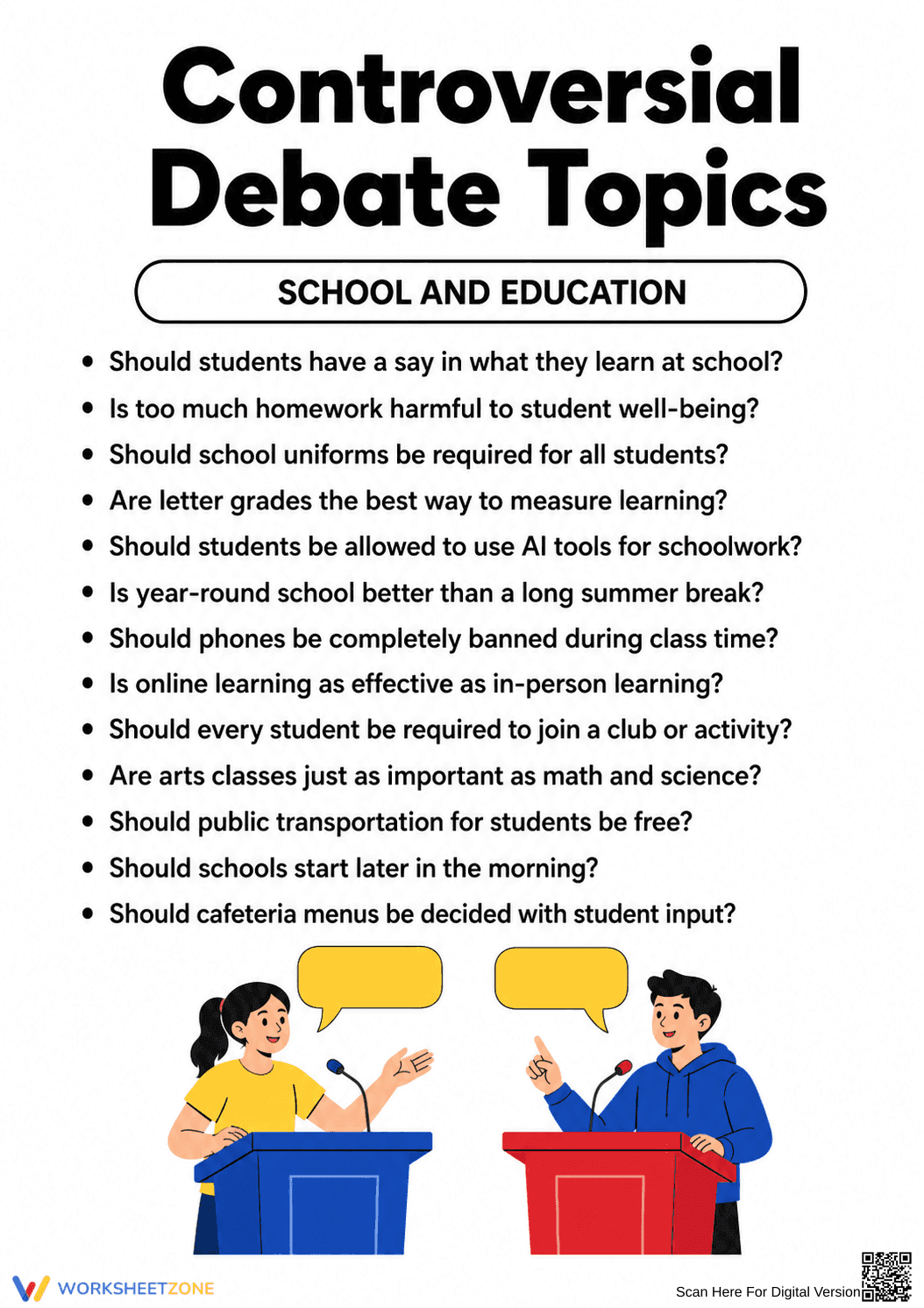

Grade 6 Debate Topics — Printable No-Prep Worksheet
Paste this activity's link or code into your existing LMS (Google Classroom, Canvas, Teams, Schoology, Moodle, etc.).
Students can open and work on the activity right away, with no student login required.
You'll still be able to track student progress and results from your teacher account.
This printable worksheet provides middle school students with thirteen thought-provoking debate prompts focused on school and education policies. By engaging with these controversial topics, learners practice articulating clear arguments, listening to opposing viewpoints, and developing strong communication skills essential for collaborative discussions.
At a Glance
- Grade: 6 · Subject: Communication Skills
- Standard:
CCSS.ELA-LITERACY.SL.6.1— Engage effectively in collaborative discussions- Skill Focus: Argumentation and debate
- Format: 1 page · 13 prompts · No answer key · PDF
- Best For: Speaking and listening practice
- Time: 30–45 minutes
This single-page resource features a curated list of 13 relevant debate questions centered around educational issues that directly impact students. Topics range from the necessity of standardized testing and homework to the implementation of mandatory uniforms and smartphone bans. The straightforward format allows educators to quickly select prompts for daily warm-ups, structured classroom debates, or persuasive writing assignments without requiring an answer key.
Zero-Prep Workflow
This resource is designed for immediate classroom implementation with minimal teacher setup:
- Print (1 minute): Generate enough copies for small groups or display the PDF directly on a smartboard for whole-class viewing.
- Distribute (1 minute): Hand out the prompt list or assign specific questions to debate teams as they enter the room.
- Review (0 minutes): Because these are open-ended discussion starters, no grading or answer key review is necessary.
Total prep time is under two minutes, making this ideal for sub plans.
Standards Alignment
This activity aligns with CCSS.ELA-LITERACY.SL.6.1, which requires students to engage effectively in a range of collaborative discussions with diverse partners on grade 6 topics, building on others' ideas and expressing their own clearly. Both standard codes can be copied directly into lesson plans, IEP goals, or district curriculum mapping tools.
How to Use It
Use this list during a persuasive writing unit to help students select topics. Alternatively, use it for weekly "Debate Fridays" where small groups are assigned a prompt, given ten minutes to prepare, and then present their arguments to the class. As a formative assessment observation tip, track how often students use evidence to support their claims rather than relying solely on emotion. Expected completion time ranges from a quick 10-minute warm-up to a full 45-minute structured debate session.
Who It's For
This resource is designed for middle school students developing verbal communication skills. To differentiate for learners who need more support, teachers can provide sentence frames for agreeing and disagreeing respectfully. Advanced students can be challenged to argue the side of the issue they personally disagree with to build empathy and cognitive flexibility. This prompt list pairs perfectly with an anchor chart on debate etiquette or a direct instruction lesson on rhetorical appeals.
Integrating structured argumentation into the middle school curriculum significantly enhances both verbal proficiency and critical thinking capabilities. According to Fisher & Frey (2014), providing students with relevant, high-interest topics increases engagement and willingness to participate in rigorous academic discourse. This resource directly supports CCSS.ELA-LITERACY.SL.6.1 by requiring learners to engage effectively in collaborative discussions. When students debate issues that directly affect their daily lives—such as homework policies, standardized testing, or smartphone bans—they are substantially more likely to construct logical arguments and listen actively to peer counterclaims. Regular practice with these types of open-ended prompts helps transition students from passive listeners to active, confident communicators who can articulate complex ideas. By utilizing these 13 targeted questions, educators can consistently foster a classroom environment where respectful disagreement and evidence-based reasoning are normalized and celebrated.


