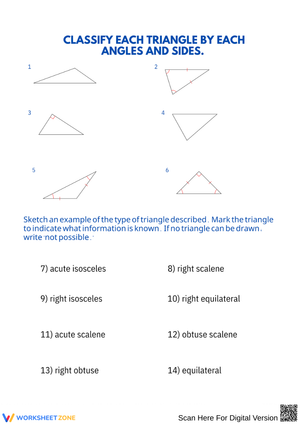
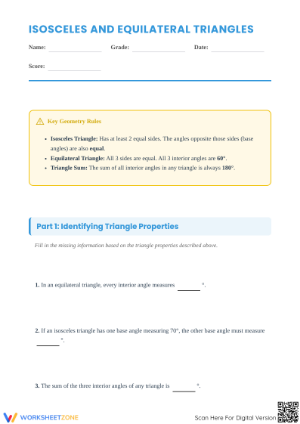
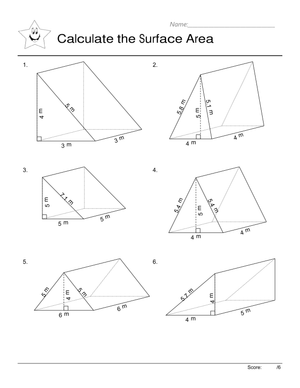
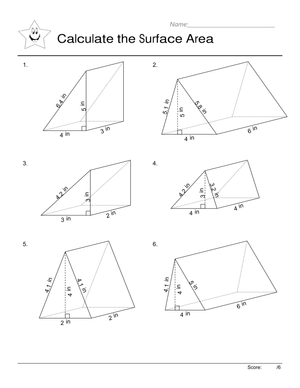
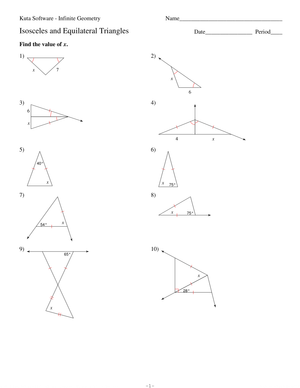
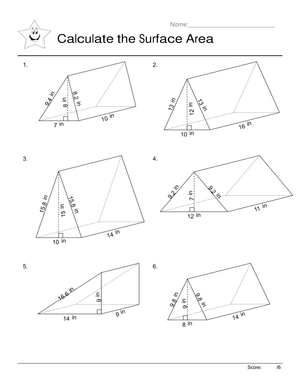
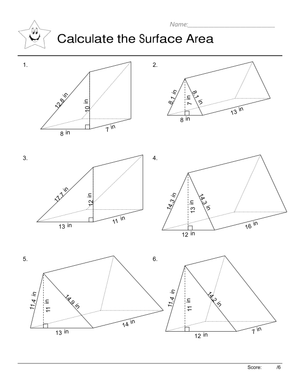
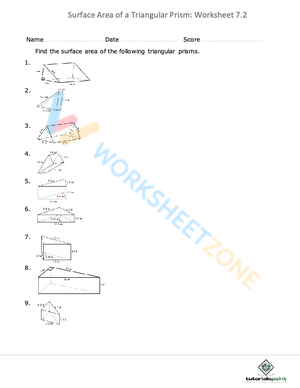
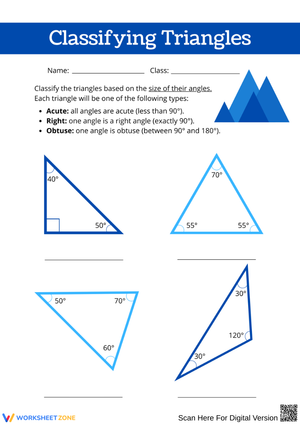
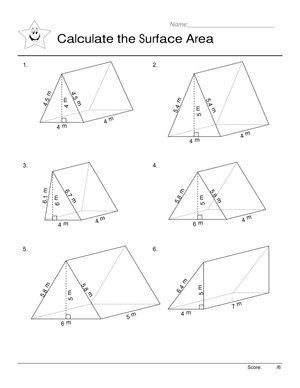
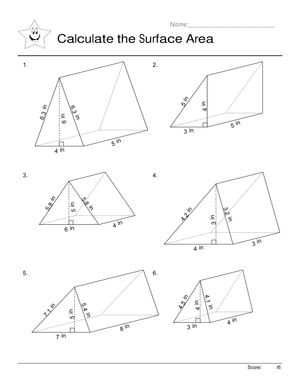
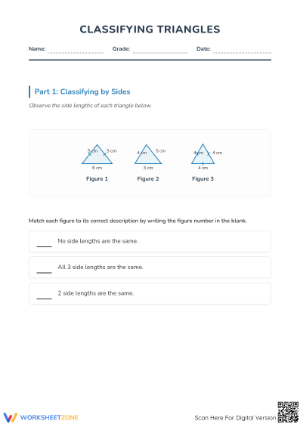
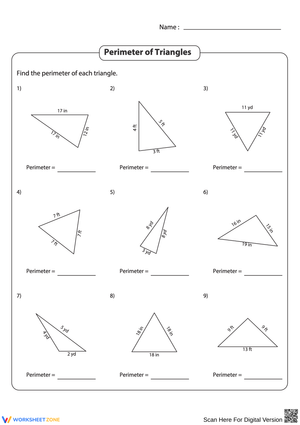
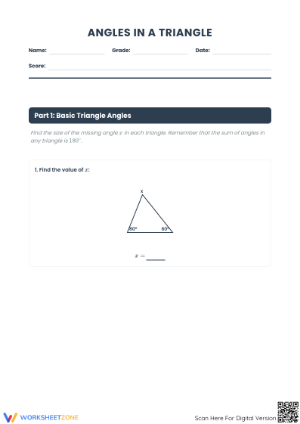
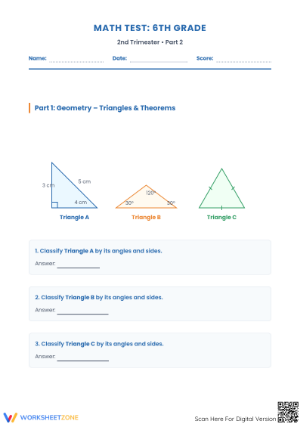
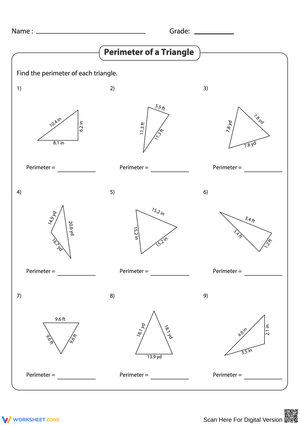
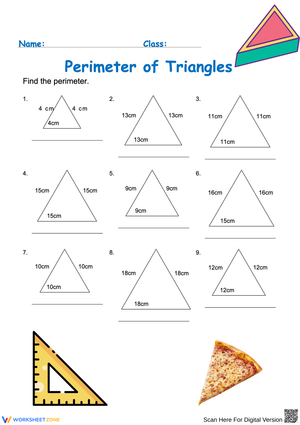
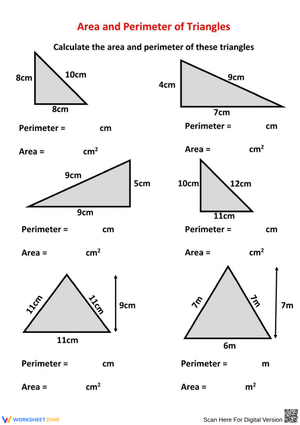
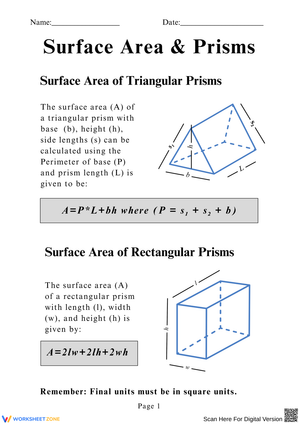
These 5th grade triangles printable worksheets address the classification challenge that catches most Grade 5 students off guard: every triangle carries two accurate labels at once — one for angle type and one for side relationships — and students need to name both with confidence. Each worksheet moves from clear visual identification into short written justification, giving teachers actual evidence of understanding rather than circled answers. The set fits at multiple points in a geometry unit — direct instruction follow-up, center rotation, reteach groups, or sub days.
The Specific Skills Targeted in Each Worksheet
The worksheets cover the full range of triangle classification work expected at Grade 5. Some focus on one system at a time to build vocabulary; others place both systems on the same worksheet so students practice naming a triangle as, say, an obtuse isosceles triangle rather than stopping at one label. Teachers get a clearer view of student understanding when both classification systems appear together because a student who can identify an acute triangle in isolation may not connect that label to its side attributes without practice doing both.
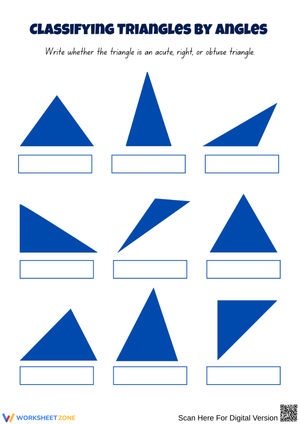
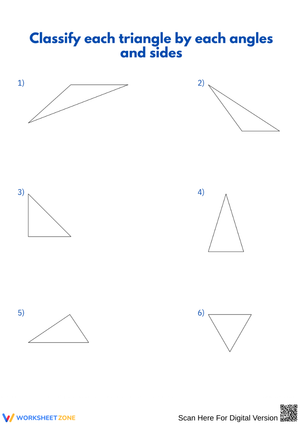
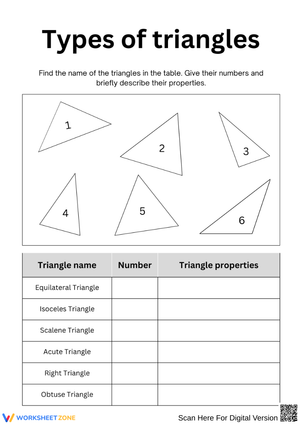
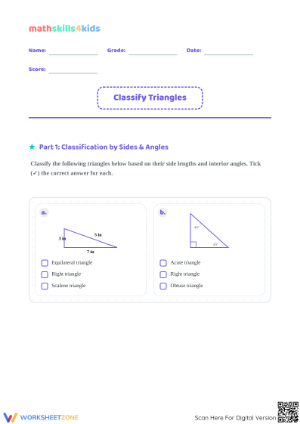
- Angle classification: students identify acute, right, and obtuse triangles from labeled drawings and mixed sets, including rotated figures.
- Side classification: students distinguish equilateral, isosceles, and scalene triangles using tick marks and side-length comparisons.
- Dual classification: students name each triangle using both systems in one response, such as right scalene or acute isosceles.
- Written justification: students explain which attributes support their label choice, not just which term to write.
- Category relationships: students recognize that an equilateral triangle is always acute, and that a right isosceles triangle is a valid combination while a right equilateral triangle is not possible.
Triangle Misconceptions That Show Up Consistently in Student Work
The most persistent error is orientation confusion. A student who correctly labels a right triangle with the right-angle marker at the lower left will sometimes reclassify the same triangle as obtuse when it appears rotated 45 degrees on a later worksheet. The student is reading the visual tilt, not the angle marker. A well-sequenced set surfaces this error during practice by showing each triangle type in multiple orientations before students reach any formal check for understanding.
The second pattern that appears consistently is the isosceles-equilateral mix-up. Students learn that equilateral triangles have three equal sides, then apply that rule inconsistently — calling an isosceles triangle equilateral because it "looks symmetrical" or because they see two tick marks and assume it qualifies. The error reveals that students have memorized a word without connecting it to a precise attribute count. Worksheets that ask students to record the tick-mark count before choosing a label slow down the guessing and expose the gap before it becomes a habit.
Building These Worksheets Into a Geometry Unit
The 5th grade triangles printable worksheets in this set work best when distributed across the unit rather than assigned all in one block. Start with angle classification only during the introduction lesson — students can focus on acute, right, and obtuse without the added load of side-length vocabulary. Introduce side classification the following day. By day three or four, use the dual-classification worksheets that require students to apply both systems to the same figure. That spacing gives vocabulary time to settle before the task complexity increases.
In small groups, one worksheet makes a strong 10–12 minute task when partners must agree on a written justification sentence before moving to the next item. That forced agreement surfaces disagreement, which is exactly what reteach time needs. For exit tickets, pull two or three items from any worksheet and add a sentence-frame prompt: This triangle is ___ because... You get a clearer read on who is ready for the next lesson than a labeled drawing gives you alone. For homework, the worksheets hold up well because they do not depend on manipulatives — students complete them without needing family support.
Standard Alignment
These worksheets connect directly to CCSS.MATH.CONTENT.5.G.B.3, which asks students to understand that attributes belonging to a category of two-dimensional figures also belong to all subcategories. For triangle classification, that means students should see equilateral as a subset of isosceles — all equilateral triangles are isosceles, but not all isosceles triangles are equilateral. Most Grade 5 worksheets skip that relationship entirely. The dual-classification tasks here address it because students who must place one triangle inside both a side-based and angle-based category are doing the hierarchical reasoning the standard targets.
CCSS.MATH.CONTENT.5.G.B.4 asks students to classify two-dimensional figures in a hierarchy based on properties. When a worksheet asks a student to explain why a right triangle cannot be equilateral, it is not asking a trivia question — it is asking the student to reason about the relationship between categories. That is where Grade 5 geometry instruction belongs, and it is where these resources consistently place the cognitive demand.
Adjusting the Set for Different Learner Needs
Students still building category vocabulary benefit from angle markers and tick marks clearly drawn on every figure, along with a word bank at the top of each worksheet. Those supports let students focus on attribute reasoning rather than retrieving six terms cold from memory. For students who have demonstrated solid recall, removing the word bank from the same worksheet raises the demand without changing the underlying task. You have not rewritten the lesson — you have removed one layer of retrieval support and turned a practice worksheet into something closer to an assessment.
5th grade triangles printable worksheets that include an open construction prompt at the bottom give advanced students genuinely harder work without pushing into 6th grade content. A prompt such as Draw a triangle that is both right and isosceles. Explain how you know both labels apply shifts students from recognizing a given example to building one — a meaningfully higher demand that still lives inside Grade 5 geometry. The focus stays on the same six vocabulary terms; students are simply working with them at greater depth.
Frequently Asked Questions
What triangle classification skills should Grade 5 students demonstrate by the end of this unit?
Students should classify any triangle by its angle type and its side relationships, state both labels together (for example, acute scalene), and explain which visible attributes support each label. They should also recognize that the two classification systems interact — an equilateral triangle is always acute, and orientation never changes classification.
How do these worksheets work in intervention settings?
In intervention, use one worksheet at a time and focus on one contrast — right versus obtuse, or isosceles versus scalene — rather than the full dual-classification task. That narrowed scope keeps the session manageable and helps teachers locate exactly where understanding breaks down. Most students in intervention have one or two specific, persistent errors that targeted practice can address without rebuilding the entire lesson from scratch.
Can the same worksheet serve both homework and classroom practice?
Yes. Because the worksheets do not require manipulatives or specialized tools, students complete them at home without difficulty. In class, the same worksheet works differently: pause mid-task, discuss two or three items aloud as a group, and have students finish the rest independently. That structured pause often surfaces errors students would otherwise carry straight through without noticing.
How do I choose which worksheet to use before a quiz or unit assessment?
Selecting 5th grade triangles printable worksheets that require written justification — not just label selection — prepares students better for assessment items. Standardized geometry tasks at Grade 5 rarely ask for a vocabulary term in isolation. They show a figure with specific attributes and ask students to identify a property or explain a relationship. Practicing that written reasoning during review is more useful than re-doing straightforward identification tasks students have already mastered.














 Interactive Worksheet Maker
 Quiz Maker
 Word Search Maker
 Crossword Puzzle Maker
 Word Scramble Generator
 Sentence Scramble Generator
 Handwriting Worksheet Generator
 Name Tracing Generator
 Fill In The Blank Generator




 BACK TOSCHOOL