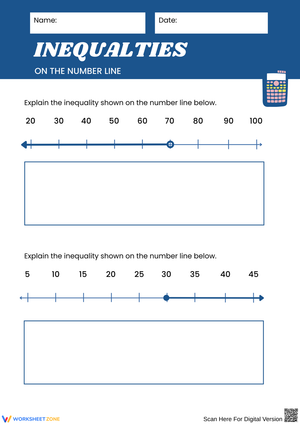
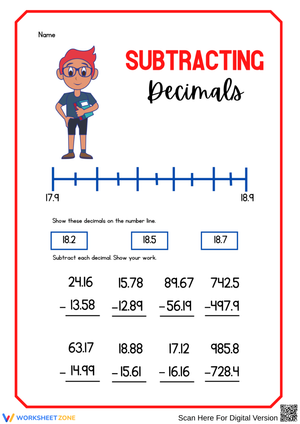
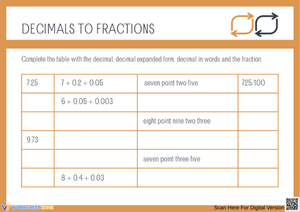
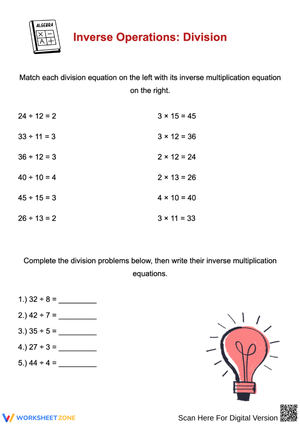
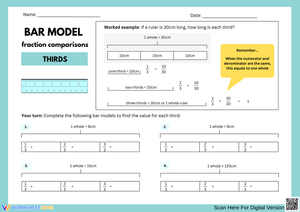
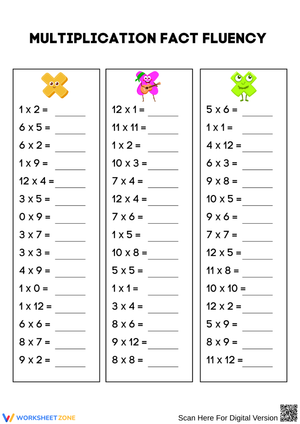
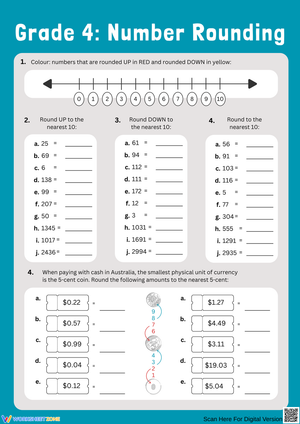
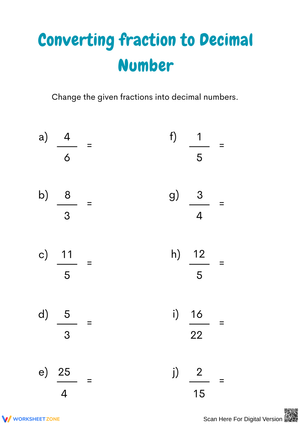
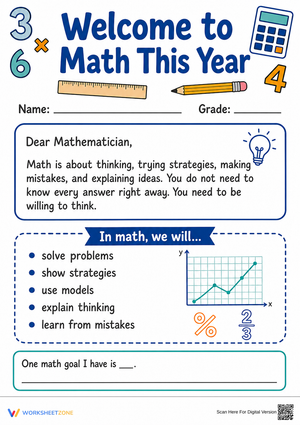
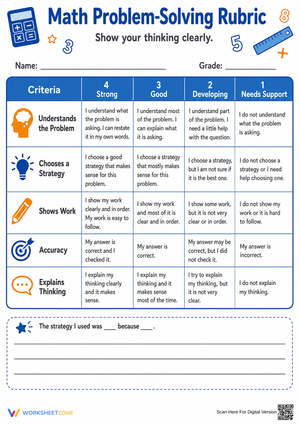
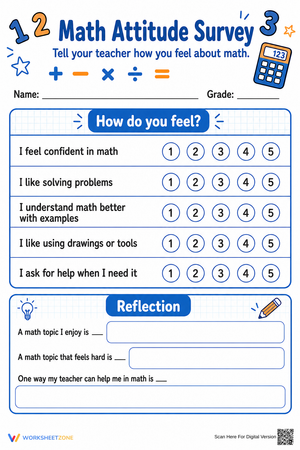
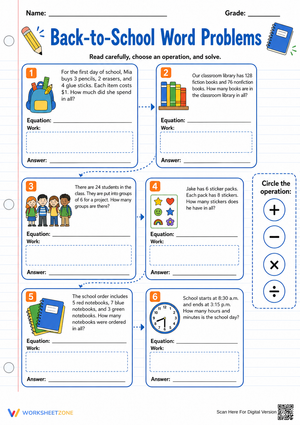
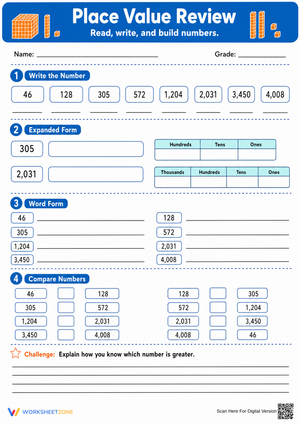
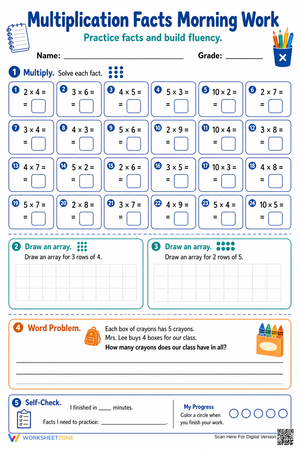
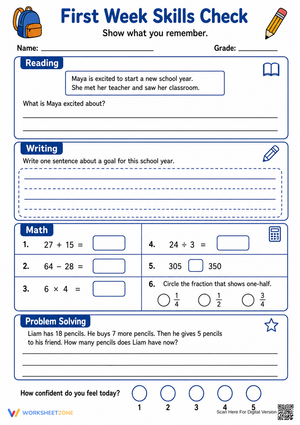
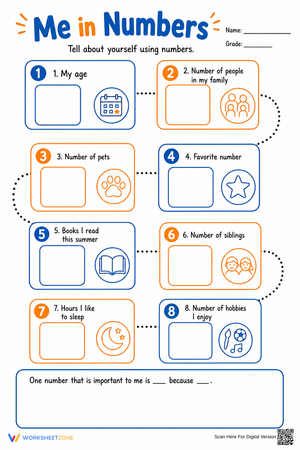
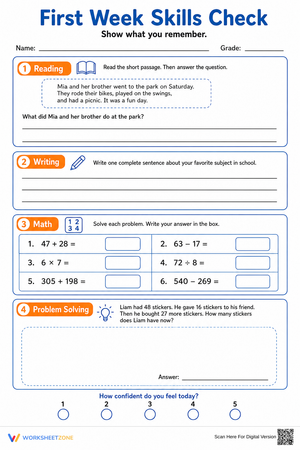
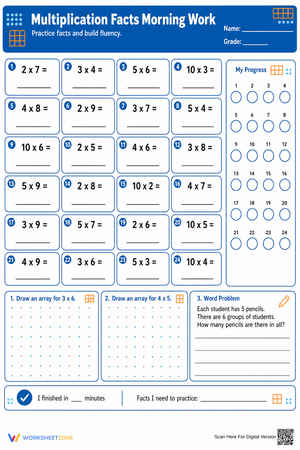
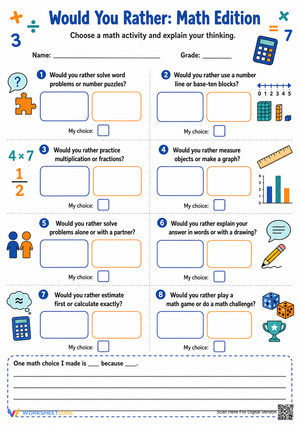
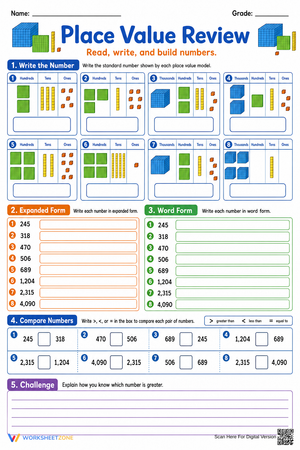
These math printable worksheets for 5th grade organize practice by individual skill — decimal place value and operations, fraction addition and multiplication with unlike denominators, multi-digit computation, volume, coordinate graphing, and line plots — so teachers can pull the right worksheet for the next day's lesson without sorting through unrelated material. The set reflects what a Grade 5 planning block actually requires: clean procedural practice after a mini-lesson some days, word problems for small-group reteach on others, and a focused skills check before the weekend on Fridays.
The Specific Skills Covered
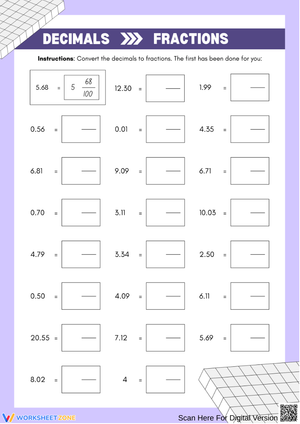
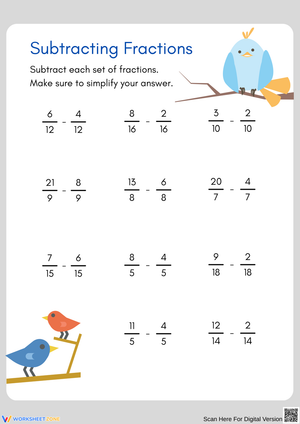
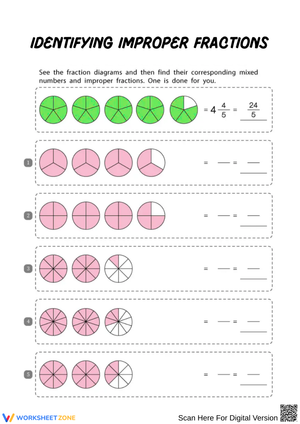
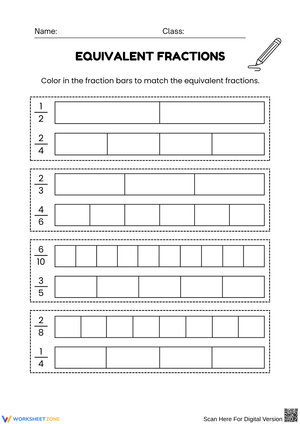
Grade 5 is the year decimal and fraction reasoning start to converge, which is exactly why the worksheets treat those topics separately during initial practice. Fraction worksheets divide into unlike-denominator addition and subtraction on one hand and fraction multiplication on the other — two procedures that share little in common and that students routinely conflate when they appear together before either is solid. Decimal worksheets separate place value, comparison, and the four operations for the same reason: each procedure needs controlled practice before students face problems requiring them to choose between operations.
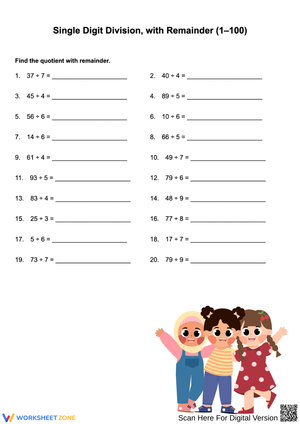
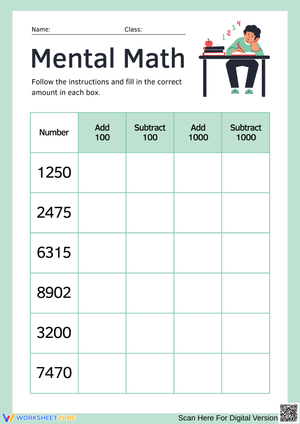
Computation worksheets cover multi-digit multiplication and long division with enough item variation to distinguish a basic-fact gap from a method breakdown. The geometry and measurement worksheets address volume of rectangular prisms, coordinate graphing in the first quadrant, and line plots with fractional data — the three topics that receive the least consistent daily practice even though every Grade 5 end-of-year assessment tests them.
Frequent Student Errors Worth Watching For and Correcting
The fraction-addition error that survives initial instruction most persistently is adding straight across both numerators and denominators: a student who writes 2/3 + 1/4 = 3/7 has not made a random slip — they've applied a logic that felt internally consistent. That error holds on because the student hasn't yet internalized what the denominator names. These worksheets surface the pattern because problem sequences move from like-denominator review to unlike-denominator application within the same worksheet, giving teachers a comparison point on a single student's work rather than across different assignments.
With decimals, the most diagnostic error involves comparison: students who correctly identify that 3.4 is greater than 3.04 will sometimes write that 3.14 is greater than 3.8, treating digits after the decimal point like whole numbers where 14 is greater than 8. That reversal rarely shows up on a broad mixed-skills worksheet because there aren't enough consecutive comparison problems to catch it. A focused decimal comparison worksheet makes the pattern visible within the first five problems.
In volume work, students frequently compute length times width correctly but stop there, writing square units alongside their answer — which signals a conceptual confusion between area and volume, not just a forgotten step. Requiring students to write the unit label on every answer line forces that distinction into the practice rather than leaving it to surface during the assessment.
How to Build These Worksheets Into Your Lesson Plans
A reliable weekly structure for Grade 5 math is focused skill practice early in the week right after direct instruction, a mixed-review worksheet midweek for spaced retrieval, and a short skills check by Thursday or Friday. Teachers who keep math printable worksheets for 5th grade filed by skill cluster rather than by date can pull from that system quickly — finding the right fraction worksheet for Monday's lesson is a different folder search than Wednesday's decimal review, and keeping them separated makes the whole routine faster.
- Use single-skill worksheets for independent practice immediately after the mini-lesson — errors that appear then are still catchable before students practice the wrong method at home.
- Place mixed-review worksheets in small-group settings where the teacher can observe which problems produce hesitation, not just which answers are wrong.
- Keep a small collection of computation and word-problem worksheets ready for substitute plans and early finishers — the format is already familiar to students, and no additional directions are needed.
- Use targeted review worksheets before a quiz to let students revisit one weak area rather than repeating an entire unit.
Standard Alignment
Fraction worksheets align with 5.NF.A.1 and 5.NF.A.2, which cover adding and subtracting fractions with unlike denominators, and with 5.NF.B.4 for multiplying fractions and mixed numbers. Decimal place value and operations map to 5.NBT.A.1, 5.NBT.A.3, and 5.NBT.B.7. Volume worksheets address 5.MD.C.3 through 5.MD.C.5, coordinate graphing worksheets align with 5.G.A.1 and 5.G.A.2, and line plot work falls under 5.MD.B.2, which specifically requires data sets involving fractions of a unit.
In classroom terms, these standards don't arrive in clean sequence. The NBT and NF domains overlap in the second and third quarters when instruction moves from fraction operations toward decimal division, and students who haven't isolated each skill clearly will start collapsing the two number systems in ways that are difficult to untangle on a mixed problem set. Keeping math printable worksheets for 5th grade sorted by standard cluster is what makes it possible to identify a fraction misconception on its own, without a concurrent decimal error obscuring the diagnosis.
Adjusting These Worksheets for a Range of Learners
For intervention groups, reducing the item count is usually the most effective adjustment — a 20-problem computation worksheet becomes a 10-problem set with larger work space, and the teacher gets more useful diagnostic information because students show their method on each problem rather than rushing to fill the full worksheet. Volume of problems matters far less than visibility of thinking for students who are still building a procedure from scratch.
For students who have the procedure solid, the word-problem and mixed-review worksheets push the demand further. Asking those students to write a second solution path or explain in writing why their answer makes sense shifts the cognitive load without requiring a separate printed resource. One honest limitation: students who freeze when an application problem uses an unfamiliar context — a recipe, a map scale, a unit they haven't seen recently — sometimes need another cycle with the procedural worksheet before the word-problem set becomes productive. That's worth knowing before assigning the application worksheet as independent homework without a heads-up.
Frequently Asked Questions
What math topics should Grade 5 printable worksheets cover?
The major Grade 5 CCSS domains give the full map: fraction operations, decimal place value and operations, multi-digit multiplication and division, volume, and coordinate graphing. A strong set also includes word problems where the operation isn't named for the student — that's where procedural fluency meets actual mathematical reasoning, and it's the gap that shows up most clearly in student work when cumulative review starts in the spring.
How do these worksheets work for small-group instruction or reteach?
Use single-skill worksheets in intervention groups rather than mixed-review sets. A student who misses several problems on a mixed worksheet might have a computation error, a reading issue, or a conceptual gap — and only a focused worksheet helps the teacher determine which. After reteach, a second attempt on the same targeted skill confirms whether the instruction closed the gap before the student rejoins the whole-class sequence.
Are answer keys included?
Yes, each worksheet includes an answer key. That matters most during independent center work and small-group rotations when the teacher can't check every paper in real time. For lesson planning purposes, reviewing student work against the key the night before the next lesson makes it straightforward to identify which specific items need a brief follow-up before the class moves forward.
Do these align with Common Core standards?
The skill coverage maps directly to Grade 5 CCSS domains, so teachers who plan around those standards can integrate math printable worksheets for 5th grade into their unit sequence without restructuring their pacing. Teachers in states that use modified standards will find the topics largely compatible, though a few geometry and measurement items are worth checking against state-specific expectations before assigning.














 Interactive Worksheet Maker
 Quiz Maker
 Word Search Maker
 Crossword Puzzle Maker
 Word Scramble Generator
 Sentence Scramble Generator
 Handwriting Worksheet Generator
 Name Tracing Generator
 Fill In The Blank Generator




 BACK TOSCHOOL