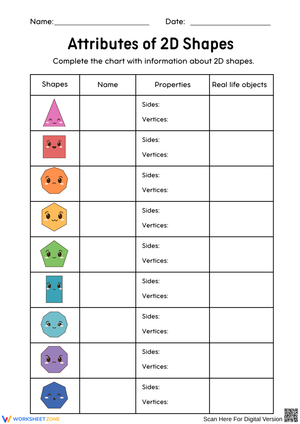
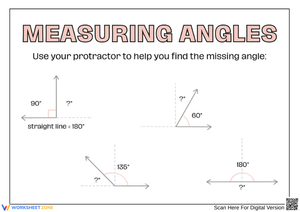
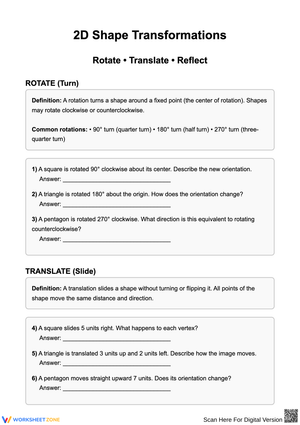
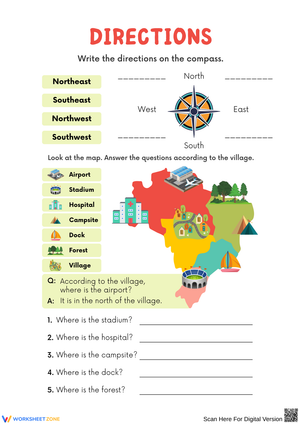
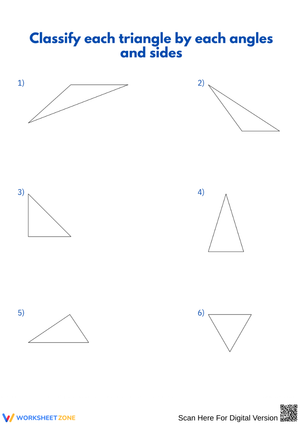
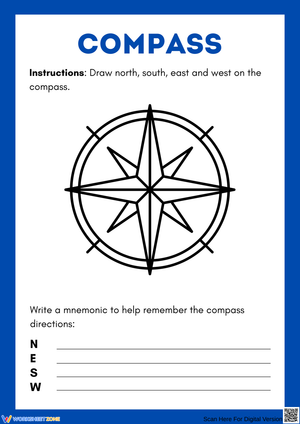
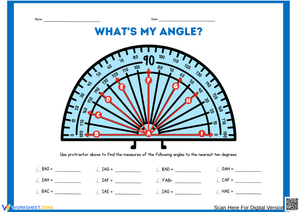
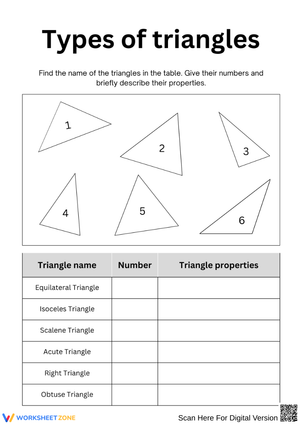
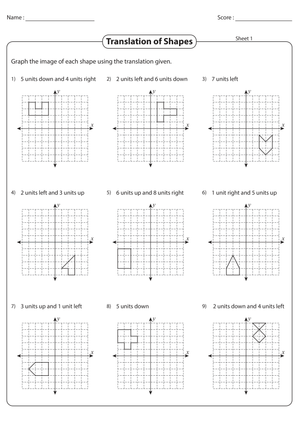
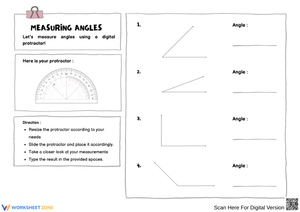
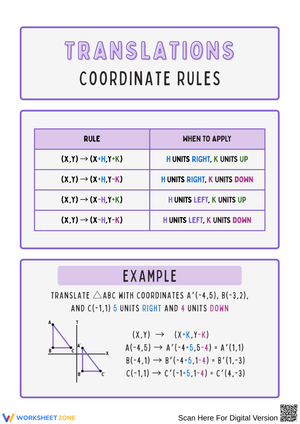
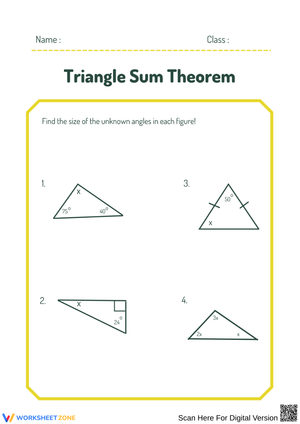
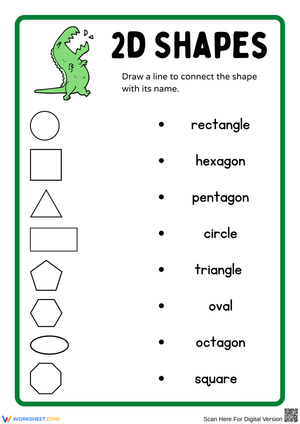
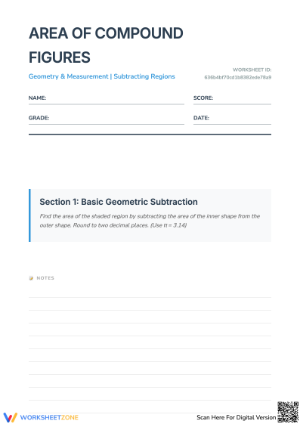
These geometry printable worksheets for 5th grade target the exact skills teachers return to most during the unit: classifying triangles and quadrilaterals by properties, identifying angle types, graphing ordered pairs in the first quadrant, spotting lines of symmetry, and describing transformations. Each worksheet isolates one of those targets so teachers can assign what the class needs on a given day without sorting through mixed-topic worksheets that blur the line between what a student actually understands and what is simply confusing them.
The Specific Skills Targeted
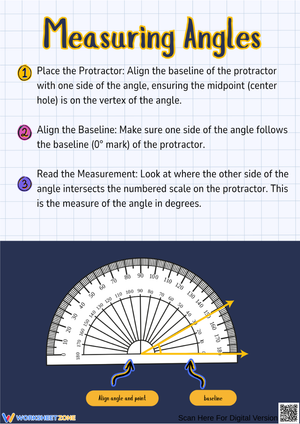
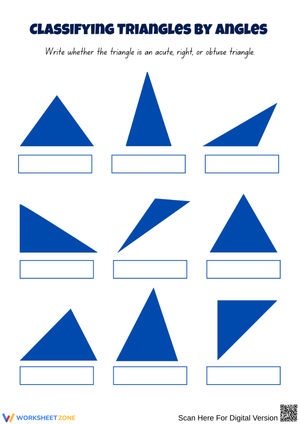
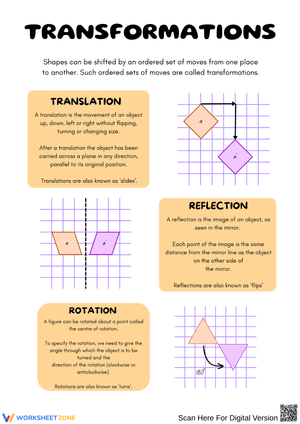
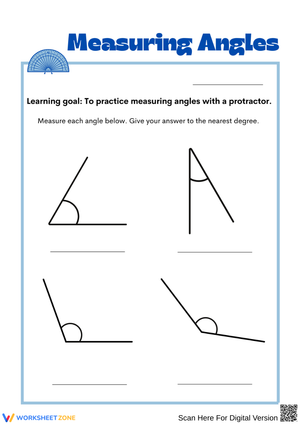
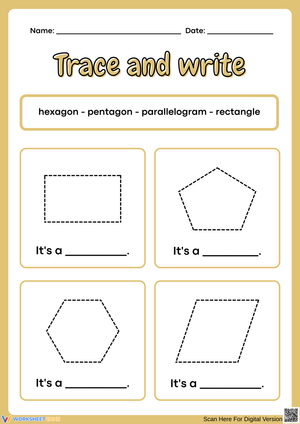
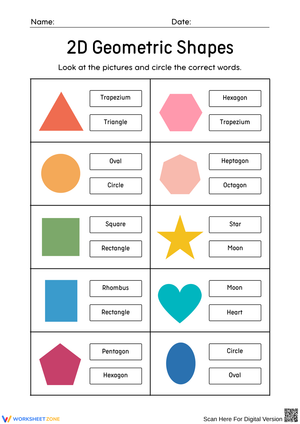
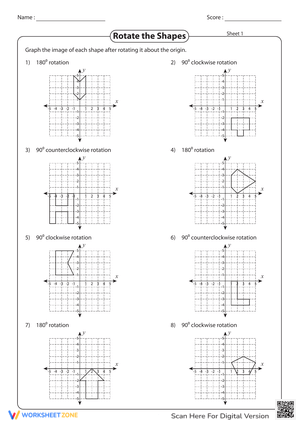
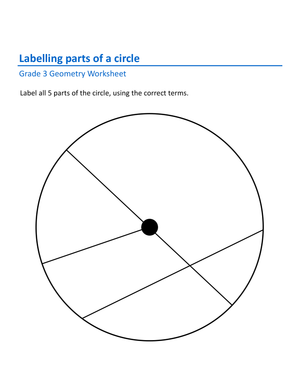
The set spans the two geometry clusters at fifth grade — two-dimensional figure classification and coordinate graphing — while also including the connected topics teachers reach for regularly. Angle worksheets give students the precise vocabulary to describe shape attributes. Sorting worksheets for triangles and quadrilaterals ask students to compare properties, not just recognize names. Coordinate graphing worksheets require students to both plot and read points in the first quadrant, including tasks where they write coordinates from a graph rather than simply place a dot at given values. Symmetry and transformation worksheets round out the set and give students a visual entry point before classification reasoning becomes the primary demand.
Fifth grade is where geometry stops being about recognition and starts requiring justification. Students in earlier grades sort shapes by appearance; fifth graders are expected to explain why a figure belongs in a category and whether it could belong to two categories at once. These geometry printable worksheets for 5th grade reflect that shift by asking students to compare attributes side by side, defend placements, and return to related categories across multiple tasks rather than answering one question and moving on.
Where Fifth Graders Go Wrong — and What the Work Reveals
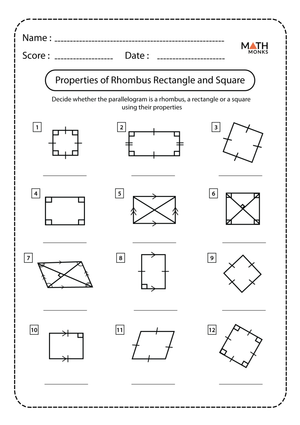
Quadrilateral classification produces the most durable errors at this grade, and the mistake almost always traces back to hierarchy thinking. Students who can label a rectangle and a square without difficulty will still write that a square is not a rectangle, because they treat those names as separate, non-overlapping bins. On student work, this shows up in sorting tasks: the student places the square in one column and the rectangle in another and sees no contradiction. Worksheets that make the category relationship explicit — asking students to shade overlapping regions on a Venn diagram or draw an arrow showing one category sitting inside another — are the ones that actually shift this thinking.
Coordinate graphing worksheets reveal a second predictable error: students reverse the x- and y-coordinates when plotting from a list, placing the second number on the horizontal axis because they read down a column before moving across a row. This isn't carelessness — it reflects a deeply ingrained habit from reading tasks that move vertically first. A worksheet that asks students to trace the movement step by step (right first, then up) before marking the final point catches this more reliably than one that simply provides a completed grid for reference.
Symmetry worksheets surface a different problem. Students often draw a line of symmetry wherever the figure looks roughly balanced rather than where a true fold would produce two matching halves. A regular hexagon might receive exactly six correct lines — or it might receive an extra diagonal because the student judged by visual weight instead of mirror reflection.
How to Work These Worksheets Into Your Planning
The warm-up slot — roughly the first six to eight minutes of math block — is the most natural fit. A short angle-identification or symmetry worksheet gives students something concrete to work through while morning routines settle, and it surfaces misconceptions before a lesson deepens them. When the teacher collects that work at the end of the warm-up, classification tasks in particular generate fast, honest formative data: you can see at a glance whether students sorted by one property or thought about multiple properties simultaneously.
For small-group instruction, a focused worksheet gives the teacher a clear starting point rather than an open-ended reteach conversation. Sitting with four students around a quadrilateral classification worksheet makes the error visible immediately. The teacher asks a student to explain why they placed a trapezoid in one column and not another — and the reasoning, not just the answer, is what the teacher can now address directly.
- Assign coordinate graphing worksheets at centers where students can self-check plotted points against a posted answer key.
- Reserve transformation and symmetry worksheets for Friday review — visual tasks hold attention better than abstract classification work at the end of the week.
- Keep angle and symmetry worksheets in a sub folder; they launch independently without verbal setup from a teacher.
- After a classification lesson, assign a worksheet that covers the next related figures rather than repeating the same ones from class. Spaced retrieval builds retention more reliably than same-night repetition of identical content.
Standard Alignment
The worksheets in this set align to 5.G.A and 5.G.B, the two standard clusters that constitute fifth-grade geometry in the Common Core State Standards for Mathematics. 5.G.A addresses graphing points in the first quadrant of a coordinate plane and using those coordinates to solve problems. 5.G.B addresses classification of two-dimensional figures by their properties and the category relationships among them — the standard that requires students to recognize, for example, that all rhombuses are parallelograms, and that all squares are rhombuses. Together, these two clusters represent the full geometry expectation at Grade 5, which is why the set is organized around them rather than a broader multi-grade geometry strand.
Meeting Different Readiness Levels With the Same Set
For students who are still building shape vocabulary, pairing a classification worksheet with an attribute reference card — one that lists what makes a parallelogram or distinguishes a rhombus — shifts the cognitive demand from memory to reasoning. The worksheet can then do its actual job of testing category thinking rather than testing whether a student remembers a definition from three weeks ago. Students who already command the vocabulary can work from the same worksheet but write a written justification for every placement instead of simply circling an answer.
Coordinate graphing worksheets support a clean tiered approach. Students who need additional practice begin with a worksheet that includes a partially labeled grid and asks them to plot four or five points before identifying two coordinates from the finished graph. Students ready to go further can work with a worksheet that asks them to generate ordered pairs from a rule and describe the pattern those points form on the grid. Both tasks stay in first-quadrant graphing — right at the fifth-grade standard — so the classroom stays aligned even when individual students are at different points along the progression. These geometry printable worksheets for 5th grade hold that range without requiring teachers to pull resources from another grade level.
Frequently Asked Questions
Do these worksheets address both 5.G.A and 5.G.B?
Yes. The set includes coordinate graphing worksheets that build 5.G.A skills — plotting and reading points in the first quadrant — and classification worksheets that address 5.G.B, including category relationships among quadrilaterals such as the square-rectangle-parallelogram hierarchy.
Can I use individual worksheets for intervention without reteaching an entire unit?
That is exactly where these worksheets earn their keep. Because each worksheet targets one subskill, teachers can put a student on the precise task that matches the observed error — quadrilateral hierarchy confusion, coordinate reversal, or symmetry line misplacement — without covering ground the student has already mastered.
What about students who shut down on visual classification tasks?
The coordinate graphing worksheets tend to be a better starting point for those students. The task is structured enough to begin without interpretation, but interpretation is still required to finish it. Starting there — rather than on a shape-sorting worksheet — often re-engages students who freeze when asked to make visual judgments about unfamiliar figures. It's an honest limitation of classification worksheets: they frustrate students who need a more procedural foothold first.
Are these worksheets useful for state test preparation?
Fifth-grade geometry appears directly on most state assessments aligned to Common Core, including items on quadrilateral classification hierarchies and first-quadrant graphing. These geometry printable worksheets for 5th grade give students repeated, low-stakes practice with the same task types and reasoning demands that appear in that format, which reduces unfamiliarity when the actual assessment arrives.














 Interactive Worksheet Maker
 Quiz Maker
 Word Search Maker
 Crossword Puzzle Maker
 Word Scramble Generator
 Sentence Scramble Generator
 Handwriting Worksheet Generator
 Name Tracing Generator
 Fill In The Blank Generator




 BACK TOSCHOOL