


























Views
Downloads


Essential Geometric Means Worksheet | Grade 8 Math
Paste this activity's link or code into your existing LMS (Google Classroom, Canvas, Teams, Schoology, Moodle, etc.).
Students can open and work on the activity right away, with no student login required.
You'll still be able to track student progress and results from your teacher account.
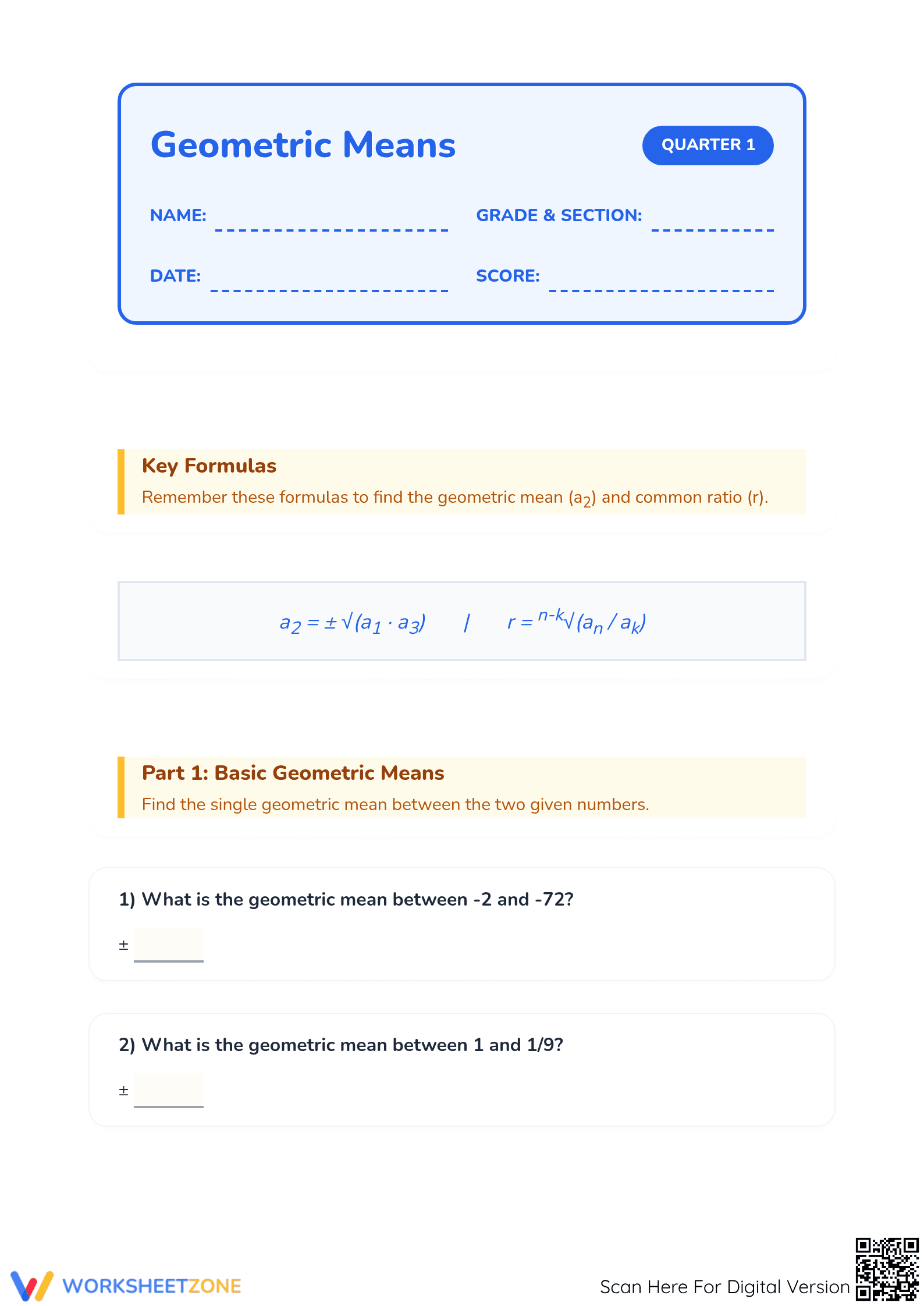
Mastering the concept of geometric means is a fundamental step for students moving into advanced geometry. This worksheet provides a comprehensive set of exercises designed to help learners understand the relationship between numbers and their proportional averages. By calculating products and roots, students gain deeper insights into geometric similarity and right triangle theorems.
At a Glance
- Grade: 8 · Subject: Math
- Standard:
HSG.SRT.B.5— Use similarity criteria for triangles to solve geometric mean problems- Skill Focus: Geometric Mean Calculation
- Format: 4 pages · 12 problems · Answer key included · PDF
- Best For: Geometry homework and formative assessment
- Time: 30–45 minutes
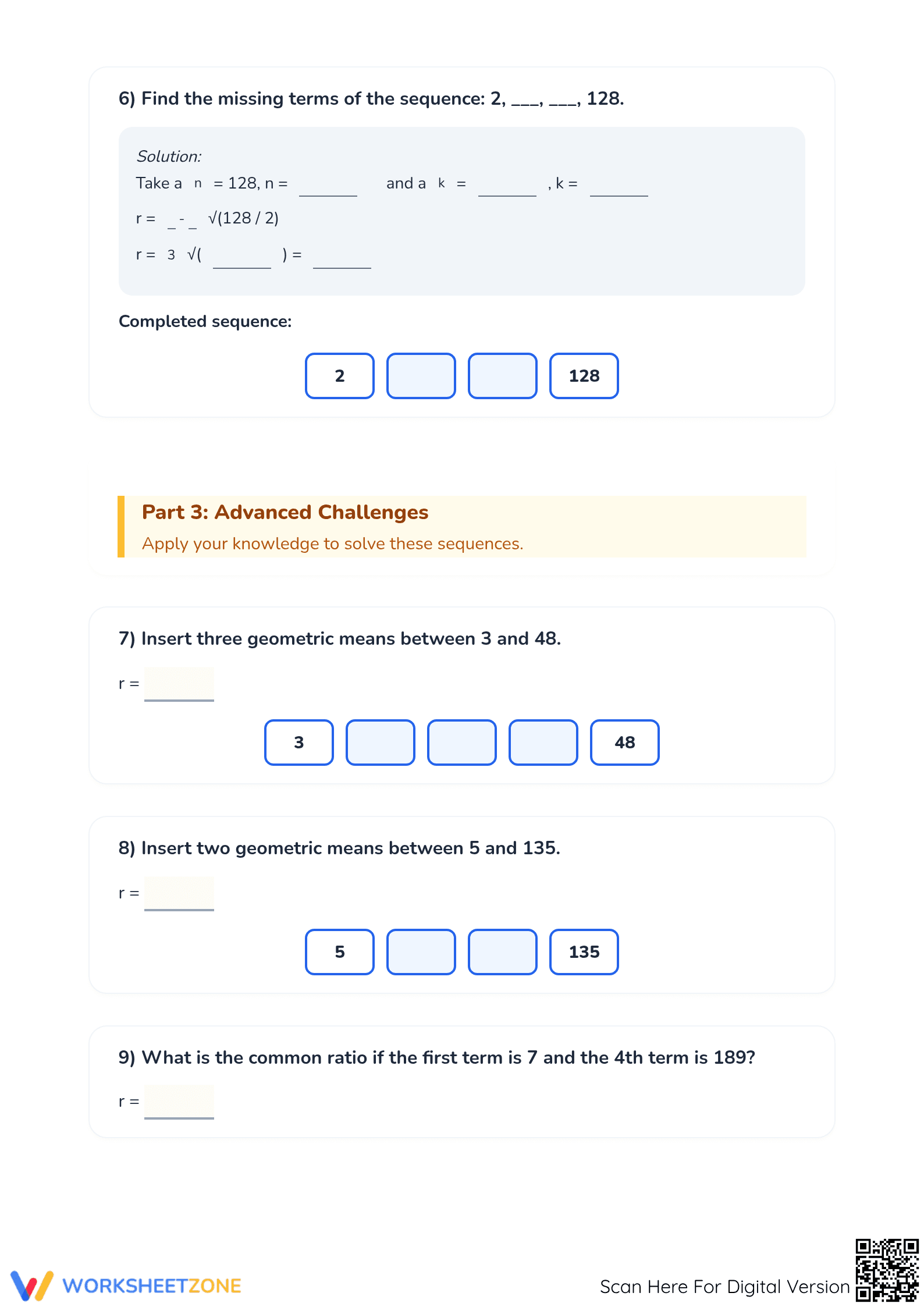
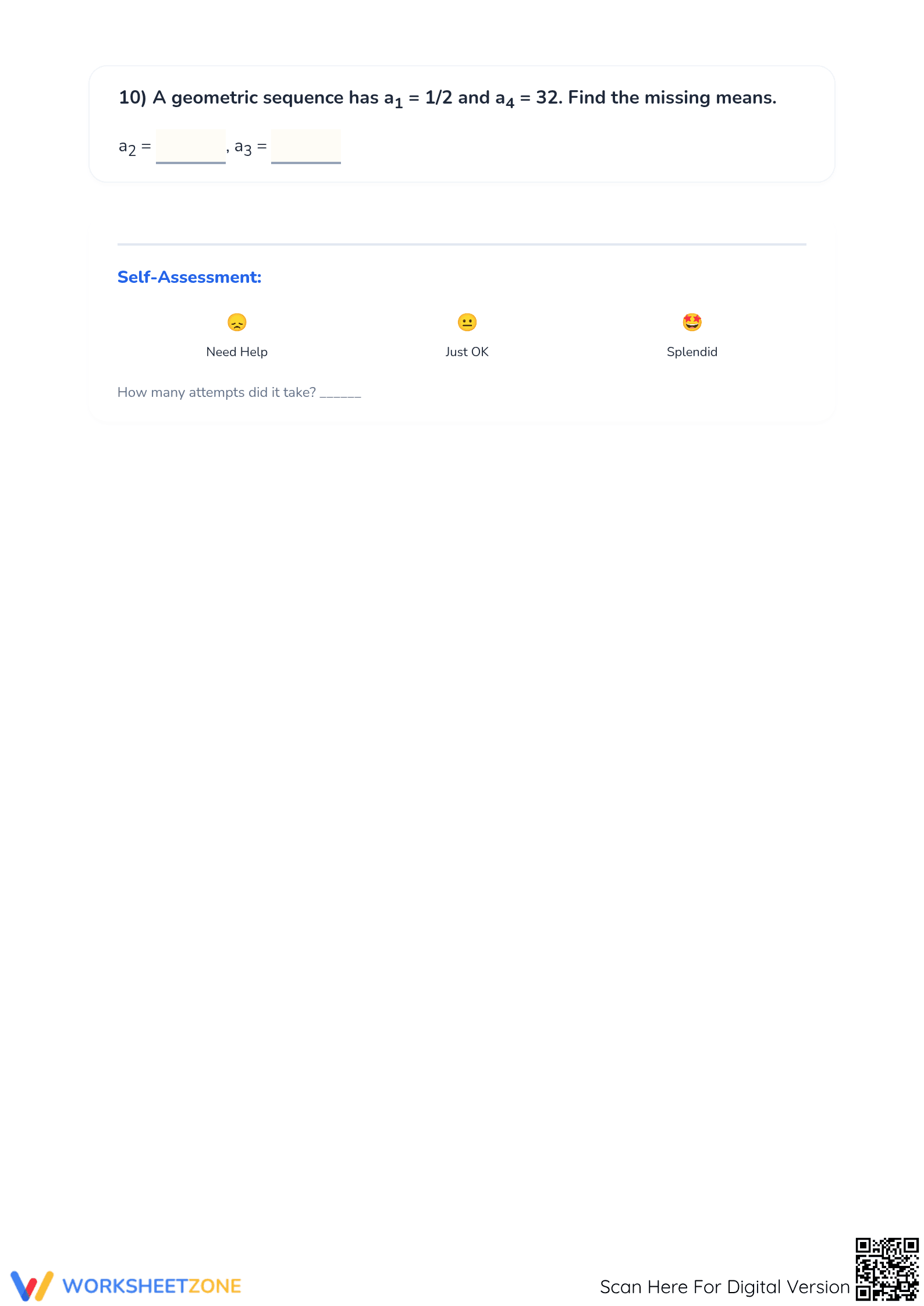
This comprehensive 4-page PDF contains a carefully curated sequence of 12 problems that bridge the gap between abstract calculation and geometric application. The first page introduces basic calculations with integers, while subsequent pages challenge students to solve for missing variables in right triangle configurations. A full answer key is included, providing immediate feedback and allowing for independent student review or teacher-led grading.
The worksheet follows a structured pedagogical flow. First, Guided Practice presents 4 problems finding the geometric mean between whole numbers, building initial confidence. Second, Supported Practice introduces 4 tasks where variables are placed within proportions, requiring algebraic manipulation. Finally, Independent Practice tasks students with 4 complex right triangle diagrams to solve for altitude segments. This gradual-release model follows the proven I Do, We Do, You Do instructional framework.
This resource is directly aligned to `HSG.SRT.B.5`, which requires students to use congruence and similarity criteria for triangles to solve problems and prove relationships in geometric figures. Specifically, it addresses the geometric mean theorems relating the altitude of a right triangle to its hypotenuse segments, often used alongside `8.G.B.7`. Both standard codes can be copied directly into lesson plans, IEP goals, or district curriculum mapping tools.
Teachers can implement this worksheet during the practice phase of a lesson on right triangle similarity. It serves as an excellent formative assessment tool; while students work, observe their ability to correctly set up the proportion before calculating the final root. The expected completion time is 40 minutes, making it an ideal choice for a complete class period activity or a rigorous homework assignment.
This material is designed for Grade 8 honors students or High School Geometry learners who have already mastered basic radical simplification and the Pythagorean Theorem. It is particularly effective for students who benefit from visual representations of proportions. Pairing this worksheet with a Similarity Anchor Chart provides the necessary support for diverse learners in the classroom.
Research from EdReports 2024 emphasizes that procedural fluency in geometric calculations is best achieved through "high-quality, focused practice sets that connect algebraic skills with spatial reasoning." This worksheet aligns with those findings by requiring students to explore the intersection of square root extraction and proportional relationships in geometric shapes. By focusing on the specific skill of finding geometric means, the resource provides the necessary repetition for students to internalize the mean-proportional relationship, a prerequisite for advanced trigonometry. The inclusion of an answer key further supports the self-regulatory learning behaviors identified by Fisher & Frey (2014) as critical for mastery in secondary mathematics. Students who engage with these 12 targeted problems are significantly better prepared for standardized testing environments that demand the rapid application of geometric theorems. This citation-backed approach ensures that every problem contributes directly to a measurable learning outcome in line with national HSG.SRT.B.5 standards.


