What Are Measurement and Equivalence Roles in 4th Grade Math?
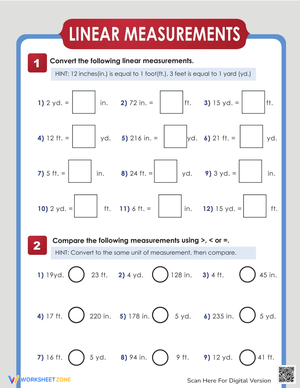
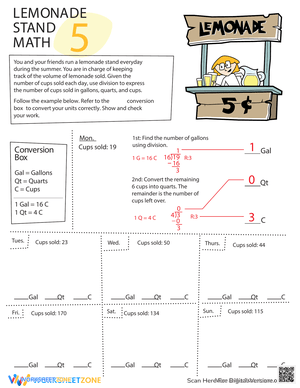
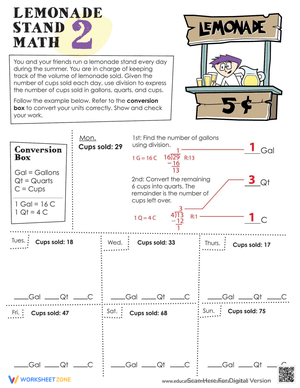
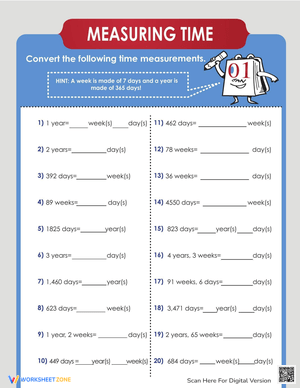
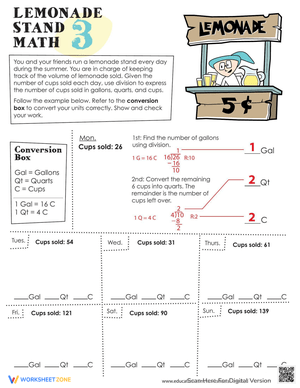
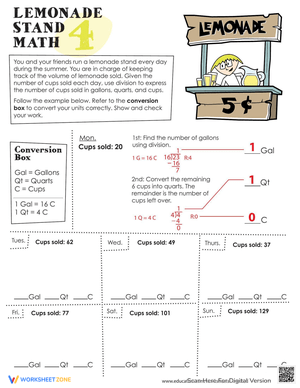
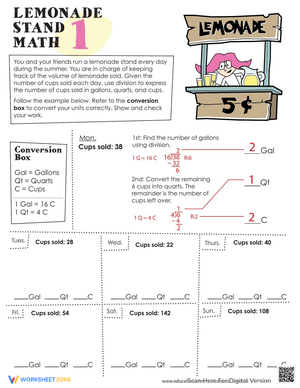
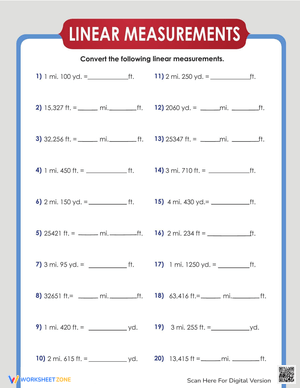
When a 4th grade lesson plan calls for practice with measurement and equivalence, it means something specific: converting between units of length, weight, capacity, and time within the same measurement system. A student working on this skill isn't comparing miles to kilometers. Instead, they're figuring out how many inches are in 4 feet, how many ounces are in 3 pounds, or how many minutes are in 2 hours. This within-system conversion work is the backbone of 4th grade Measurement and Data instruction, and it shows up constantly in word problems, science units, and even classroom scheduling tasks.
For a teacher planning a math block around a worksheet set tied to this topic, the goal is fluency with relative unit sizes so students can move confidently between a larger unit and its smaller equivalent, and back again.
The Core Standard Behind These Worksheets: 4.MD.1
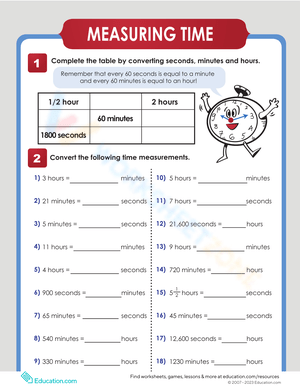
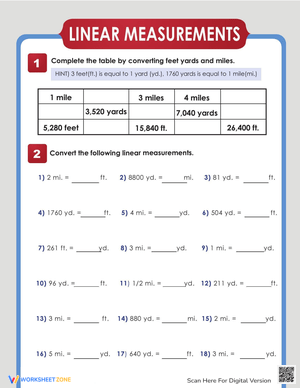
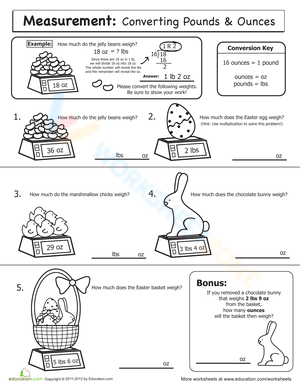
CCSS.Math.Content.4.MD.A.1 asks students to know the relative sizes of measurement units within a single system, including km, m, and cm for length; kg and g for mass; lb and oz for weight; l and ml for capacity; and hr, min, and sec for time. Students are expected to express a measurement in a larger unit in terms of a smaller unit and to record those equivalents in a two-column table.
A classic 4.MD.1 example: students should know that 1 foot is 12 times as long as 1 inch, so a 4 ft length converts to 48 inches. From there, students generate a table of equivalent pairs, such as (1, 12), (2, 24), and (3, 36), extending the pattern rather than memorizing isolated facts. Worksheets built around this standard should give students repeated, structured practice building these tables themselves, not just filling in blanks.
Solving Measurement Word Problems: 4.MD.2
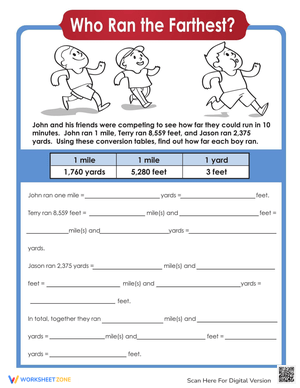
CCSS.Math.Content.4.MD.A.2 shifts the focus from building conversion tables to applying them. This standard requires students to use the four operations to solve word problems involving distances, time intervals, liquid volumes, masses, and money, including problems that involve simple fractions or decimals and require converting from a larger unit to a smaller one before solving.
Students are also expected to represent these quantities visually, often using a number line diagram with a measurement scale. A strong 4.MD.2 worksheet doesn't ask students to convert in isolation; it embeds the conversion inside a multi-step problem, such as finding the total length of three ribbons given in feet and inches, or determining how many 8-ounce servings come from a 5-pound bag.
How Equivalence Tables Function as a Teaching Tool
The two-column equivalence table isn't just a worksheet format; it's the visual scaffold that makes the multiplicative relationship between units visible. When students see (1, 12), (2, 24), (3, 36) stacked together, the pattern of multiplying by 12 becomes concrete rather than abstract, which is exactly what 4.MD.1 asks students to internalize before they're asked to apply it inside word problems.
Because the standard names this table format specifically, worksheets that ask students to complete or build their own two-column tables give a more direct rehearsal of the standard than worksheets that only ask for a single converted answer. Teachers can use partially filled tables for scaffolded practice and blank tables for students who are ready to generate the pattern independently.
According to the Common Core State Standards Initiative's Grade 4 Measurement & Data domain, students in this grade are expected to solve problems involving measurement and the conversion of measurements from a larger unit to a smaller unit, a benchmark that anchors both the table-building work of 4.MD.1 and the applied word problems of 4.MD.2 within the same instructional strand.
Classroom Implementation
For small-group intervention, equivalence tables with a completed first row work well as a starting scaffold, letting students focus on the multiplicative pattern rather than the setup. For whole-class review, a mixed worksheet with both length and capacity conversions keeps students from assuming every problem uses the same unit pair.
As a formative check, a short set of three to four problems, one direct conversion, one table completion, and one word problem, gives a quick read on whether students have moved from table-building to applied use. These checks work well midway through the unit, before moving fully into multi-step word problems, and can guide whether more students need stage 1 or stage 2 practice before advancing.
Frequently Asked Questions
1. What measurement units should 4th graders be able to convert between?
Students should convert within a single system: km, m, and cm for length; kg and g for mass; lb and oz for weight; l and ml for capacity; and hr, min, and sec for time, per CCSS.Math.Content.4.MD.A.1.
2. How do measurement and equivalence worksheets align with CCSS 4.MD.1 and 4.MD.2?
4.MD.1 worksheets focus on building equivalence tables and knowing relative unit sizes, while 4.MD.2 worksheets apply those conversions inside multi-step word problems involving the four operations.
3. How can teachers use these worksheets for small-group intervention or review?
Use scaffolded tables with a completed first row for intervention groups, and mixed-unit worksheets for whole-class review so students practice identifying which unit pair a problem uses.
4. What's the difference between measurement equivalence and measurement word problems in 4th grade?
Equivalence work builds the conversion pattern itself, such as completing a table, while word problems require applying that pattern as one step inside a larger multi-step problem.
5. How do these worksheets prepare students for the next grade level?
Fluency with within-system conversions and equivalence tables gives students the foundation they'll need for more advanced measurement conversion work in later grades.













 Interactive Worksheet Maker
 Quiz Maker
 Word Search Maker
 Crossword Puzzle Maker
 Word Scramble Generator
 Sentence Scramble Generator
 Handwriting Worksheet Generator
 Name Tracing Generator
 Fill In The Blank Generator