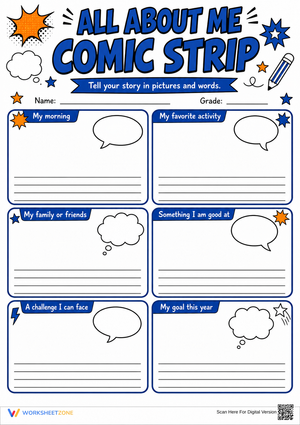
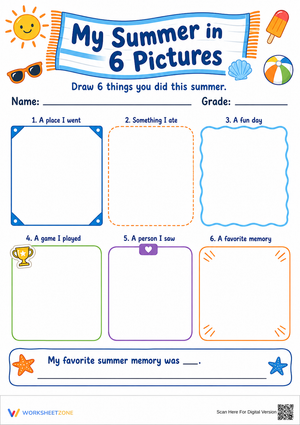
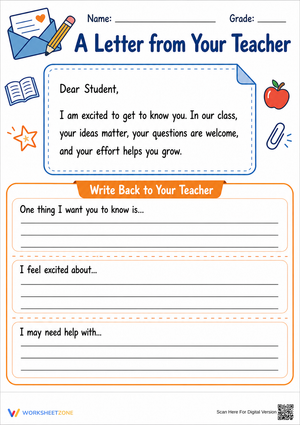
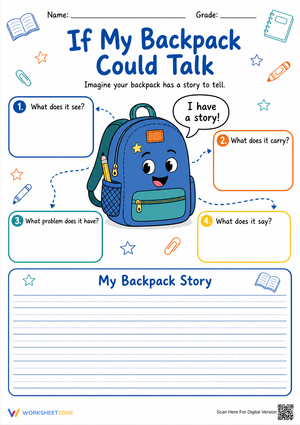
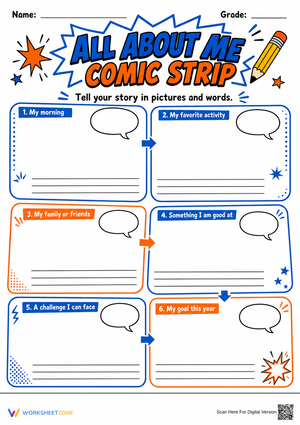
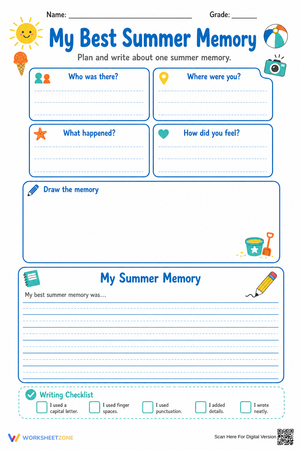
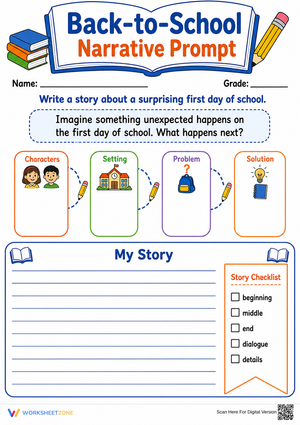
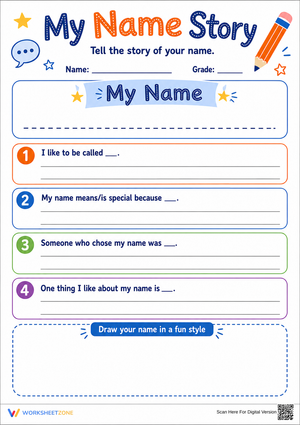
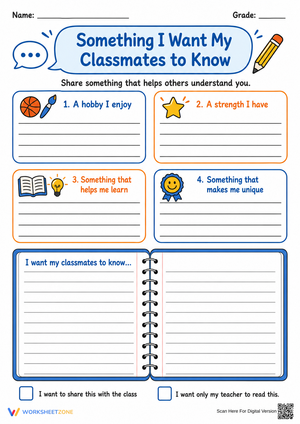
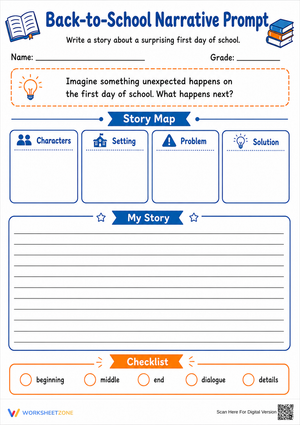
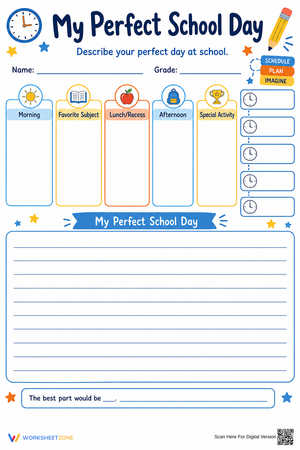
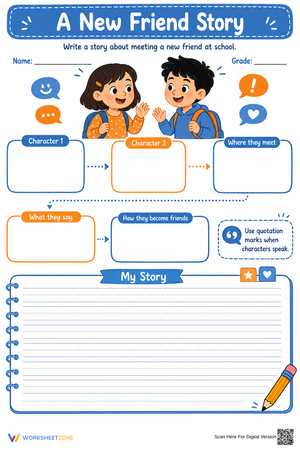
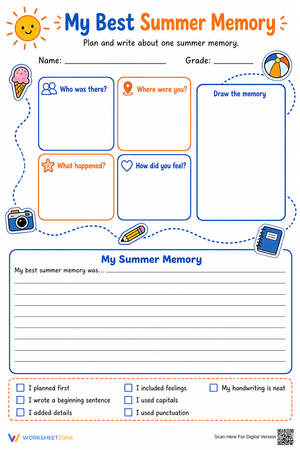
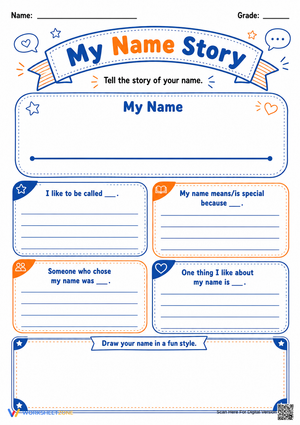
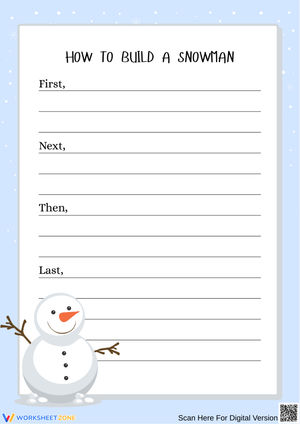
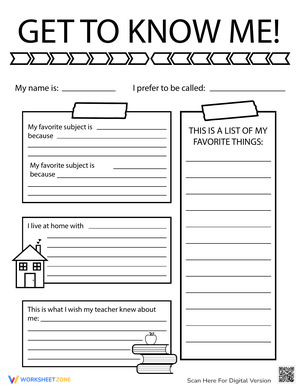
These 4th grade narrative writing printable worksheets give teachers a focused set of standalone resources that move students through story construction from first idea to polished draft. The set covers prewriting, drafting, revising, and editing — not as abstract phases, but as activities with specific, tangible goals at each step. Fourth graders are at the developmental moment when recounting "what happened" stops being enough, and these resources push them toward the craft decisions that separate a sequence of events from an actual story.
The Narrative Craft Skills These Worksheets Build
Each worksheet isolates a distinct element of narrative writing rather than asking students to manage everything at once. That separation matters at this grade level — students who try to develop a character, punctuate dialogue, and sequence events simultaneously tend to handle all three poorly. Keeping the skills separate in early practice produces stronger integration when students write independently.
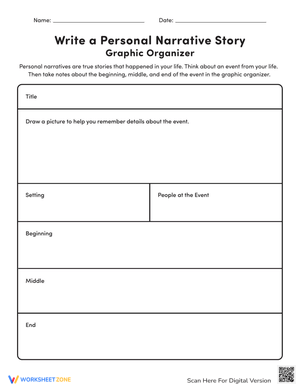
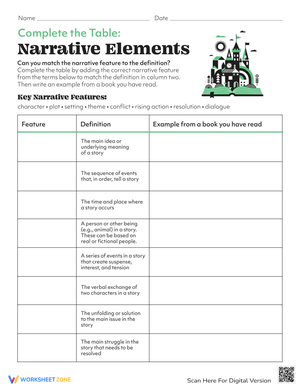
- Story structure and event sequencing — plot arc organizers that require students to name the central problem and trace how it builds toward resolution, not simply list what occurred
- Character development — worksheets that push beyond physical description into action, motivation, and internal response
- Dialogue writing and punctuation — practice covering both the mechanics (comma placement inside quotation marks, paragraph breaks between speakers) and the craft (showing personality through word choice)
- Sensory and descriptive detail — structured charts that guide students from vague telling statements toward specific physical and perceptual details
- Transitional language — word bank worksheets organized around time-order, cause-and-effect, and contrast transitions
- Conclusions and reflection — prompts that require students to tie the ending back to what changed or what the narrator understood by the story's close
Standard Alignment
The set addresses CCSS ELA-Literacy.W.4.3, which requires students to write narratives developing real or imagined experiences using effective technique, descriptive details, and clear event sequences. The standard's sub-components — establishing a situation, introducing a narrator or characters, organizing a logical event sequence, using dialogue and description, and providing a conclusion — map directly onto individual worksheets. Teachers planning a multi-week unit can assign each worksheet to the corresponding instructional phase rather than treating W.4.3 as a single summative target. The revision and peer-review worksheets also support W.4.5, which addresses planning, revising, and strengthening writing, so students working through the full set are building toward both standards simultaneously.
Frequent Writing Errors Worth Watching for at This Stage
The most persistent error at this grade level is conceptual, not mechanical. Students default to telling with confidence — a student who writes "Maya was really embarrassed" believes she has described the scene. Getting her to "Maya's face went red and she kept staring at the floor" requires repeated, targeted practice. Several worksheets in the set ask students to rewrite telling sentences using physical and sensory detail before applying the skill in original writing, which is more effective than defining "show, don't tell" and immediately asking students to apply it cold.
Dialogue punctuation produces its own consistent pattern. Fourth graders reliably place the comma outside the closing quotation mark — "I have no idea where it went", she said — or drop the comma before a dialogue tag entirely: "Let's go" Marcus said. The dialogue worksheets address both errors through mentor sentence examples followed by a rewrite task, so students first identify the error in a provided sentence, then apply the correction rule in a passage of their own.
A third pattern worth watching: students who complete a detailed story map and then draft something entirely different. The organizer sits beside them, but the draft follows its own path. A mid-draft pause — asking students to annotate their draft against the story map for just two or three minutes — closes that gap more reliably than re-explaining the organizer before they start writing.
Working These Worksheets Into Your Writing Block
The most effective sequence follows a gradual release model: teacher models the skill using a shared class story, students practice on the worksheet during a focused mini-lesson, then apply the same technique in their own draft. That arc does not require a full writing period each time. Several worksheets are short enough for a 10–12 minute warm-up — the sensory detail chart works particularly well as a Monday opener before students return to whatever draft they were developing the previous week.
For full units, a reliable structure assigns prewriting and character development worksheets first, then moves into drafting with the event sequencing and transitional language tools available as reference. Dialogue practice fits naturally during the drafting phase when students are actively building scenes. Revision worksheets and peer-review checklists belong at the end of drafting — handing them out before students have a working draft gives them nothing to apply the checklist to. The 4th grade narrative writing printable worksheets in this set are sequenced to support that unit arc, but each worksheet also functions independently for teachers who need to address a specific skill mid-unit without starting over from the beginning.
Adjusting the Set for a Range of Writers in Your Room
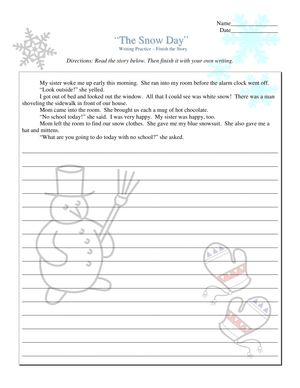
Students who freeze at open prompts need a different entry point than students who write fluently but loosely. For struggling writers, the scenario-based prompt cards and sentence starters in the set lower the barrier enough to get words on the page — though teachers should know that some of these students will fill in the organizer neatly and then draft something entirely different. That disconnect is worth addressing directly rather than assuming the organizer transferred automatically.
4th grade narrative writing printable worksheets serve advanced writers best when the task shifts from completing the organizer to critiquing it — ask them to draft a second version using a non-linear structure, or rewrite a mentor sentence from three different narrative perspectives. Students who already sequence events logically need the challenge to be rooted in technique, not organization.
For English learners and students who need additional language support, the dialogue worksheets offer a natural bridge between conversational speech and written form. Having students act out a scene before writing it — a brief oral rehearsal — reduces the translation burden significantly and often produces more authentic-sounding dialogue than straight writing does, for all students, not just those learning English.
Frequently Asked Questions
What does a strong Grade 4 narrative need to include?
A proficient narrative at this level includes an introduced narrator or characters, a clearly established situation, and a logical sequence of events that builds through the story. Students also need to use dialogue and descriptive detail to develop scenes, transitional language to manage the passage of time, and a conclusion that follows from the events rather than simply stopping. Those elements directly reflect the expectations outlined in CCSS W.4.3.
How do I help students who can't get started?
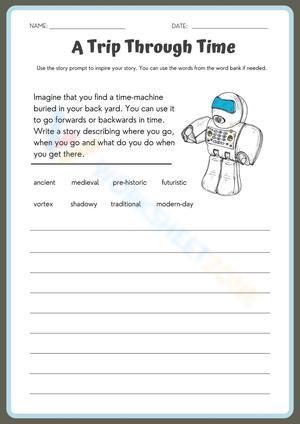
Blank-page paralysis is common at this age and responds differently to different tools. For most students, a scenario-based prompt with a visual cue breaks the freeze better than a generic "write a story about anything." Story starters that establish a situation but leave the outcome open — "You find an old key in your grandmother's attic" — give students just enough structure to take the first step without dictating the whole narrative. The prewriting organizers in the set work best when teachers model completing one aloud before students work independently.
Which worksheets work best as formative assessments?
The character development and sensory detail worksheets offer the clearest window into where individual students are in the showing-versus-telling progression. A quick scan of those two worksheets tells you which students are still relying on adjectives alone and which are reaching for action and internal response. The peer-review checklist, when students complete it for a classmate, also functions as a formative check — what a student marks as missing in someone else's writing often reveals exactly what they are not yet doing in their own.
Do these worksheets work for both personal narratives and fictional storytelling?
The structural skills these worksheets target apply equally to both forms. Story arc organizers, character development prompts, and transition word practice work whether a student is writing about a real event or an invented one. The main adjustment for personal narrative is in the dialogue worksheets: students recalling actual conversations need guidance on reconstructing spoken language rather than transcribing it word for word, which can feel impossible for a memory-based piece. A brief class discussion of that distinction before the worksheet removes most of the confusion. Among the 4th grade narrative writing printable worksheets in the set, the sensory detail charts are the most form-neutral and transfer directly between personal and fictional work.












 Interactive Worksheet Maker
 Quiz Maker
 Word Search Maker
 Crossword Puzzle Maker
 Word Scramble Generator
 Sentence Scramble Generator
 Handwriting Worksheet Generator
 Name Tracing Generator
 Fill In The Blank Generator




 BACK TOSCHOOL