


























Views
Downloads
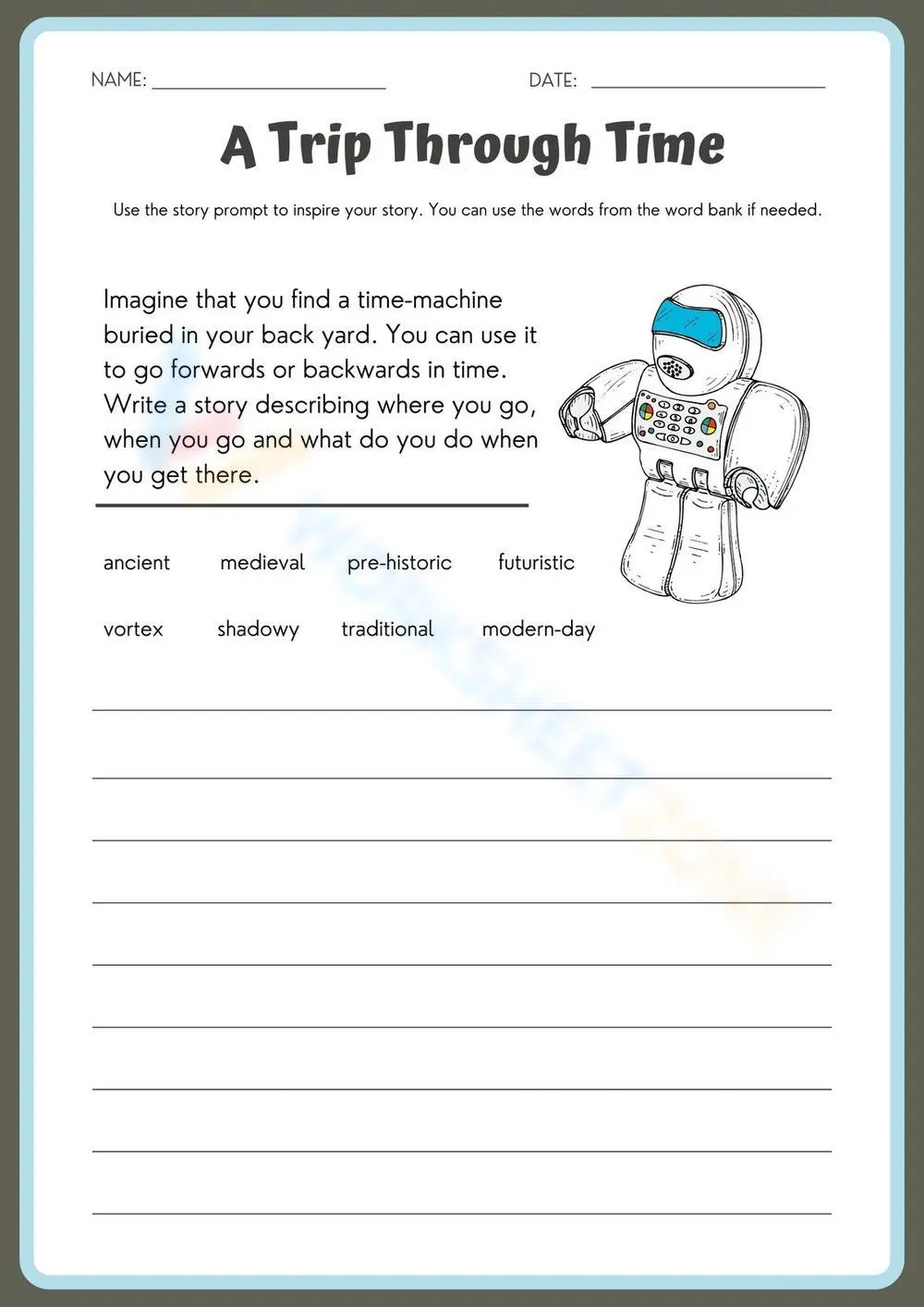

Grade 4 Narrative Writing — Printable No-Prep Worksheet
Paste this activity's link or code into your existing LMS (Google Classroom, Canvas, Teams, Schoology, Moodle, etc.).
Students can open and work on the activity right away, with no student login required.
You'll still be able to track student progress and results from your teacher account.
This Grade 4 creative writing worksheet prompts students to draft an imaginative narrative about discovering a time machine. By providing a structured scenario and a targeted vocabulary word bank, the activity helps young writers organize their thoughts, develop clear event sequences, and practice using descriptive details in their storytelling.
At a Glance
- Grade: 4 · Subject: ELA
- Standard:
CCSS.ELA-LITERACY.W.4.3— Write narratives to develop imagined experiences or events- Skill Focus: Narrative Writing
- Format: 1 page · 1 prompt · No answer key · PDF
- Best For: Independent writing practice
- Time: 25–35 minutes
This single-page resource features a highly engaging "Trip Through Time" writing prompt alongside an eight-word vocabulary bank. Students are asked to imagine finding a time machine in their backyard and must describe their destination, the era they visit, and their actions upon arrival. The included word bank offers descriptive terms like "futuristic," "medieval," and "vortex" to encourage stronger vocabulary choices. Ample lined space is provided directly on the page for students to draft their stories.
Zero-Prep Workflow
- Print (1 minute): Generate the PDF and print a class set. No special formatting or double-sided printing is required.
- Distribute (1 minute): Hand out the prompt during your designated writing block or place it in a literacy center.
- Review (0 minutes): The instructions are completely self-explanatory, requiring zero teacher setup or direct instruction before students begin.
With a total teacher prep time of under two minutes, this activity is an excellent addition to any emergency sub plan or independent work folder.
Standards Alignment
This activity aligns with CCSS.ELA-LITERACY.W.4.3: Write narratives to develop real or imagined experiences or events using effective technique, descriptive details, and clear event sequences. It also supports vocabulary acquisition by encouraging students to integrate specific word bank terms into their writing. Both standard codes can be copied directly into lesson plans, IEP goals, or district curriculum mapping tools.
How to Use It
Deploy this worksheet during independent writing time after a mini-lesson on narrative structure or descriptive language. It serves as an excellent formative assessment tool; teachers can observe whether students successfully establish a setting and sequence events logically. Alternatively, use it as a morning work activity to get students focused and writing immediately. Expected completion time ranges from 25 to 35 minutes depending on the student's writing stamina.
Who It's For
This resource is designed for fourth-grade students developing their narrative writing skills. The built-in word bank provides natural differentiation for students who struggle with vocabulary generation, offering them a concrete starting point for their descriptions. It pairs exceptionally well with a mentor text about time travel or a direct instruction lesson on using sensory details to establish a setting.
Developing strong narrative writing skills requires consistent practice with engaging, structured prompts. According to Fisher & Frey (2014), providing students with targeted scaffolds, such as vocabulary word banks, significantly reduces cognitive load and allows learners to focus on complex tasks like event sequencing and descriptive elaboration. This resource directly supports CCSS.ELA-LITERACY.W.4.3 by challenging students to write narratives to develop imagined experiences or events. When students are given a compelling scenario—like discovering a time machine—alongside specific vocabulary tools, they are more likely to produce detailed, coherent stories. Regular engagement with structured prompts builds writing stamina and fosters creative thinking. By integrating these targeted writing exercises into the weekly curriculum, educators can effectively monitor student progress in narrative development and vocabulary application, ensuring foundational literacy skills are firmly established before transitioning to more advanced compositional demands.


