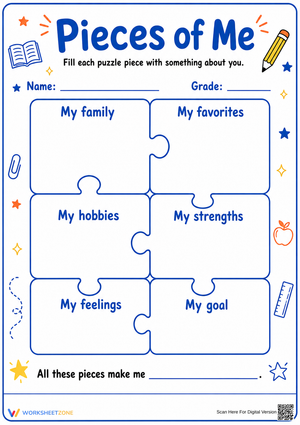
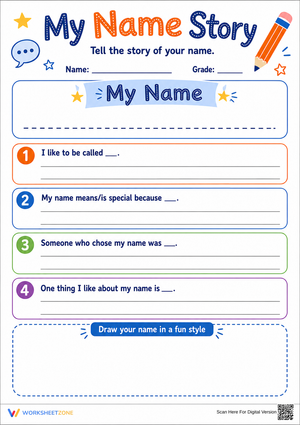
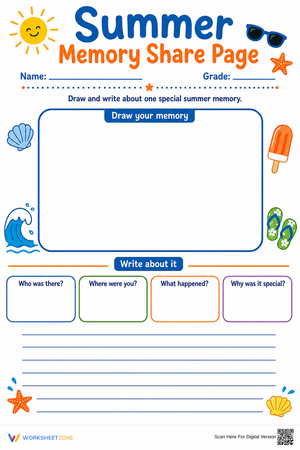
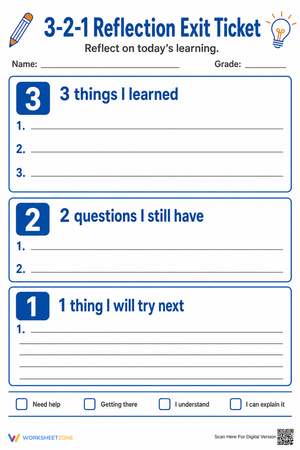
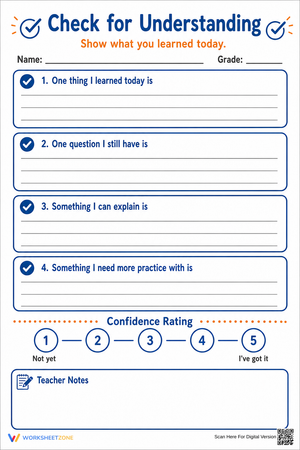
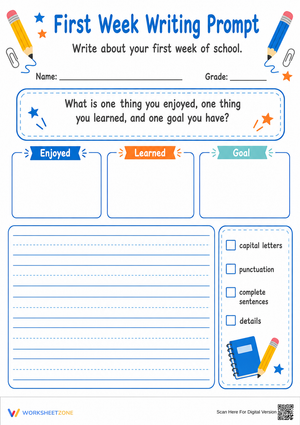
These nonfiction writing pdf worksheets for 4th grade arrive at a critical instructional pivot — the grade where Common Core formally asks students to move beyond recounting events toward explaining topics clearly for a reader who has no prior knowledge of the subject. That shift is harder than it looks. Narrowing a topic, sorting facts into coherent groups, signaling transitions that do real logical work, and writing a conclusion that doesn't just repeat the opening sentence — these are habits that require explicit instruction and deliberate, repeated practice.
The Writing Moves Each Worksheet Targets
Each worksheet focuses on one distinct stage of the informative writing process. Keeping the work stage-specific holds cognitive load in check — students practicing note-taking aren't simultaneously wrestling with paragraph structure.
- Topic selection and narrowing: Students identify a subject and bring it into focus, avoiding the sprawling "all about penguins" approach that leads to thin, underdeveloped drafts.
- Note-taking from informational text: Students record relevant facts from a source using prompts that push paraphrasing rather than word-for-word copying.
- Main idea and detail organizers: Students group gathered facts under controlling ideas before drafting begins, so each paragraph has a clear direction from the start.
- Drafting pages with labeled sections: Separate writing spaces for introduction, body paragraphs, and conclusion prevent students from collapsing all three into one undifferentiated block of text.
- Linking word practice in context: Students work with words like because, for example, in contrast, and as a result inside their own sentences — not as a vocabulary list to memorize and forget.
- Revision and editing checklists: Students review drafts against the specific criteria in W.4.2, making revision a routine procedural check rather than a vague direction to "fix it."
Mistakes Students Make That These Worksheets Help You Catch
The most predictable problem in fourth-grade informative writing is the topic-dump introduction. Students write: "My report is about sea turtles. Sea turtles are interesting animals. I am going to tell you about sea turtles." Three sentences, no information conveyed, no reader orientation. They've followed the instruction to introduce the topic — technically — but they haven't told the reader anything worth knowing. Introduction worksheets that model what a strong opening actually does (establishes the topic clearly, signals why it matters, hints at the subtopics ahead) give students a concrete reference before drafting, not after.
The copy-and-paste conclusion is equally consistent. Many students reproduce their first two sentences at the end and consider the writing finished. They haven't grasped that a conclusion's job is to close the discussion, not restart it. A worksheet that places two contrasting endings side by side — one that mirrors the introduction and one that synthesizes the key points — lets students annotate the difference before writing their own.
Transition poverty is the third pattern worth addressing directly. "Also" and "and then" carry nearly all the logical connective work in most fourth-grade drafts. The solution isn't a printed list of alternatives posted on the classroom wall — it's asking students to choose between specific linking words in context so they develop genuine judgment about what each one signals. A worksheet where students read a pair of sentences and select among therefore, however, and in addition builds that judgment faster than passive exposure to a word list.
Building These Worksheets Into Your Writing Block
The modular design is what makes nonfiction writing pdf worksheets for 4th grade so practical for daily instruction. Teachers don't need to assign the full set at once. A Wednesday mini-lesson on grouping related information works better when students fill out the main-idea organizer during the lesson itself rather than as follow-up homework. That in-the-moment work produces a filled-in organizer students can actually consult when they draft later in the week — and it gives the teacher a real-time window into who understands the skill and who is guessing.
For literacy centers, pairing a prompt card with a planning organizer and a revision checklist creates a self-contained writing station students can work through without continuous redirection. Small-group reteaching sessions benefit from a focused single worksheet — three students working through a note-taking page together is a concrete, targeted conversation rather than a re-explanation of the whole writing process. And for sub days, a complete worksheet sequence tied to a science or social studies topic the class is already studying keeps writing practice purposeful rather than filler.
Standard Alignment
These worksheets align to CCSS.ELA-LITERACY.W.4.2, the informative and explanatory writing standard for Grade 4. The substandards map directly to the stages of the writing process: W.4.2a addresses introducing a topic clearly; W.4.2b covers developing the topic with facts, definitions, and concrete details; W.4.2c focuses on linking words and phrases; W.4.2d requires precise language and domain-specific vocabulary; W.4.2e calls for a concluding statement or section. Each worksheet in the set targets one or more of these substandards. Teachers using a writing workshop model or a structured daily writing block will find the worksheets slot naturally into guided practice before students move to independent drafting — exactly the instructional moment where W.4.2 demands the most targeted support.
Adjusting the Set for Writers at Different Stages
The nonfiction writing pdf worksheets for 4th grade in a well-designed set build flexibility into the task itself rather than requiring teachers to create entirely separate materials for different ability levels. Students who freeze at a blank page benefit from worksheets that include sentence frames within the drafting space — structures like "One important fact about [topic] is..." or "This is significant because..." The frame removes the blank-page paralysis without reducing the thinking required; the student still selects the fact and explains its relevance, the frame only provides the grammatical launch point.
Students writing above grade level need a different kind of challenge. An optional extension prompt — "Write a second body paragraph that addresses a related question your reader might ask" — keeps them pushing elaboration and academic reasoning without requiring a separate worksheet. The honest caveat here: these adjustments only work if the teacher previews the materials and assigns selectively. Handing every student the sentence-framed version when half the class doesn't need it wastes instructional time and frustrates stronger writers who correctly sense they're being asked to do less demanding work than they're capable of.
Frequently Asked Questions
Do these worksheets work for cross-curricular writing in science or social studies?
Yes. The planning organizers, note-taking sheets, and drafting pages are content-neutral — students supply the subject matter from whatever informational texts the class is reading. A unit on ecosystems or colonial settlements works just as well as a general writing topic. Pairing these resources with content-area reading also solves a separate problem: students who know how to fill out a graphic organizer but struggle to generate facts because they haven't read enough on the subject.
How many worksheets does a complete informative writing unit typically use?
A focused unit uses four to six: topic selection, note-taking, main-idea organizing, drafting, revision checklist, and editing checklist. Teachers who use nonfiction writing pdf worksheets for 4th grade across the school year often build sequences from a larger set, pulling only the worksheets that match what their students need at a given point rather than assigning everything every time.
What layout features matter when evaluating a worksheet set?
Clear section labels, enough writing space for actual sentences rather than just phrases, and directions concise enough for students to read independently. Worksheets that require teacher translation before students can start waste the first five minutes of every writing session. The most functional designs are explicit enough that a student can understand the task from the worksheet alone — which matters especially during independent work time and on the days when a substitute is managing the room.












 Interactive Worksheet Maker
 Quiz Maker
 Word Search Maker
 Crossword Puzzle Maker
 Word Scramble Generator
 Sentence Scramble Generator
 Handwriting Worksheet Generator
 Name Tracing Generator
 Fill In The Blank Generator




 BACK TOSCHOOL