


























Views
Downloads

Grade 3 Perfect School Day — Printable No-Prep Worksheet
Paste this activity's link or code into your existing LMS (Google Classroom, Canvas, Teams, Schoology, Moodle, etc.).
Students can open and work on the activity right away, with no student login required.
You'll still be able to track student progress and results from your teacher account.
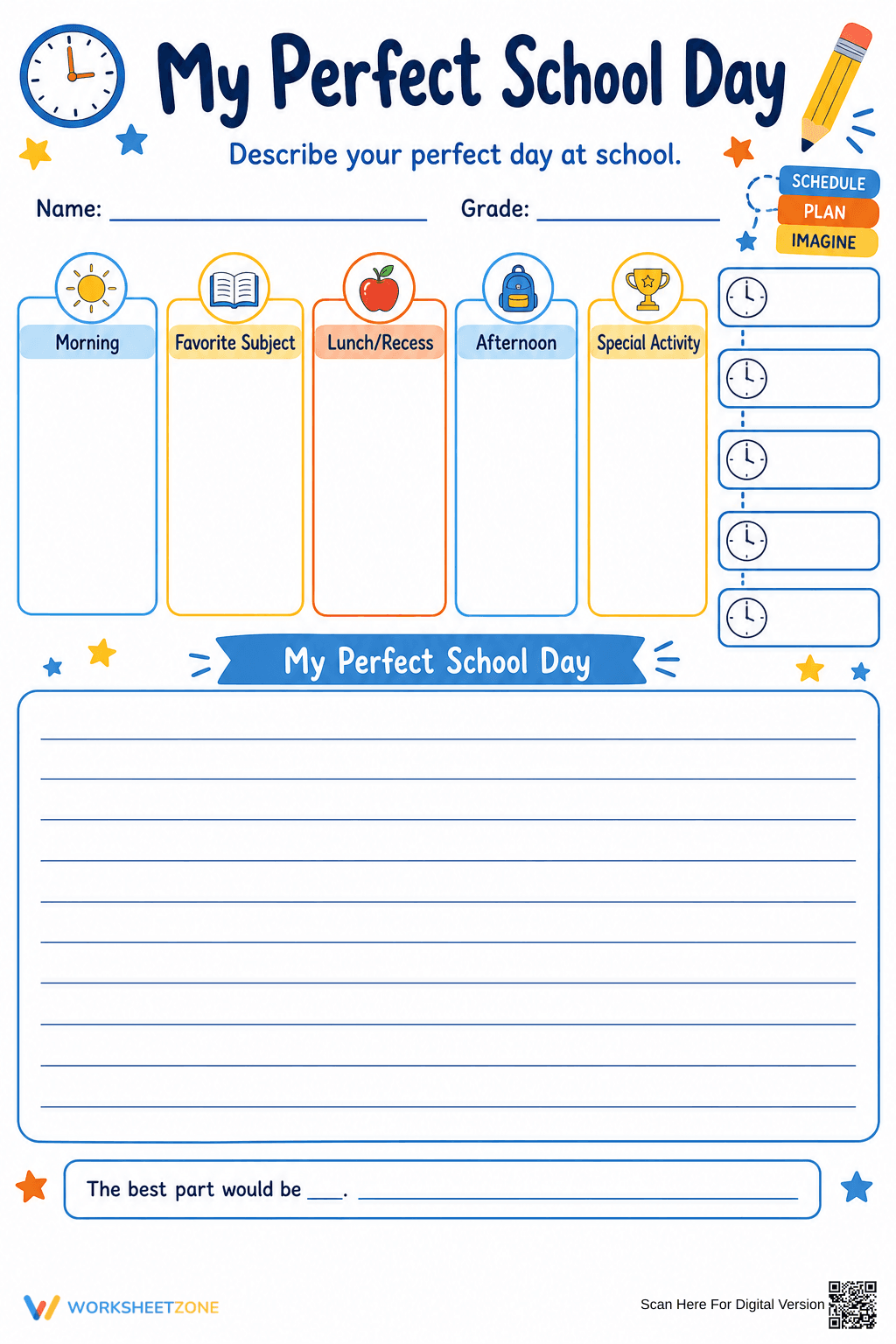
This Grade 3 narrative writing worksheet gives students a structured framework to plan and draft a descriptive story about their ideal day. By breaking the writing process into manageable planning steps, students can organize their thoughts chronologically before composing a complete narrative paragraph.
At a Glance
- Grade: 3 · Subject: ELA
- Standard:
CCSS.ELA-LITERACY.W.3.3— Write narratives with clear event sequences- Skill Focus: Narrative Writing and Planning
- Format: 1 page · 3 tasks · No answer key · PDF
- Best For: Independent writing practice
- Time: 25–35 minutes
Inside this single-page resource, teachers will find a comprehensive writing prompt that guides students from brainstorming to final execution. The top section features five distinct planning boxes for morning, favorite subject, lunch, afternoon, and a special activity, alongside a blank schedule strip for time management practice. The bottom half provides ample lined space for the final narrative draft, concluding with a targeted sentence starter to summarize their favorite part of the day.
This resource is designed for immediate classroom implementation with absolutely zero teacher preparation required.
- Print (1 minute): Simply download the PDF and print a class set. The black-and-white friendly design ensures crisp copies.
- Distribute (1 minute): Hand out the sheets during your designated writing block or morning work period.
- Review (3 minutes): Briefly read the instructions aloud and let students begin. Total teacher prep time is under two minutes, making this an excellent addition to any emergency substitute plan.
This activity is directly aligned with CCSS.ELA-LITERACY.W.3.3, requiring students to write narratives to develop real or imagined experiences or events using effective technique, descriptive details, and clear event sequences. It also supports foundational brainstorming and organizational skills necessary for effective communication. Both standard codes can be copied directly into lesson plans, IEP goals, or district curriculum mapping tools.
Teachers can utilize this worksheet as a standalone creative writing assignment during a dedicated ELA block or as an engaging morning work activity to start the week. It works exceptionally well after direct instruction on chronological sequencing and transition words. As students work through the 25 to 35-minute activity, teachers can use the planning boxes for formative assessment, checking that students are organizing their ideas logically before they begin drafting the main narrative.
This resource is primarily designed for third-grade students, though it can easily be adapted for second or fourth graders needing structured writing support. The visual planning boxes provide excellent scaffolding for English Language Learners and students who struggle with executive functioning or organizing their thoughts. It pairs perfectly with an anchor chart on transition words or a mini-lesson on adding descriptive adjectives to narrative writing.
Effective writing instruction requires explicit teaching of the planning and organization phases before students begin drafting. By aligning with CCSS.ELA-LITERACY.W.3.3 to write narratives with clear event sequences, this worksheet provides the necessary cognitive scaffolding for young writers. According to Fisher & Frey (2014), providing students with structured graphic organizers and clear sequential frameworks significantly reduces cognitive load, allowing them to focus on descriptive language and sentence variety rather than simply figuring out what to say next. The integration of visual planning boxes directly supports this research, ensuring that students can map out their ideas chronologically. This structured approach not only improves the quality of the final written product but also builds long-term confidence in students' ability to tackle complex writing tasks independently across various subjects.


