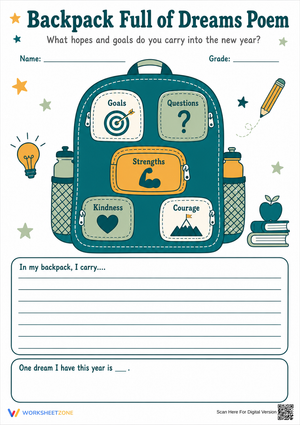
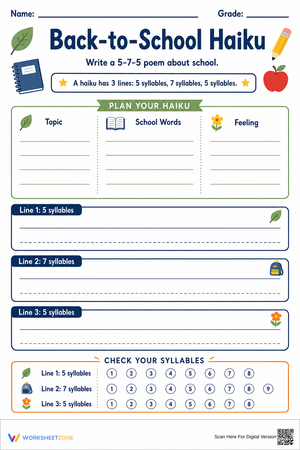
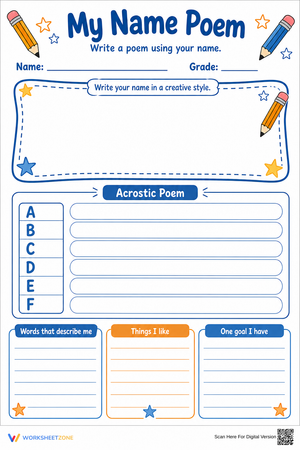
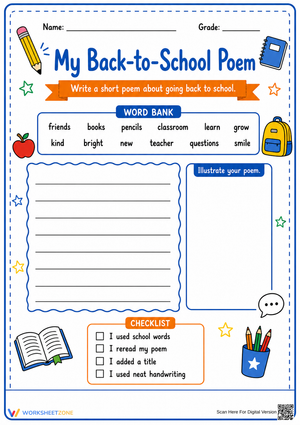
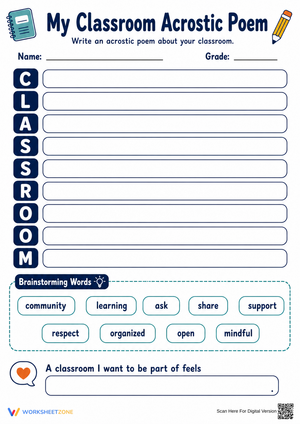
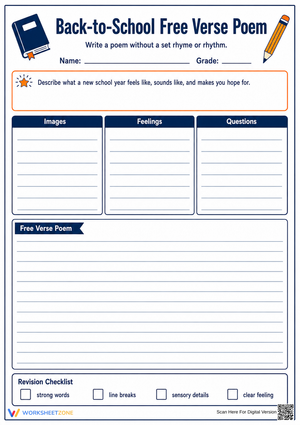
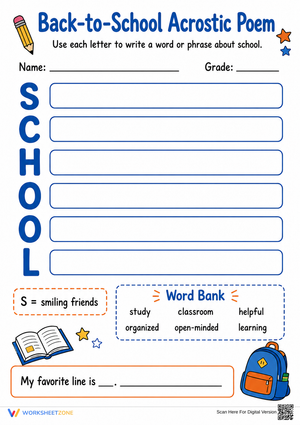
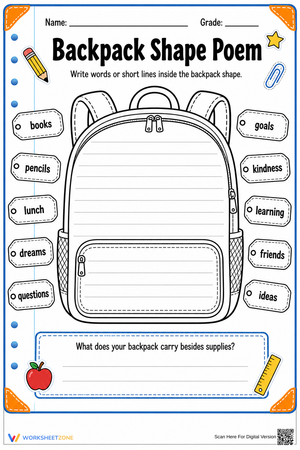
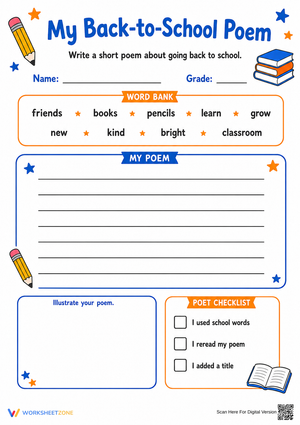
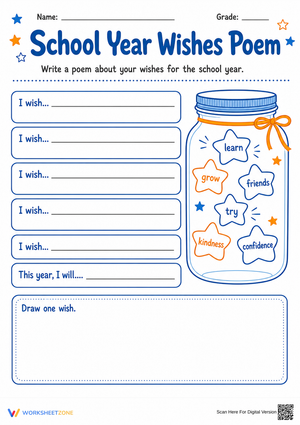
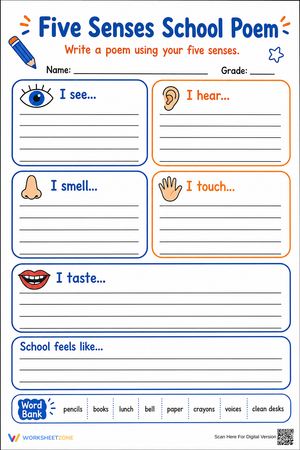
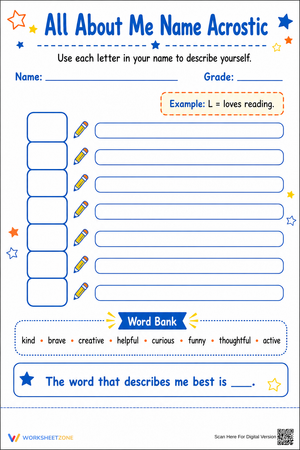
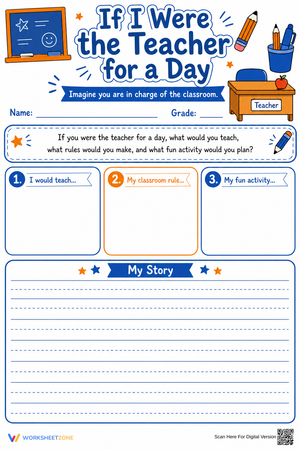
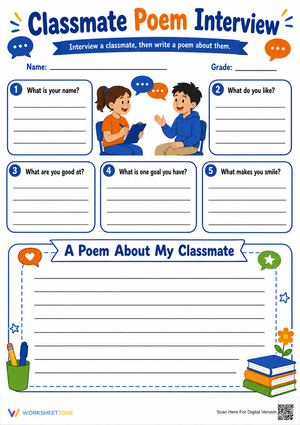
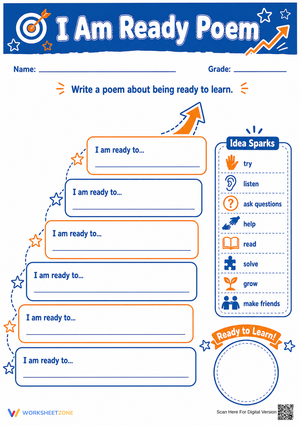
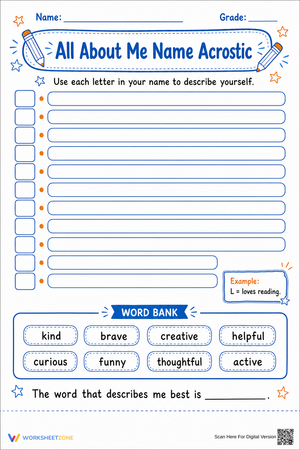
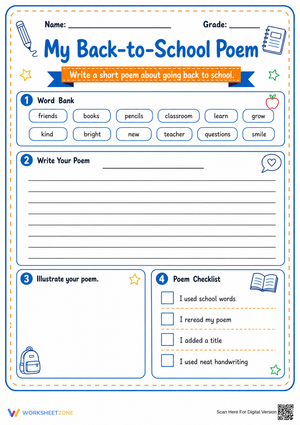
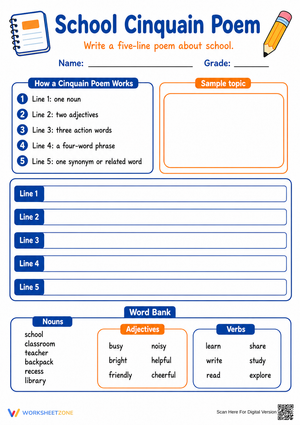
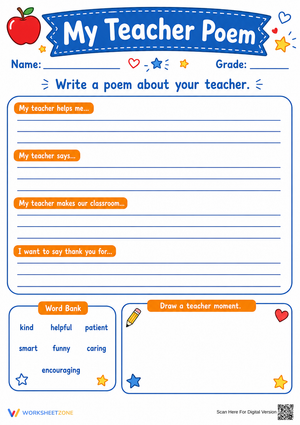
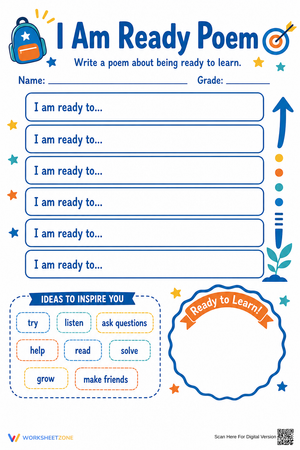
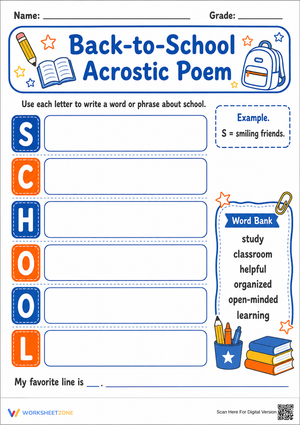
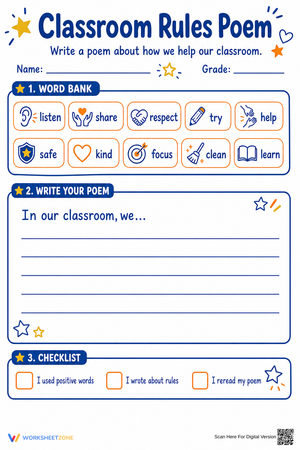
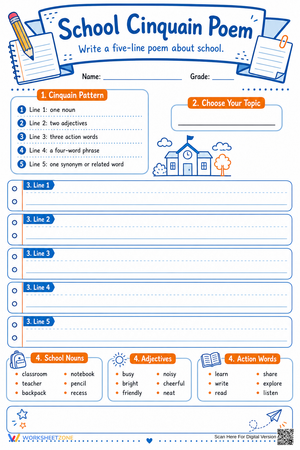
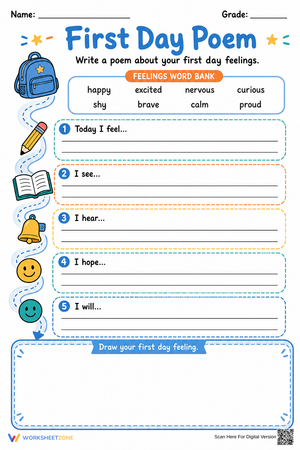
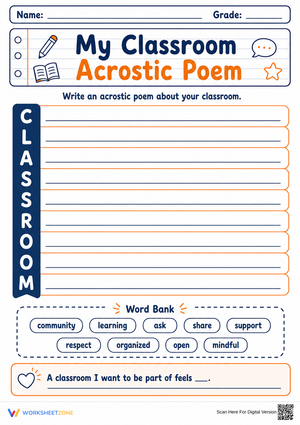
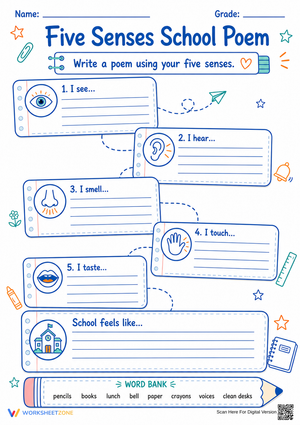
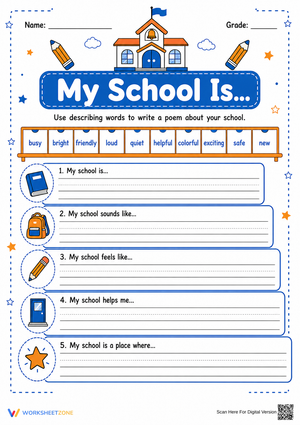
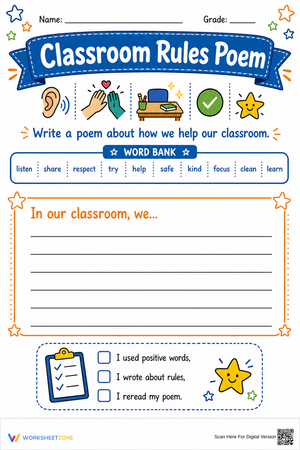
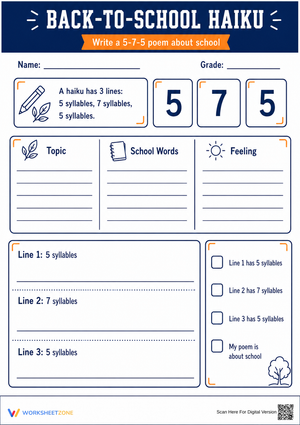
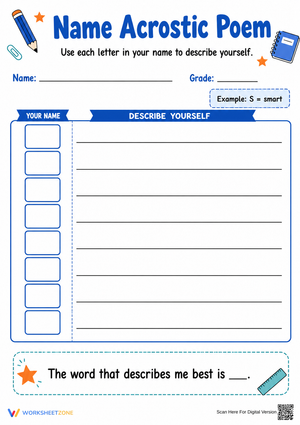
These 4th grade fiction writing worksheets address the most consistent breakdown in Grade 4 narrative writing: students who have a solid story idea but no structure for sustaining it past the opening paragraph. Each worksheet targets one part of the process — generating ideas, planning characters and setting, organizing events, drafting, revising for detail, or editing mechanics — so teachers can build a focused block around a single writing move instead of handing students a blank page and watching them stall.
Skills Built Across the Set
The resources cover the full arc of narrative writing, from initial idea generation through final revision. Each worksheet isolates one instructional move, which makes it straightforward to drop a single resource into a writing workshop mini-lesson follow-up, a literacy center, or a homework assignment without reteaching the entire unit.
- Story maps that ask students to name the character, setting, problem, key events, and resolution before drafting begins
- Character development worksheets that push beyond physical description into motivation — what does this character want, and what is standing in the way?
- Beginning-middle-end organizers with space to sequence events in order
- Dialogue practice worksheets focused on using conversation to reveal character feeling or move the plot forward, not just fill lines
- Revision checklists targeting descriptive detail, event order, and stronger endings
- Editing worksheets for capitalization, punctuation, sentence completeness, and paragraph breaks
Mistakes Students Make That These Worksheets Help You Catch
The error pattern that appears most reliably in Grade 4 fiction is the premature ending. A student will plan a character and a problem, write a solid opening, and then resolve everything in two sentences — "and then they fixed it and everything was fine." This almost always means the student ran out of planned events, not ideas. When teachers require a completed story map before students open the drafting worksheet, that kind of collapsed ending drops noticeably. The plan forces students to commit to at least three meaningful events between the problem and the resolution.
Dialogue is the other consistent trouble spot. Most 4th graders write dialogue that reports information rather than reveals anything: "I am nervous," said Emma. "Me too," said her friend. What students need — and what a focused dialogue worksheet prompts — is practice connecting what a character says to what that character wants or fears. A question built into the worksheet, such as "What does this line of dialogue tell us about how the character feels right now?" moves students toward dialogue that does real narrative work instead of simply taking up lines.
Building These Worksheets Into Your Weekly Writing Plan
The most productive classroom sequence treats each worksheet as one step in a multi-day writing cycle. A five-day structure works well: Monday, students complete the character and setting worksheet; Tuesday, the story map and event sequence; Wednesday, the opening draft; Thursday, a dialogue or sensory detail worksheet tied to a specific scene; Friday, self-editing with a targeted checklist. By the time students reach the drafting worksheet, the planning work is already done — which shortens conferences considerably because teachers aren't rebuilding story structure from scratch with each student.
When teachers build a fiction unit using 4th grade fiction writing worksheets, it pays to save the drafting worksheet until after students have a completed organizer in hand. In many Grade 4 classrooms, weaker stories don't come from a lack of imagination — they come from students starting to write before they know the resolution. Requiring the plan first reduces off-topic drafting and turns the writing conference into a discussion about craft rather than a recovery effort.
The worksheets also fit small-group instruction well. Pulling four or five students who share a specific gap — weak event sequencing, flat endings, or missing transitions — and working through a worksheet together lets teachers address that skill without a whole-class reteach. Individual worksheets fit the 10 minutes before a read-aloud, Monday morning warm-up time after morning meeting, or the end-of-week review block, depending on where the writing unit currently sits.
Adjusting the Set for a Range of Learners
Reluctant writers do best with worksheets that narrow the decision space: a specific scenario, a short word bank, and planning boxes with clear labels. When the worksheet tells a student "your character needs something, and someone is blocking them," the task feels far less threatening than a blank page and an open prompt.
For students already producing multi-paragraph narratives with some control, the more open-ended resources — blank story maps, open drafting worksheets — give them room to work without feeling like they're filling out a form. A few targeted adjustments for advanced writers:
- Challenge them to vary sentence openings during the revision stage rather than simply adding more detail
- Ask them to write two different endings and evaluate which one resolves the original problem more completely
- Use the dialogue worksheet to push beyond functional lines into subtext — what does a character not say, and what does that reveal about them?
One honest limitation: students who already have a strong, fully mapped story in mind sometimes find the planning boxes constraining. For those writers, allow the organizer to be completed after a rough draft, using it as a structure check rather than a starting point.
Standard Alignment
These 4th grade fiction writing worksheets align directly to CCSS.ELA-LITERACY.W.4.3, which asks fourth graders to write narratives that develop real or imagined experiences using effective technique, descriptive details, and clear event sequences. The standard breaks into subcomponents — orientation (W.4.3a), dialogue and description (W.4.3b), transitional words and phrases (W.4.3c), and conclusions (W.4.3e) — and each worksheet in the set targets at least one of those subcomponents explicitly. That specificity makes it straightforward to connect individual practice tasks to unit planning guides or standards-based grading documentation without having to retrofit the alignment after the fact.
Frequently Asked Questions
Do students need to complete the worksheets in a specific sequence?
Planning resources work best before drafting ones. Students who skip the story map and go straight to the drafting worksheet tend to produce shorter, less structured writing. The planning-then-drafting sequence gives students a reference point to return to when they stall mid-story, and it gives teachers something concrete to discuss during conferences instead of starting over from the idea stage.
How long does a typical worksheet take during class?
Most worksheets fit a 15-to-20-minute focused work block for 4th graders working independently. Planning and organizer worksheets tend to move faster. Drafting worksheets naturally vary based on student pace — some teachers use them across two sessions, treating the first pass as a rough draft and returning the next day for revision.
Can these be used alongside a published writing curriculum?
Yes. Because each worksheet targets a specific skill — character development, event sequence, dialogue, or revision — the resources fit inside most published writing units without conflicting with the existing sequence. Teachers often pull individual worksheets to give additional practice on skills their core curriculum covers too quickly for students who need more time. The full set of 4th grade fiction writing worksheets works equally well as a standalone unit or as supplemental material inside a larger program.
Are these worksheets useful for assessment purposes?
Story maps and revision checklists give teachers clear evidence of student planning and self-monitoring, making them useful as formative data during a writing unit. The drafting worksheets show narrative development over time when collected at the start and end of a unit. They are not summative assessments, but teachers routinely use them to inform writing conferences and to identify which students need small-group support.












 Interactive Worksheet Maker
 Quiz Maker
 Word Search Maker
 Crossword Puzzle Maker
 Word Scramble Generator
 Sentence Scramble Generator
 Handwriting Worksheet Generator
 Name Tracing Generator
 Fill In The Blank Generator




 BACK TOSCHOOL