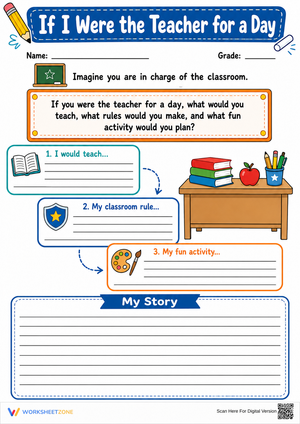
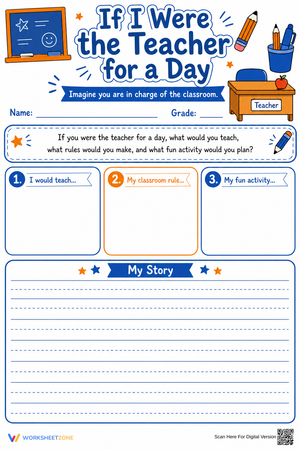
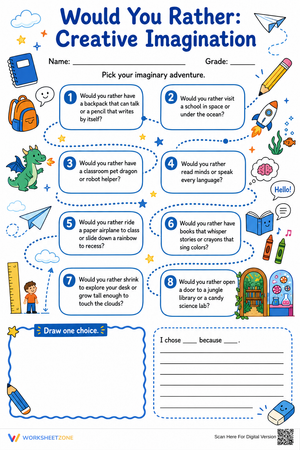
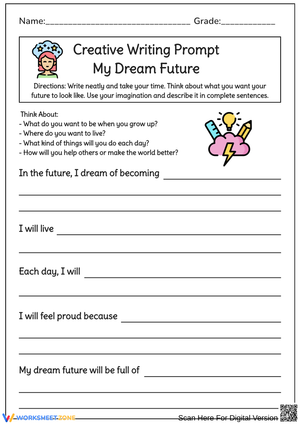
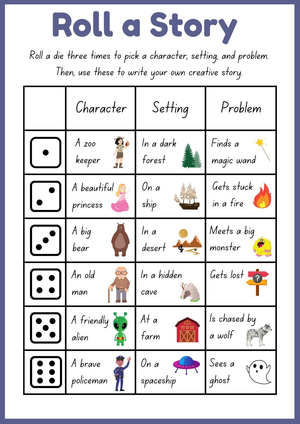
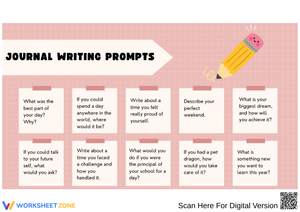
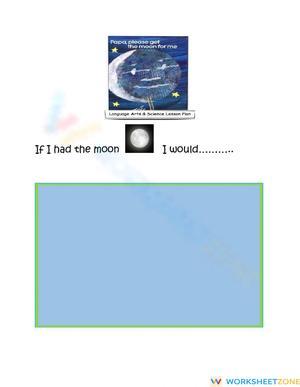
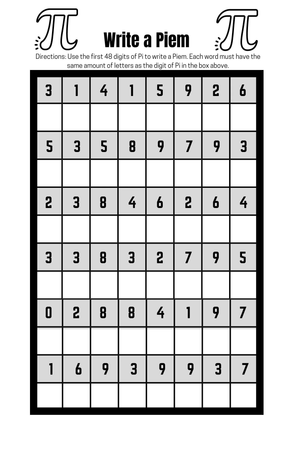
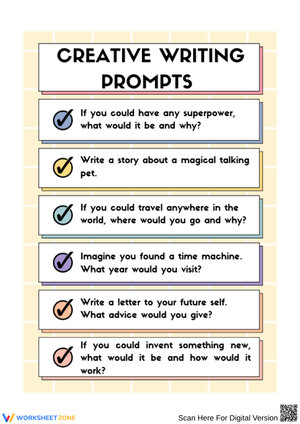
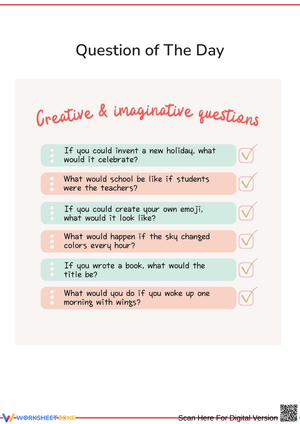
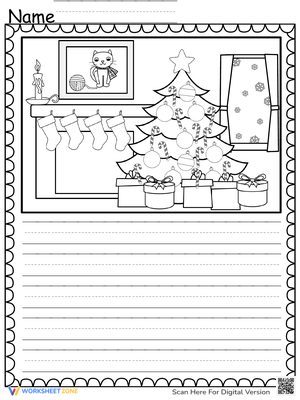
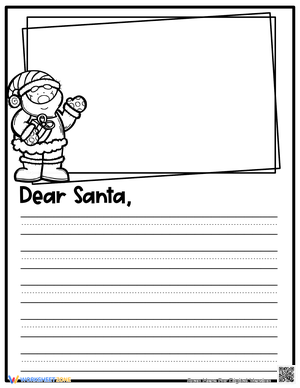
These 4th grade creative writing pdf worksheets give teachers a set of standalone, targeted exercises built around the specific narrative demands of the fourth-grade ELA curriculum. Each worksheet addresses one storytelling skill — character motivation, plot sequencing, sensory language, or dialogue mechanics — so teachers can assign the right practice at the right moment rather than working through a generic writing unit from beginning to end. The set is built around a real classroom reality: fourth graders understand story structure conceptually long before they can apply it independently on the page.
The Specific Skills Each Worksheet Targets
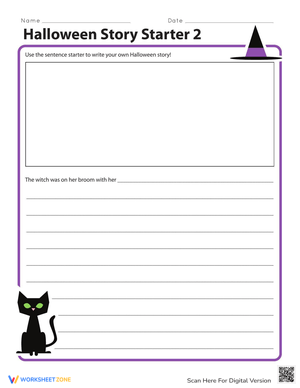
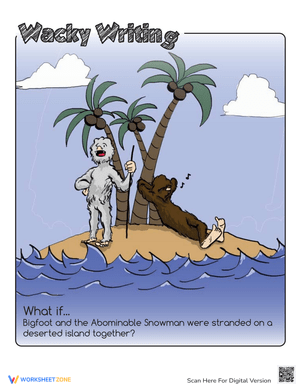
Fourth grade is the year narrative writing stops being about getting words down and starts being about shaping them into something a reader actually wants to follow. Story starters in this set remove the blank-page paralysis that stops many nine-year-olds before they begin — giving a hook so students can focus on development rather than invention from nothing.
- Character development worksheets ask students to define physical appearance, personality quirks, and internal motivation — the combination that makes a fictional person feel real rather than functional.
- Plot mountain organizers walk students through introduction, rising action, climax, falling action, and resolution with guided prompts at each stage, so students stop treating the climax as the ending.
- Sensory detail charts move students from telling to showing by prompting them to record what a character sees, hears, smells, tastes, and touches in a specific scene.
- Dialogue practice worksheets focus on punctuation and speaker tags — the mechanics that fourth graders consistently mishandle even when they write lively, natural-sounding conversation.
- Conclusion drafting exercises help students write endings that follow logically from what happened rather than stopping abruptly or resolving everything in a single flat sentence.
These skills build on each other. A student who hasn't worked through character motivation will write a climax that feels unmotivated no matter how well the plot is structured. Assigning these worksheets in sequence — character first, plot second, detail and dialogue woven in — reflects how the craft actually develops at this level.
Student Writing Patterns That Repeatedly Need Correction
The flat emotion statement is the most consistent error in fourth-grade narrative drafts. Students write "She was terrified" and consider the description complete. When pushed to show the fear, they often swap one flat statement for another: "She was really terrified." The sensory detail worksheets address this directly by presenting a telling sentence and asking students to rewrite it using physical evidence — what the body does when afraid, what the character notices around her, what she does next.
Dialogue punctuation produces its own reliable set of mistakes. Students omit the comma before the closing quotation mark — writing "I'm not going" she said instead of "I'm not going," she said — and they frequently capitalize the speaker tag as though starting a new sentence: "I'm not going," She said. A short run of focused error-correction exercises on the dialogue worksheets closes this gap faster than any standalone mini-lesson.
Plot pacing is the third area to watch. Students who can correctly label each section of a story mountain will still write narratives where rising action amounts to one sentence before the resolution arrives. The plot organizer worksheets require at least three distinct events in the rising action, which forces the pacing problem into view before the full draft is written — when it's still cheap to fix.
Lesson-Planning Ideas to Get the Most From These Worksheets
Assign the character development worksheet before students begin drafting — not during revision. When a student builds a character first, that character's choices during the plot make sense. Saving character work for revision means students are retrofitting personality onto actions already written, which produces awkward rewrites and frustration.
The sensory detail chart works well as a ten-minute warm-up before a read-aloud. After reading a vivid passage aloud, students fill in the chart for the scene the author created, then repeat the exercise for a scene from their own draft in progress. Running both through the same lens makes the comparison concrete without being discouraging.
For a tactile pre-writing activity, place a small object — a rough pinecone, a piece of velvet, a dried orange slice — in a paper bag and have students reach in without looking. They describe what they feel and smell, then use one of the 4th grade creative writing pdf worksheets to write a short scene where their character encounters that object somewhere unexpected. The physical experience gives them sensory language that comes from a real place, rather than language copied from a model text.
Standard Alignment
These worksheets address CCSS.ELA-LITERACY.W.4.3, which requires fourth graders to write narratives developing real or imagined experiences using effective technique, descriptive details, and clear event sequences. The standard breaks into five sub-standards: orienting the reader by establishing a situation and introducing a narrator or characters (W.4.3a), organizing a naturally unfolding event sequence (W.4.3b), using dialogue and description of characters' actions, thoughts, and feelings (W.4.3c), using temporal words and phrases to signal order (W.4.3d), and writing a conclusion that follows from the narrated events (W.4.3e). Each of the 4th grade creative writing pdf worksheets in this set maps to one or two of those sub-standards, which makes lesson planning straightforward — teachers looking specifically for W.4.3c practice can go directly to the dialogue and sensory description worksheets rather than sorting through unrelated material.
Adjusting the Worksheets for Writers at Different Levels
For students who struggle to generate content, the character development and plot organizer worksheets work best when sentence frames are added to the prompts. A frame like My character wants ___ but is afraid of ___ because ___ provides a structure for thinking about internal motivation without requiring the student to invent the question from scratch. Story starters with the opening two sentences already written reduce the decision load enough that reluctant writers can actually move forward.
Advanced writers tend to outgrow the plot mountain quickly. The 4th grade creative writing pdf worksheets that work best for this group are the sensory detail and dialogue exercises, which have no ceiling — there is always a more precise word, a more specific sensory observation, a more natural-sounding exchange to reach for. Open-ended prompts that ask for a scene written from two characters' perspectives in sequence, or a story where the narrator turns out to be unreliable, give strong writers somewhere to push.
Peer editing adds useful structure for both groups. A short checklist drawn from the W.4.3 sub-standards — Did the author use dialogue? Are there sensory details in the setting description? Does the ending follow from what actually happened? — teaches the editor what to look for and gives the writer feedback that goes beyond "I liked it."
Frequently Asked Questions
What does CCSS W.4.3 actually expect from student writing?
The standard requires fourth graders to write narratives — fiction or personal narrative — that establish a clear situation, introduce a narrator or characters, and move through a logical sequence of events to a conclusion. Students are expected to use dialogue, describe characters' thoughts and feelings, and include sensory details that bring the setting and action to life. These are not optional features; they are the benchmarks teachers use when assessing whether a student's narrative writing meets fourth-grade expectations.
How do I work with a student who writes prolifically but never develops characters?
This is a common pattern at this age — a student with a strong sense of what happens but no real sense of who it's happening to. Assign the character motivation worksheet before the next draft begins and treat it as a planning requirement, not a creative exercise. When students commit in writing to what their character wants and fears before the first sentence is drafted, the character's choices during the story start making sense on their own without teacher prompting.
Can these worksheets serve as formative assessments?
Yes, and this is one of the most practical uses of the set. A completed plot mountain tells a teacher immediately whether a student understands pacing, whether rising action is present, and whether the climax is placed before the resolution rather than after it. A dialogue worksheet reveals whether the student has command of punctuation or still needs direct instruction on speaker tags. These are faster reads than a full draft and give teachers specific, actionable information about what each student still needs — well before a summative writing assignment arrives.












 Interactive Worksheet Maker
 Quiz Maker
 Word Search Maker
 Crossword Puzzle Maker
 Word Scramble Generator
 Sentence Scramble Generator
 Handwriting Worksheet Generator
 Name Tracing Generator
 Fill In The Blank Generator




 BACK TOSCHOOL