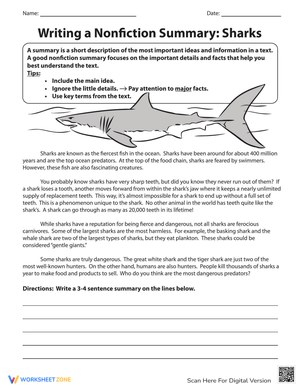
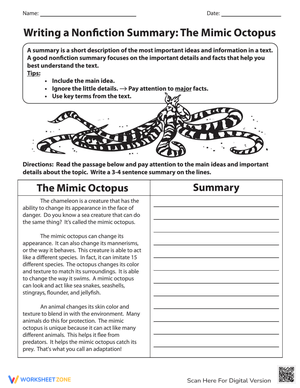
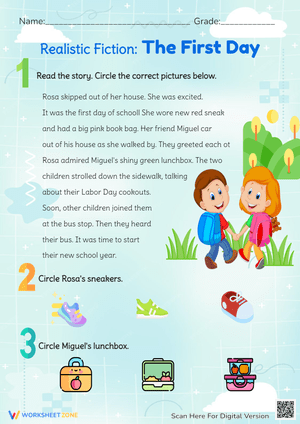
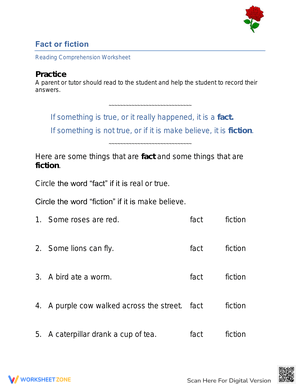
These 4th grade realistic fiction worksheets resources walk students through the entire writing process — genre introduction, character development, setting, conflict, dialogue, sequencing, and revision — so teachers have a structured sequence to build lessons around rather than a single writing prompt to hand out and hope for the best. Each worksheet targets one skill that students can practice independently, return to during revision, or revisit in a small-group reteaching session. The set is organized the way real writing instruction actually moves: forward through planning, drafting, and refining, not sideways through isolated skill drills.
The Specific Skills Each Worksheet Targets
Realistic fiction sits in an interesting instructional space at Grade 4: the genre feels accessible because students can draw on their own experience, but writing a believable story with a developed character and a logical problem-solution arc is harder than it looks. A strong 4th grade realistic fiction worksheets set addresses that gap by giving students one concrete task per worksheet rather than asking them to manage character, setting, plot, and dialogue all at once.
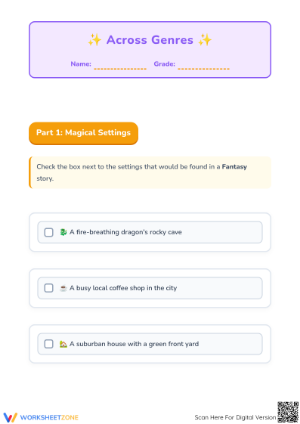
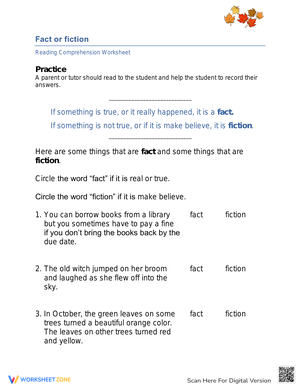
- Genre sorting and identification — students read brief scenarios and mark which could happen in real life and which cross into fantasy, building a concrete sense of genre boundaries before they write a word of their own story
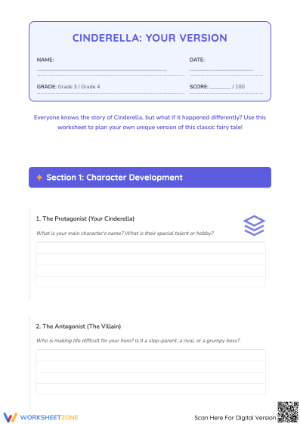
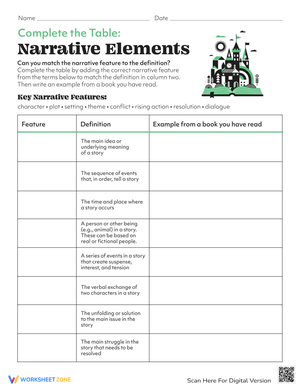
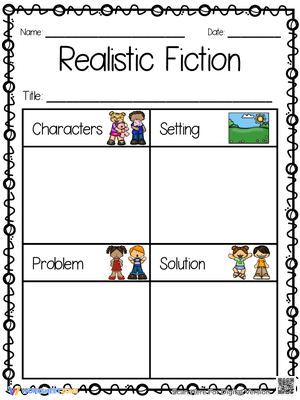
- Character development organizers — students record traits, motivations, and the specific want or goal that drives their character's choices throughout the plot
- Setting detail worksheets — students move past location labels ("at school") toward sensory specifics: what the place looks, sounds, and feels like, and when the story takes place
- Problem and solution planning — focused on keeping the conflict believable and making sure the solution comes from the character's own effort rather than luck or outside rescue
- Dialogue practice sheets — students write and punctuate short conversations that reveal character or advance the plot, not just fill space with greetings
- Event sequencing organizers — beginning, rising action, climax, and resolution mapped before drafting begins
- Revision checklists — targeting consistency, transitions, showing-not-telling moments, and sentence-level conventions
Mistakes Students Make That These Worksheets Help You Catch
The most common error in Grade 4 realistic fiction is genre drift. A student plans a believable scenario — a team loses a championship, a kid forgets a homework project — and then somewhere mid-draft a character develops an unusual ability or a pet starts giving advice. It rarely feels like a deliberate decision to the student; it just happens because that's how many of the stories they've consumed work. The genre-sorting worksheets address this directly by asking students to mark which details could happen in real life before they ever write their own story.
A second persistent problem is the collapsed ending. Students build a strong opening — good setting detail, a character with a clear want, a rising problem — and then resolve everything in a single sentence: "Then she found it and everything was fine." The sequencing organizer pushes against that pattern because it requires students to plan the climax and the resolution as two separate labeled boxes. When students see those distinct spaces, they understand that the story isn't over at the climax — there's still a resolution to write.
Dialogue is its own challenge. Many fourth graders write conversations that read like a phone transcript: short lines, quick replies, no subtext. The dialogue worksheets push students to ask what a character is trying to get, avoid, or hide in a conversation. That one question produces more naturalistic exchanges than any number of punctuation reminders alone.
How to Build These Worksheets Into Your Lesson Plans
The most effective structure is a ten-minute mini-lesson followed by independent practice on one worksheet at a time. A lesson on character motivation pairs directly with the character organizer; a lesson on showing emotion through action pairs with the revision checklist. Each worksheet includes extension prompts for students who finish early, so there's no need for a separate activity to fill the last few minutes.
Several teachers use the sequencing and problem-planning worksheets as Monday warm-ups at the start of a writing unit — five minutes of planning before the week's drafting sessions begin. Others keep the revision checklist inside writing folders as a standing reference that students return to across multiple pieces throughout the year, not just during the realistic fiction unit. Because each worksheet is a separate printable, it's easy to pull one for a small-group reteaching session in the final weeks of a grading period without distributing the full set.
One move worth trying before students start their own stories: spend eight minutes generating a shared list of Grade 4-believable scenarios on the board — losing a library book the morning it's due, being picked last for a class project group, accidentally breaking something that belongs to a friend. Students who enter planning with a bank of realistic starting points spend far less time staring at a blank character organizer and far more time developing the story itself.
Adjusting the Worksheets for Different Student Levels
Students who need more support do better with a narrower prompt and partially pre-filled organizers. Giving them a specific school-based setting — the cafeteria, a field trip bus, the gym during free play — and asking them to fill in only the character's name, one trait, and one problem keeps the planning task tight without removing the thinking. These students do better writing one scene in full detail rather than attempting a complete story structure in one go. That's not a shortcut; it's a way to keep the writing focused long enough for real practice to happen.
On-level students use the full organizer set alongside a standard drafting checklist. The most useful instructional push at this level is the shift from telling to showing: students often understand story structure but describe emotions with labels ("he was sad," "she felt nervous") rather than through action or dialogue. The character and dialogue worksheets address that shift directly.
Students ready for more challenge can work through the same base worksheets with added prompts: write two possible endings and explain which is more satisfying, or revise the story's opening sentence three different ways and note what changes with each version. Some teachers also ask these students to annotate a mentor text alongside their own planning, marking where the published author solved the same problems the student is currently working through.
Standard Alignment
These worksheets align most directly to CCSS W.4.3, which asks fourth graders to write narratives using effective technique, descriptive details, and clear event sequences. The sub-standards map to specific worksheets in the set: W.4.3b (using dialogue and description to develop experiences and show character responses) aligns to the dialogue practice worksheets; W.4.3c (transitional words and phrases to manage event sequence) aligns to the sequencing organizer; and W.4.3d (concrete words and sensory details) aligns to the setting and revision worksheets.
In instructional terms, W.4.3 marks the point where narrative writing stops being primarily personal and starts requiring deliberate craft decisions. Grade 3 narrative standards center on recounting real events; Grade 4 expects students to build invented stories with technique. That developmental shift — from recounting to constructing — is exactly why genre identification, character motivation work, and conflict mapping matter more at this grade than at the one before it, and why the 4th grade realistic fiction worksheets format fits the standard so precisely.
Frequently Asked Questions
What is the difference between realistic fiction and personal narrative at the 4th grade level?
Personal narrative recounts something that actually happened to the writer. Realistic fiction is an invented story — characters, events, and settings are made up, even when they feel familiar. Students often blur the two because both draw on everyday experience as raw material. The genre-sorting worksheet addresses this directly by asking students to categorize a story idea as "could be true," "did happen to me," or "impossible in real life" before planning begins.
Can these worksheets be used for reading response as well as writing instruction?
Several of them translate easily. The character organizer works well as a reading response tool after students finish a realistic fiction novel or short story — students fill in what the author revealed about the character rather than what they plan to write themselves. The problem-solution planner and sequencing organizer also work for analyzing a published text's structure. The dialogue and revision worksheets are writing-specific and are harder to repurpose for reading response without adjusting the prompts.
How do I assess realistic fiction writing without feedback feeling purely subjective?
Anchor the assessment to the planning documents. When students submit their character organizer and plot planner alongside the draft, you can see whether the finished story reflects the planning work — and where it diverged. That makes feedback concrete: rather than simply reacting to the draft, you're comparing it to the student's own stated intentions. The revision checklist also builds in a self-assessment step before teacher review, which tends to raise the quality of what actually gets submitted.
Does this set work for 5th graders or advanced 3rd grade writers?
The 4th grade realistic fiction worksheets set works well for advanced third graders who are ready for genre-specific writing instruction and for fifth graders who need a structured review before an independent writing unit. The core skills — genre identification, character motivation, dialogue, event sequencing — sit comfortably across the Grade 3–5 band. Fifth grade teachers may want to layer in more complex craft expectations, such as point-of-view consistency or theme development, on top of the base activities in each worksheet.












 Interactive Worksheet Maker
 Quiz Maker
 Word Search Maker
 Crossword Puzzle Maker
 Word Scramble Generator
 Sentence Scramble Generator
 Handwriting Worksheet Generator
 Name Tracing Generator
 Fill In The Blank Generator




 BACK TOSCHOOL