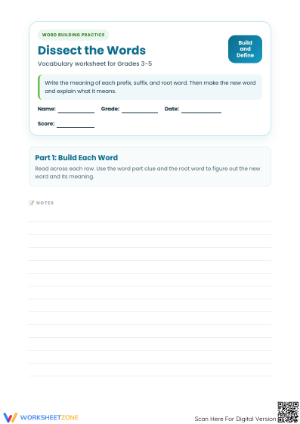
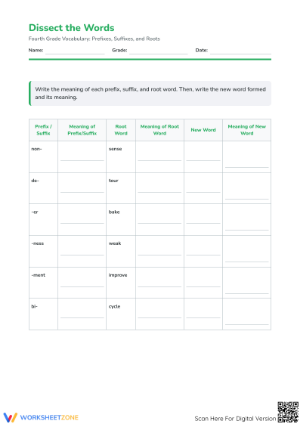
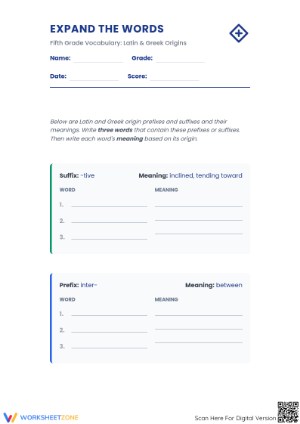
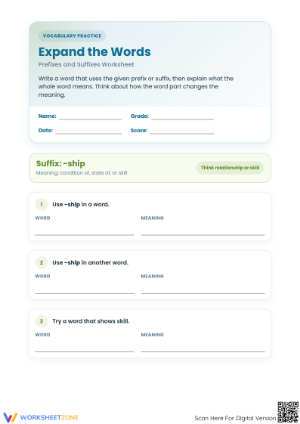
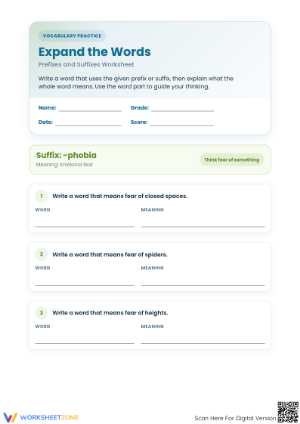
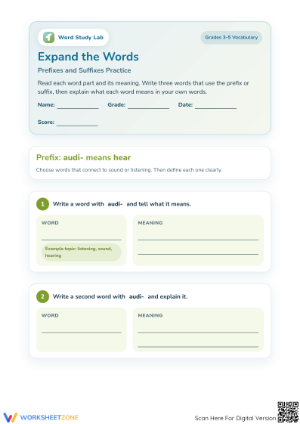
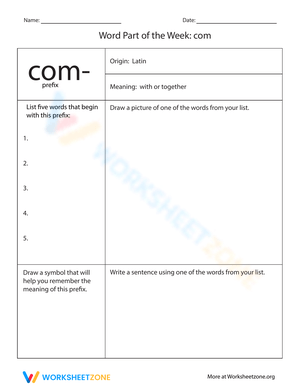
These 4th grade roots prefixes and suffixes printable worksheets give teachers a focused set of word-study resources that address one of the most consequential skills in the intermediate grades: reading unfamiliar academic vocabulary by recognizing meaningful parts instead of sounding out every letter. Each worksheet targets a specific prefix, suffix, or Greek and Latin root, building that recognition in isolation before students encounter the same word parts inside longer, multi-morpheme words. The set covers the affixes and roots that surface most heavily in Grade 4 science and social studies texts — precisely where the vocabulary jump becomes steepest.
The Skills Each Worksheet Targets
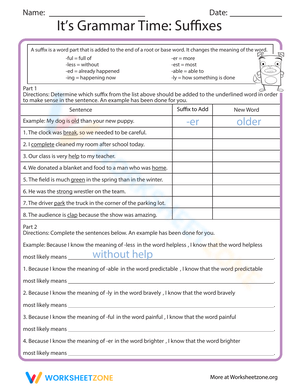
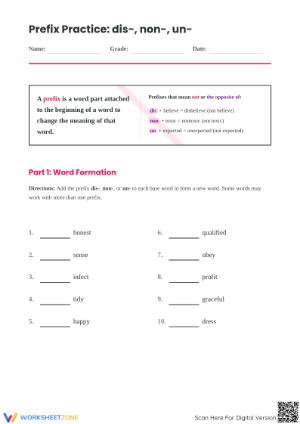
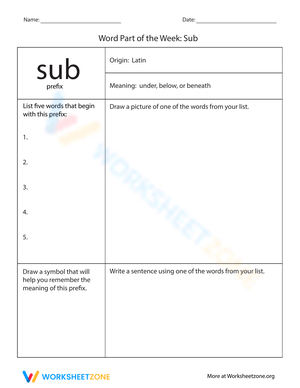
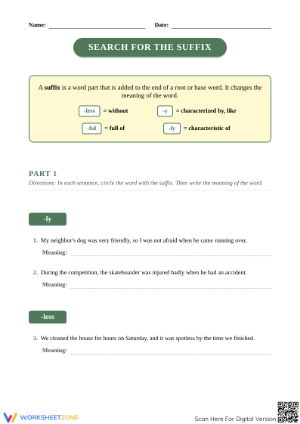
The prefix worksheets focus on the affixes that shift a word's meaning most dramatically: un-, re-, dis-, pre-, and mis-. Students sort words by prefix, rewrite sentences using the prefixed form of a given base word, and explain the meaning shift in their own words — not just circle and move on. The suffix worksheets work through -ful, -less, -able, -ly, and -ment, with a particular emphasis on what happens to a word's part of speech when the suffix attaches. Knowing that adding -ment turns a verb into a noun is a different and more durable skill than memorizing that excitement is a noun.
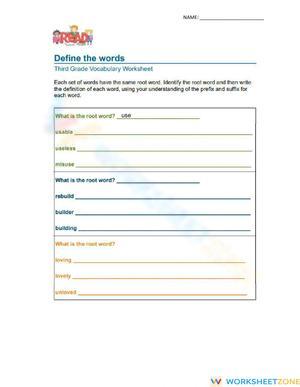
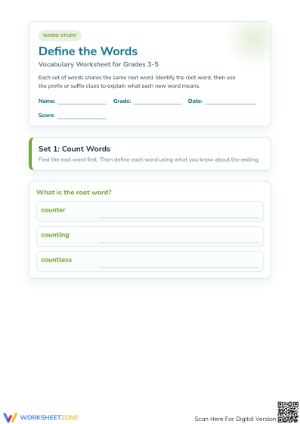
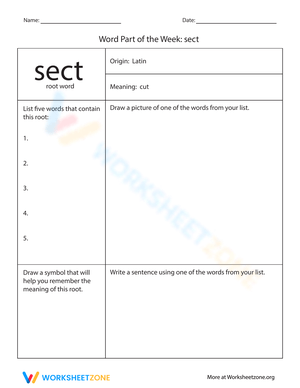
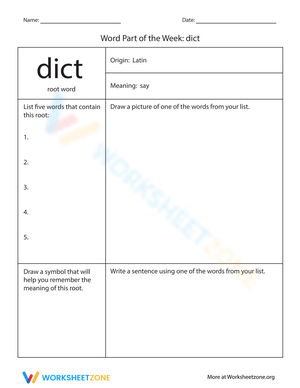
The Greek and Latin root worksheets cover the roots that appear most reliably in Grade 4 academic content: bio (life), graph (write), phon (sound), tele (far), aud (hear), and vis (see). Each worksheet uses a root tree format — students place the root at the center and map related words as branches — so they can see that knowing one root gives them a strategy for decoding an entire word family. 4th grade roots prefixes and suffixes printable worksheets structured this way make the connection between word knowledge and reading comprehension visible, which matters for students who have been treating vocabulary as a list to memorize rather than a system to understand.
Frequent Student Errors Worth Watching For
The most common error isn't misidentifying a prefix — it's over-applying one. Once students learn that un- means "not," a predictable subset will produce forms like unsad or uncold, treating un- as universally attachable to any adjective. These students have grasped the concept but haven't yet absorbed that prefix attachment is governed by convention, not just semantic logic.
A second error pattern shows up with look-alike letter strings. Students trained to spot pre- will mark it in pretty and press — words where those letters aren't a separable prefix but simply part of the root. This is a consistent finding in student work at this grade level, and it's worth building at least one task around it explicitly: give students a mix of genuine pre- words and false positives, then ask them to justify why a word is or isn't prefixed. The reasoning step catches the error that recognition-only tasks miss.
With roots, the disconnect usually surfaces in transfer. A student will correctly identify graph as "write" on the worksheet, then encounter the word biography in a science text twenty minutes later and have no conscious awareness that the root is present. Making the link between worksheet practice and running text explicit — flagging root words during read-aloud, asking students to annotate root words in their reading journals — closes that gap faster than additional worksheet repetition alone.
Lesson-Planning Ideas to Get the Most From These Worksheets
The most effective placement for these worksheets is before a content-area unit, not as a standalone vocabulary activity. When a class is about to begin a science unit on ecosystems, running a bio- root worksheet two days before students open the textbook means they arrive at words like biodiversity and biome with a ready framework rather than blank uncertainty. That sequencing — word-part study before content reading — reflects spaced retrieval principles: the initial exposure on the worksheet and the reinforcement in the content text are separated by enough time to make the second encounter feel like remembering, which deepens retention.
For daily pacing, these worksheets work well as a ten-minute opener during the language arts block or as the word-work station in a literacy center rotation. Teachers running four-station rotations can use one worksheet per cycle, moving through a new word part each week. 4th grade roots prefixes and suffixes printable worksheets also fit naturally into a Tuesday-through-Thursday practice routine — students carry the anchor meaning from Monday's introduction, and the worksheet gives them the structured application they need before Friday's writing task or formative check.
Standard Alignment
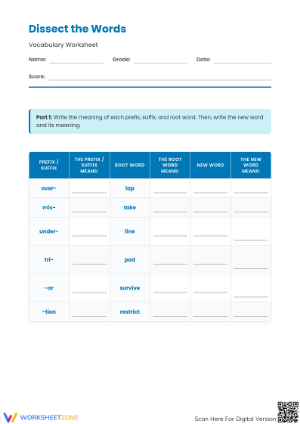
The set aligns to CCSS.ELA-LITERACY.L.4.4.B, which directs Grade 4 students to use common Greek and Latin affixes and roots as clues to word meaning. In classroom terms, this standard lives in two places: vocabulary work during the literacy block, and word study connected to science and social studies content reading. Because the standard names both affixes and roots explicitly, these worksheets address all three components — prefixes, suffixes, and roots — rather than limiting morphology instruction to prefix-and-suffix work alone, which is a common gap at this grade level.
Differentiating These Worksheets Across Ability Levels
Students new to morphology instruction benefit from starting with base words already in their oral vocabulary before any affixes are introduced. Running a prefix worksheet where every base word is familiar reduces the cognitive load of simultaneously decoding an unfamiliar word and tracking what the prefix contributes. Start with un- + happy, fair, kind before moving to un- + familiar, certain, predictable.
For students who move through the basic tasks quickly, the extension work is to shift from identification to generation. Instead of marking the root in a provided list, they write three sentences in which the target root appears in a different word each time — and none of the example words from the worksheet count. That constraint forces genuine application rather than restating examples already given. Students working below grade level often benefit from a reference card listing the current word part and two or three known examples, kept at their desk while working through each worksheet.
Frequently Asked Questions
What is the difference between a base word and a root, and how do I explain it to fourth graders?
A base word is a complete English word that stands on its own — play, help, friend. A root carries meaning but can't stand alone in English — struct, phon, vis. The most concrete explanation for students: "Can you say this part by itself and have it sound like a real English word?" If yes, it's a base word. If no, it's a root. The distinction matters because students who hunt for the base word of structure come up empty — they need to understand that struct is the root and it only works with other pieces attached.
Are these worksheets useful for English Language Learners?
Yes, particularly for students whose first language is Spanish, Portuguese, French, or Italian. Greek and Latin roots appear heavily in Romance languages, so a student who knows the Spanish word audición already has a working sense of what aud- means in English. Pointing that connection out explicitly — "this root is related to a word you might already know" — turns the worksheet into a bridge rather than an isolated English-only task. Teachers can note cognate connections in the margins of relevant worksheets to prompt that conversation during small-group work.
How do I help students who complete the worksheets correctly but don't apply the skills during independent reading?
This transfer gap is common, and it usually means practice has stayed at the recognition level without reaching application. The fix is to add a brief extension step whenever students work through 4th grade roots prefixes and suffixes printable worksheets: give them two minutes to skim whatever they are currently reading independently and underline any word that contains the day's word part. No analysis required — just find it in running text. That small routine begins to move the skill from worksheet behavior to reading behavior, which is the actual goal.












 Interactive Worksheet Maker
 Quiz Maker
 Word Search Maker
 Crossword Puzzle Maker
 Word Scramble Generator
 Sentence Scramble Generator
 Handwriting Worksheet Generator
 Name Tracing Generator
 Fill In The Blank Generator