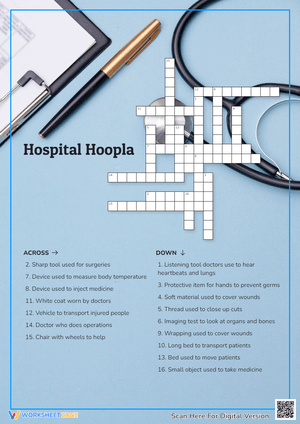
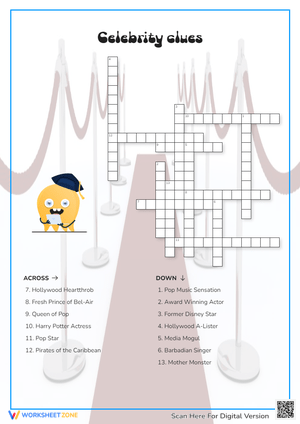
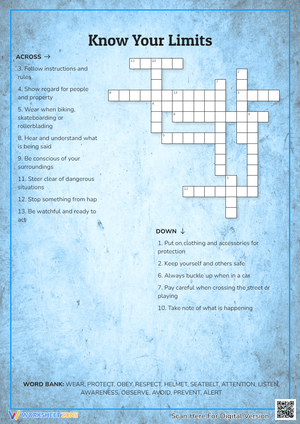
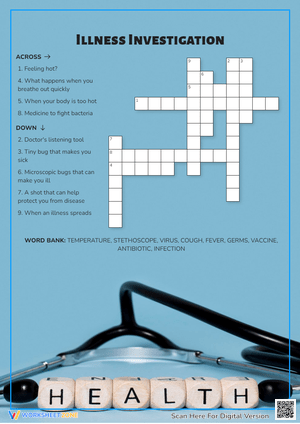
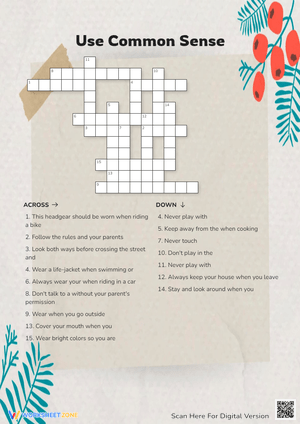
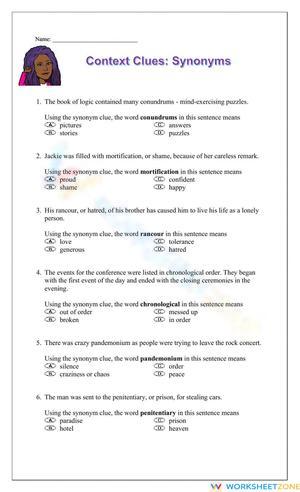
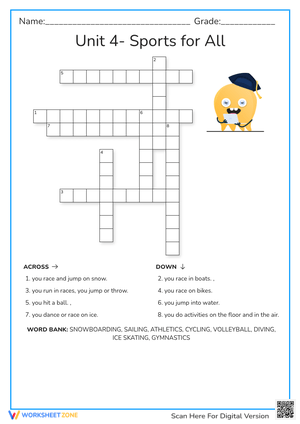
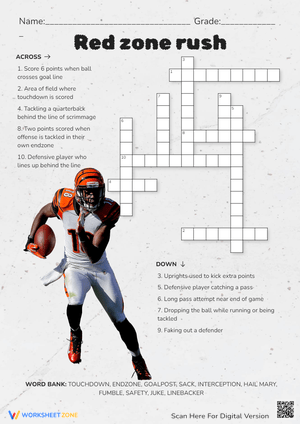
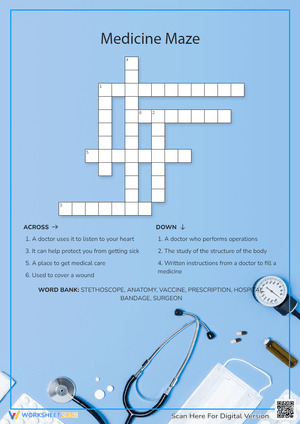
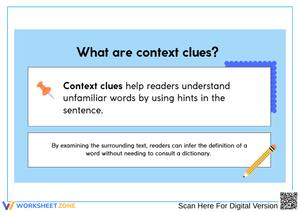
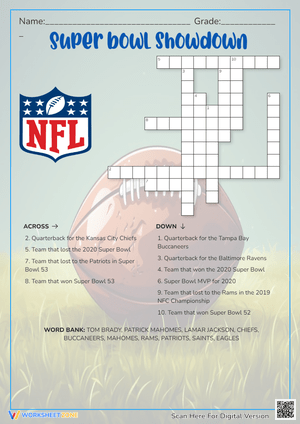
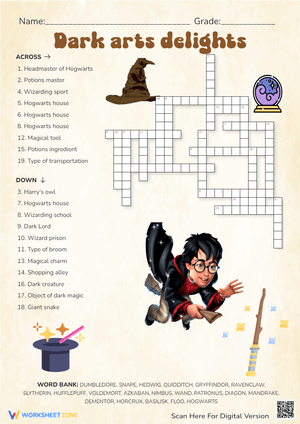
These 4th grade context clues pdf worksheets give teachers a ready set of printable practice organized around the five clue types students are expected to use independently by the end of Grade 4 — definition, synonym, antonym, example, and inference. The resources draw from both fiction and informational passages, since the signals authors use to clarify meaning differ noticeably by genre. Each worksheet asks students to underline textual evidence before writing their own definition, making the inferencing steps visible rather than guessing-invisible.
The Five Clue Types Covered in the Set
The five clue types move from transparent to challenging. Definition clues are the most accessible — the author restates a word's meaning directly, often marked by a dash, parentheses, or an appositive phrase set off by commas. Synonym clues require students to locate a nearby word with similar meaning and use it as a reference point. Antonym clues demand one extra mental step: students must first recognize a contrast signal ("but," "however," "unlike") and then invert the opposite word to arrive at a meaning.
Example clues use signal phrases like "such as" or "for instance" to list specific members of a category — the skill is moving backward from the examples to the broader category term. Inference clues carry no signal words at all; meaning emerges from the cumulative weight of a sentence or paragraph. Students who practice only definition and synonym clues tend to stall on these last two types, which appear frequently in Grade 4 standardized reading passages.
Student Errors That Surface Most Often Across These Clue Types
Antonym clues produce the most predictable error. When a student reads "Unlike his boisterous brother, Liam was very quiet," many will write "quiet" as the definition of boisterous — they correctly locate the contrast word, then stop one step short of inverting it. Asking "so if one person is quiet, what must the other person be?" usually breaks the pattern, but the error reappears across multiple worksheets before it stops.
Inference clues produce a different failure: students quote the surrounding context back as the definition instead of synthesizing it. Asked what "trudging" means in a passage about a tired hiker in deep snow, a student writes, "it means the character is tired and walking in the snow." That's evidence, not a definition. The nonsense-word technique — replacing the target word with a made-up placeholder like zibble before asking students to define it — short-circuits this tendency. Since students can't rely on partial word recognition, they're forced to read the surrounding sentences for all their information, which is exactly what inference clue work demands.
Example clues produce a narrower error: students define the category word using one of its listed members. When a sentence reads "utensils such as spatulas, whisks, and ladles," students write "utensils means spatulas" rather than identifying the category. Asking "would a whisk also count as a utensil?" redirects them toward the category-level thinking the clue is actually pointing to.
Building These Into Your Weekly Routine
Think-aloud modeling is the most effective entry point before students work independently. Projecting a passage and narrating your reasoning out loud — "I don't know this word, so I'm looking at the sentences around it for a signal" — shows students the internal conversation proficient readers have with text. The first round of independent practice goes noticeably smoother when students have heard that process modeled rather than just being told to "look for clues."
For ongoing use, 4th grade context clues pdf worksheets rotate well through literacy centers. Laminate a set, leave dry-erase markers in the bin, and students can circle evidence and write definitions without consuming paper copies. Rotating which clue type appears at the center each week means students work through all five types across a unit. Posting the substitute-back rule at the center — replace your definition in the original sentence and read it aloud; if it doesn't sound right, look again — gives students a self-check step that requires no teacher presence.
These worksheets also work as a two-minute exit check at the end of a reading lesson. Looking at which clue types a class consistently misses tells you exactly where to spend the next short mini-lesson — a pattern of antonym errors points to five minutes on contrast signal words the following morning, before the reading block begins.
Standard Alignment
These worksheets address CCSS.ELA-LITERACY.L.4.4, which requires students to use context as a clue to the meaning of an unknown word or phrase. In the standards framework, L.4.4 sits at the intersection of the Language strand and the Reading strands — it connects directly to RI.4.4 (determining word meaning in informational text) and RL.4.4 (the same skill in literary text). In classroom terms, context clue practice belongs in both the reading block and the language block, not only in Friday vocabulary work.
Tailoring Practice for Students at Different Levels
For students still working at the sentence level, fold a sheet over the passage above and below the target sentence before they begin. Practicing with one sentence's worth of context first — before widening to paragraph-level clues — reduces the cognitive load of processing a full passage while learning a new strategy simultaneously. Once a student reliably infers meaning from single sentences, remove the cover.
For students who move through the standard set quickly, 4th grade context clues pdf worksheets have room for extension without requiring separate materials. Ask those students to find a second piece of supporting evidence elsewhere in the passage, or to write a sentence of their own that uses the same clue type they just practiced. Both tasks push toward more precise, evidence-based reasoning rather than simply racing ahead.
For English language learners, definition and example clue worksheets are the strongest starting point because the signal structures are explicit and named. Inference clues are better introduced once a student has enough background knowledge and reading fluency to make the logical leaps those clues require.
Frequently Asked Questions
Do these worksheets cover all five clue types with equal depth?
The set includes worksheets targeting each clue type individually as well as mixed-clue passages — which is the format students encounter on actual assessments and in sustained reading. If you want students to work through one clue type for several days before introducing the next, the single-type worksheets make that sequencing straightforward.
How do context clues show up on Grade 4 standardized tests?
Most Grade 4 state assessments include questions that present an underlined word in a passage and ask what it means "as used in paragraph 3." This is essentially an inference clue task — students can't rely on prior knowledge of the word and must return to the surrounding text for evidence. Students who have practiced 4th grade context clues pdf worksheets with inference passages are far less likely to select a familiar but contextually wrong answer choice.
What if a student correctly finds the clue but still writes the wrong definition?
This usually means one of two things: the student found a nearby word that looked promising but wasn't the most informative clue, or they applied the right clue incorrectly — the antonym inversion error described above. The substitute-back test works as a self-correction tool here. If a student's definition doesn't fit smoothly back into the original sentence, they have a concrete reason to look again without waiting for teacher feedback.












 Interactive Worksheet Maker
 Quiz Maker
 Word Search Maker
 Crossword Puzzle Maker
 Word Scramble Generator
 Sentence Scramble Generator
 Handwriting Worksheet Generator
 Name Tracing Generator
 Fill In The Blank Generator