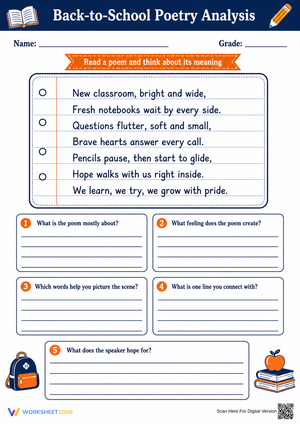
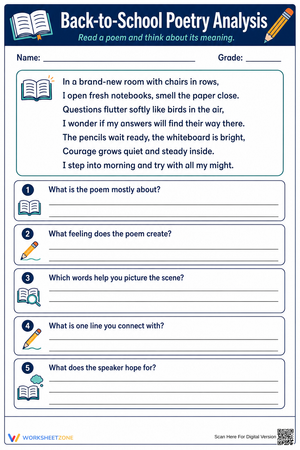
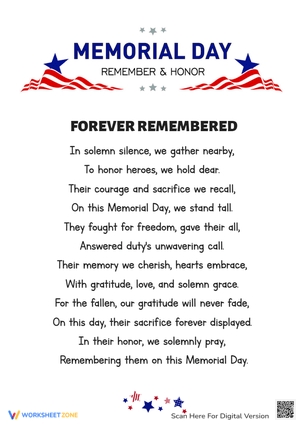
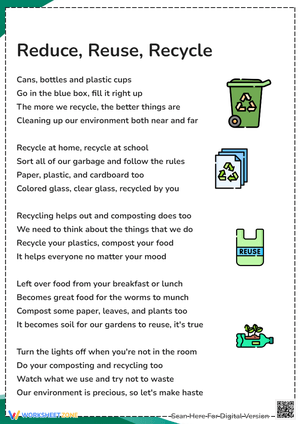
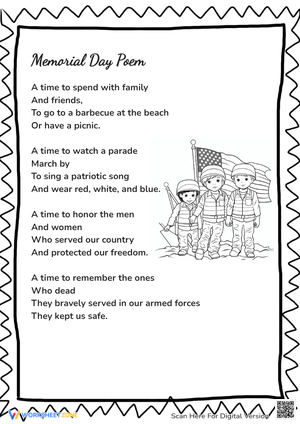
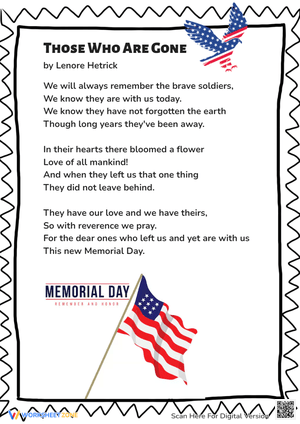
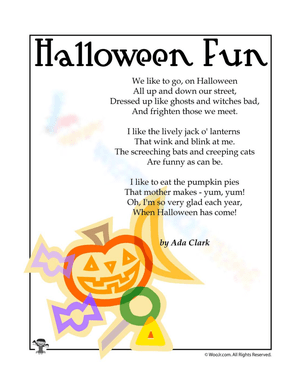
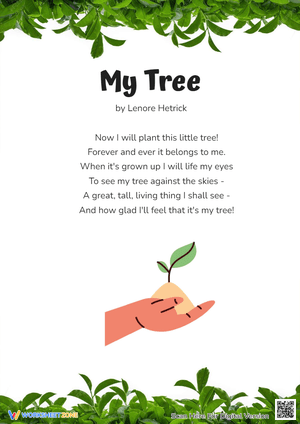
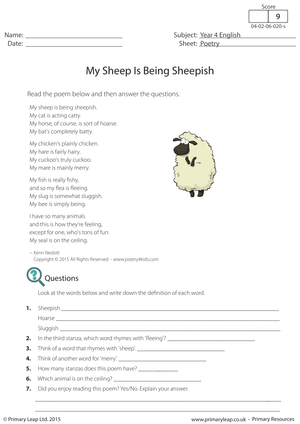
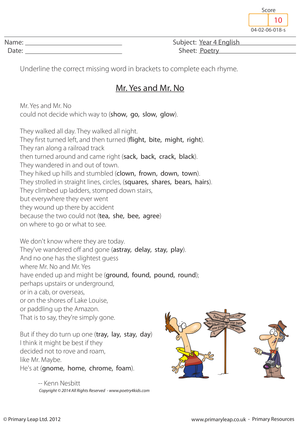
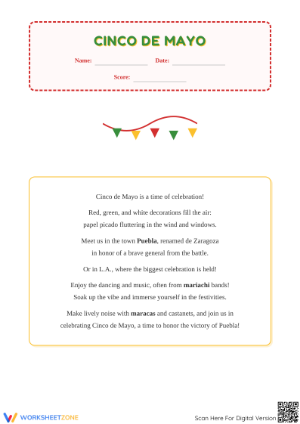
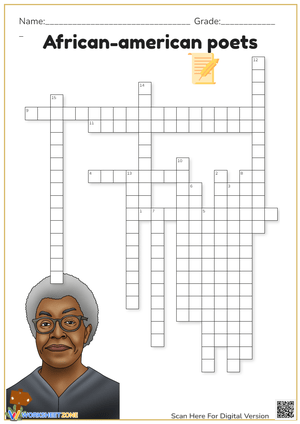
These poems worksheets for 3rd grade give teachers a ready-to-print set of resources built around the specific reading and language skills third graders are working toward — stanza recognition, rhyme scheme identification, figurative language, and poetry-specific fluency. Third grade is a genuine inflection point in ELA: students have mostly cracked the decoding code, and instruction now pushes them to think about how language works aesthetically, not just accurately. Short poems put that shift front and center in a way longer prose passages can't.
The Specific Skills Each Worksheet Targets
Each worksheet in the set works on one or two focused skills rather than spreading attention across every poetic element at once. That concentrated design matters at this age — asking third graders to simultaneously identify the rhyme scheme, explain the mood, and find two similes produces surface-level guessing rather than real reading. The skills covered across the set include:
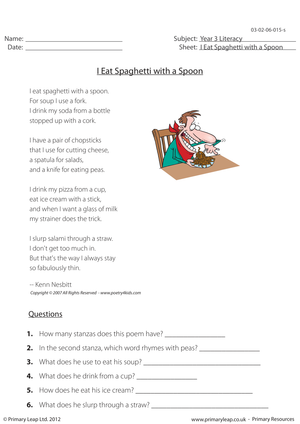
- Stanza and verse identification — Students label each stanza, count the lines per stanza, and explain in a sentence how one stanza connects to the next. Many students initially read a poem straight through and ignore stanza breaks entirely; the labeling task forces them to slow down.
- Rhyme scheme notation — Students assign letters to end sounds and record the pattern, beginning with AABB couplets and moving to alternating ABAB structures once the labeling process feels automatic.
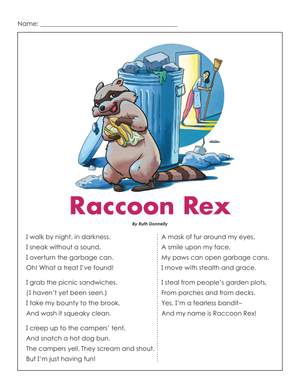
- Figurative language identification — Similes, alliteration, repetition, and personification appear in context, not in isolation. Students underline the example, name the device, and explain what it adds to the poem's meaning.
- Speaker and mood — Students determine who is speaking and describe the poem's overall tone, citing specific words as evidence. This skill transfers most directly to narrative reading comprehension.
- Oral fluency prompts — Selected worksheets ask students to mark places for pausing or emphasis before reading, then read the poem twice: once for accuracy, once for expression.
Poem Forms in the Set and Why Each One Belongs
The choice of poem forms is deliberate. Rhyming four-line stanzas come first because predictable sound structure lets students focus on form before meaning becomes complicated. Haiku follow — the five-seven-five syllable rule gives students a concrete counting task, and the brevity makes vocabulary analysis manageable in a way a longer poem doesn't. Free verse appears once students have a firm sense of what rhyme and rhythm feel like, because free verse asks them to find structure through meaning and imagery rather than sound. Narrative poems round out the set. Students who freeze when asked to interpret a lyric poem often relax when a poem has a clear character and sequence of events — the familiarity of story structure gives them a foothold for the comprehension questions.
Student Mistakes That Show Up Repeatedly With Poetry
The most persistent error across every poem form is rhyme-scheme misassignment. Students who learn the ABAB label quickly will apply it to every four-line stanza regardless of whether the actual end sounds match. A student will write "ABAB" on a poem where lines 1 and 3 end in "rain" and "morning" and lines 2 and 4 end in "sky" and "blue" — they see four lines arranged in two visual pairs and assume the rhyme pattern follows. It's worth spending two minutes at the start of any rhyme-scheme lesson having the class read the end words aloud before anyone writes a letter label.
Figurative language identification runs into a different problem: students understand the definitions but lose them when devices are embedded in context. They can explain that a simile uses "like" or "as," but when a poem reads "her voice was as rough as gravel," several students will underline "voice" as the simile because that's the surprising image that caught their attention. The worksheets address this by asking students to write out the two things being compared — not just circle the device — which catches that particular confusion almost every time.
Fitting These Worksheets Into Your Weekly Literacy Schedule
The most reliable entry point is the 8-to-10 minutes at the start of an ELA block. Put the poem on the board, hand out the matching worksheet, and let students read and mark independently before any instruction. What they underline, leave blank, or get wrong tells you exactly where to focus the class discussion — that's a faster formative read than most exit tickets, because it captures uncoached thinking before you've taught anything.
For literacy centers, three to five worksheets at staggered difficulty levels work well as a self-directed rotation. Students read, respond, and check an answer key if one is available. Because poems worksheets for 3rd grade center on short texts, the rotation doesn't require extended independent stamina — even students who struggle to sustain focus through longer passages can complete one worksheet in a standard 15-minute slot. One caveat: this format works less well for students who are stronger oral comprehenders than silent readers. For those students, build in a brief partner or whole-class read-aloud before anyone works independently, or the written tasks will feel disconnected from the poem they just half-decoded.
Standard Alignment
These poems worksheets for 3rd grade align directly with CCSS.ELA-LITERACY.RL.3.5, which requires students to refer to parts of poems using terms such as stanza and verse and to describe how each successive section builds on earlier ones. They also address CCSS.ELA-LITERACY.RL.3.4, which asks students to determine the meaning of words and phrases in a text, including figurative language. Oral fluency components connect to CCSS.ELA-LITERACY.RF.3.4b, which specifies reading poetry aloud with accuracy, appropriate rate, and expression. In instructional terms, RL.3.5 is the standard teachers most often rush — poetry terminology gets treated as a one-day vocabulary lesson rather than distributed practice. Using these worksheets across several weeks gives that standard the repetition it needs to move from surface recognition to confident use.
Adjusting the Worksheets for a Range of Learners
The same poem text supports multiple entry points without printing different versions. Students who need more support complete the stanza-labeling and rhyme-identification sections, which have clear right-or-wrong answers and don't require interpretive writing. Students who are ready for deeper work go further: they explain how a figurative language example shifts the poem's meaning, or they compare the speaker's perspective across two stanzas. The interpretive questions aren't a bonus — they're built into each worksheet — so no additional prep is needed to use the same resource with readers at different levels.
For students significantly below grade level in decoding, read the poem aloud as a class or in a small group before anyone works independently. The comprehension and analysis tasks are accessible once the text itself isn't a barrier. The issue is almost never that students can't think about a poem — it's that they can't get through it silently.
Frequently Asked Questions
What poetry vocabulary do 3rd graders need to know?
Third graders working toward RL.3.5 need to use and understand stanza, verse, and line accurately. For figurative language under RL.3.4, they work with simile, alliteration, repetition, and personification. Each worksheet introduces the relevant term in context — students encounter the device in an actual poem before any task asks them to define it abstractly, which builds durable understanding rather than test-day recall.
How often should poetry worksheets appear in a literacy block?
Two to three times per week is enough to build familiarity without wearing out the format. Daily poetry work tips into rote routine, and once students start completing worksheets on autopilot, the analytical thinking stops. Spacing them out — Monday, Wednesday, Friday as warm-ups, for example — keeps the task purposeful rather than mechanical. The poems worksheets for 3rd grade set includes enough variation in poem form and skill focus that repetition doesn't mean sameness.
Can these worksheets reach a student who says they dislike poetry?
Usually, yes — with a qualifier. Students who say they dislike poetry typically mean they dislike the feeling of not understanding it. A short rhyming poem with a concrete subject and a worksheet that starts with something manageable — count the stanzas, mark the rhymes — gets reluctant readers moving before they've decided to disengage. The format doesn't resolve deep reading anxiety, but it removes the blank-page problem that triggers most of the resistance.
Do these worksheets connect to standardized test preparation?
Third-grade reading assessments aligned to Common Core regularly include a literary passage, and that passage is often a poem. Students who have practiced identifying stanzas, rhyme schemes, and figurative language in a low-stakes context handle those test questions with far less confusion than students encountering poetic structure for the first time under timed conditions. The question types used across these worksheets — multiple choice with text evidence and short constructed response — mirror the formats students see on most state assessments at this grade level.












 Interactive Worksheet Maker
 Quiz Maker
 Word Search Maker
 Crossword Puzzle Maker
 Word Scramble Generator
 Sentence Scramble Generator
 Handwriting Worksheet Generator
 Name Tracing Generator
 Fill In The Blank Generator