


























Views
Downloads
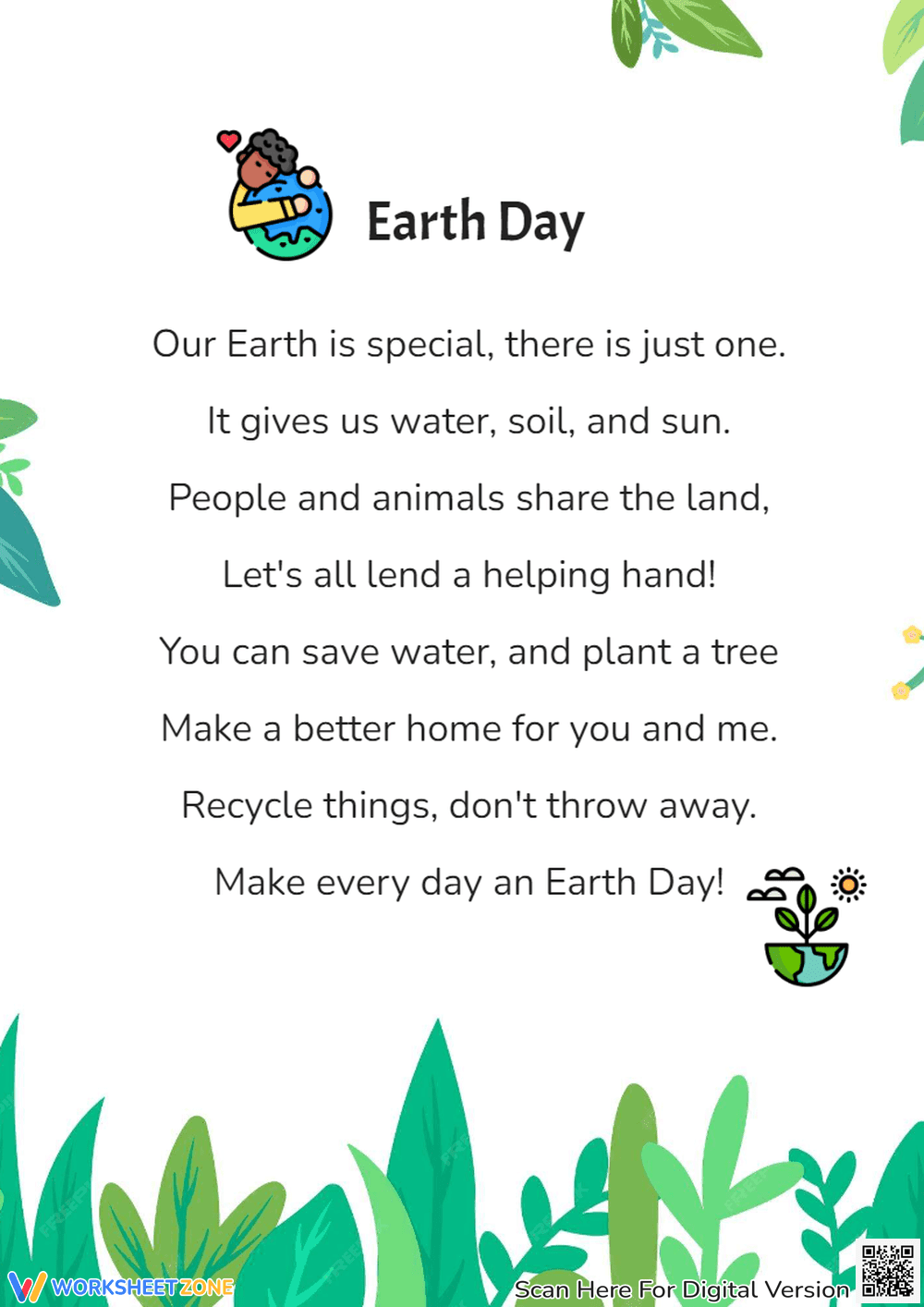

Grade 1 Earth Day Poem — Printable No-Prep Worksheet
Paste this activity's link or code into your existing LMS (Google Classroom, Canvas, Teams, Schoology, Moodle, etc.).
Students can open and work on the activity right away, with no student login required.
You'll still be able to track student progress and results from your teacher account.
This Grade 1 reading worksheet helps young learners build foundational literacy skills through a themed Earth Day poem. Students practice reading fluency, rhythm, and vocabulary while learning about environmental conservation. The simple structure supports independent reading and group recitation, making it an ideal resource for early elementary classrooms.
At a Glance
- Grade: Grade 1 · Subject: Reading Genres and Poems
- Standard:
CCSS.ELA-LITERACY.RL.1.4— Identify words and phrases in poems that suggest feelings or appeal to senses- Skill Focus: Poetry reading, rhythm, and environmental vocabulary
- Format: 1 page · 1 poem · No answer key · PDF
- Best For: Morning work or Earth Day lessons
- Time: 10–15 minutes
This single-page PDF features a beautifully illustrated 8-line poem dedicated to Earth Day. The text uses high-frequency words and simple rhyming patterns to support early readers. Large, clear fonts and thematic illustrations of the Earth and plants provide visual context clues, helping students decode unfamiliar words and engage with the text.
Zero-Prep Workflow
Implement this resource in under 2 minutes with three simple steps:
- Print (1 minute): Generate copies of the single-page PDF for your entire class.
- Distribute (30 seconds): Pass out the sheets to students for independent or guided reading.
- Review (15 minutes): Lead a choral reading session to practice rhythm and discuss the poem's message.
This straightforward layout makes the worksheet an excellent option for emergency sub plans or quick morning work activities.
Standards Alignment
This resource aligns directly with the Common Core State Standard CCSS.ELA-LITERACY.RL.1.4, which requires students to identify words and phrases in stories or poems that suggest feelings or appeal to the senses. By analyzing the poem's call to "lend a helping hand" and "save water," students connect emotional themes to environmental actions. Both standard codes can be copied directly into lesson plans, IEP goals, or district curriculum mapping tools.
How to Use It
Use this worksheet during direct instruction to introduce poetry elements like rhyme and stanza structure. Alternatively, assign it as a warm-up activity during Earth Day celebrations. For formative assessment, observe students during oral reading to check for proper phrasing, expression, and decoding of words like "recycle" and "special." Expect students to complete the reading and discussion within 10 to 15 minutes.
Who It's For
This worksheet is designed for students in Kindergarten through Grade 3, with primary alignment for Grade 1 readers. It offers excellent support for English language learners who benefit from the repetitive rhyming structure and visual aids. Pair this poem with an anchor chart about recycling or a short informational passage about conservation to create a comprehensive science and literacy lesson.
This Earth Day reading resource supports early literacy development by aligning with the CCSS.ELA-LITERACY.RL.1.4 standard. According to the Fisher & Frey (2014) framework for close reading, engaging young learners with short, structured texts like poems builds essential phonological awareness and vocabulary acquisition. The repetitive rhyming structure helps students recognize word families and develop reading fluency through repeated oral readings. By focusing on a single, thematic page, teachers can easily integrate environmental science concepts into their daily ELA block without overwhelming early readers. This worksheet provides a practical tool for assessing student comprehension and decoding skills in real-time. Educators can confidently utilize this structured poem to meet curriculum standards while fostering a classroom culture of environmental awareness and active reading engagement.


