




























Views
Downloads


Grade 3 Poetry Comprehension — Printable Worksheet

Paste this activity's link or code into your existing LMS (Google Classroom, Canvas, Teams, Schoology, Moodle, etc.).
Students can open and work on the activity right away, with no student login required.
You'll still be able to track student progress and results from your teacher account.
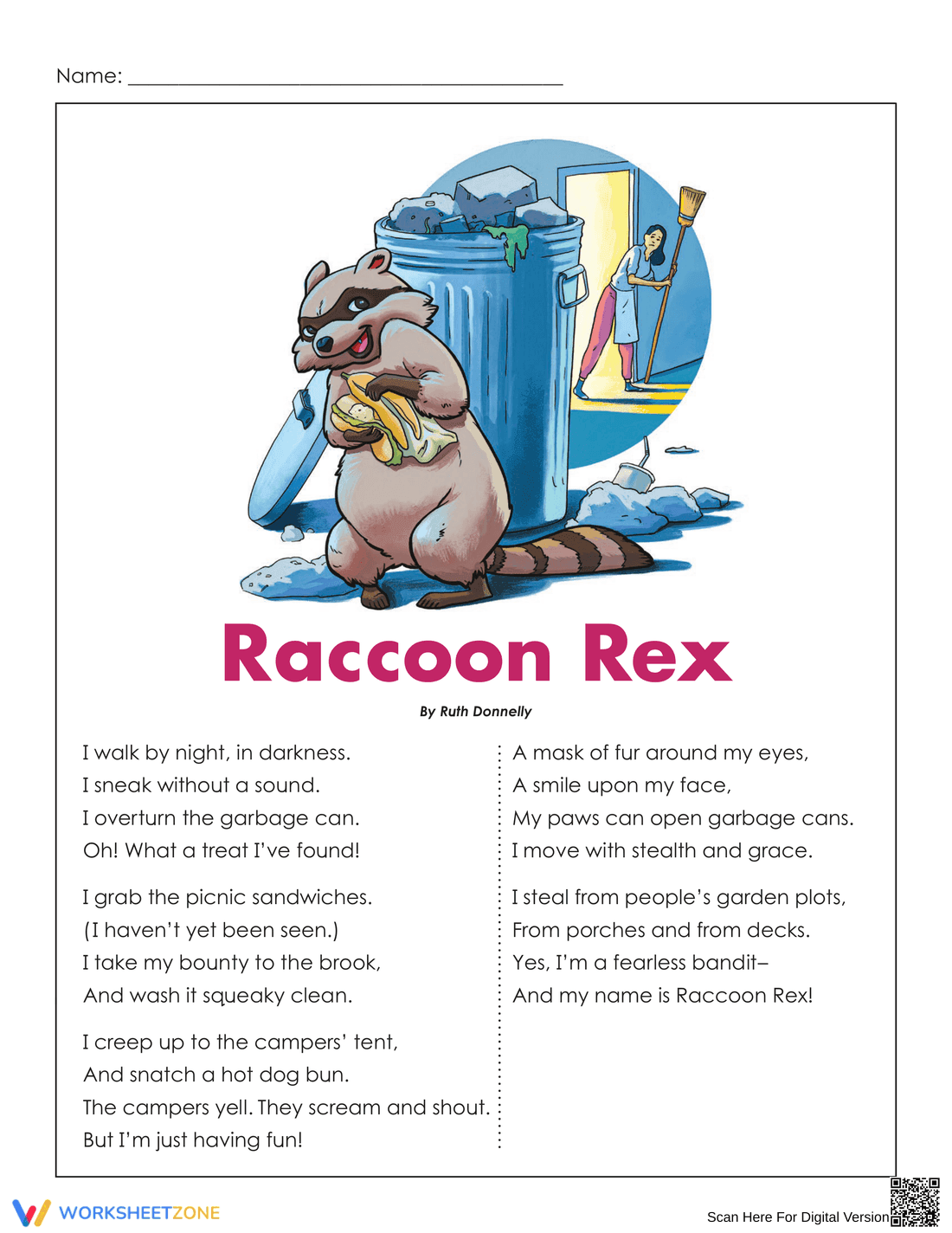
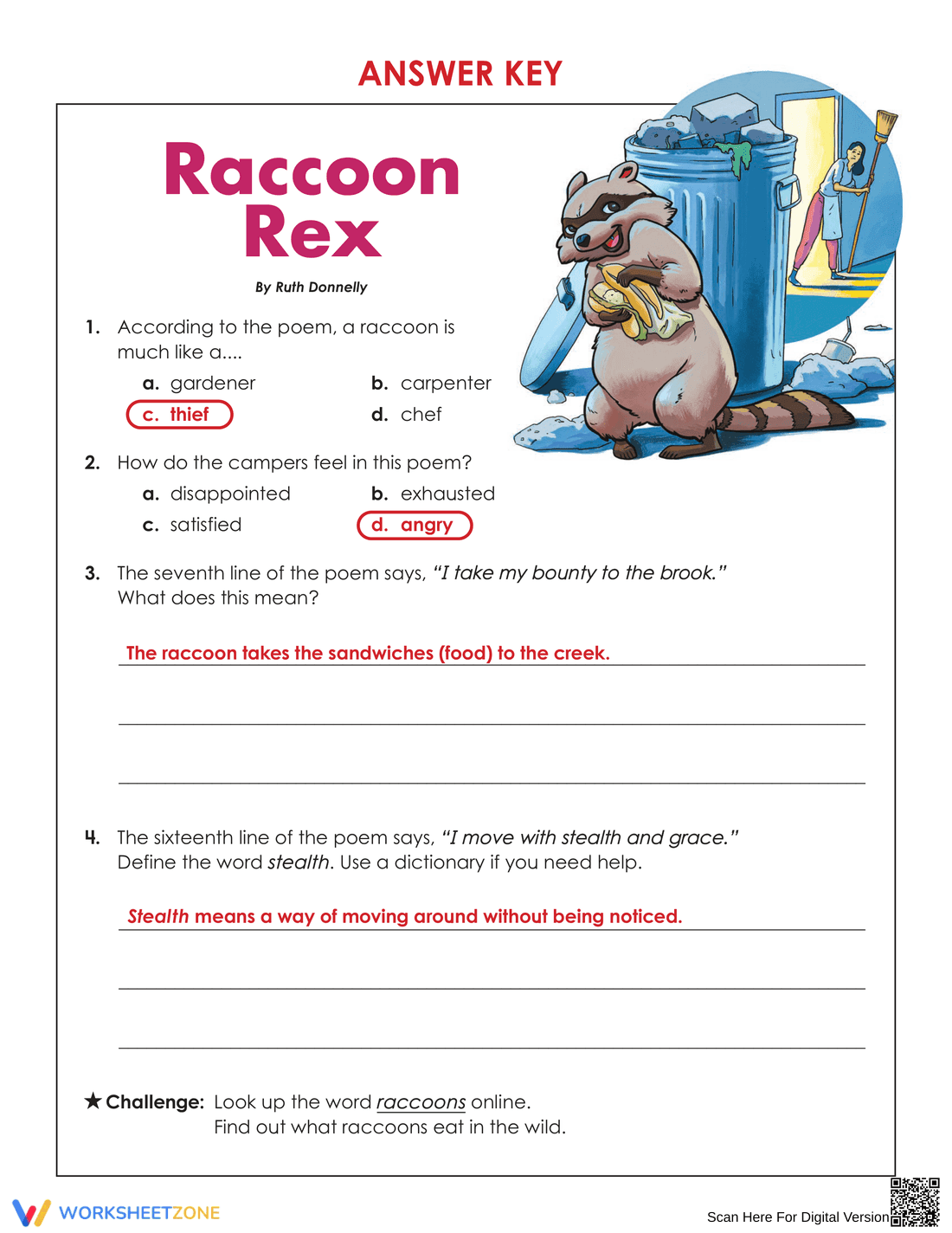
This Grade 3 poetry reading comprehension worksheet helps students analyze rhythm, rhyme, and character traits in the poem "Raccoon Rex" by Ruth Donnelly. Students read the text and answer targeted questions to build critical analysis skills. This resource ensures learners locate text evidence to support their answers.
At a Glance
- Grade: Grade 3 · Subject: English Language Arts
- Standard:
CCSS.ELA-LITERACY.RL.3.1— Ask and answer questions to demonstrate understanding of a text- Skill Focus: Poetry comprehension and vocabulary acquisition
- Format: 2 pages · 5 problems · Answer key included · PDF
- Best For: Independent reading practice and quick assessment
- Time: 15–20 minutes
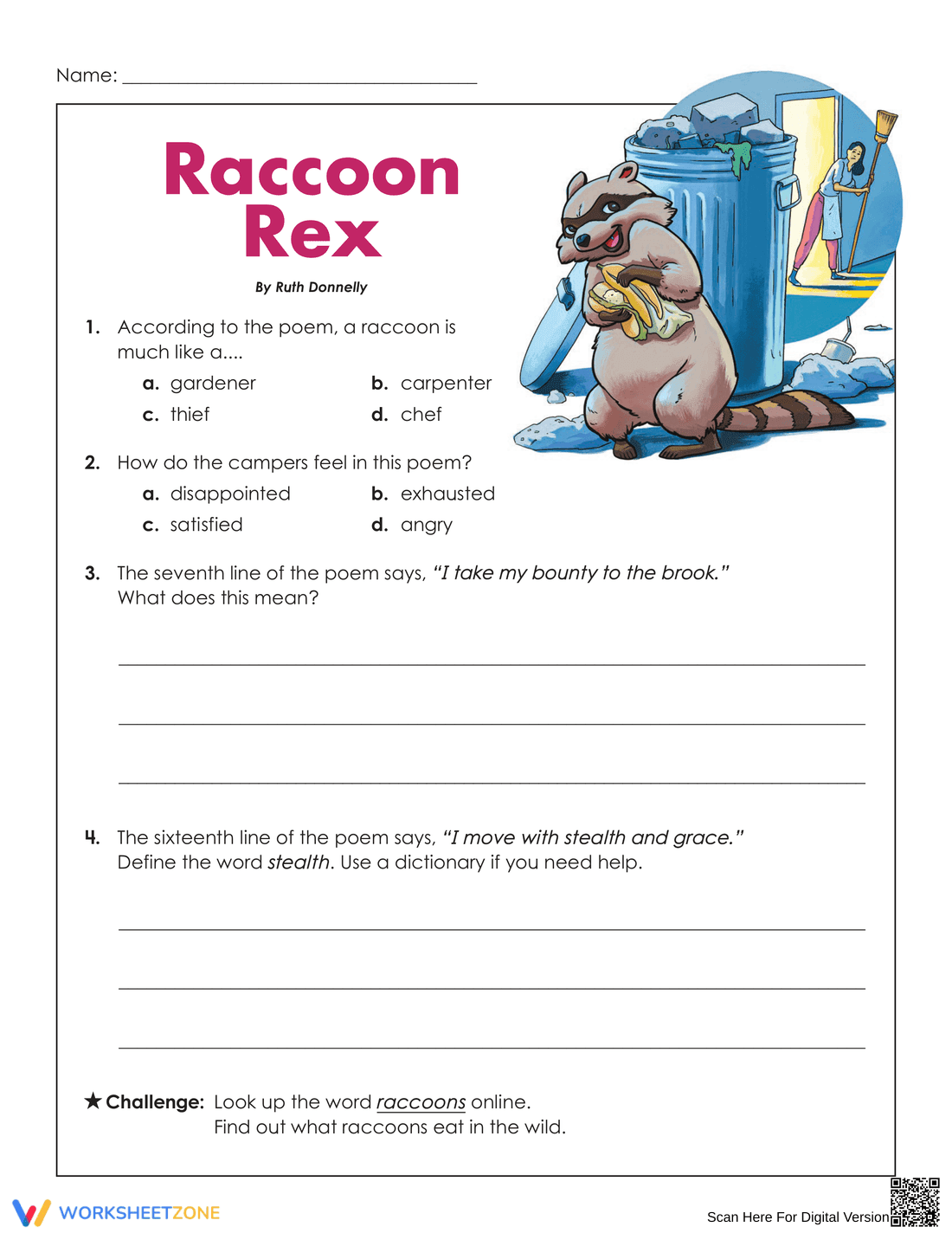
This packet contains a two-page printable layout designed for immediate classroom use. The first page features the complete text of the poem, accompanied by a clear illustration of a raccoon to support visual learners. The second page provides four structured comprehension questions and one challenge activity. These tasks include multiple-choice questions focusing on character feelings and literal interpretation, open-ended questions requiring text evidence, and a vocabulary definition task. A complete answer key is provided to facilitate rapid grading.
Implement this resource with a simple three-step workflow. First, print the two-page document, which takes less than one minute. Second, distribute the sheets to your class for a focused fifteen-minute independent activity. Third, review the answers using the provided key, requiring only two minutes of teacher grading time. This efficient design makes the resource ideal for emergency substitute plans, morning work, or homework assignments.
Standards Alignment
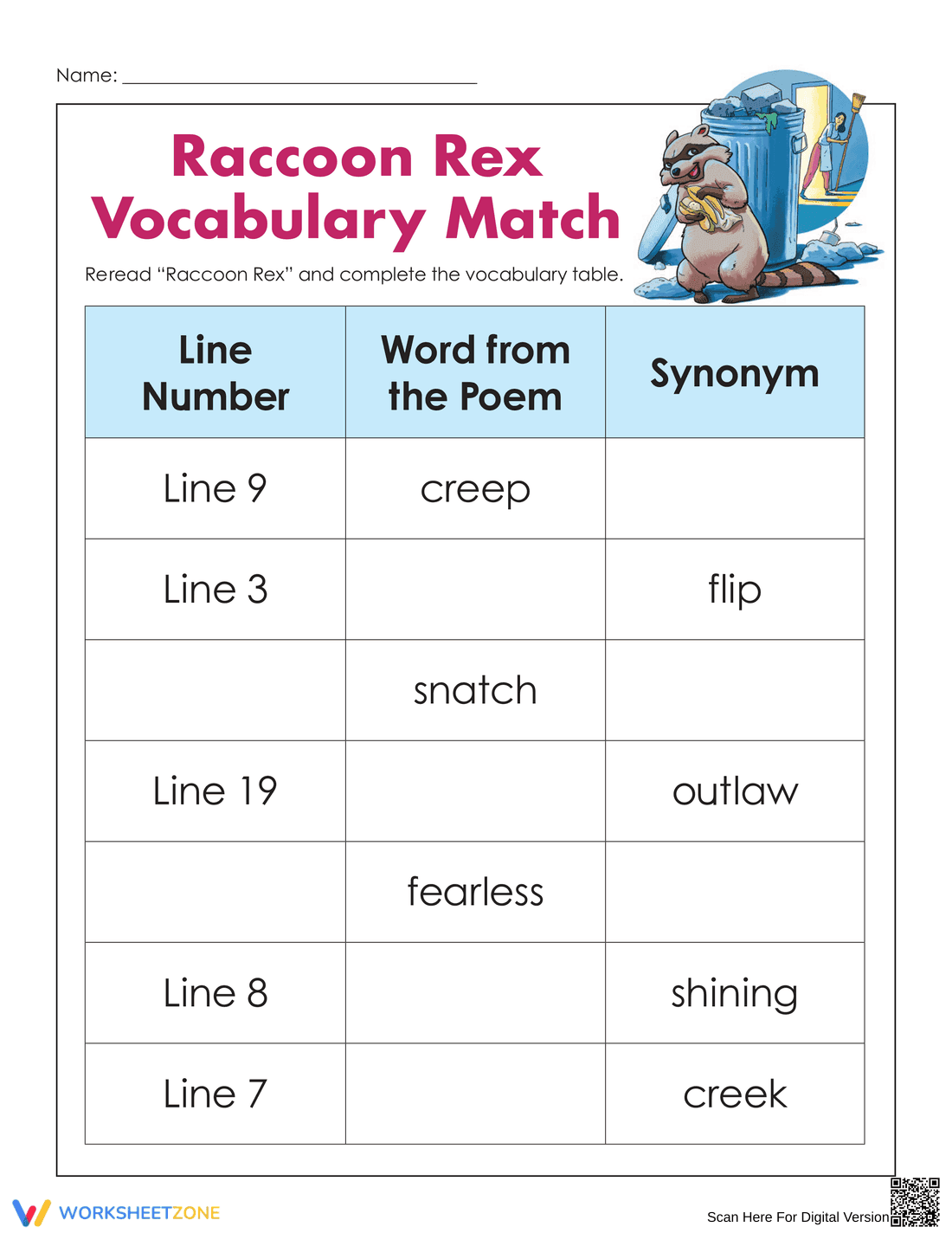
This activity aligns directly with the Common Core State Standard CCSS.ELA-LITERACY.RL.3.1, which requires students to ask and answer questions to demonstrate understanding of a text, referring explicitly to the text as the basis for the answers. Additionally, it supports vocabulary development under CCSS.ELA-LITERACY.RL.3.4 by asking students to define words in context. Both standard codes can be copied directly into lesson plans, IEP goals, or district curriculum mapping tools.
How to Use It
Use this worksheet during the independent practice phase of a poetry unit. After direct instruction on stanza structure and rhyme schemes, assign this text to evaluate individual comprehension. Alternatively, use it as a formative assessment tool; observe how students locate the specific lines mentioned in questions three and four to gauge their ability to cite text evidence. Expect completion within fifteen to twenty minutes.
Who It's For
This resource is designed for third-grade students, but it also serves as a valuable intervention tool for fourth or fifth graders needing additional reading support. Pair this worksheet with a lesson on nocturnal animals or a broader unit on narrative poetry to deepen student engagement and build cross-curricular connections.
According to the Fisher & Frey (2014) framework for close reading, structured text-dependent questions are essential for guiding students to analyze vocabulary and author intent. This worksheet directly supports that instructional methodology by requiring learners to return to specific lines of the poem to define terms like "stealth" and interpret figurative phrases. By aligning tasks to CCSS.ELA-LITERACY.RL.3.1, the resource ensures that students practice the foundational skill of citing evidence, which is a key predictor of later reading success. The clear layout minimizes cognitive load, allowing young readers to focus entirely on decoding and comprehension. Educators can confidently integrate this tool into daily reading blocks, knowing it meets rigorous standards for text-dependent analysis and vocabulary acquisition in the primary grades.


