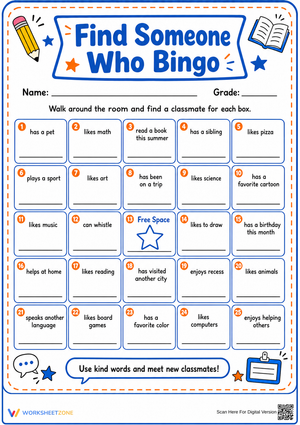
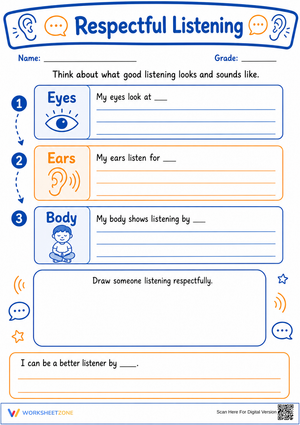
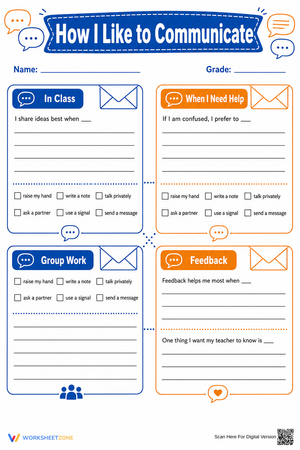
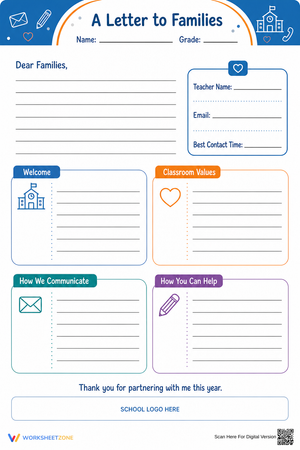
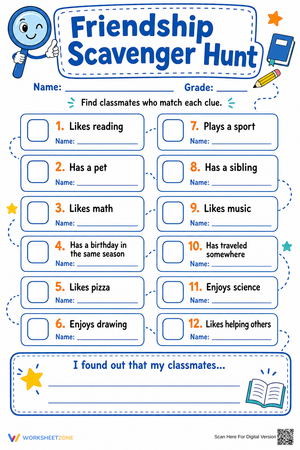
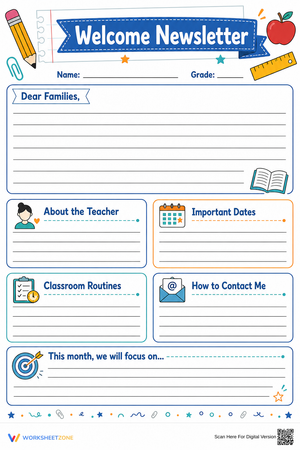
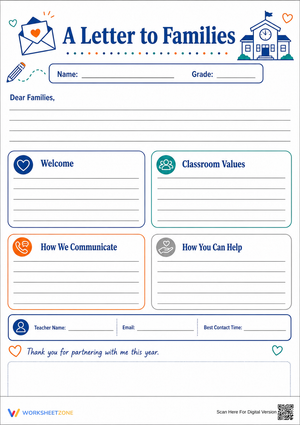
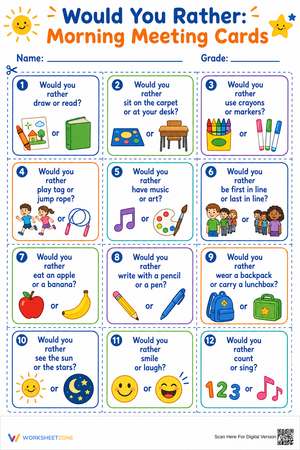
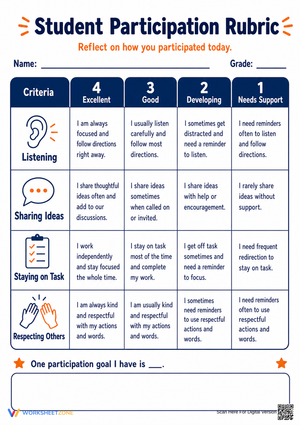
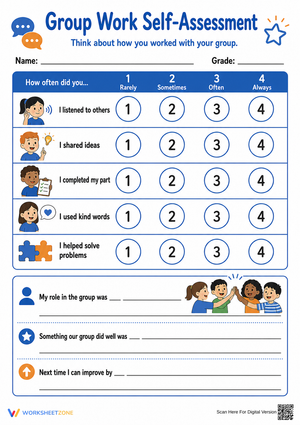
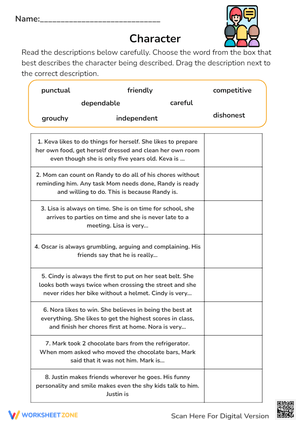
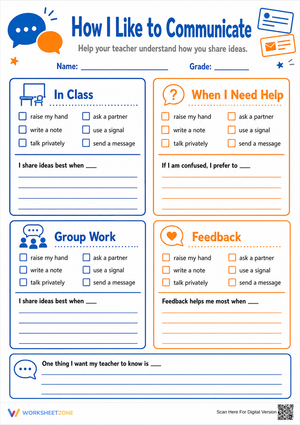
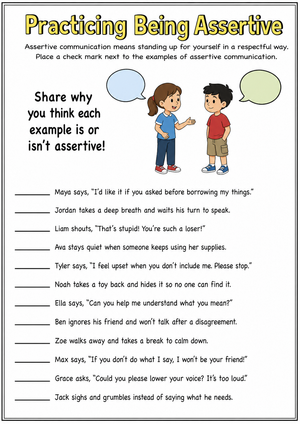
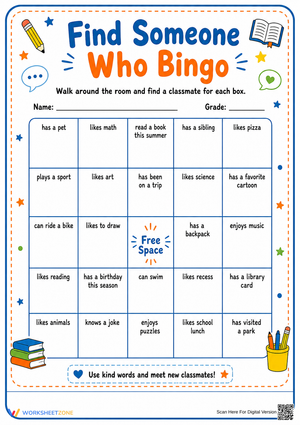
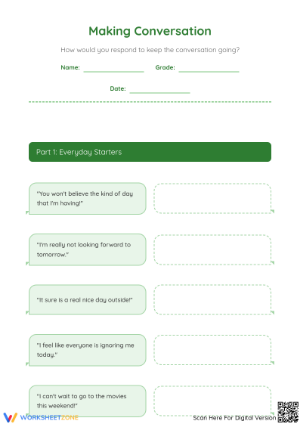
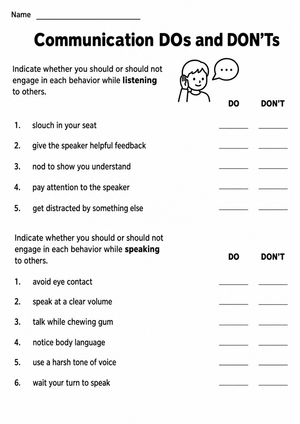
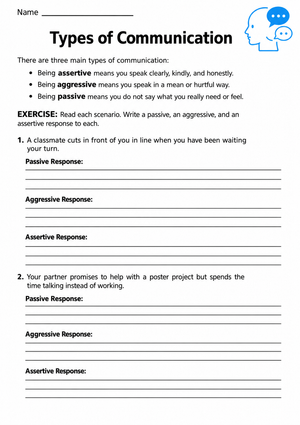
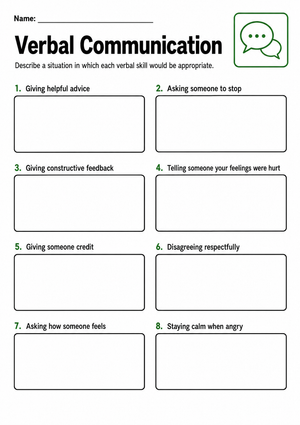
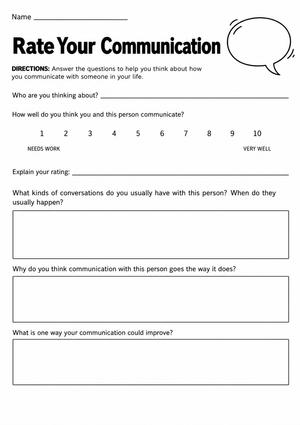
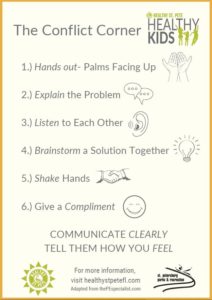
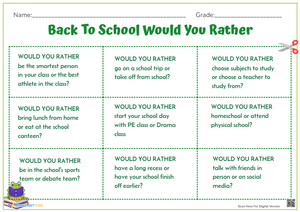
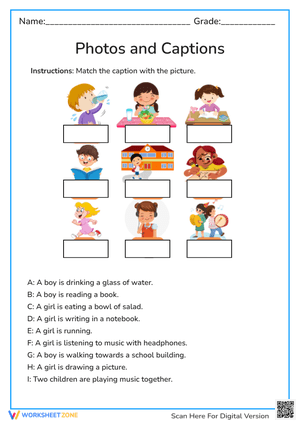
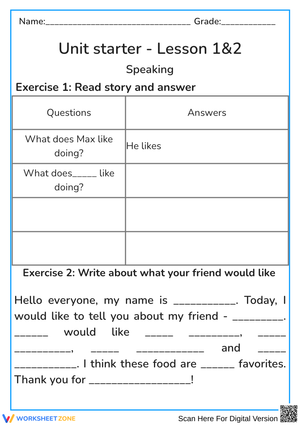
These communication skills worksheets for 3rd grade give teachers a targeted set of resources for the social-emotional skills that 8- and 9-year-olds are actively working out — active listening, I-statement construction, non-verbal cue reading, and conflict resolution through words rather than reactions. Each worksheet addresses one skill specifically, which means teachers can slot them into a morning meeting, a small-group rotation, or the six minutes after a rough recess without reworking anything else. The set is print-ready, which matters when a conflict is live and you need something in a student's hands quickly.
What These Worksheets Actually Cover
Third grade is when friendships get more complicated. Shared interests start mattering in ways they didn't in first or second grade, social hierarchies begin to form, and students feel real hurt when they're left out or misunderstood. The worksheets in this set address exactly those dynamics. Students don't just read about communication — they underline examples, rewrite statements, annotate illustrations, and fill in structured response frames that require them to identify and name specific feelings rather than describe situations in the abstract.
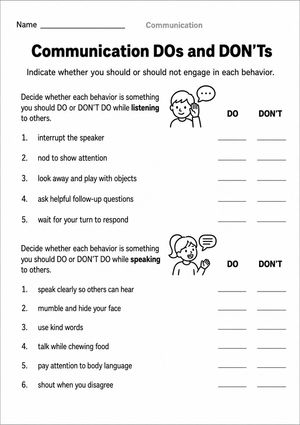
- Active listening: Students mark which listening behaviors they practiced during a partner activity — eye contact, calm body, not interrupting — then write a one-sentence summary of what their partner said in their own words, not a word-for-word repetition.
- I-statements: Fill-in-the-blank frames ("I felt ___ when ___ because ___") paired with short written scenarios. Later worksheets in the set ask students to construct the statement without the frame, building independence as confidence grows.
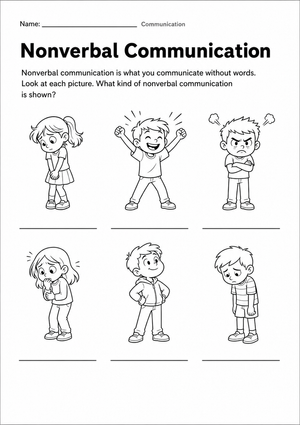
- Non-verbal cues: Illustrated social scenes with no dialogue, where students identify a character's likely emotion and explain which visual detail — posture, facial expression, gesture — told them so.
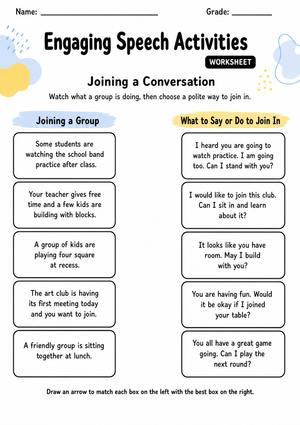
- Turn-taking and conversation skills: Students use sentence starters to practice asking follow-up questions, then self-assess whether they contributed to a real back-and-forth exchange or mainly waited for their own turn to speak.
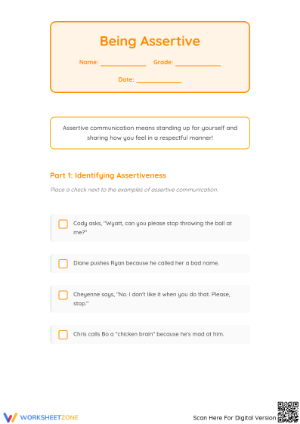
- Conflict resolution: Short written scenarios where students choose from multiple response options, explain their reasoning, and rewrite a "you-statement" as an I-statement.
Common Student Errors Worth Anticipating Before the Activity Starts
The most predictable error in I-statement practice is the disguised you-statement. A student writes "I feel like you're being unfair" and believes the task is done because the sentence begins with "I feel." But what follows that opener is a judgment about someone else's behavior — not an emotion word. This appears in student work consistently enough to warrant a quick class discussion before the worksheet: what counts as a feeling word (frustrated, nervous, embarrassed, left out) versus what counts as an opinion about another person. Including a printed emotion word bank directly on the worksheet reduces this error significantly without making the communication task any easier.
Non-verbal cue worksheets surface a different pattern. Strong readers default to whatever text appears in the illustration — a speech bubble, a caption — and skip the body language entirely. Covering or removing that text before students examine the scene forces attention toward the visual information the skill actually requires. Students who are accustomed to hunting for word-based clues find this genuinely hard at first, which is useful diagnostic information for teachers to have.
In active listening exercises, the summarizing task trips students up not because they weren't paying attention, but because they don't yet know how to paraphrase. They attempt to recall their partner's exact words, can't reproduce them perfectly, and freeze. Spending two minutes before the activity distinguishing between "repeat" and "restate" — with a teacher-modeled example — prevents most of that stalling before it starts.
Building These Worksheets Into Your Week Without Carving Out a Separate Block
Morning meeting is the natural starting point for the active listening and I-statement worksheets. Introduce one skill as the week's focus on Monday — use the worksheet as the discussion anchor — and then keep returning to that vocabulary during transitions, conflicts, and partner work throughout the rest of the week. By Friday, students start reaching for that language on their own without prompting. Covering a new topic every single day rarely produces the same kind of carry-over.
Small-group rotations give the conflict resolution and non-verbal cue worksheets room to work properly. With four to six students at a table instead of the whole class, there is space to role-play, pause when something goes sideways, and catch a disguised you-statement in real time — rather than finding the same error written across twenty papers on Thursday. The smaller setting also helps students who feel exposed practicing these skills in front of a full classroom audience.
A timing note: the communication skills worksheets for 3rd grade fit most naturally in the first six weeks of school, when students are still negotiating friendships and classroom norms haven't fully solidified. Introducing the set later in the year isn't wrong, but the habits you want to redirect — talking over peers, blame-heavy language, missing non-verbal cues — are easier to interrupt early than after they've become the room's default.
How to Use These Worksheets With Students at Different Readiness Levels
Students who need additional support with the I-statement worksheet benefit when the teacher reads the scenario aloud before they begin writing. Many students who struggle with decoding can identify and articulate their feelings clearly — the communication skill is present, and the reading demand is what's in the way. Removing that barrier without altering the task preserves what the worksheet is actually assessing. A printed emotion word bank gives those students vocabulary access without lowering the expectation for what they produce.
Students who move quickly through the written tasks can extend any worksheet into a role-play. After completing a written conflict resolution response, they pair up, act it out, and swap roles so each student experiences both sides of the scenario. A more demanding extension is the peer observation role — one student delivers a verbal I-statement while a partner listens and notes whether the feeling word used was a genuine emotion or a disguised judgment. That level of close, analytical listening is genuinely challenging for third graders and makes the activity worth staying with rather than replacing with something new.
For students receiving SEL counseling or Tier 2 behavioral support, these worksheets align with the language most counselors already use — I-statements, emotion naming, body language awareness. The communication skills worksheets for 3rd grade use vocabulary that travels across classroom and pull-out settings without contradiction, so students aren't maintaining two parallel systems for talking about the same skills.
Frequently Asked Questions
Can the I-statement worksheet be used right after a real conflict, or is it mainly for hypothetical practice?
Using it immediately after a real conflict is often when it works best. Students who just came in from a heated recess disagreement have a genuine feeling to name, not a fictional one. Handing them the I-statement frame at that moment gives language to something they're actively experiencing, which tends to stick far more than completing the same exercise about a made-up scenario later in the afternoon. Keep a small supply in a classroom folder specifically for post-conflict use — it becomes a natural first step rather than a disciplinary detour.
What if a student refuses to participate in the partner activities?
The written portion of each worksheet stands on its own. A student can complete the I-statement or non-verbal cue task independently and then debrief with the teacher one-on-one rather than performing in front of a partner. That approach still builds the skill and gives the teacher useful information about where the student is — without requiring a public communication moment that some students aren't ready for.
How do these resources fit if our school already uses a formal SEL curriculum?
These communication skills worksheets for 3rd grade work as reinforcement rather than replacement. If your school uses Second Step, PATHS, or RULER, the vocabulary and concepts here align closely with what students already encounter in those programs. The worksheets add written practice during the weeks between formal lessons — exactly when the concepts need reinforcement before they fade from working memory and disappear from daily conversation.
Are these appropriate for students who struggle with writing?
Several worksheets use sentence frames, emotion word banks, or illustrated prompts that reduce the writing demand without changing the communication skill being assessed. The non-verbal cue worksheets require no writing at all — students annotate illustrations or circle responses — making them an accessible starting point for students at any writing level. For students with IEP accommodations for written expression, allowing verbal responses while the student uses the worksheet as a visual reference preserves the intent of the activity without creating an unnecessary barrier to demonstrating the skill.












 Interactive Worksheet Maker
 Quiz Maker
 Word Search Maker
 Crossword Puzzle Maker
 Word Scramble Generator
 Sentence Scramble Generator
 Handwriting Worksheet Generator
 Name Tracing Generator
 Fill In The Blank Generator