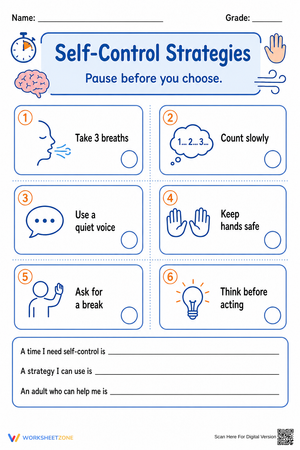
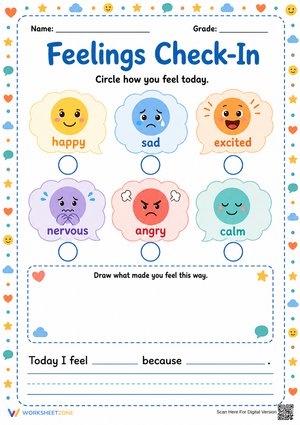
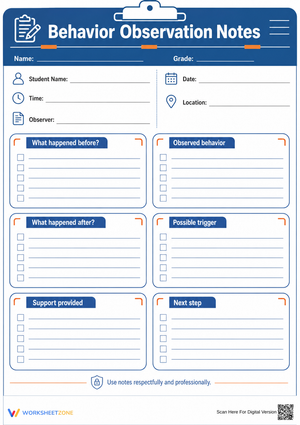
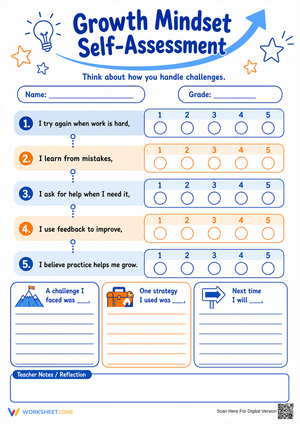
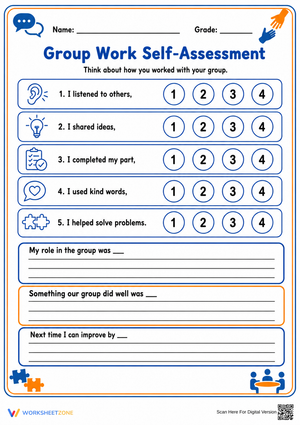
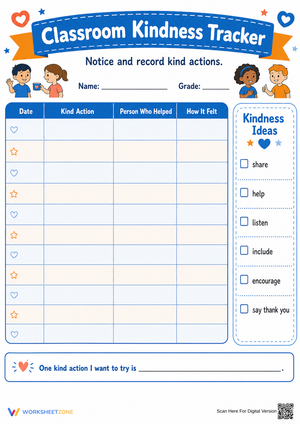
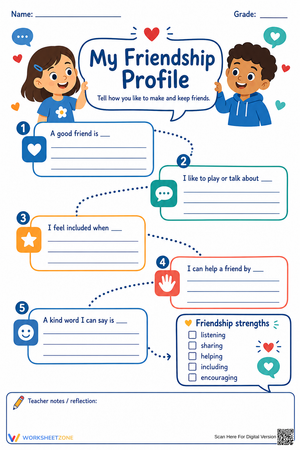
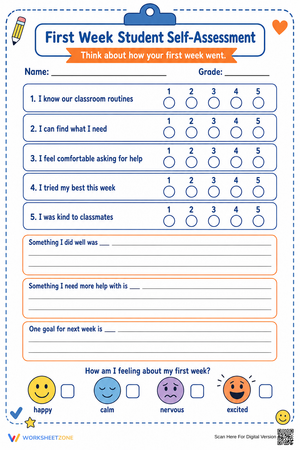
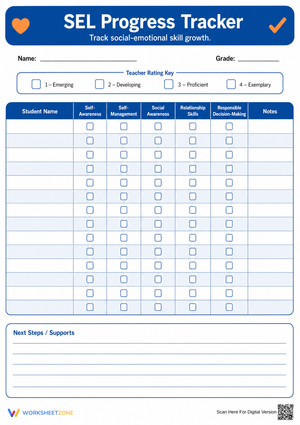
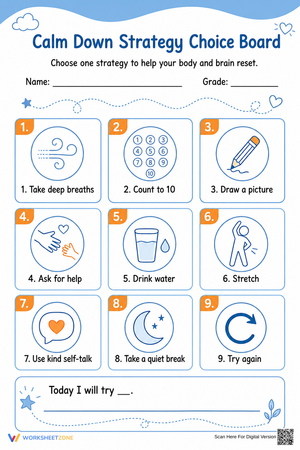
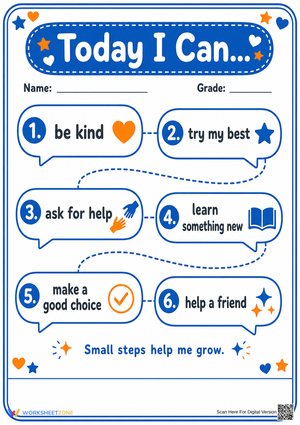
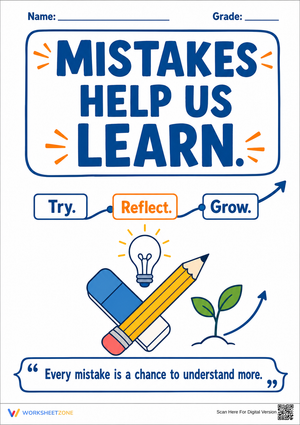
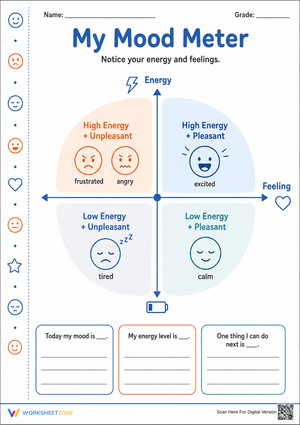
These 3rd grade behavior pdf worksheets give teachers a ready set of tools for the grade level where classroom dynamics change fastest — where kids are independent enough to push back but not yet equipped to name what they are feeling or choose a different response. The set covers four distinct formats: reflection think sheets, goal-tracking logs, social scenario practice, and pre-correction checklists that teachers use proactively before high-energy transitions rather than reactively after the disruption has already happened.
What the Set Targets
Eight- and nine-year-olds are navigating real peer complexity for the first time — playground hierarchies, shifting friendships, the sting of being left out of a group — while simultaneously absorbing a heavier academic load than they have faced before. Multiplication, multi-paragraph writing, and longer independent work blocks create frustration that surfaces as off-task behavior, short-fuse reactions, and conflict with classmates. These worksheets address the behavioral layer of those pressures directly.
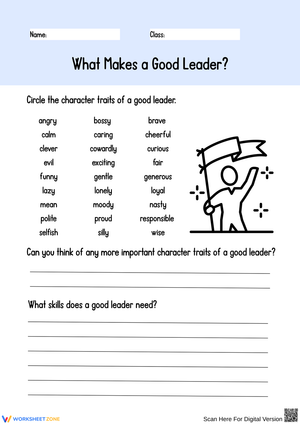
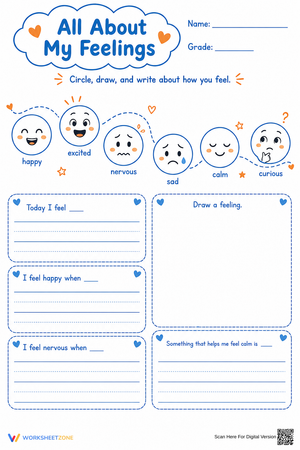
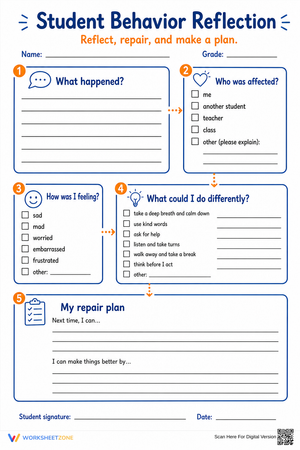
- Think sheets walk students through four prompts in sequence: what happened, what they were feeling at the time, who was affected by the choice, and what a better response would look like. The structure matters — it prevents the default "I was bad and I'm sorry" response by requiring specific reasoning at each step rather than a one-sentence resolution.
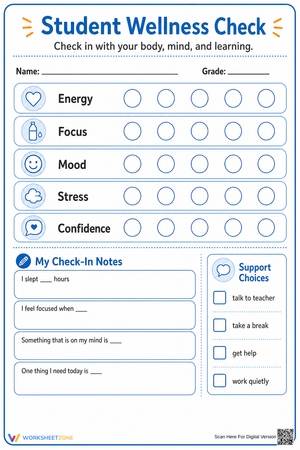
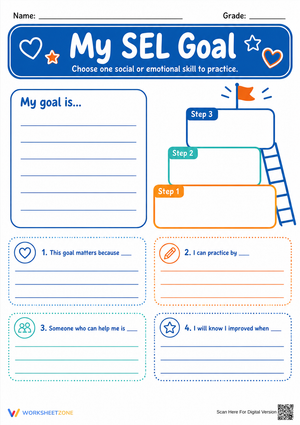
- Goal-setting logs ask students to name one concrete behavioral target for the week and rate their own performance against it each day. These work best when the teacher models a specific goal first — not "be good" but "ask for help instead of shutting down when the work feels hard" — before students write their own.
- Social scenario worksheets present short conflict situations drawn from the actual contexts where 3rd grade disputes tend to happen: recess game disagreements, project group roles, lunchroom seating. Students identify each character's perspective, then choose or write a resolution strategy.
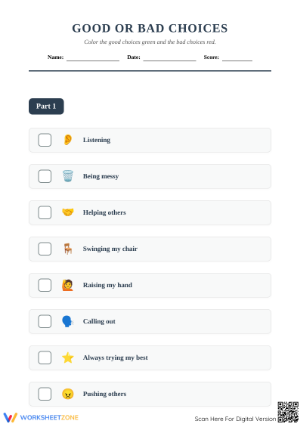
- Pre-correction checklists are used before a high-energy event — a science lab, a whole-class game day, a field trip — to walk students through expected behaviors while they are still calm. Five minutes with this worksheet before the event consistently reduces the number of reminders needed during it.
Building These Into Your Week Before Problems Start
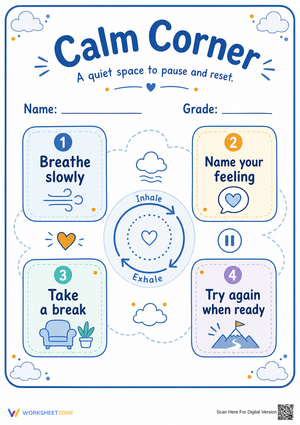
The 3rd grade behavior pdf worksheets in this set function best when they are already part of the room's physical environment, not something that appears only after an incident. A calm-down corner with a small stack of blank think sheets and a pencil gives students the option to self-refer before they hit the threshold of a behavioral outburst. When the corner exists as a permanent fixture rather than a consequence station, students learn to use it as a regulation tool — the distinction matters to how they experience the choice of going there.
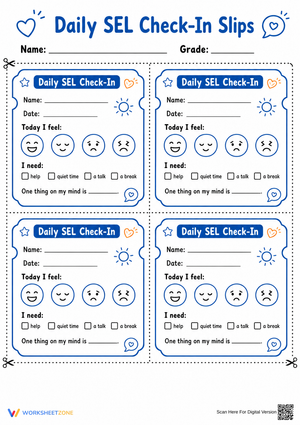
Pre-correction checklists belong in the Monday morning meeting rotation or in the five minutes before any transition that disrupts the normal schedule. The checklist is not a lecture — it is a quick visual run-through that students read and check off themselves, priming their decision-making before they are in the situation. Teachers who use this format before assemblies or special events report fewer redirects during the event itself, which tracks: students have already rehearsed the expectations on paper in a low-stakes moment.
After a student completes a think sheet, a two-minute follow-up conversation converts the written work into something that actually sticks. One targeted question — "Which part of this was hardest to write?" — surfaces more genuine reflection than reading the responses back together. The worksheet starts the thinking; the brief exchange closes it.
What Student Work Tends to Reveal — and Where to Push Back
The most predictable pattern on think sheets is the one-sentence resolution that signals compliance rather than reflection: "I will not do it again." The structured prompts are there specifically to interrupt that pattern, but they only hold if the teacher insists on specific answers. When a student writes "nobody" in the "who was affected" box, that is the moment to sit down and ask them to name a person. The genuine thinking happens in that exchange, not from the worksheet alone.
Goal-setting logs surface a different tendency. Students writing vague, unmeasurable goals — "be nicer," "listen better" — have not internalized what behavioral specificity looks like in practice. The fix is concrete modeling before students ever write their own: put two goals on the board, one vague and one specific, and ask the class which one they could actually check at the end of the day. That four-minute contrast exercise shifts the quality of every log in the room for the rest of the semester.
Scenario worksheets present their own challenge. A student who quickly identifies the textbook-correct answer — "they should take turns and talk it out" — may still have no idea how to enact that reasoning during a real dispute twenty minutes later. This gap between paper performance and live behavior is typical at this developmental stage. It is the reason scenario practice needs repeated exposure across different social contexts rather than a single worksheet completed once and filed away.
Standard Alignment
The CASEL Social-Emotional Learning framework identifies five core competency areas; these worksheets address two of them most directly. Self-Management — the ability to regulate emotions, set goals, and use strategies to stay focused — is the target of the think sheets and goal logs. Responsible Decision-Making — analyzing choices, considering consequences, reflecting on outcomes — is the primary focus of the scenario worksheets and pre-correction checklists. Schools using 3rd grade behavior pdf worksheets as part of their SEL instruction can point to specific worksheet formats as evidence of grade-level competency work in both areas without needing to build a separate document trail.
Within a PBIS framework, these resources align naturally with Tier 1 universal instruction — reinforcing school-wide expectations through consistent, predictable visual formats — and with Tier 2 targeted support, where goal-tracking logs produce documented, student-generated data that check-in/check-out teams can review across weeks. The documentation value is worth noting for teachers who participate in SST or IEP meetings: a folder of a student's completed think sheets over six weeks tells a clearer behavioral story than any verbal summary of the same period.
Adjusting These Worksheets Across Student Levels
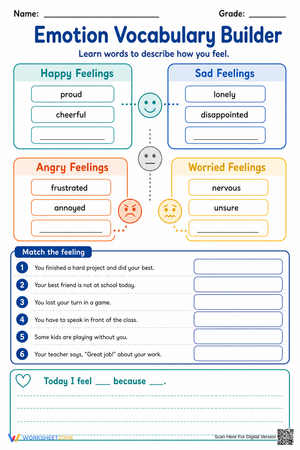
Students who avoid writing — whether because of a processing difference, limited stamina, or an IEP accommodation — often shut down in front of blank reflection prompts. Adding sentence starters before printing ("I was feeling _____ because _____" and "Next time I will _____") keeps the reflective structure intact while removing the barrier of generating the first words. The thinking requirement stays the same; the entry point becomes more manageable without reducing what students are asked to understand.
For English language learners working alongside these resources, pairing the scenario worksheets with a printed emotion chart allows students to identify and circle feelings before they attempt to write about them. The written response then confirms rather than initiates the thinking, which is a more workable sequence for students with limited English production. 3rd grade behavior pdf worksheets printed at slightly larger font sizes also reduce visual crowding for students who are still building reading stamina — a small formatting adjustment that costs nothing in print but noticeably affects how students interact with the prompts.
Students who move through the worksheets quickly and accurately benefit from a comparative extension: complete two scenario worksheets covering different social contexts, then write a sentence or two comparing which resolution strategy worked better and why. The comparison requires more abstract reasoning than completing a single worksheet correctly, and it keeps high-performing students engaged with the same core behavioral content rather than pivoting to unrelated extension tasks.
Frequently Asked Questions
How is a reflection worksheet different from a standard disciplinary write-up?
A write-up documents what a student did for the purposes of an administrative record. A reflection think sheet asks the student to analyze what happened, trace it back to an emotional trigger, consider the effect on others, and plan a different response. The think sheet is an instructional tool, not a disciplinary record — though completed sheets can accompany a referral when a student's own written pattern of reasoning is relevant context for counselors or administrators reviewing recurring behavior.
How do these resources fit into a PBIS system?
At the Tier 1 level, pre-correction checklists and think sheets reinforce the school-wide expectations that PBIS teams define as universal norms. At the Tier 2 level, goal-tracking logs produce consistent data that check-in/check-out support teams can use to monitor behavioral response over time. Because the format is standardized across the set, data from these worksheets is readable across classrooms without additional translation when a team is reviewing a student's progress.
Can these be used preventively, not only after an incident?
Proactive use is the strongest application in this set. Pre-correction worksheets before field trips or high-energy activities, goal-setting logs at the start of the week, and scenario practice during morning meetings are all preventive uses. Teachers who reserve these resources exclusively for post-incident response are using only part of what the set offers. Regular, low-stakes use builds the habit of behavioral self-assessment before students need those skills in a charged moment — which is precisely when the habit is hardest to access without prior practice.
Why is PDF the right format for printing these worksheets?
PDF preserves the exact layout — line spacing, text box sizing, visual structure — regardless of printer model or operating system. Behavior worksheets rely on white space and prompt placement to guide thinking; a format that reflows prompts onto an unexpected line or cuts off a text box at the margin loses its instructional clarity. PDF removes that variable entirely, so what teachers print is what students actually work with.












 Interactive Worksheet Maker
 Quiz Maker
 Word Search Maker
 Crossword Puzzle Maker
 Word Scramble Generator
 Sentence Scramble Generator
 Handwriting Worksheet Generator
 Name Tracing Generator
 Fill In The Blank Generator