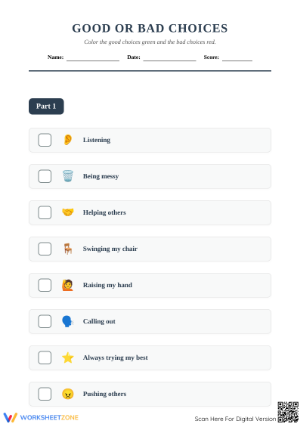
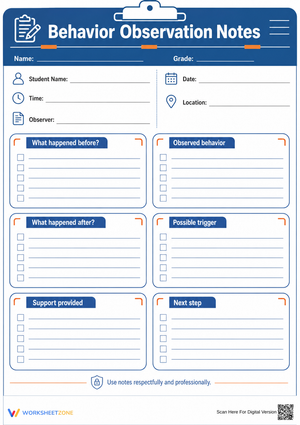
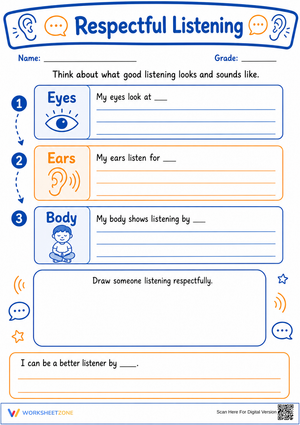
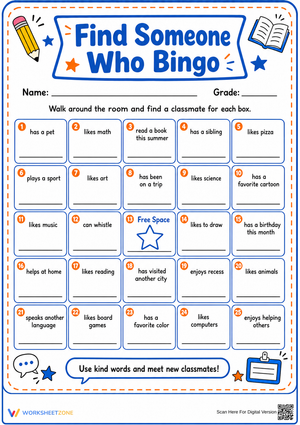
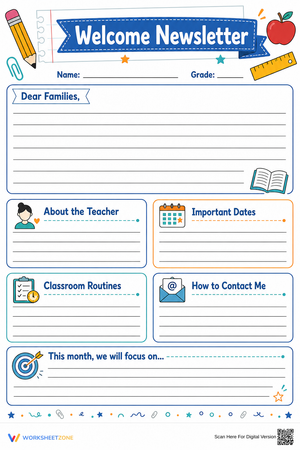
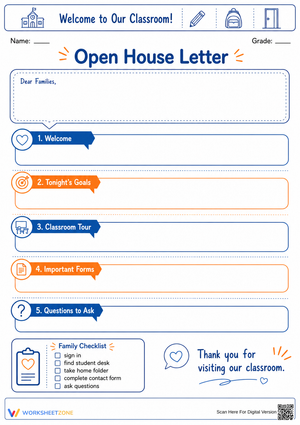
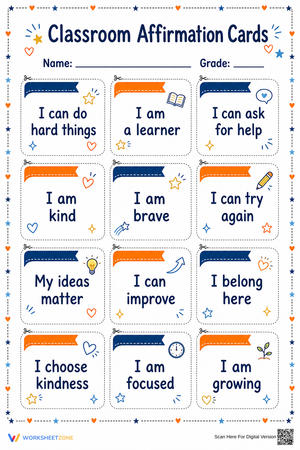
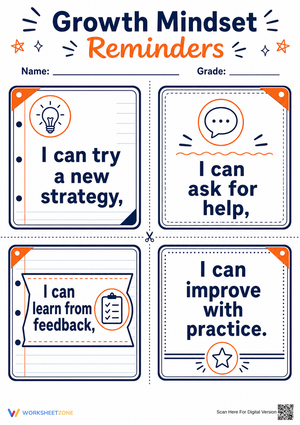
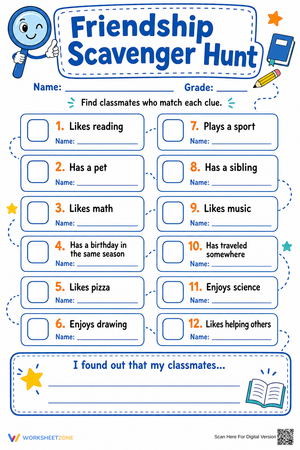
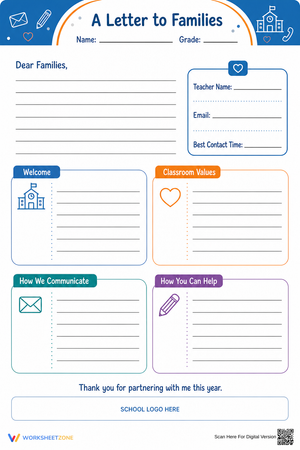
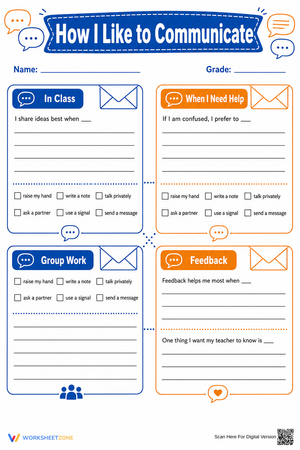
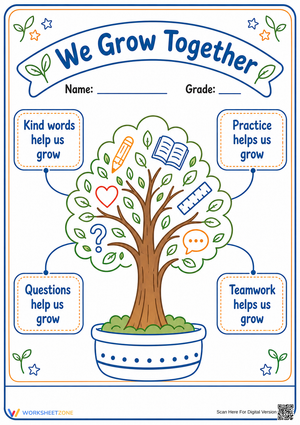
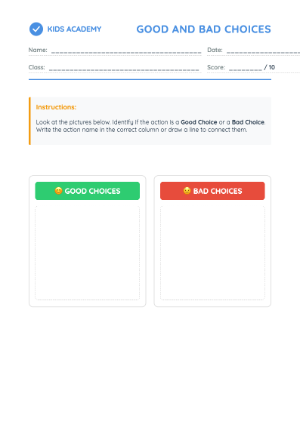
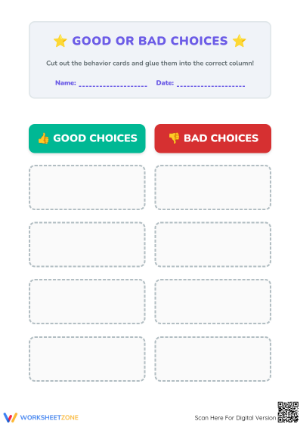
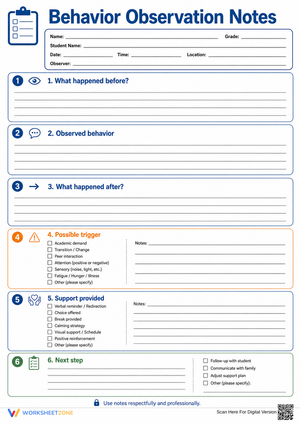
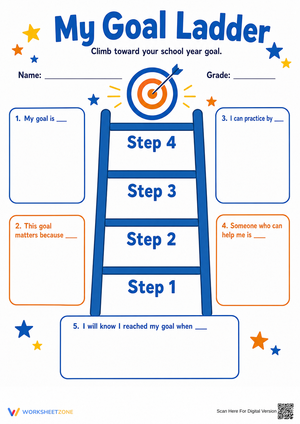
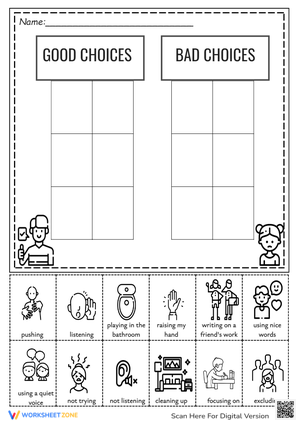
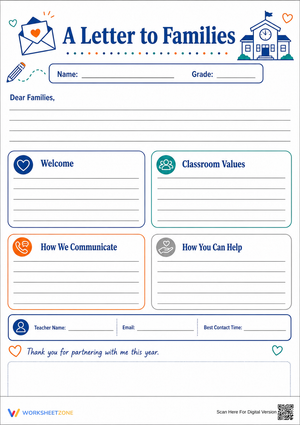
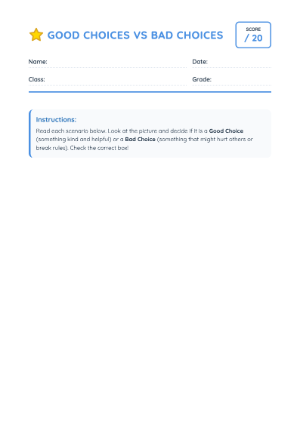
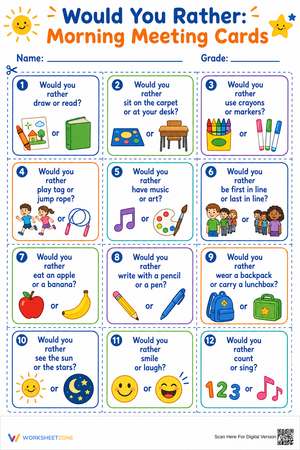
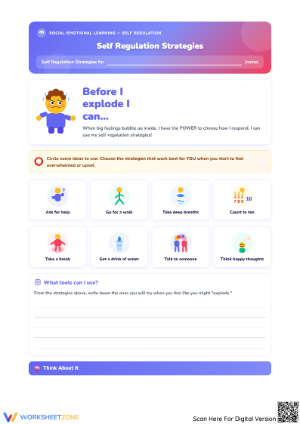
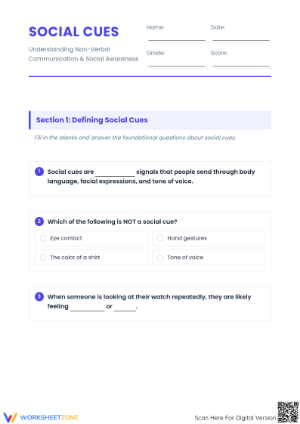
These 3rd grade social skills worksheets resources give teachers a targeted way to address the peer dynamics that define this grade level — clique formation, group project friction, and the shift from parallel play to genuine collaboration. Each worksheet focuses on a specific CASEL competency, so it fits cleanly into morning meeting, small group time, or a counselor pull-out session without needing additional materials to make it work.
The Specific Competencies Each Worksheet Builds
Third grade is when peer opinion starts to matter more than adult approval, which changes everything about how social conflicts play out. Kids this age are navigating negotiation, compromise, and the early stages of group identity — and they need explicit instruction in each of those skills, not just modeling. The 3rd grade social skills worksheets set covers five core competency areas:
- Emotion identification: Students label their feelings using vocabulary that goes well past happy, sad, and mad. Words like frustrated, jealous, overwhelmed, and proud appear across the set because third graders need terms that match what they actually experience — not just the easiest ones to reach for.
- Perspective-taking: Scenario-based worksheets ask students to step into a classmate's point of view and write what that person might be thinking or feeling. This skill does not develop automatically at this age without direct instruction and repeated structured practice.
- Conflict resolution: Step-by-step flowcharts walk students through identifying the problem, naming each person's need, and generating a fair solution. The format makes visible a thought process that most eight-year-olds are still developing internally.
- Active listening and conversation: Partner interview worksheets give students a framework for initiating a conversation and genuinely responding to what a peer says — not just waiting for a turn to speak.
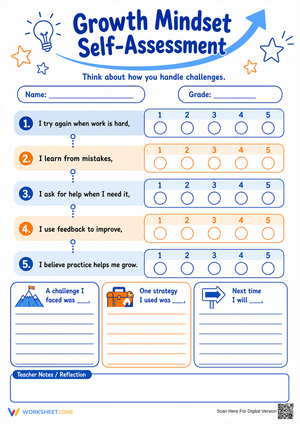
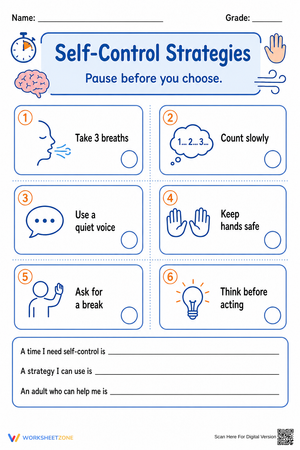
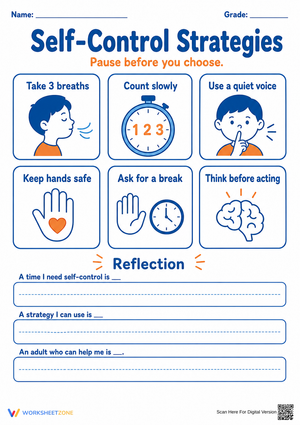
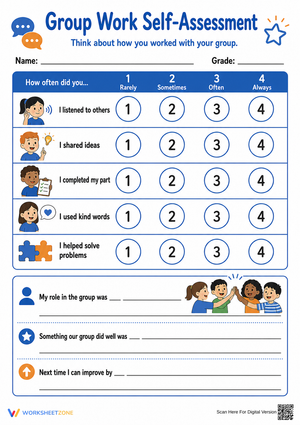
- Self-regulation: Brief self-reflection check-ins ask students to name a social goal for the week, then return to that worksheet and write what actually happened. That plan-act-reflect loop builds metacognitive habits across the school year.
Each competency area appears in multiple formats, which matters because students who correctly label an emotion on a chart don't always recognize that same emotion in themselves mid-conflict. Repeated exposure across varied task types is what closes that gap.
Working These Into Your Week Without Losing Instructional Time
The most practical entry point is morning meeting. A scenario card takes about eight minutes — time enough to read it, have students write or mark their responses, and do a quick share-out before the day starts. Teachers who use these worksheets consistently report that the vocabulary from the cards starts showing up during recess and lunch, which is the actual goal. That transfer only happens when students encounter the same language repeatedly across the week, not through a single one-time lesson.
Small group pull-outs with a school counselor are a strong secondary setting, particularly for students who need more practice with conflict resolution before applying it in front of the full class. Conflict-resolution flowcharts work especially well in those shorter sessions because students leave with something concrete to reference during a real disagreement later in the day. One move worth building in: after students complete a scenario worksheet in writing, have them act out the resolution. Role-playing what they wrote surfaces tone of voice and body language in ways the written exercise alone cannot, and it gives teachers specific, real-time feedback to offer.
For the 3rd grade social skills worksheets set to pay off long-term, integration has to be consistent. When students recognize SEL as a fixed part of their week — not something that appears only after a difficult incident — they engage more honestly with the materials. The worksheet becomes a routine, not a consequence.
What Students Write vs. What They Actually Do
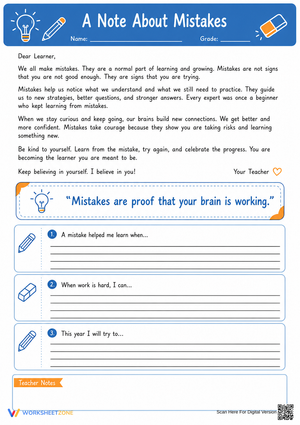
The most instructive pattern in student work: a child correctly identifies the right response on a scenario card — writing "I would say, 'That hurt my feelings, can we talk?'" — and then, thirty minutes later on the playground, shoves someone who cut in line. The worksheet captures what students know is appropriate. It doesn't automatically transfer to moments of genuine frustration. Teachers need to name this gap explicitly with students: the goal isn't to write the right answer, it's to practice thinking slowly so you can do it a little faster when you're actually upset.
A second pattern: when asked how a character in a scenario feels, students frequently skip the emotion and jump straight to what the character should do. "He should tell the teacher" instead of "He probably feels left out." This reflects where third graders are developmentally — action feels more concrete than internal states. Pointing this out when reviewing completed worksheets helps students slow down and name a feeling before reaching for a solution.
A third predictable error appears on conflict-resolution worksheets: students write "I would say sorry" regardless of whether the situation actually calls for an apology. It's the socially safe answer that requires the least cognitive effort. The flowchart format interrupts that shortcut by requiring students to name the problem and identify both parties' needs before they can reach a resolution — which forces more honest engagement with each scenario.
Adapting These Worksheets for Your Full Range of Learners
For English Language Learners, worksheets that include emotion wheels with picture cues and body-language illustrations reduce the reading demand without reducing the cognitive work. Sentence frames printed directly on the worksheet — "I feel ___ when ___ because ___" — give students the grammatical structure they need to express something they may already understand in their home language.
Students with autism spectrum disorder or ADHD often struggle most with the implicit, unspoken rules that many peers absorb through casual observation. Comic strip templates and step-by-step conflict flowcharts make those invisible rules visible and sequential. The predictable format of the worksheet itself is an asset here — students who freeze in unstructured social situations often engage readily when the sequence is laid out in front of them.
For students who move through this content quickly, scenario cards can point toward more complex situations: bystander dilemmas, leadership conflicts inside a group project, or scenarios where there's no clean right answer. That moral complexity pushes students past surface-level empathy into genuine ethical reasoning. Any of these 3rd grade social skills worksheets resources can be extended by adding one follow-up question: "What would you do if that strategy didn't work the first time?"
Frequently Asked Questions
What social skills are third graders expected to have?
By the end of third grade, students should be able to identify a range of emotions in themselves and others, take a basic perspective on a peer's experience, resolve minor conflicts without adult intervention, and work cooperatively in a group without constant teacher direction. Many students arrive without these skills fully in place — explicit instruction through structured materials addresses that directly.
How do I use these without cutting into academic instructional time?
Morning meeting, the transition after lunch, and the five minutes before dismissal all work. Scenario cards and self-reflection check-ins run under ten minutes. School counselors can run the longer conflict-resolution worksheets during pull-out sessions. Teachers who fold one worksheet into two or three days per week — rather than running a separate 30-minute SEL block — tend to see more consistent uptake across the school year.
Do these work for students with IEPs or 504 plans that address social behavior?
Yes. The structured, predictable format of scenario cards and flowcharts supports students who find open-ended social situations difficult. Visual supports built into many worksheets — emotion charts, picture prompts, sentence frames — give students with language-based or social communication goals a concrete way to demonstrate understanding. Completed worksheets also serve as documentation of social skills progress at IEP meetings, which teachers find useful when behavioral anecdotes alone don't capture what a student can do in a structured context.
How can I tell whether students are actually learning from the worksheets?
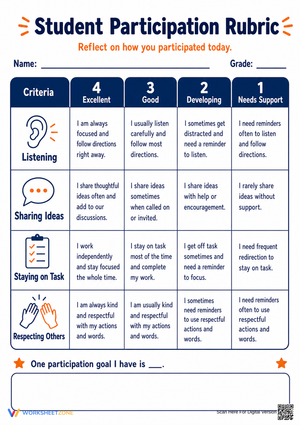
Watch what happens on the playground and during group work — that's the real assessment. Inside the classroom, a portfolio of completed scenario cards and self-reflection check-ins over a semester shows whether a student's written reasoning is becoming more nuanced over time. Rubrics tied to specific CASEL competencies — naming the feeling, identifying both parties' needs, proposing a realistic solution — give that portfolio a concrete evaluation structure. Parent conferences become more grounded when there's a set of completed worksheets to reference alongside behavioral observations.












 Interactive Worksheet Maker
 Quiz Maker
 Word Search Maker
 Crossword Puzzle Maker
 Word Scramble Generator
 Sentence Scramble Generator
 Handwriting Worksheet Generator
 Name Tracing Generator
 Fill In The Blank Generator