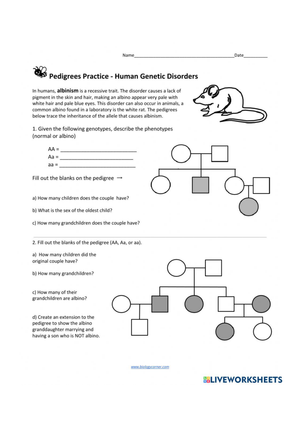
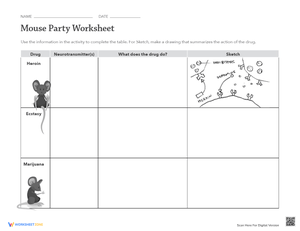
10th grade others science printable worksheets give teachers a practical entry point into the elective and interdisciplinary science topics that typically receive less instructional support than the core biology-chemistry-physics sequence. Earth science, environmental science, forensic science, astronomy — these subjects draw in students who disengage during standard chemistry units, yet they bring their own teaching challenges: sprawling content domains, thinner textbook coverage, and students who arrive with drastically different background knowledge depending on what middle school covered.
Subjects and Skills Across the Set
Each worksheet targets one focused concept within the elective science landscape rather than trying to span multiple topics in a single activity. The subjects covered include:
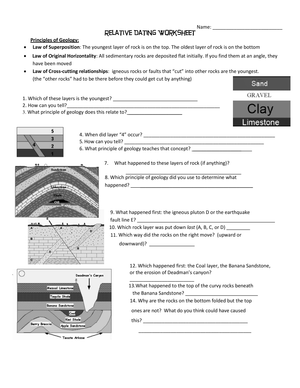
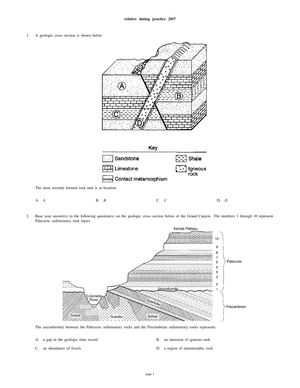
- Earth science: rock cycle sequencing, plate boundary classification, mineral hardness comparisons using the Mohs scale, and reading topographic maps
- Environmental science: calculating carbon footprints from household consumption data, interpreting biodiversity indices, and tracing cause-and-effect relationships in ecosystem disruptions
- Forensic science: fingerprint classification by loop, whorl, and arch patterns; unknown substance identification through chemical tests; and working through hypothetical case files using physical evidence
- Astronomy: tracing stellar evolution on an H-R diagram, converting between light-years and astronomical units, and interpreting redshift data as evidence for an expanding universe
- Marine biology: ocean zone identification, food web construction from population tables, and analyzing the relationship between water temperature and dissolved oxygen levels
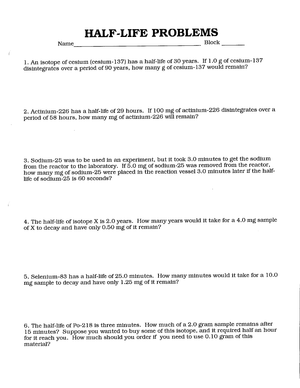
Because many 10th grade others science printable worksheets address content that standard textbooks treat in a page or two, the activities prioritize data interpretation and diagram analysis over definition memorization — a distinction that matters when students are building toward any kind of science reasoning assessment.
Frequent Student Errors Worth Watching For
The most persistent error in Earth science work is the conflation of weathering and erosion. Students write "erosion breaks rocks apart" when erosion is about transport, not breakdown — weathering does the breaking, erosion moves the pieces. This distinction appears on assessments every year and rarely sticks from a lecture alone. Having students sort process descriptions, then defend their categorization in writing, is what finally makes it land.
In environmental science, students routinely use a single data point to draw sweeping conclusions. A worksheet showing one year of temperature records will produce answers like "this proves climate change is accelerating" — which is a reasoning error, not a content error. Pointing students back to the axis labels and asking them to specify what the data can and cannot show is more productive than simply correcting the conclusion.
Forensic science worksheets surface a different problem: students skip the control step. When asked to identify an unknown substance using chemical tests, many stop as soon as one result seems to match — not realizing the unknown might match none of the listed substances, or that a second confirmatory test is required. Building that expectation into the worksheet's question sequence catches the error before it becomes a habit.
Standard Alignment
Several worksheets connect directly to NGSS High School Earth and Space Sciences standards. HS-ESS1-2 asks students to construct an explanation of the Big Bang using spectral data and cosmic background radiation — covered in the astronomy worksheets where students interpret redshift graphs and calculate the implications of Hubble's constant. HS-ESS2-2 focuses on how one change to Earth's surface creates feedback in other systems, which aligns with the environmental science activities involving deforestation modeling and water cycle disruption. For forensics and marine biology, the data-analysis practices embedded in each worksheet address NGSS Science and Engineering Practices 4 through 6: analyzing and interpreting data, constructing explanations, and engaging in argument from evidence — practices that appear across all high school science standards regardless of subject.
Building These Worksheets Into Your Weekly Lesson Rotation
The most effective use pattern for 10th grade others science printable worksheets is the station rotation structure, particularly in elective classrooms where students chose the course because they're already interested in the subject. Set up three or four stations — a forensics case file, an environmental data set, a star mapping exercise, a rock identification key — and rotate groups in 15-minute intervals. This approach works especially well on days following a major assessment, when whole-class instruction feels flat, or during the stretch before a school break when sustained focus is hard to maintain.
Sub plans are another strong use case. Each worksheet is self-contained and doesn't require a substitute to understand the unit arc. A forensics worksheet asking students to classify fingerprint samples and match them to a suspect list runs itself. Keep a folder of five or six different topic worksheets ready — students get real content, the sub has clear directions, and the activity connects to the course rather than functioning as filler.
For the Monday warm-up block — those 8 to 10 minutes while attendance is taken and students settle — a short data-reading section from an Earth science or astronomy worksheet reactivates prior knowledge without consuming the full period. Students who finish early annotate their reasoning in the margin, which doubles as a formative check when collected at the end of class.
Adjusting the Set for Mixed-Enrollment Elective Classes
Elective science courses tend to be mixed-ability by design — students self-select based on interest, not academic placement, which means a forensics class might include a student reading at a 12th grade level alongside one who is still building fluency with data tables. An environmental science worksheet built around a bar graph of deforestation rates by country works at multiple levels: some students annotate and describe the overall trend, others calculate percentage change between regions, and stronger students write a paragraph connecting the data to a specific policy outcome. The same worksheet, three different products.
For students who struggle to make sense of scientific diagrams — a common barrier in astronomy worksheets showing stellar evolution sequences — providing a labeled reference sheet alongside the activity gives enough support without removing the intellectual work. On the other end, a written extension prompt ("explain why a star with twice the sun's mass follows a different evolutionary path") keeps faster students engaged without requiring a separate worksheet entirely.
Frequently Asked Questions
What subjects do these worksheets actually cover?
The set spans the most commonly taught 10th grade elective science topics: Earth science, environmental science, forensic science, astronomy, and marine biology. Each worksheet stays within one subject area and one focused skill — a plate boundaries activity doesn't drift into climate science partway through. That focus makes them easier to drop into a specific unit without having to extract what's relevant from a broader activity.
Do these worksheets require lab equipment or special materials?
No. Every activity works with pencil and paper. Forensics worksheets use printed fingerprint samples and diagram-based pattern analysis rather than physical specimens. Earth science mineral identification uses the Mohs hardness scale as a printed reference rather than a physical sample kit. Teachers in schools with limited lab budgets or minimal prep time find that distinction important — the activities deliver real content without requiring materials that take time to gather or cost money to replace.
How do these fit into a course that already uses a textbook?
Most 10th grade others science printable worksheets in this set address content that textbooks cover lightly — particularly forensics and standalone astronomy units embedded in a broader Earth science course. They work best as practice material for topics the textbook treats briefly, or as the primary structured activity for units where the text provides background reading but no analytical exercises. Teachers using them alongside a textbook typically assign the reading first, then use the worksheet to move students from passive reading to active reasoning.
Are these appropriate for students who struggled in prior science courses?
The elective subjects are often more accessible to students who hit walls in chemistry or biology — forensics problems feel grounded in recognizable situations, and environmental data connects to issues students already know about outside school. That said, astronomy worksheets involving scientific notation or multi-step unit conversions will need teacher introduction before being assigned independently to students who need more support with quantitative reasoning. Pairing those particular activities with a worked example on the board first closes most of the gap.












 Interactive Worksheet Maker
 Quiz Maker
 Word Search Maker
 Crossword Puzzle Maker
 Word Scramble Generator
 Sentence Scramble Generator
 Handwriting Worksheet Generator
 Name Tracing Generator
 Fill In The Blank Generator