


























1 / 4
0
Views
0
Downloads

0.0
0
Save
0 Likes
Share
Introduction to Relative Dating
0 Views
0 Downloads
Paste this activity's link or code into your existing LMS (Google Classroom, Canvas, Teams, Schoology, Moodle, etc.).
Students can open and work on the activity right away, with no student login required.
You'll still be able to track student progress and results from your teacher account.
Information
Description
What It Is:
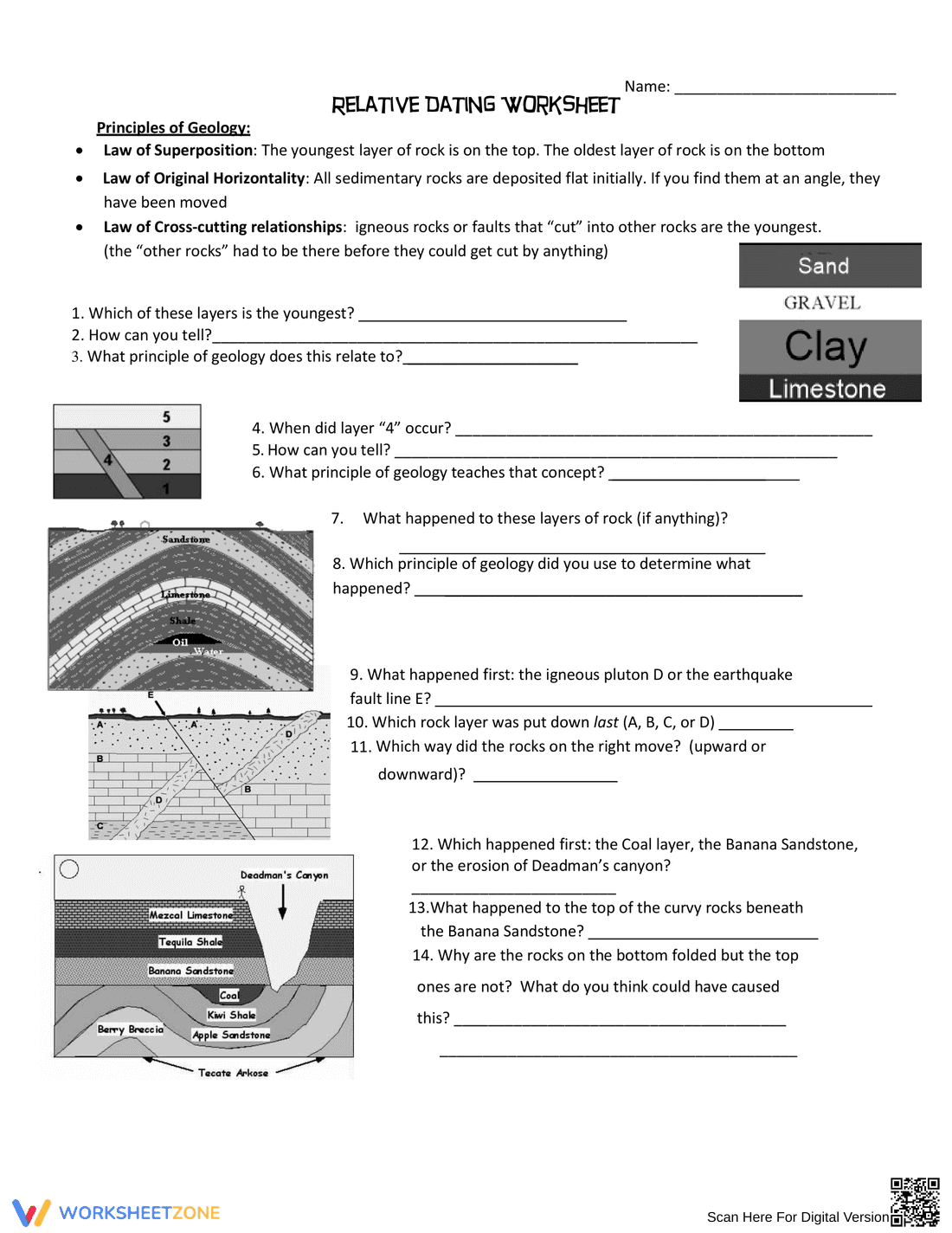
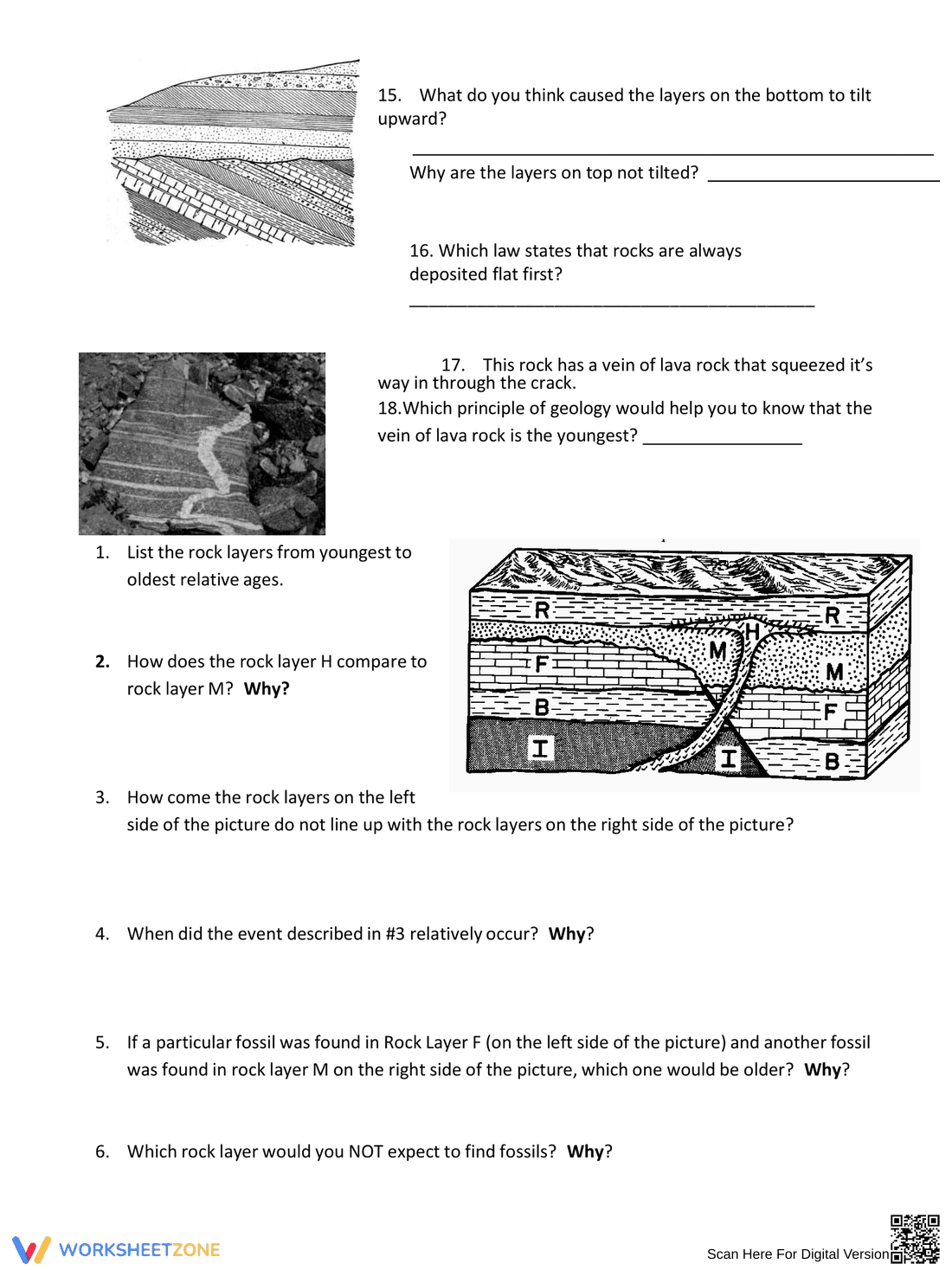
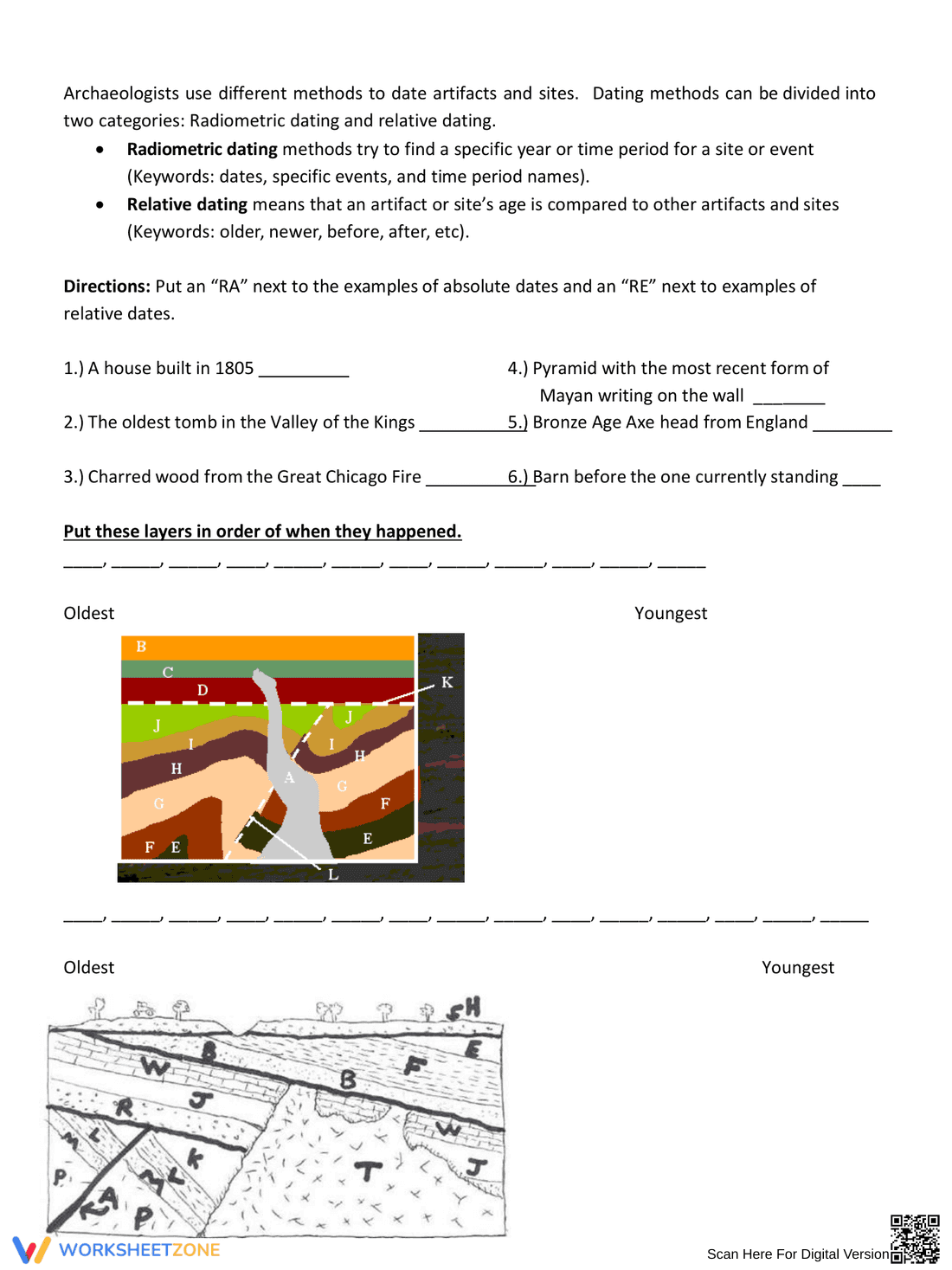
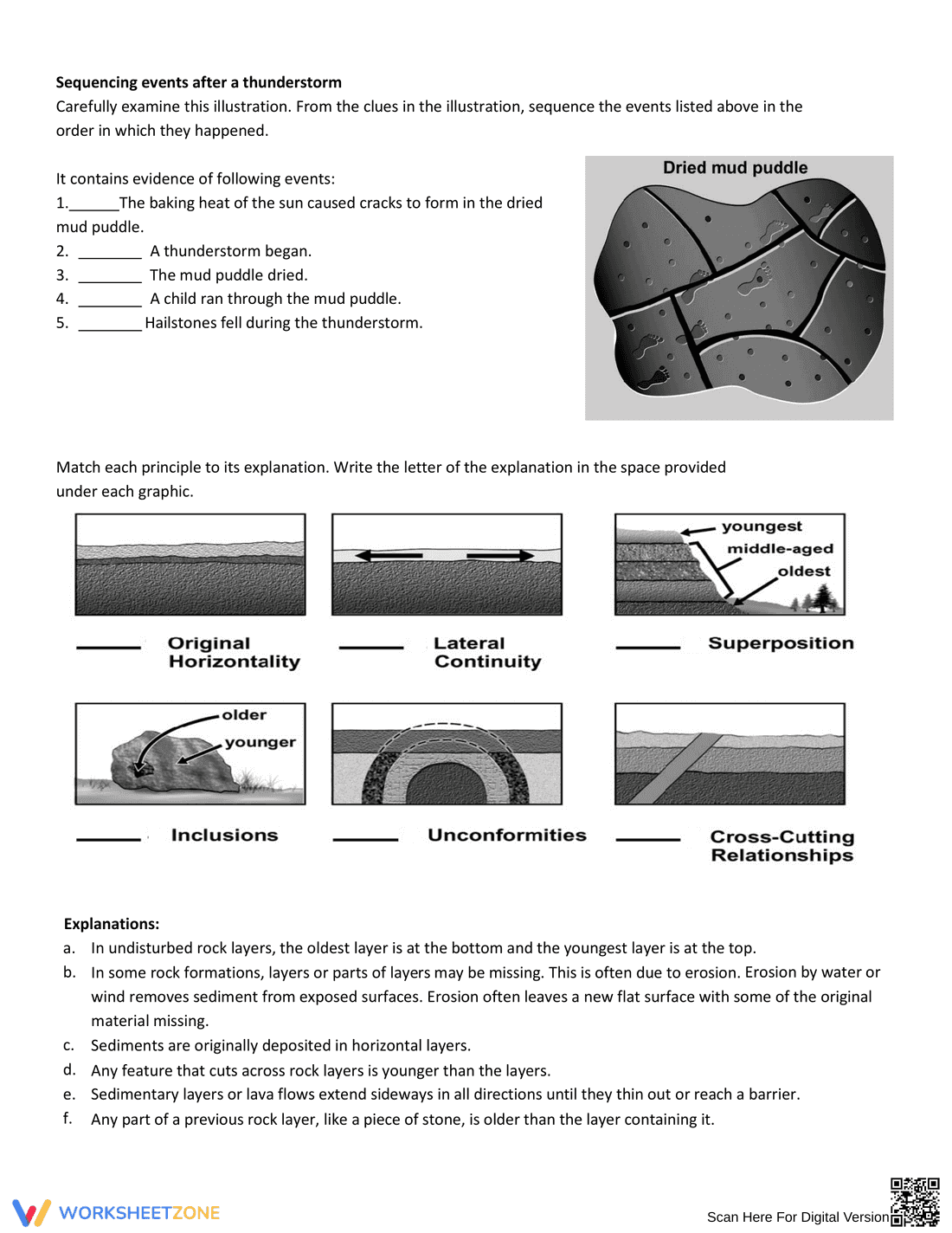
This is a relative dating worksheet focused on geological principles. It includes questions about the Law of Superposition, Law of Original Horizontality, and Law of Cross-cutting Relationships. The worksheet presents diagrams of rock layers and faults, asking students to determine the relative ages of different geological features and explain the principles used to make those determinations. There are questions related to identifying the youngest layers, the order of events, and the movement of rock layers (upward or downward). The worksheet also includes a key of rock types: Sand, Gravel, Clay, and Limestone.
Grade Level Suitability:
This worksheet is suitable for middle school (grades 6-8) and high school (grades 9-12) earth science or geology courses. The concepts require an understanding of basic geological principles and the ability to interpret diagrams of rock formations.
Why Use It:
This worksheet reinforces understanding of relative dating techniques in geology. It helps students apply the Laws of Superposition, Original Horizontality, and Cross-cutting Relationships to real-world examples. It promotes critical thinking and problem-solving skills by requiring students to analyze diagrams and explain their reasoning.
How to Use It:
Students should first review the definitions of the geological principles provided at the top of the worksheet. Then, they should carefully examine each diagram and answer the corresponding questions. They should use the rock type key to help identify the layers. Encourage students to explain their reasoning for each answer, citing the relevant geological principle.
Target Users:
The target users are middle school and high school students studying earth science, geology, or environmental science. It is also useful for homeschoolers covering earth science topics.
This is a relative dating worksheet focused on geological principles. It includes questions about the Law of Superposition, Law of Original Horizontality, and Law of Cross-cutting Relationships. The worksheet presents diagrams of rock layers and faults, asking students to determine the relative ages of different geological features and explain the principles used to make those determinations. There are questions related to identifying the youngest layers, the order of events, and the movement of rock layers (upward or downward). The worksheet also includes a key of rock types: Sand, Gravel, Clay, and Limestone.
Grade Level Suitability:
This worksheet is suitable for middle school (grades 6-8) and high school (grades 9-12) earth science or geology courses. The concepts require an understanding of basic geological principles and the ability to interpret diagrams of rock formations.
Why Use It:
This worksheet reinforces understanding of relative dating techniques in geology. It helps students apply the Laws of Superposition, Original Horizontality, and Cross-cutting Relationships to real-world examples. It promotes critical thinking and problem-solving skills by requiring students to analyze diagrams and explain their reasoning.
How to Use It:
Students should first review the definitions of the geological principles provided at the top of the worksheet. Then, they should carefully examine each diagram and answer the corresponding questions. They should use the rock type key to help identify the layers. Encourage students to explain their reasoning for each answer, citing the relevant geological principle.
Target Users:
The target users are middle school and high school students studying earth science, geology, or environmental science. It is also useful for homeschoolers covering earth science topics.


