




























Views
Downloads
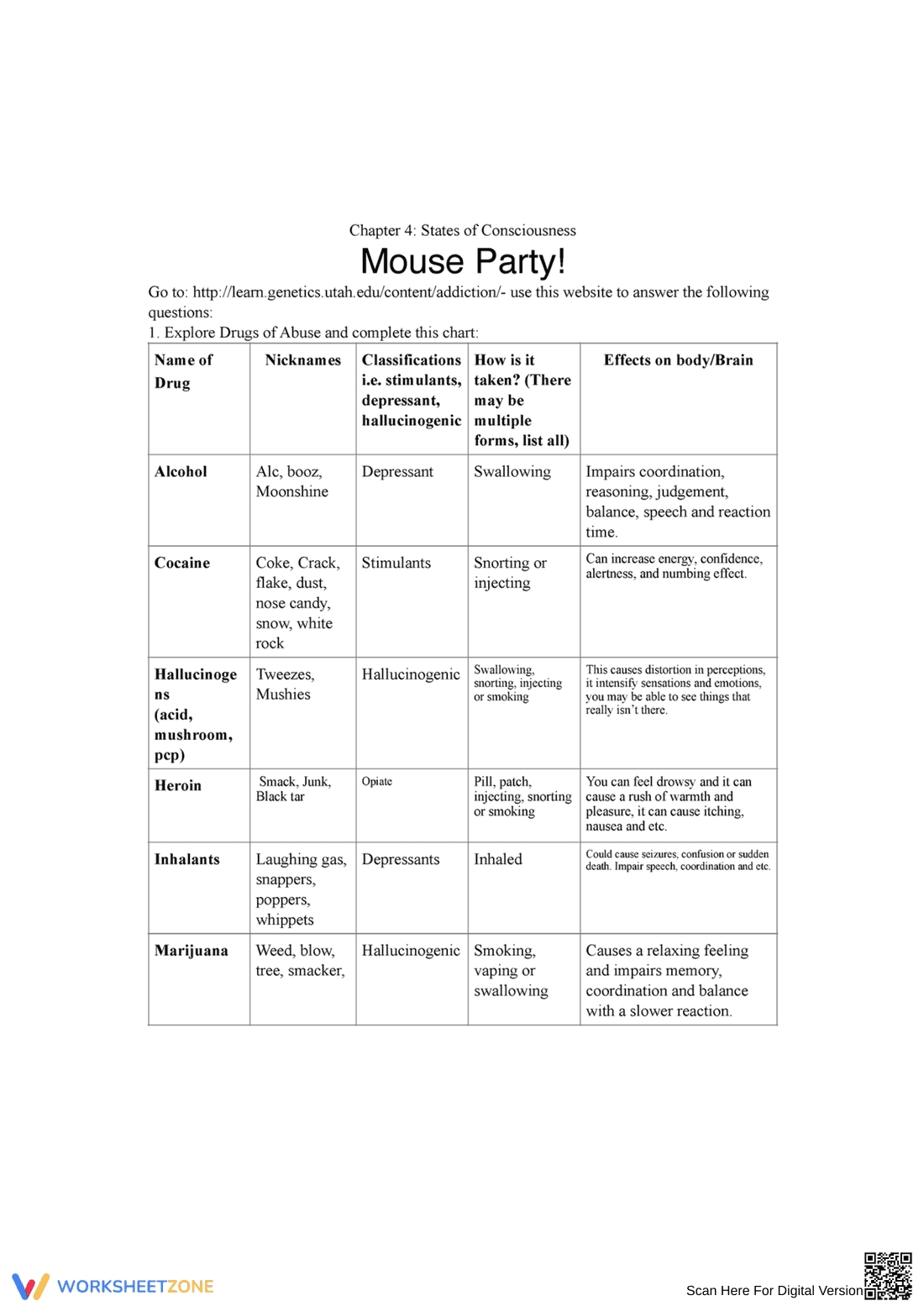

Mouse Party! Worksheet: Biology & Psychology Essential

Paste this activity's link or code into your existing LMS (Google Classroom, Canvas, Teams, Schoology, Moodle, etc.).
Students can open and work on the activity right away, with no student login required.
You'll still be able to track student progress and results from your teacher account.
This Grade 10-12 Mouse Party worksheet provides a structured framework for students to analyze how different substances affect the human brain and nervous system. By completing the detailed chart, learners identify drug classifications, administration methods, and physiological impacts. It serves as a perfect companion to interactive lab simulations or neurobiology units.
At a Glance
- Grade: 10-12 · Subject: Biology & Psychology
- Standard:
HS-LS1-2— Develop and use a model to illustrate hierarchical organization of interacting systems- Skill Focus: Neurobiology and drug classification
- Format: 1 page · 6 tasks · Answer key included · PDF
- Best For: Interactive lab companion or sub plan
- Time: 30–45 minutes
The resource features a comprehensive 6-row data collection table designed for use with the University of Utah's "Mouse Party" interactive. It covers major drug categories including stimulants, depressants, and hallucinogens. The single-page PDF format includes specific columns for nicknames, classifications, and physiological effects, ensuring students capture critical data without overwhelming writing requirements.
Zero-Prep Workflow
- Print: Download and print the single-page PDF for your class in less than 1 minute.
- Distribute: Provide students with the URL for the interactive simulation and the worksheet.
- Review: Use the included answer key to facilitate a class discussion on neurotransmitters and addiction.
This worksheet is designed for immediate classroom implementation with a total teacher prep time of under 2 minutes, making it an ideal emergency sub plan.
Standards Alignment
This resource aligns with `HS-LS1-2`, focusing on how the nervous system interacts with external chemical stimuli to alter homeostasis. Students model the relationship between chemical substances and brain function by categorizing the effects of various drugs. Both standard codes can be copied directly into lesson plans, IEP goals, or district curriculum mapping tools.
How to Use It
Assign this worksheet during the "Explore" phase of a unit on the nervous system or states of consciousness. It works exceptionally well as a formative assessment to observe if students can distinguish between the mechanisms of different drug classes. Expect students to spend 30 to 45 minutes navigating the interactive and recording their findings in the provided chart.
Who It's For
This activity is ideal for high school Biology, Anatomy, or AP Psychology students. It provides necessary scaffolding for learners who benefit from structured data tables and pairs naturally with a direct instruction lesson on synaptic transmission or an anchor chart detailing the parts of a neuron and chemical signaling.
Research by Fisher & Frey (2014) emphasizes the importance of scaffolded data collection tools in helping students transition from interactive exploration to conceptual mastery. This HS-LS1-2 aligned worksheet facilitates this transition by requiring students to categorize complex neurobiological information into a simplified, comparative format. By identifying the specific effects of six different drug classes on the brain, students build a foundational understanding of how chemical substances disrupt homeostasis and neural signaling. According to the ScienceDirect TpT Analysis, structured companions to digital interactives significantly increase student engagement and retention of technical vocabulary compared to unstructured note-taking. This resource ensures that the 45 minutes spent in the digital lab translate into measurable academic evidence of understanding regarding the hierarchical organization of the human nervous system and its response to external stimuli.


