


























1 / 3
0
Views
0
Downloads

0.0
0
Save
0 Likes
Share
Updated Pedigree Analysis: Genetics Worksheet
0 Views
0 Downloads
Paste this activity's link or code into your existing LMS (Google Classroom, Canvas, Teams, Schoology, Moodle, etc.).
Students can open and work on the activity right away, with no student login required.
You'll still be able to track student progress and results from your teacher account.
Information
Description
What It Is:
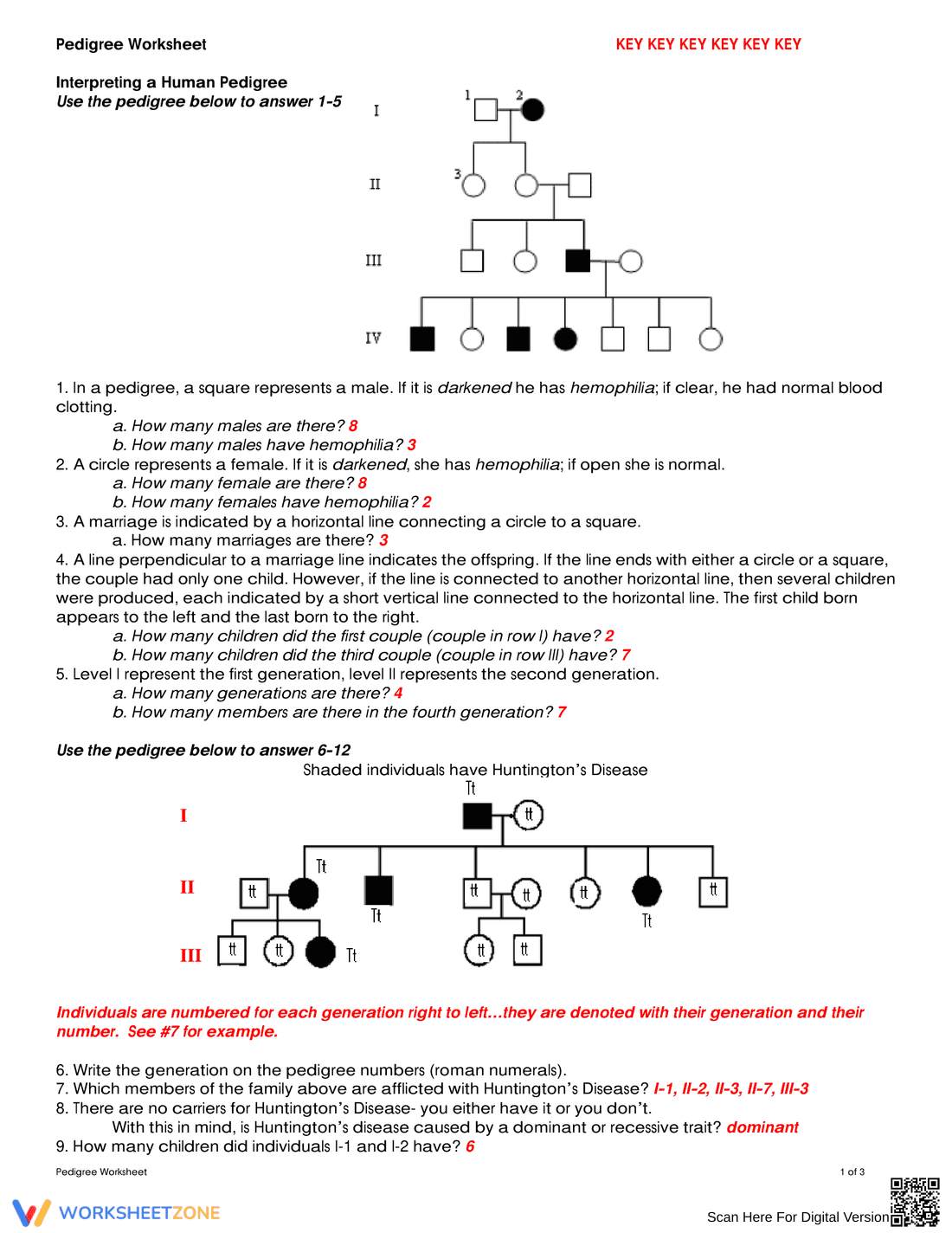
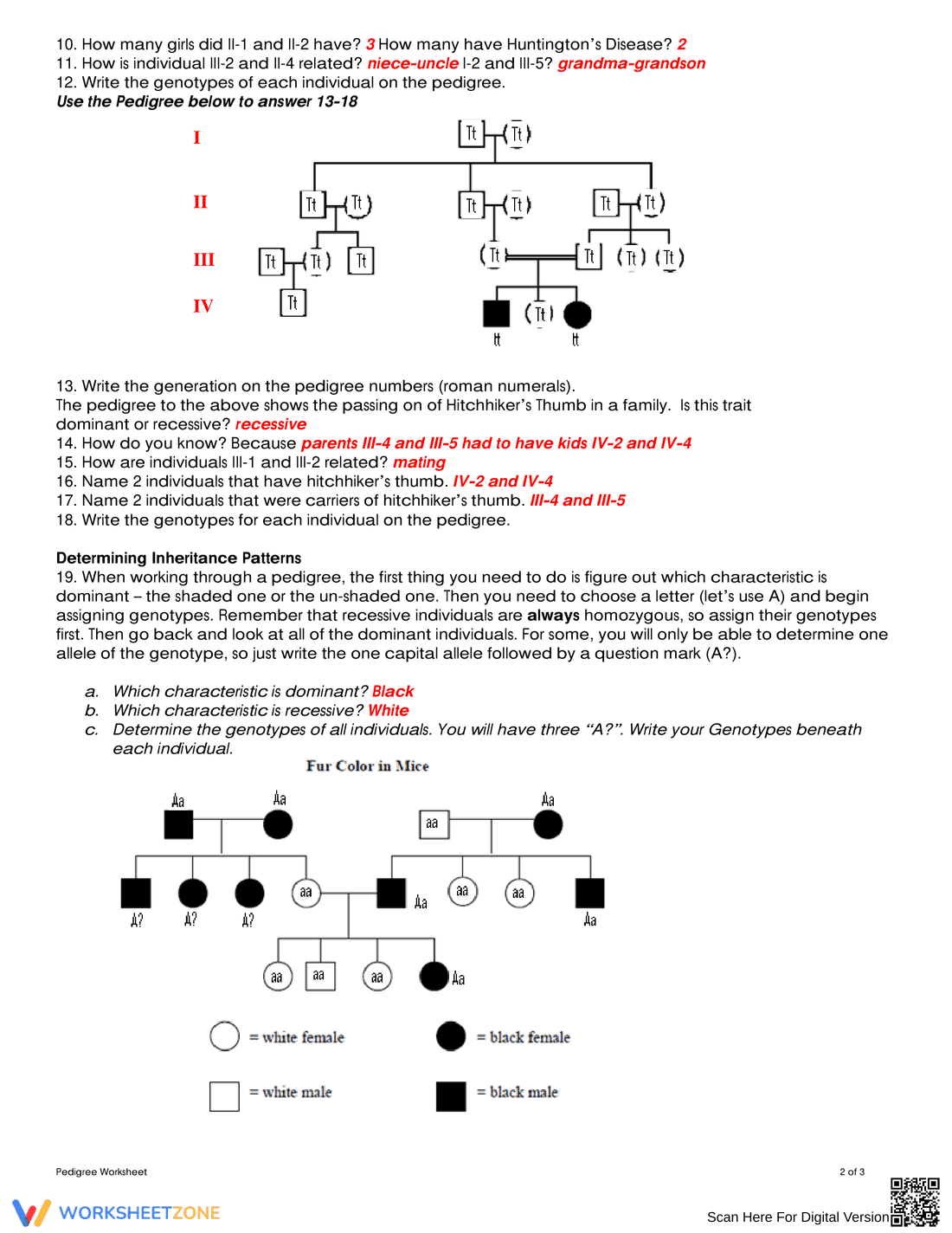
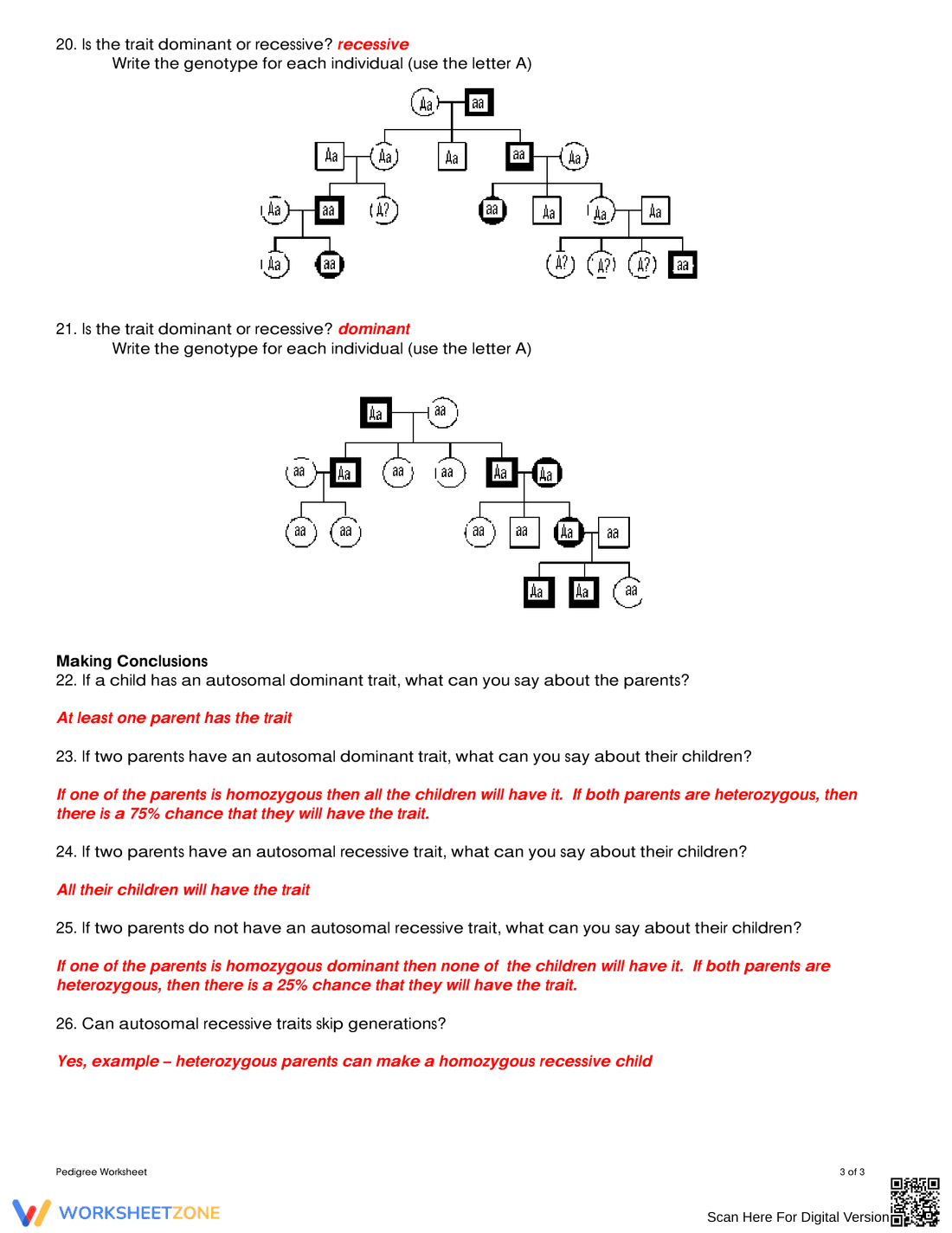
This is a genetics worksheet focusing on interpreting human pedigrees. It presents two pedigree charts. The first pedigree focuses on hemophilia, where students answer questions about the number of males and females, affected individuals, marriages, and generations. The second pedigree focuses on Huntington's Disease, and asks students to identify affected individuals, write the generation numbers, and determine if Huntington's is dominant or recessive.
Grade Level Suitability:
This worksheet is suitable for high school biology (Grades 9-12) and introductory college genetics courses. The concepts of pedigree analysis, dominant and recessive traits, and sex-linked inheritance are typically taught at these levels.
Why Use It:
This worksheet reinforces the understanding of pedigree charts and their use in tracking genetic traits through generations. It helps students develop skills in analyzing family history to determine inheritance patterns and predict the likelihood of offspring inheriting specific genetic conditions like hemophilia and Huntington's disease.
How to Use It:
Students should first read the introductory text explaining the symbols used in pedigrees (squares for males, circles for females, shading for affected individuals, lines for marriages and offspring). They should then carefully analyze each pedigree chart, answering the questions provided based on their observations of the charts. For the Huntington's pedigree, students need to use the numbering system to identify individuals.
Target Users:
The target users are high school and college students studying genetics, biology, or related life sciences. It is useful for students learning about Mendelian genetics, inheritance patterns, and genetic disorders.
This is a genetics worksheet focusing on interpreting human pedigrees. It presents two pedigree charts. The first pedigree focuses on hemophilia, where students answer questions about the number of males and females, affected individuals, marriages, and generations. The second pedigree focuses on Huntington's Disease, and asks students to identify affected individuals, write the generation numbers, and determine if Huntington's is dominant or recessive.
Grade Level Suitability:
This worksheet is suitable for high school biology (Grades 9-12) and introductory college genetics courses. The concepts of pedigree analysis, dominant and recessive traits, and sex-linked inheritance are typically taught at these levels.
Why Use It:
This worksheet reinforces the understanding of pedigree charts and their use in tracking genetic traits through generations. It helps students develop skills in analyzing family history to determine inheritance patterns and predict the likelihood of offspring inheriting specific genetic conditions like hemophilia and Huntington's disease.
How to Use It:
Students should first read the introductory text explaining the symbols used in pedigrees (squares for males, circles for females, shading for affected individuals, lines for marriages and offspring). They should then carefully analyze each pedigree chart, answering the questions provided based on their observations of the charts. For the Huntington's pedigree, students need to use the numbering system to identify individuals.
Target Users:
The target users are high school and college students studying genetics, biology, or related life sciences. It is useful for students learning about Mendelian genetics, inheritance patterns, and genetic disorders.


