


























Views
Downloads

Printable Phonics Matching Cards | Kindergarten ELA
Paste this activity's link or code into your existing LMS (Google Classroom, Canvas, Teams, Schoology, Moodle, etc.).
Students can open and work on the activity right away, with no student login required.
You'll still be able to track student progress and results from your teacher account.
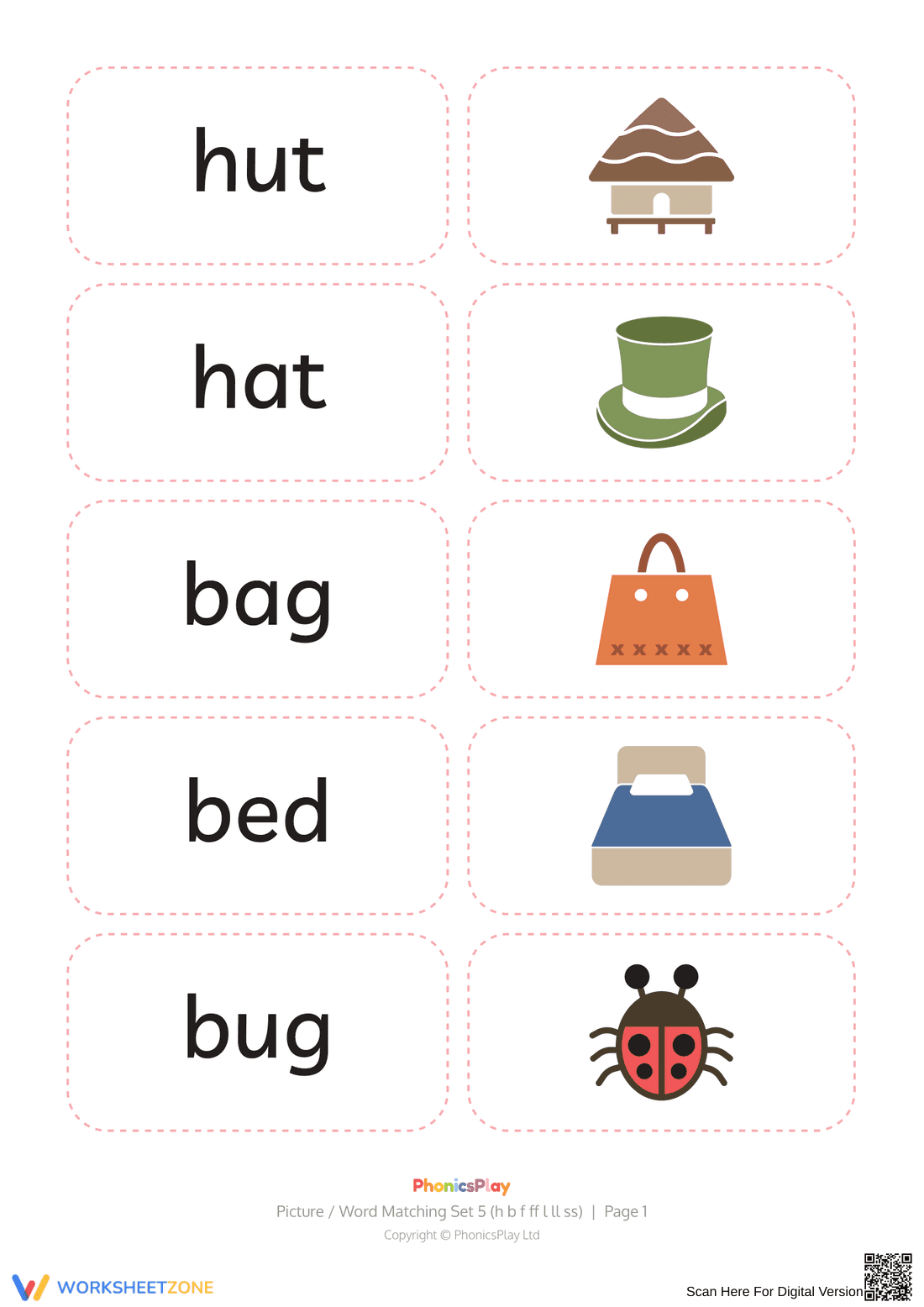
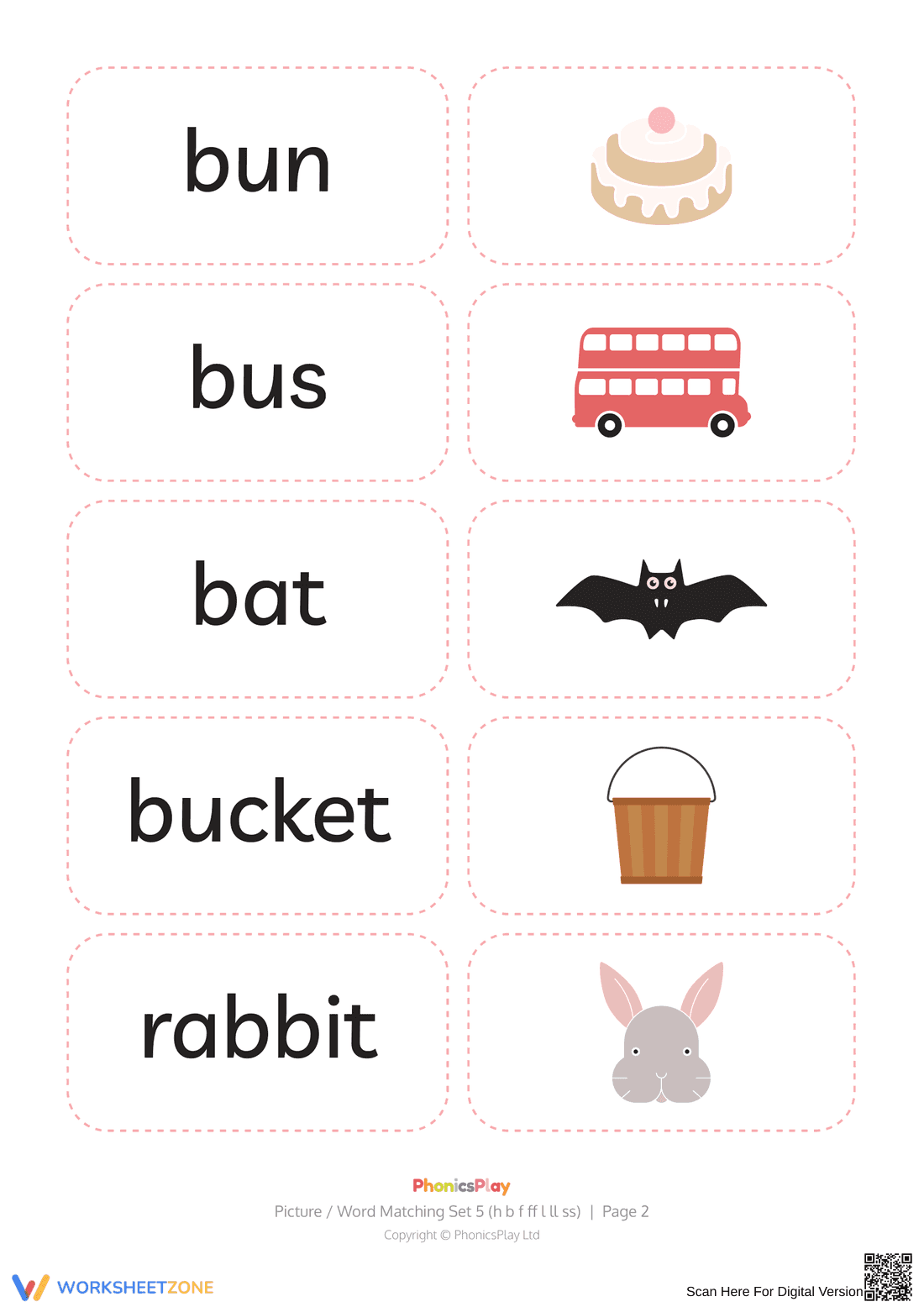
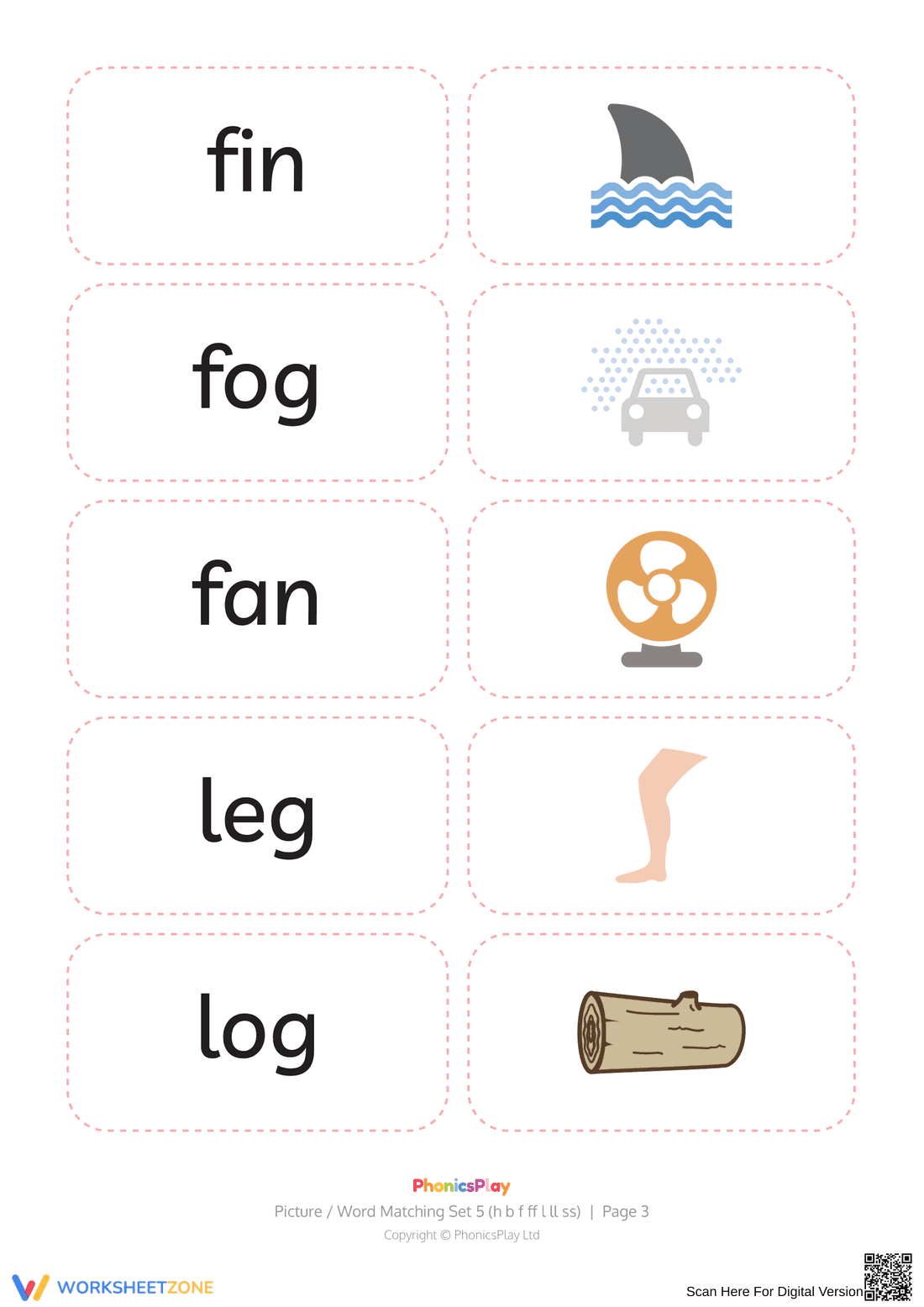
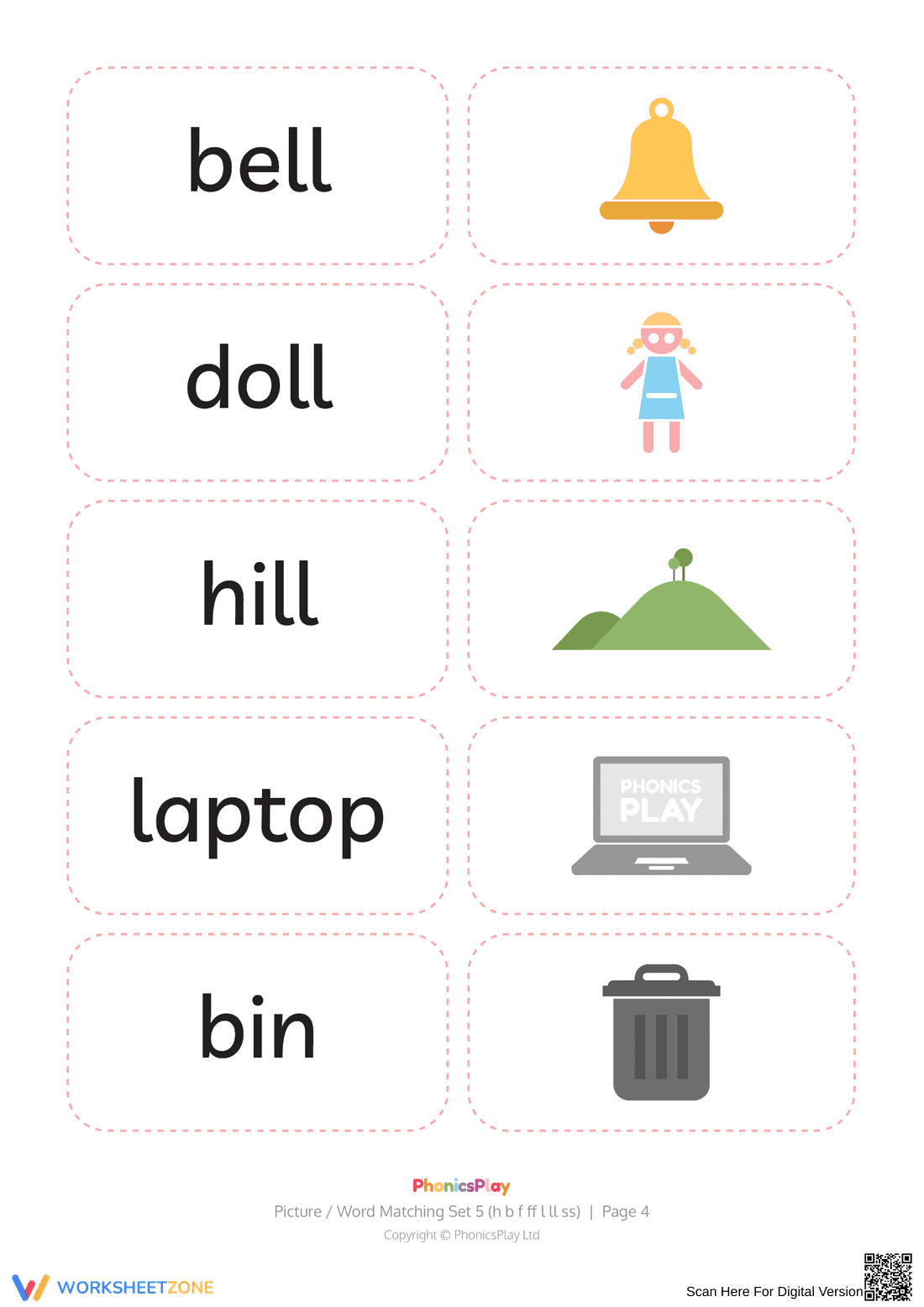
This printable phonics worksheet helps early readers build essential decoding skills by matching 21 high-frequency words with corresponding illustrations. Students practice blending letter sounds to read simple words containing target consonants and short vowels, establishing a strong foundation for independent reading success.
At a Glance
- Grade: Kindergarten · Subject: ELA Vocabulary
- Standard:
CCSS.ELA-LITERACY.RF.K.3— Associate long and short sounds with common spellings for five major vowels- Skill Focus: Phonics decoding and word matching
- Format: 5 pages · 21 problems · No answer key · PDF
- Best For: Independent literacy centers and phonics practice
- Time: 15–20 minutes
What's Inside
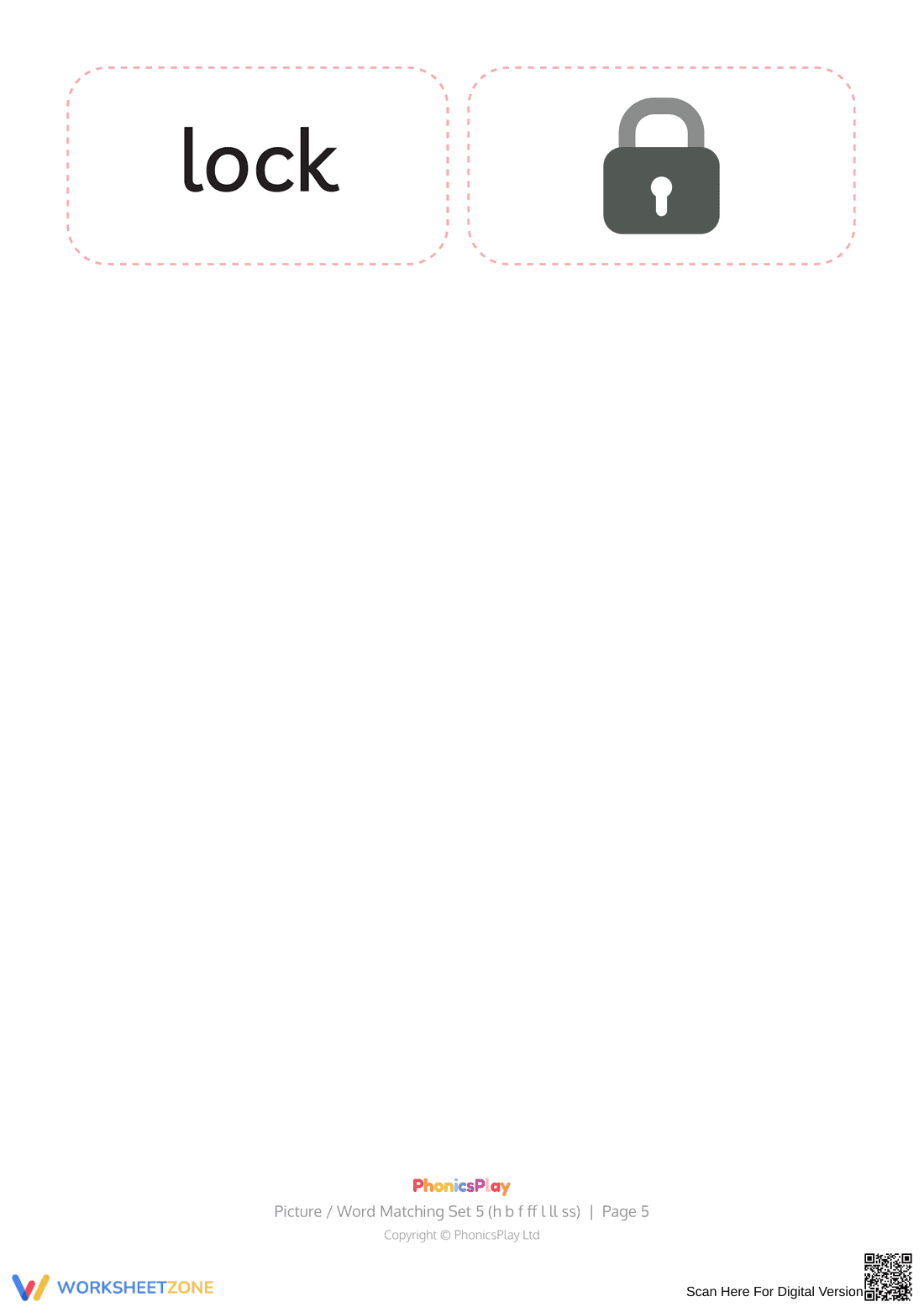
This resource contains 5 pages of printable matching cards designed for easy cutting and sorting. It features 21 distinct word-and-picture pairs focusing on Phase 2 phonics sounds, specifically targeting the letters h, b, f, ff, l, ll, and ss. Each card displays a clear, lowercase word on the left and a colorful, recognizable graphic on the right, providing immediate visual feedback for young learners as they decode.
Zero-Prep Workflow
The zero-prep workflow makes this resource ideal for busy educators. First, print the 5 pages of cards, which takes less than 1 minute. Second, distribute the sheets to students or assistants to cut along the dotted lines, requiring about 2 minutes of preparation. Third, review student matches during independent work time, taking only 1 minute per child. This entire setup requires under 2 minutes of active teacher preparation, making it an excellent option for emergency sub plans or morning work.
Standards Alignment
This activity aligns directly with the Common Core State Standard CCSS.ELA-LITERACY.RF.K.3, which requires students to know and apply grade-level phonics and word analysis skills in decoding words. By matching written words like "hut," "bell," and "lock" to their visual representations, students demonstrate their ability to blend letter-sound correspondences. Both standard codes can be copied directly into lesson plans, IEP goals, or district curriculum mapping tools.
How to Use It
Use these cards during small-group direct instruction to introduce new letter sounds, or place them in a literacy center for independent practice after students learn the target phonemes. For a quick formative assessment, observe students as they match the cards and note which letter combinations cause hesitation. The activity typically takes 15 to 20 minutes to complete.
Who It's For
This resource is designed for kindergarten and first-grade students who are developing early decoding skills. It serves as an excellent intervention tool for struggling readers who need extra practice with short vowel words and double consonants. Pair this activity with a shared reading passage or an anchor chart displaying the target letter sounds for maximum instructional impact.
According to the Fisher & Frey (2014) framework for gradual release of responsibility, structured visual aids like matching cards support early readers by bridging the gap between abstract graphemes and concrete meaning. This resource targets CCSS.ELA-LITERACY.RF.K.3 by providing systematic practice with 21 phonics pairs, helping students build automaticity in word recognition. Research indicates that pairing orthographic representations with high-quality illustrations reinforces memory retention and phonological awareness in early childhood education. By engaging in tactile sorting activities, young learners develop the cognitive pathways necessary for fluent decoding and vocabulary acquisition. This printable set offers a practical, evidence-based tool for classroom teachers seeking to reinforce foundational literacy skills during independent centers or small-group interventions.


