


























Views
Downloads
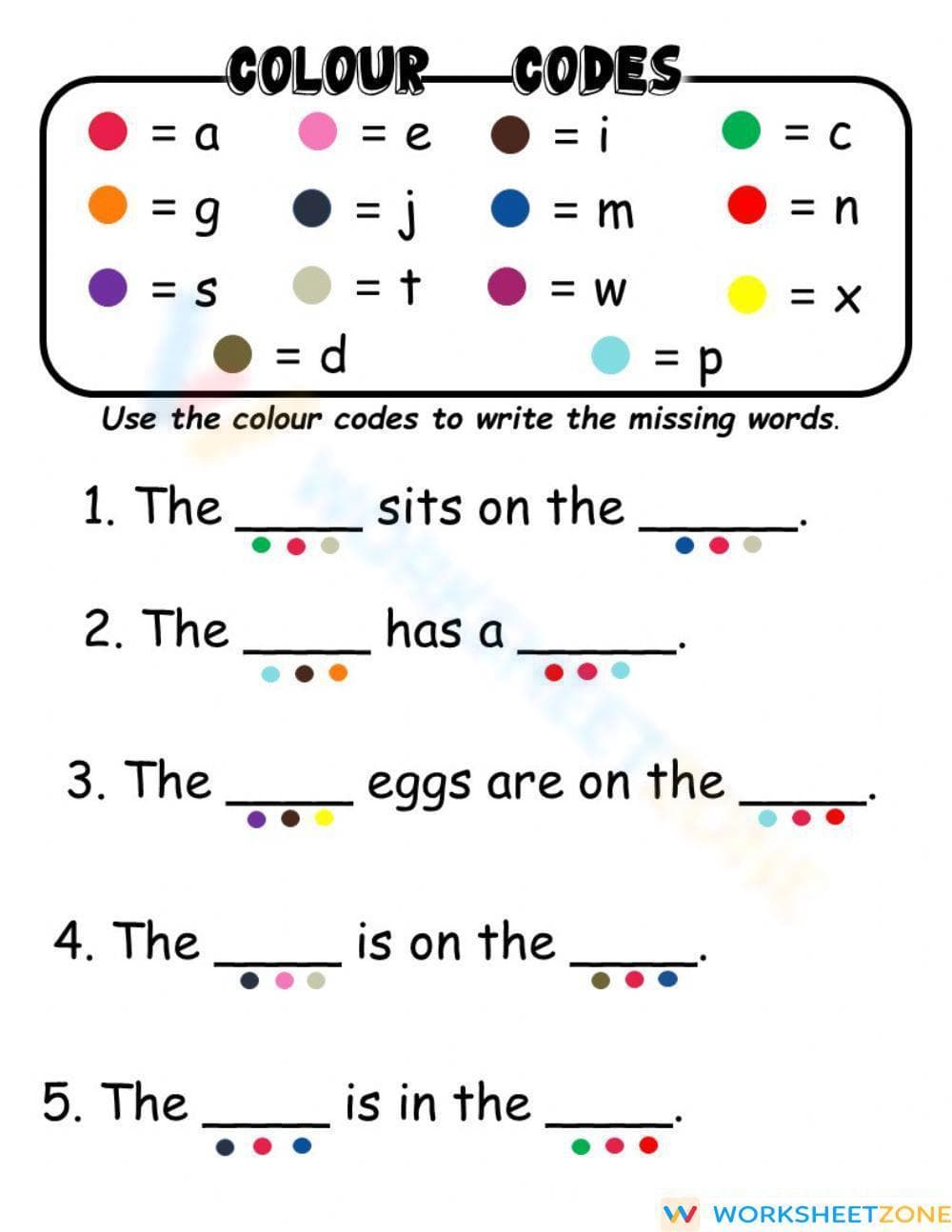

Essential Phonics: Color Codes Decoding Worksheet | K-2
Paste this activity's link or code into your existing LMS (Google Classroom, Canvas, Teams, Schoology, Moodle, etc.).
Students can open and work on the activity right away, with no student login required.
You'll still be able to track student progress and results from your teacher account.
This engaging Color Codes worksheet provides Kindergarten through Grade 2 students with a creative way to practice phonics and CVC word decoding. By mapping vibrant colors to specific letters, learners solve five contextualized sentences, reinforcing their ability to blend sounds and recognize patterns in English Language Arts.
At a Glance
- Grade: K–2 · Subject: English Language Arts
- Standard:
CCSS.ELA-LITERACY.RF.1.3.B— Decode regularly spelled one-syllable words and blend letter-sound correspondences efficiently- Skill Focus: Phonics and CVC Word Decoding
- Format: 1 page · 10 tasks · Answer key included · PDF
- Best For: Literacy centers and early morning bell-work
- Time: 10–15 minutes
This printable PDF features a clear, visual key at the top of the page where 14 distinct colors are assigned to common lowercase letters. Below the key, students find five sentences with missing words, each represented by a series of color dots. The worksheet includes a full answer key for quick checking and progress monitoring.
First, print the single-page PDF in under thirty seconds. Second, distribute the copies to your literacy centers or individual desks. Finally, review student progress using the provided answer key as they complete the decoding tasks. The total teacher preparation time is less than two minutes, making it an excellent choice for sub plans.
The primary standard for this resource is CCSS.ELA-LITERACY.RF.1.3.B, which requires students to decode regularly spelled one-syllable words. By requiring students to identify individual phonemes through a color-coding system and then blend them into recognizable words, this worksheet directly supports foundational reading standards. Both standard codes can be copied directly into lesson plans or IEP goals.
Use this worksheet as a formative assessment after introducing CVC word blending or during independent practice in a literacy station. A great instructional tip is to observe if students are whispering the sounds as they decode each color dot; this self-talk is a vital sign of phonological processing. Students typically complete the page in about twelve minutes.
This resource is designed for Kindergarten, Grade 1, and Grade 2 students who are working on their phonemic awareness and decoding skills. It pairs naturally with leveled reading passages or an anchor chart displaying common CVC word families like -at, -ig, or -un. The visual nature of the activity keeps students engaged throughout the literacy block.
Effective phonics instruction requires frequent, high-utility practice that allows students to apply their knowledge of letter-sound correspondences to real decoding tasks. According to Fisher & Frey (2014), the gradual release of responsibility model emphasizes the importance of independent practice where students can demonstrate mastery of foundational skills like CVC word recognition. This Color Codes worksheet aligns with these evidence-based practices by providing a structured, low-stakes environment for students to decode 10 common words within the context of complete sentences. By isolating the phonemes through visual cues and requiring active blending, the activity strengthens the orthographic mapping process necessary for reading fluency. Educators can use this standards-aligned CCSS.ELA-LITERACY.RF.1.3.B tool to monitor student progress in phonological awareness and ensure that every learner reaches the developmental milestones required for successful reading in the early elementary grades.


