


























Views
Downloads

Grade K-1 Phonics: Write a Word 6 — Essential Printable
Paste this activity's link or code into your existing LMS (Google Classroom, Canvas, Teams, Schoology, Moodle, etc.).
Students can open and work on the activity right away, with no student login required.
You'll still be able to track student progress and results from your teacher account.
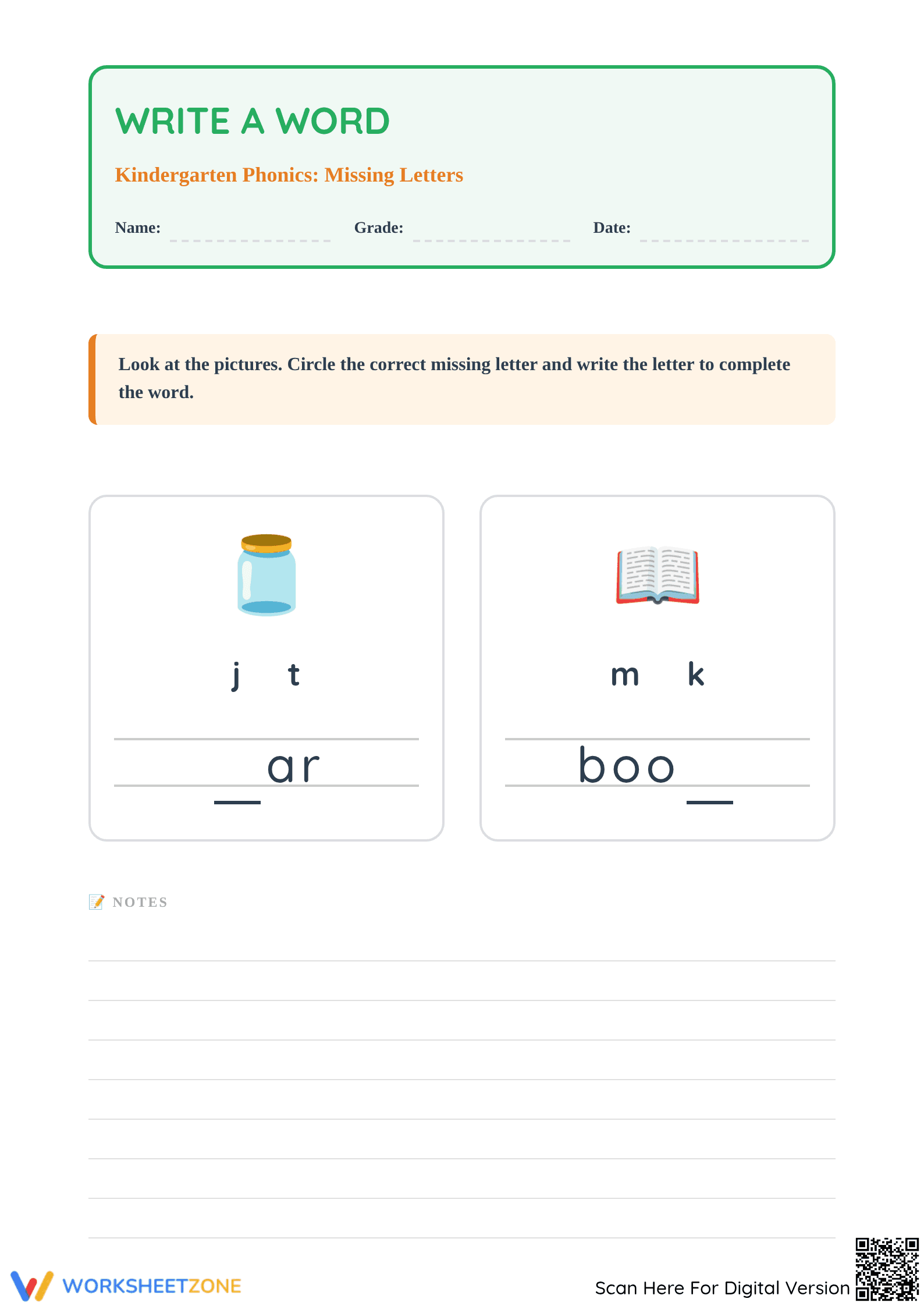
This Grade K-1 phonics worksheet helps early learners bridge the gap between hearing sounds and writing letters. Students identify missing phonemes in common words by analyzing visual cues and selecting the correct grapheme. It provides a structured way to build foundational literacy skills through active participation and handwriting practice.
At a Glance
- Grade: K–1 · Subject: ELA Phonics
- Standard:
CCSS.ELA-LITERACY.RF.K.3— Know and apply grade-level phonics and word analysis skills in decoding words- Skill Focus: Phoneme identification and spelling
- Format: 3 pages · 10 problems · Answer key included · PDF
- Best For: Independent practice or morning work
- Time: 15–20 minutes
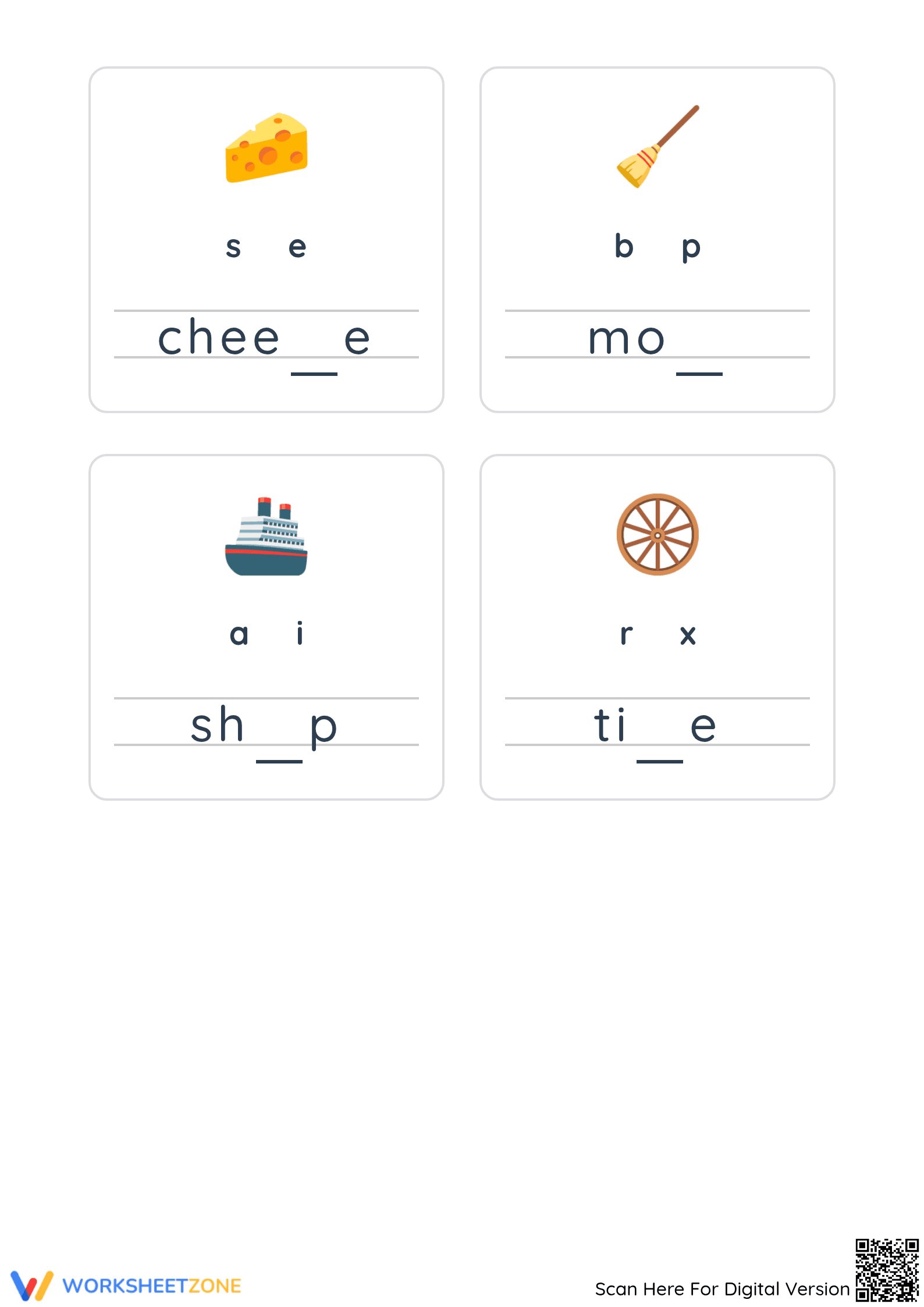
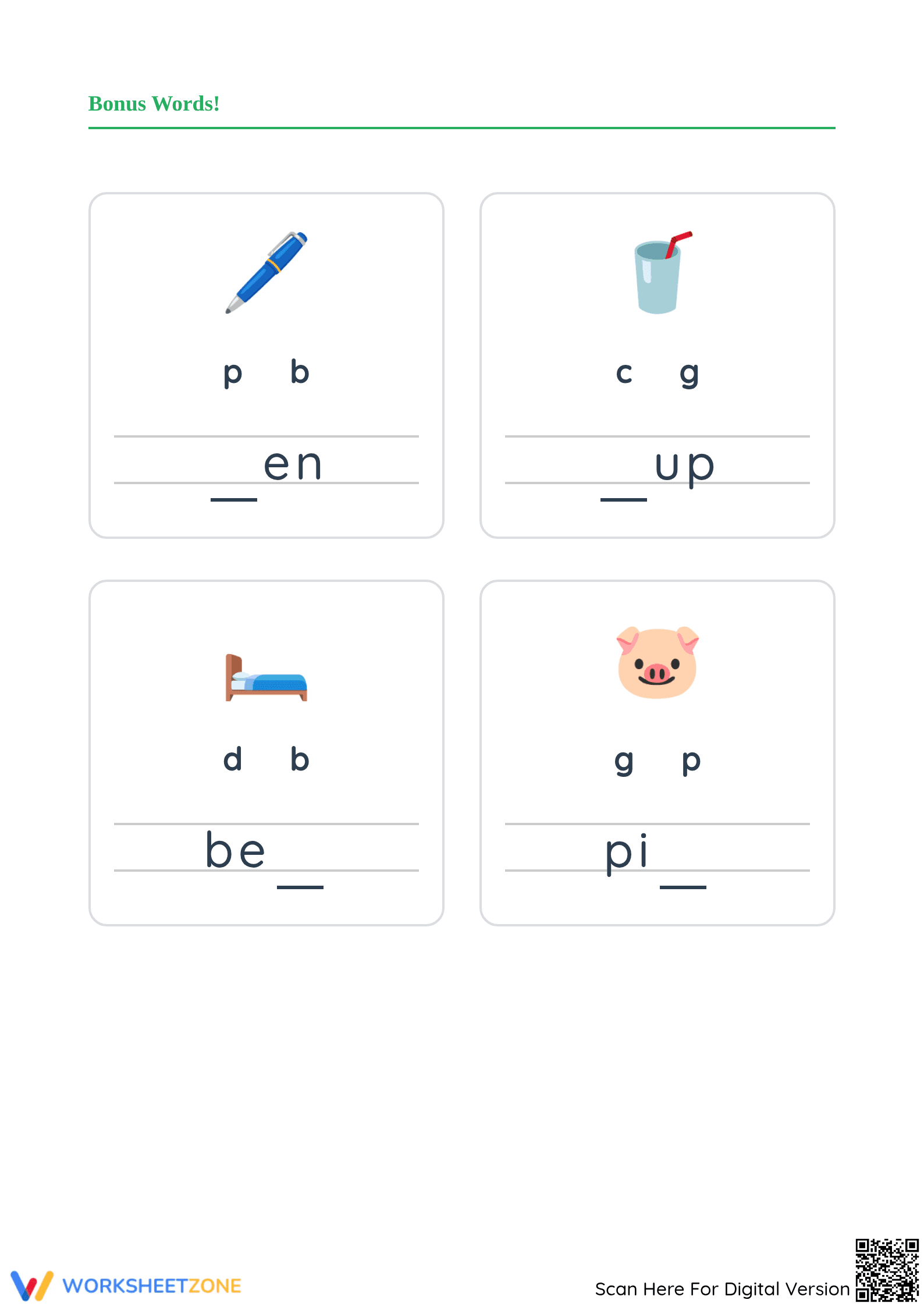
The resource contains three distinct pages of practice, totaling 10 word-completion tasks. Each task features a high-quality illustration, a choice between two potential letters, and a primary-lined space for writing. A full three-page answer key is included to facilitate quick grading or student self-correction.
Zero-Prep Workflow
- Print: Select the desired pages and print in seconds (under 1 minute).
- Distribute: Hand out the sheets for immediate use as a bell-ringer or literacy center activity (30 seconds).
- Review: Use the provided answer keys to check student work or project them for a whole-class review (under 1 minute). Total teacher prep time is less than 2 minutes.
Standards Alignment: Primary standard CCSS.ELA-LITERACY.RF.K.3: "Know and apply grade-level phonics and word analysis skills in decoding words." This worksheet specifically targets the association of long and short sounds with common spellings (graphemes) for five major vowels and several consonants. Both standard codes can be copied directly into lesson plans, IEP goals, or district curriculum mapping tools.
How to Use It: Use this as a formative assessment after introducing specific letter sounds. It is particularly effective during small-group rotations where the teacher can observe a student's ability to segment sounds before writing. Expect students to complete the full 10-task set within 15 to 20 minutes depending on their fine motor speed.
Who It's For: This resource is designed for Kindergarten and Grade 1 students, as well as Preschoolers ready for early writing. It serves as an excellent intervention tool for English Language Learners (ELL) who need visual support to connect vocabulary with spelling. Pair this with a phonics anchor chart or a picture dictionary for additional support.
According to the RAND AIRS 2024 report on early literacy, the integration of visual stimuli with phonemic segmentation significantly improves long-term retention of letter-sound correspondence. This worksheet aligns with these findings by requiring students to map the auditory phoneme to a visual grapheme while completing words like "jar," "book," and "ship." By focusing on CCSS.ELA-LITERACY.RF.K.3, the activity ensures that students are practicing the specific decoding skills necessary for reading fluency. The 10 structured tasks provide enough repetition to build muscle memory without overwhelming young learners. Research from Fisher & Frey (2014) supports this gradual release of responsibility, where the visual choice acts as a scaffold before students move to entirely independent spelling. This resource provides a reliable, evidence-based method for reinforcing foundational ELA skills in any classroom setting.


