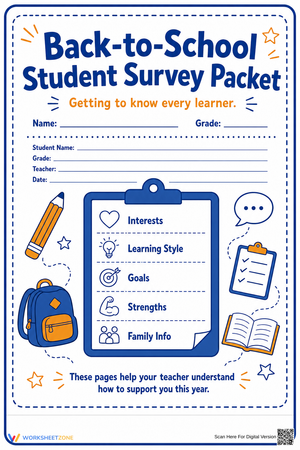
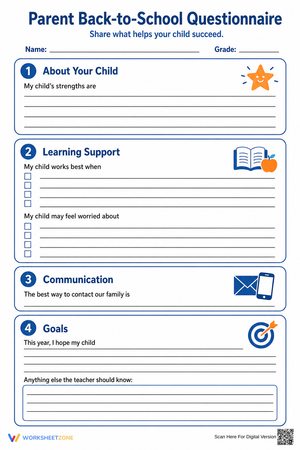
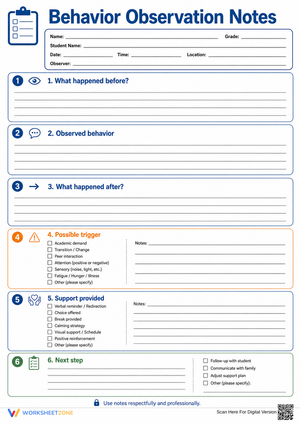
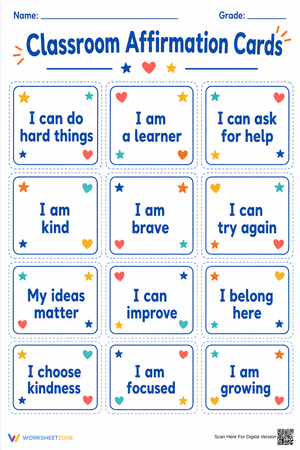
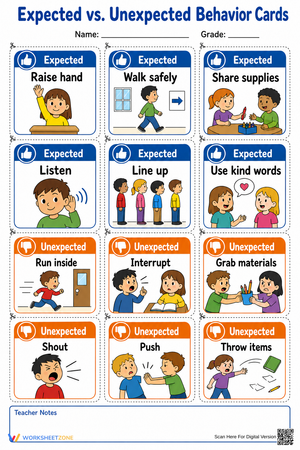
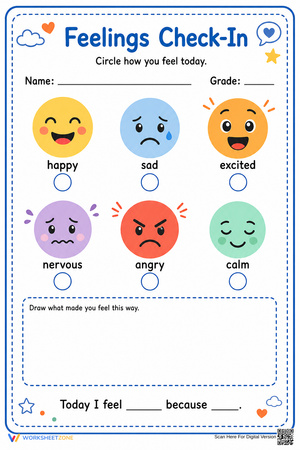
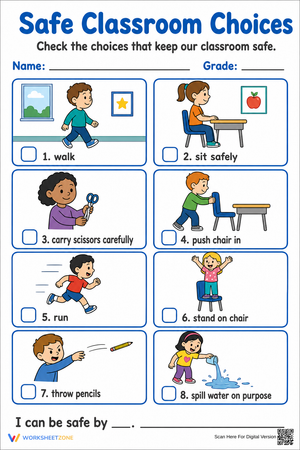
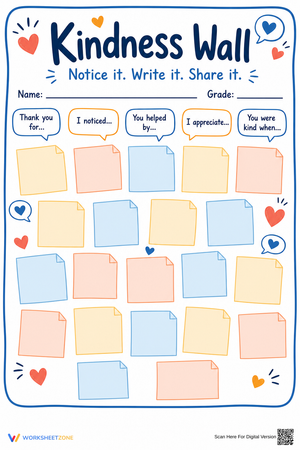
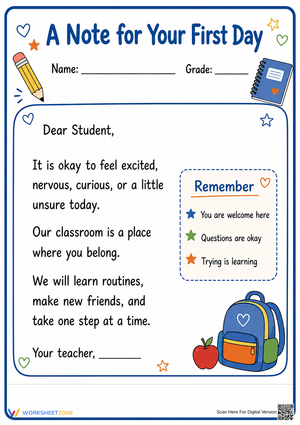
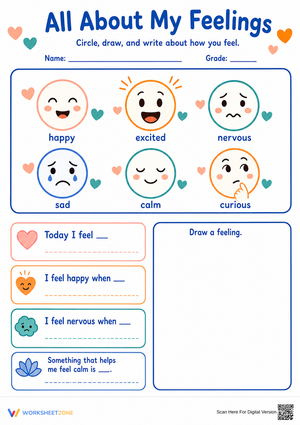
These 1st grade behavior worksheets pdf resources give teachers print-ready tools for the most consequential behavioral window in a child's school career — the first six weeks of first grade, when classroom routines either take root or don't. The set covers emotional identification, good-versus-poor choice sorting, calming strategy selection, and classroom rule reinforcement, all written at a level a six-year-old can access independently by October. Each worksheet stands alone, so teachers can pull exactly what a lesson or a particular student moment calls for.
The Four Skill Areas These Worksheets Cover
The worksheets fall across four categories, each addressing a distinct layer of early behavior development.
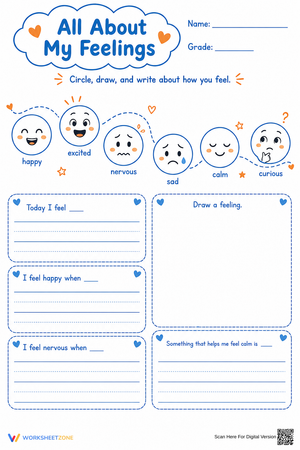
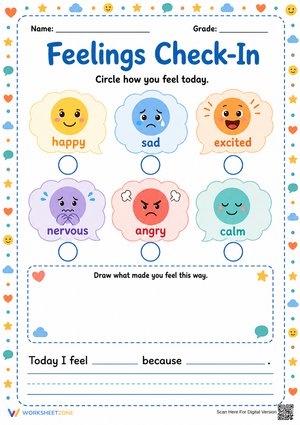
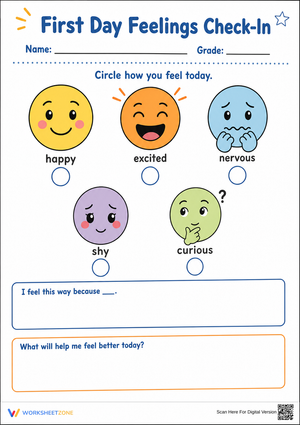
- Emotion identification: Students circle or draw the face that matches a described scenario. For early first graders, the visual anchor matters more than the label — many six-year-olds can point to the right expression before they can name the feeling in words.
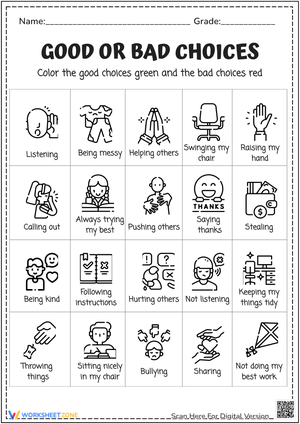
- Good-versus-poor choice sorting: Students sort illustrated scenarios into two columns. The concrete visual contrast does conceptual work that abstract rule-recitation cannot.
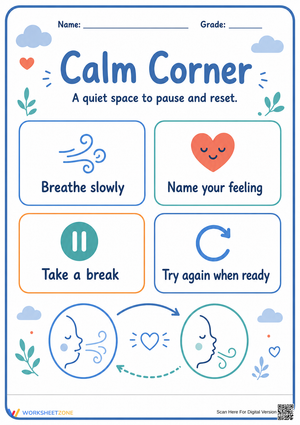
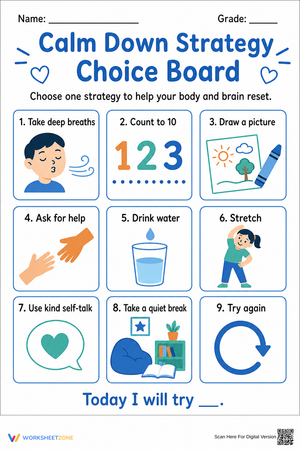
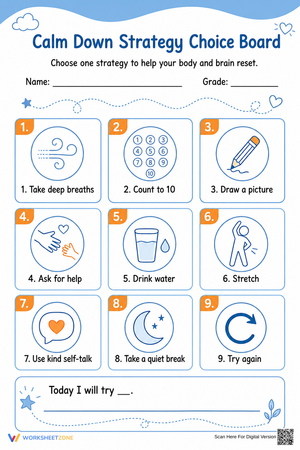
- Calming strategy selection: Students mark which strategies they will use when upset, choosing from a fixed menu — deep breaths, counting backward, drawing, asking for help, stepping away. A constrained menu works better than an open prompt at this age.
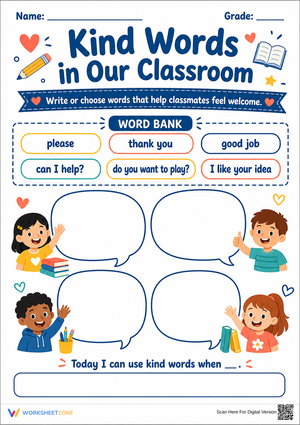
- Classroom rules reinforcement: Matching and fill-in tasks tied to the specific language most PBIS schools use on their behavior matrices, so the vocabulary on the worksheet matches what students hear in the hallway and at transitions.
Across all four categories, this 1st grade behavior worksheets pdf set keeps reading demand low enough that a student's understanding of behavior concepts isn't blocked by decoding difficulty. The illustrations do real instructional work — they're not decorative.
Why First Grade Is the Right Time for Explicit Behavior Instruction
Six- and seven-year-olds understand rules as external and absolute — handed down by adults, not yet internalized as personal values. That's a normal feature of this developmental stage, and it has direct classroom implications: children follow rules at this age because authority figures expect it, not because they've constructed an internal sense of why it matters. Moving them toward genuine internalization requires applying rules to novel situations, repeatedly, with language they can use themselves. A worksheet that asks a student to evaluate a scenario they haven't seen before is doing exactly that transfer work — something a behavior poster on the wall cannot replicate on its own.
What Student Work Actually Reveals About Behavioral Understanding
The most persistent pattern we see is the gap between worksheet performance and real-time behavior. A student who correctly sorts every scenario during independent work will still shove a classmate in the lunch line fifteen minutes later — not because she doesn't know the rule, but because emotional activation temporarily overrides stored knowledge in the moment. That gap is developmentally expected, and it tells teachers where to invest next: not more worksheets, but practiced rehearsal of specific in-the-moment phrases. These worksheets identify students who understand the concept; classroom observation identifies students who can't yet retrieve it under stress.
On feelings-identification worksheets, students who are having a difficult morning routinely circle "happy" across every item — performing the expected answer rather than reflecting honestly. When a student's worksheet responses consistently mismatch their visible affect, that's a signal for a quiet one-on-one conversation, not a correction of the paper itself.
On calming strategies worksheets, many students circle every option rather than choosing what actually works for them. One adjustment that helps: ask students to first cross out two strategies they've tried and don't like. That narrows the field and makes the remaining selections feel personally chosen rather than assigned.
Where These Worksheets Fit Into Your Weekly Routine
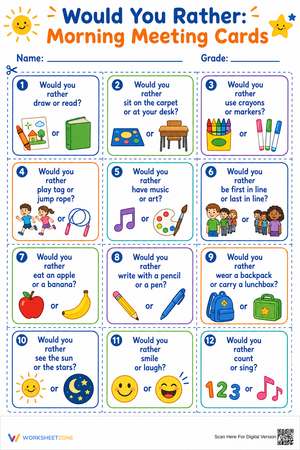
Morning meeting is the natural home for introducing a new worksheet. Read the scenario or prompt aloud while students follow along, then work through two examples together before anyone moves to independent work. First graders who receive an unfamiliar worksheet without a verbal walkthrough tend to spend independent time copying a neighbor's answers rather than thinking through their own — the group introduction closes that gap. Keep the introduction under eight minutes; the worksheet itself runs five to ten, well within the attention window for this age group.
The 1st grade behavior worksheets pdf set also works well in the cool-down corner. A laminated calming strategies worksheet placed there gives a dysregulated student a reference point without requiring the teacher to retrieve materials mid-lesson. For end-of-week routine, a five-minute Friday reflection — students look at one completed worksheet and name a choice they made that matched the skill — provides low-stakes retrieval practice that does more for retention than moving straight to a new topic on Monday.
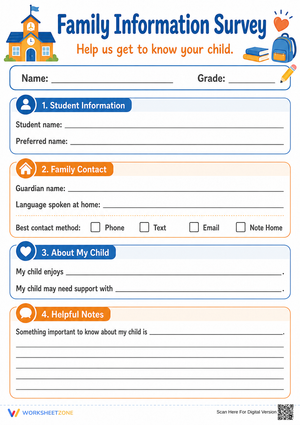
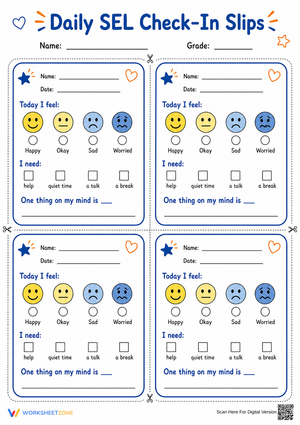
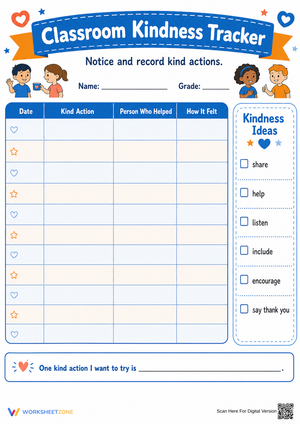
Daily behavior logs travel well in take-home folders. They give parents specific, observable language: "Your teacher says you practiced calming strategies today — which one did you try?" That concrete hook opens a far more productive conversation than "How was school?" which most first graders answer in a single word.
Standard Alignment
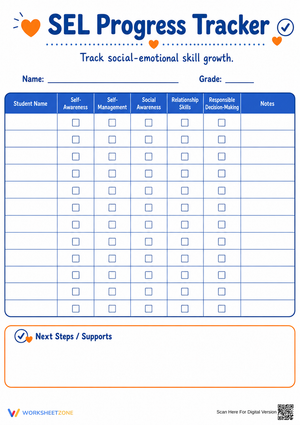
These worksheets address CASEL's five core SEL competencies directly. The emotion-identification and calming strategy worksheets target self-awareness and self-management — the expectation that by the end of early elementary, students recognize their own emotions and apply strategies to regulate them before situations escalate. The good-versus-poor choice and classroom rules worksheets address responsible decision-making and social awareness, asking students to evaluate actions in the context of peers and school community norms.
Within a PBIS framework, this material sits in Tier 1 universal instruction — proactive, whole-class teaching of expected behaviors before problems arise. The Center on PBIS identifies explicit prosocial skill instruction as a foundational early childhood element, and these printables give that instruction a practical classroom form. Teachers who track SEL growth through observation checklists can use completed worksheets as supplementary documentation of the concepts introduced and practiced throughout the year.
Tailoring Each Worksheet to Where Your Students Actually Are
For students who are not yet reading independently, these worksheets function as picture-based tasks — a partner reads the prompt aloud, and the student marks, draws, or points to their answer. The illustrations carry the conceptual weight; decoding is not a prerequisite for demonstrating behavioral understanding. This makes the worksheets equally accessible for ELL students who are still building English vocabulary but can process visual scenario information without difficulty.
For students who move through tasks quickly and need more challenge, add a writing line or sticky note at the bottom: "What would you say to your classmate?" or "What rule did you follow today and how did it help the class?" This moves the task from recognition — selecting the right answer from a field of options — into production, which is the harder cognitive work. A student who correctly sorts every scenario card but cannot generate repair language is showing you exactly where direct instruction needs to go next.
Frequently Asked Questions
Should I start these worksheets on the first day of school or wait a few weeks?
Wait until students can navigate your daily schedule without constant reminders — usually the second or third week. Introducing a behavior worksheet on day one, before routines are established, asks students to reflect on expectations they haven't yet experienced. The worksheets land better when children have had enough classroom time to recognize the scenarios as situations they've actually been in.
What should I do when a student rushes through a worksheet in two minutes?
Treat speed as data, not compliance. Ask that student to explain one answer aloud — "Tell me why you put this one in the good-choice column." Students who genuinely processed the task explain their reasoning without hesitation; students who moved quickly without thinking usually pause, look back at the paper, and start to reconsider. The verbal explanation is the real assessment. The completed worksheet is just the artifact that prompts it.
Can I use completed worksheets as documentation for parent conferences or behavior intervention records?
Yes. A folder of completed behavior worksheets — showing a student's self-reported calming strategies, choice-sorting patterns, and weekly log entries — gives parent conferences a concrete anchor beyond teacher observation notes alone. The 1st grade behavior worksheets pdf format prints cleanly, organizes into folders without resizing, and gives parents something tangible to examine with their child at home. For formal behavior intervention plans, treat the worksheets as supplementary evidence alongside observational records rather than as primary documentation on their own.