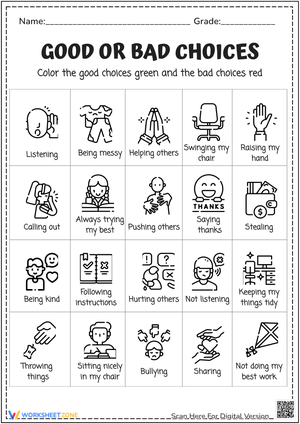
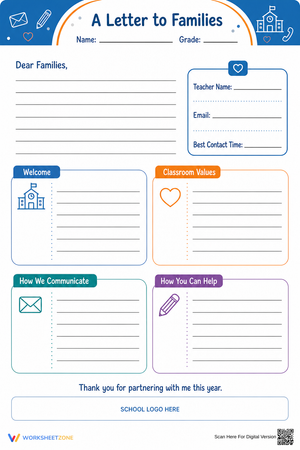
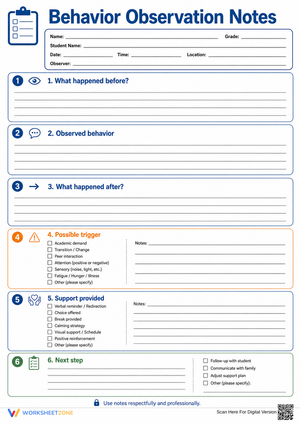
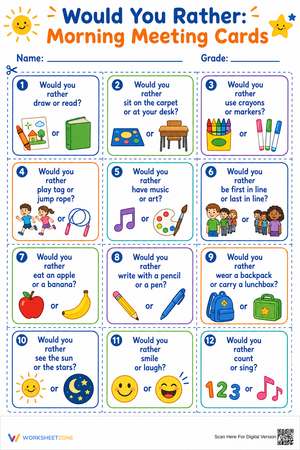
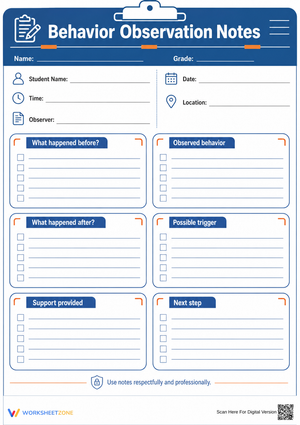
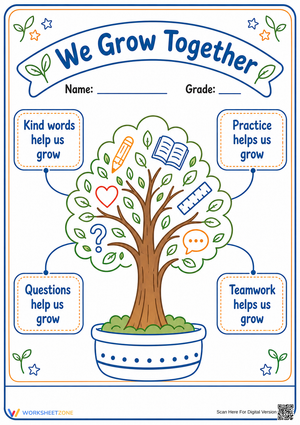
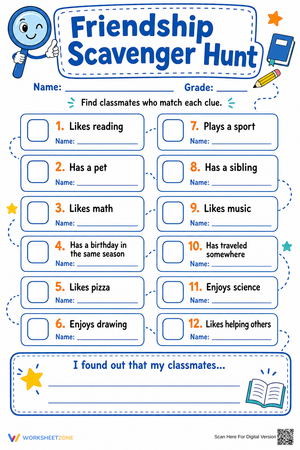
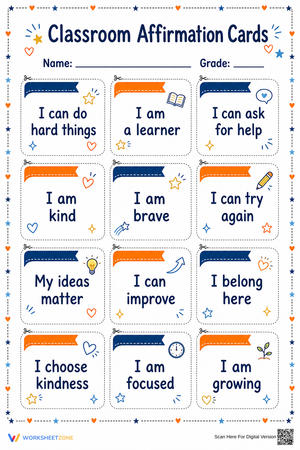
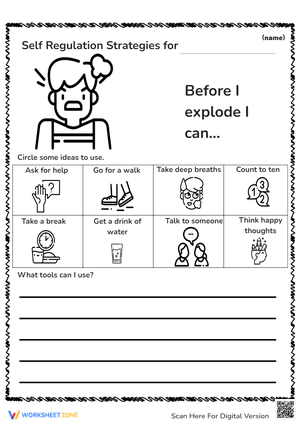
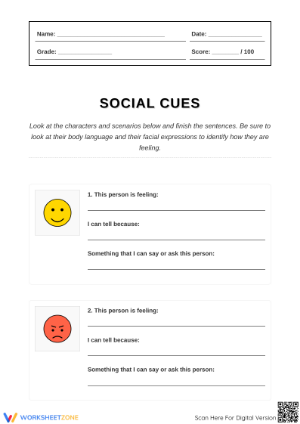
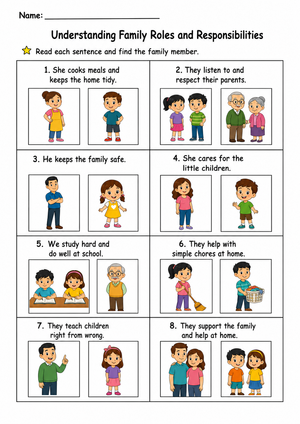
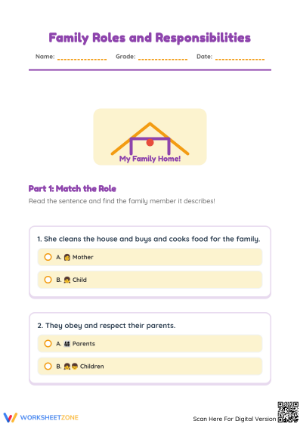
These social skills worksheets printable for 1st grade address one of the trickiest transitions in early elementary—the shift from "playing beside" to "playing with," when six-year-olds are expected to negotiate, take turns, read body language, and repair small conflicts, often within the same 20-minute recess block. The set covers the core interpersonal territory of a first-grade classroom: emotion identification, active listening, turn-taking, friendship behaviors, and basic conflict resolution. Each worksheet uses a picture-first format because, at this stage, a child's reading decoding and social reasoning are both still developing—and you cannot let one skill bottleneck the other.
The Specific Skills Targeted
The worksheets move through five distinct skill areas that mirror the progression teachers see across a typical first-grade year.
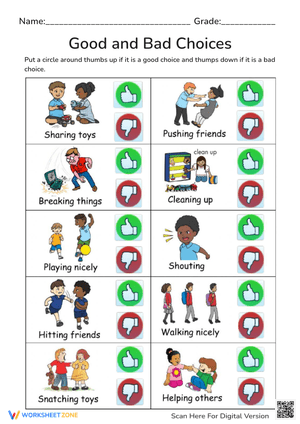
- Naming and matching emotions: Students draw lines from illustrated facial expressions to emotion words, then mark which face matches a described scenario—building the vocabulary children need before they can self-regulate or show empathy toward classmates.
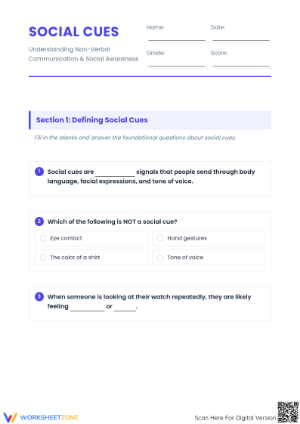
- Reading body language: Each worksheet in this strand pairs a posture or gesture—crossed arms, slumped shoulders, a raised hand—with a set of possible meanings. Students circle the most likely interpretation, practicing the kind of close observation that reduces playground misreads.
- Turn-taking and sharing sequences: Students reorder scrambled panels showing a correct sharing sequence (asking, waiting, thanking) before copying the steps into their own words or drawings.
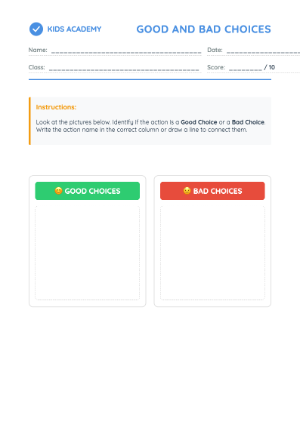
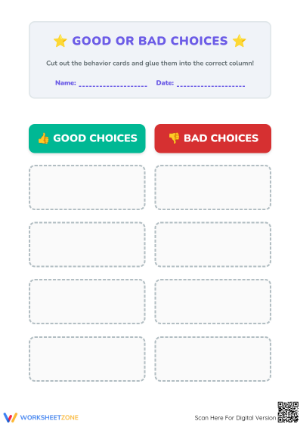
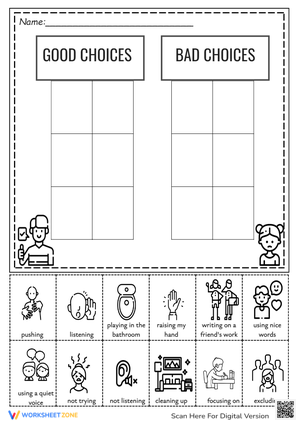
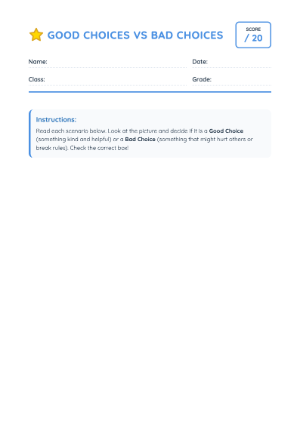
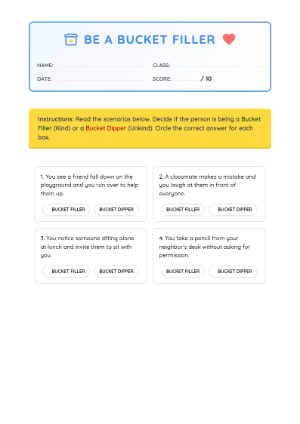
- Conflict resolution choices: Multiple-choice scenarios present a common dispute—two children reach for the same book at the same moment—and three possible responses. Students mark the best choice, then write or draw why the others would make things worse.
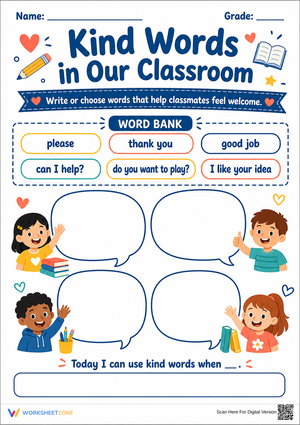
- I-statements and kind words: Fill-in-the-blank frames help students practice phrasing like "I feel ___ when ___," with word banks and emotion faces to keep the entry point accessible for early writers.
Mistakes Students Make That These Worksheets Help You Catch
The most consistent error pattern in emotion-identification work is the conflation of anger and sadness. Students who correctly label "happy" and "surprised" from facial expressions will routinely mark a crying face as "mad"—because in their lived experience, big feelings collapse into a single outburst. When you see that error on the matching worksheet, it opens a precise conversation: "What does your face look like when you're sad? What's different about angry?" That five-minute debrief, triggered by a specific wrong answer, is more productive than re-teaching the whole lesson from scratch.
A second recurring pattern shows up in the conflict resolution worksheets. Students reliably select "tell a teacher" even when the scenario describes a minor disagreement—two friends arguing over which game to play at recess. They are not wrong that adults can help, but the pattern tells you they have not yet internalized the idea that small conflicts belong to them to resolve. The worksheets present a deliberate range of low- and high-stakes scenarios so you can name that distinction explicitly: some situations need a grown-up; many do not.
How These Worksheets Fit Into Real Lesson Structures
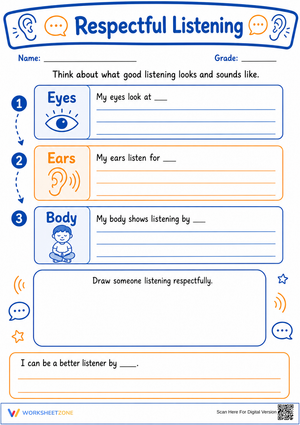
The most reliable entry point for social skills worksheets printable for 1st grade is the five minutes after morning meeting, when the class is already oriented toward community and before academic centers pull attention elsewhere. Introduce one concept—say, the difference between a listening body and a distracted body—project a worksheet on the document camera, complete two examples together, then send students back to their seats for the independent portion. The whole sequence runs about 12 minutes on a tight day.
The conflict resolution and I-statement worksheets earn their strongest results when used as a follow-up to an actual classroom incident. When a dispute happens at recess and the involved students are calm again, sitting together with the relevant worksheet gives the conversation structure. It removes the "he said / she said" spiral and replaces it with a shared visual framework—both children looking at the same sequence of steps rather than at each other's faces. Teachers who use them this way report fewer repeat conflicts around the same trigger.
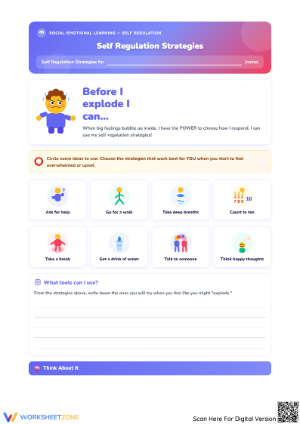
Emotion-identification worksheets belong in the cool-down area. A student who is dysregulated cannot access a resolution framework yet; they need to name what they are feeling first. Keeping three or four of these worksheets in a designated corner—alongside a feelings chart and something tactile—gives the child a concrete first step they can take independently while the teacher continues instruction with the rest of the class.
Standard Alignment
These worksheets align with CASEL's five core SEL competencies: self-awareness, self-management, social awareness, relationship skills, and responsible decision-making. In practical classroom terms, self-awareness worksheets fit best in September when students are building their emotion vocabulary; relationship skills and conflict resolution work lands more effectively in November and January, after the honeymoon period has faded and real social friction is emerging. Most U.S. states with adopted SEL standards tie first-grade benchmarks to these same CASEL domains—naming conventions vary, so look for "Social-Emotional Learning Standards, Grade 1" in your state framework for the specific codes. The active-listening worksheets also support CCSS ELA-Literacy.SL.1.1, which asks students to participate in collaborative conversations using agreed-upon rules for discussion.
Differentiating These Worksheets Across Ability Levels
For students who are still emerging as readers, the picture-heavy format already does most of the work—but you can go further by reading all text aloud before independent work begins, or by partnering a strong reader with a peer who needs support. The fill-in-the-blank I-statement worksheets include word banks precisely because open-ended writing at this stage stops some students before they ever reach the social thinking at the heart of each activity.
For students who move through the worksheets quickly, the extension line on the conflict resolution worksheet—"explain why this choice causes more problems"—adds genuine cognitive demand without requiring a separate activity. Asking those students to generate a new scenario matching the skill being practiced, then share it as a class discussion starter, is a meaningful step up in social perspective-taking that the rest of the group benefits from too.
Students receiving support services for social-emotional development or behavioral goals may use the social skills worksheets printable for 1st grade as a structured session-opener with a counselor or specialist—the worksheet provides a neutral starting point that reduces the intensity of direct questioning and gives the student something to mark and point to rather than speaking cold.
Frequently Asked Questions
Are these worksheets usable with students who are not yet reading independently?
Yes. The design prioritizes visual information—illustrated faces, body language pictures, sequencing panels—over written text. A pre-reader can complete most worksheets with minimal adult support. Where text appears, it is short, high-frequency, and paired with a corresponding image so the picture carries the social meaning even when the words do not land yet.
Can a school counselor or SEL specialist use these in pull-out sessions?
The social skills worksheets printable for 1st grade work well in both push-in and pull-out settings. Counselors often use them as session openers—the worksheet gives the student something to look at and respond to, which lowers the pressure of direct conversation and establishes shared vocabulary before deeper discussion begins.
What do I do when a student consistently picks the wrong answer on conflict resolution scenarios?
Treat the pattern as diagnostic information, not a performance problem. A student who repeatedly selects aggressive or avoidant responses is showing you their current conflict schema—not a reading comprehension error. Sit with them one-on-one, read the scenario aloud together, and ask them to walk through their reasoning. What you hear guides your next instructional step more precisely than any whole-class lesson can.
Do these worksheets replace live social skills instruction?
No—and pairing them with real practice is what makes them work. A child who completes a turn-taking worksheet but never practices turn-taking in a structured game has processed the concept on paper only. The worksheet is the anchor; the lived practice is the instruction.