


























Views
Downloads
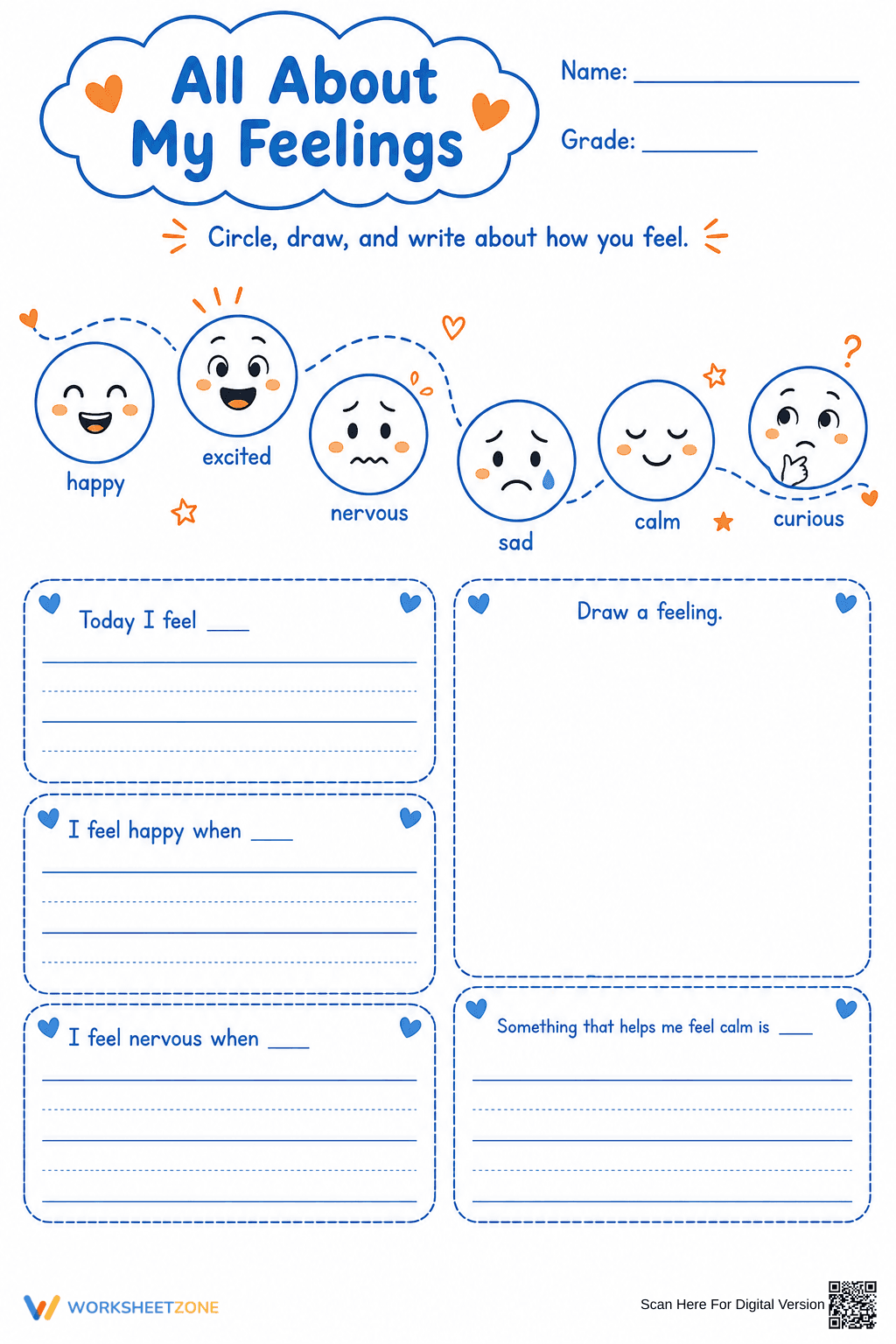

All About My Feelings Worksheet | Essential Grade K-3 SEL
Paste this activity's link or code into your existing LMS (Google Classroom, Canvas, Teams, Schoology, Moodle, etc.).
Students can open and work on the activity right away, with no student login required.
You'll still be able to track student progress and results from your teacher account.
This Grade K-3 social-emotional learning worksheet provides a structured framework for young learners to identify, process, and communicate their internal emotional states. By combining visual recognition with reflective writing, students develop the vocabulary necessary to articulate complex feelings. This resource ensures that every child has a safe, guided space to explore their emotional well-being.
At a Glance
- Grade: K-3 · Subject: Social Emotional Learning
- Standard:
CCSS.ELA-LITERACY.W.1.2— Write informative texts to name a topic and supply some facts.- Skill Focus: Emotional Literacy & Self-Expression
- Format: 1 page · 11 tasks · Answer key N/A · PDF
- Best For: Morning meetings and counseling sessions
- Time: 15–20 minutes
The worksheet features a creative "feelings path" layout containing 6 distinct emotion icons: happy, excited, nervous, sad, calm, and curious. Below this visual guide, students encounter 4 specific sentence starters designed to prompt personal reflection. A large, dedicated drawing frame allows for non-verbal expression, making the 1-page PDF accessible to students at varying levels of literacy development.
Zero-Prep Workflow
- Print: Select the single-page PDF and print enough copies for your class in under 30 seconds.
- Distribute: Hand out the sheets during a transition period or as part of a dedicated SEL block; no additional materials are required beyond pencils and crayons.
- Review: Spend 5 minutes inviting volunteers to share which emotion they circled or what they drew in the feeling box. Total teacher preparation time is less than 2 minutes.
Standards Alignment
This resource aligns with `CCSS.ELA-LITERACY.W.1.2`, which requires students to write informative or explanatory texts in which they name a topic and supply some facts about the topic. By identifying their own feelings and providing context for those emotions, students practice foundational composition skills. Both standard codes can be copied directly into lesson plans, IEP goals, or district curriculum mapping tools.
How to Use It
Use this worksheet as a formative assessment during a morning meeting to gauge the emotional temperature of the classroom. Observe which students struggle to identify a specific emotion or provide a reason for their feelings, as this can signal a need for targeted intervention. It also serves as an excellent quiet-time activity following recess to help students transition back to academic focus.
Who It's For
This tool is designed for early elementary students in Kindergarten through Grade 3, including English Language Learners who benefit from the visual emotion badges. It pairs naturally with a classroom feelings chart or a direct instruction lesson on self-regulation strategies and empathy.
According to Fisher & Frey (2014), the integration of visual scaffolds and sentence frames is essential for helping young learners bridge the gap between internal thoughts and external expression. This worksheet utilizes these evidence-based strategies to support CCSS.ELA-LITERACY.W.1.2 by providing a structured environment for emotional literacy. Research indicates that students who regularly engage in self-reflection activities demonstrate higher levels of social competence and academic persistence. By identifying 6 core emotions and responding to 4 reflective prompts, students build the linguistic capacity to manage their social-emotional needs. This resource provides a practical application of the gradual release of responsibility model, moving from visual identification to independent writing and drawing. It is a reliable tool for educators seeking to meet state standards while fostering a supportive classroom climate.


