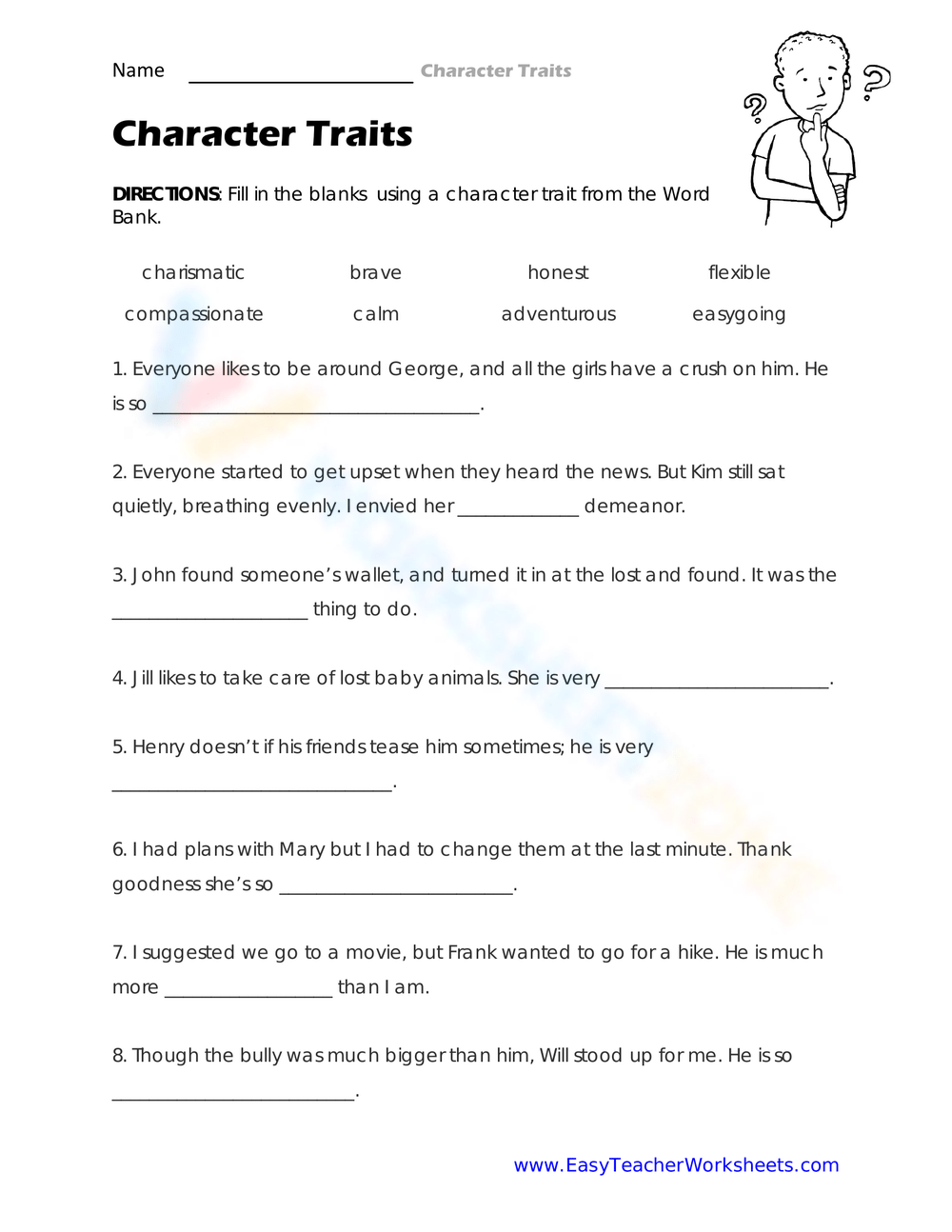
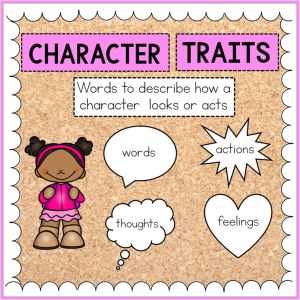
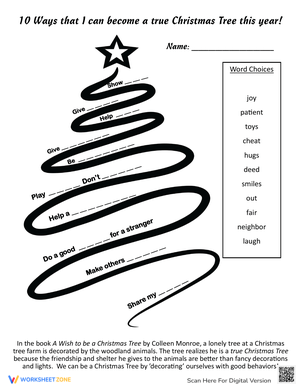
These 1st grade character traits worksheets pdf give first-grade teachers a ready structure for one of the harder conceptual shifts in early literacy — getting 6- and 7-year-olds to look past what a character looks like and start thinking about who that character actually is. Each worksheet pairs a short reading passage or illustration prompt with targeted questions that push students to name a trait and then point to the specific evidence that shows it. The set works across whole-class read-alouds, small-group rotations, and morning meeting SEL discussions without modification.
Why This Concept Arrives in Grade 1 — and Not Before
Kindergartners describe characters the way they describe people in photographs: hair color, clothing, whether someone looks happy or mad in the picture. That's developmentally right for that age. The move to internal traits in first grade is a genuine cognitive step — students at 6 and 7 are becoming capable of sustained inference. They can hold a character's behavior in mind, connect it to a personality word, and then defend that connection with a detail from the story. The worksheets in this set are built around that specific developmental window, not around the grade level as an administrative category.
The "inside vs. outside" framework is the conceptual anchor. Physical descriptions — height, hair color, what someone is wearing — are visible to any observer. Traits like courageous, selfish, or determined have to be inferred from behavior. Teachers who make this distinction explicit from the first lesson, and return to it consistently throughout the unit, find that students stop defaulting to appearance when asked what a character is really like.
What Students Practice Across the Set
The worksheets address character trait work through several different task formats, so students encounter the same underlying concept more than once without doing the identical activity repeatedly:
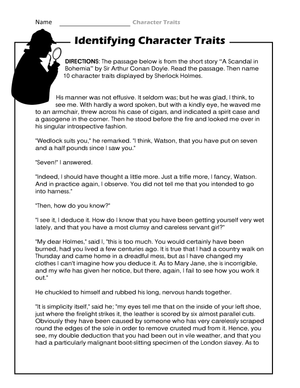
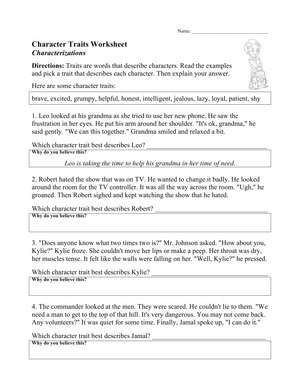
- Reading a short passage (typically 4–8 sentences) and circling the sentence that best supports a given trait
- Studying an illustration sequence and naming the trait without any text prompt
- Choosing between two trait words and writing one sentence that explains the choice
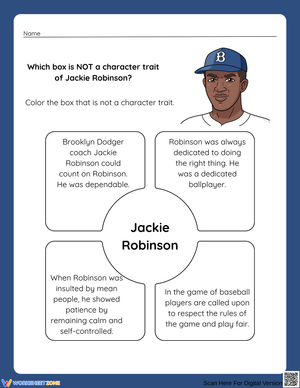
- Completing a character map — name in the center, trait bubbles branching out, one evidence note per bubble
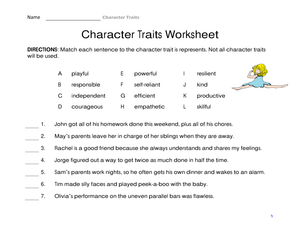
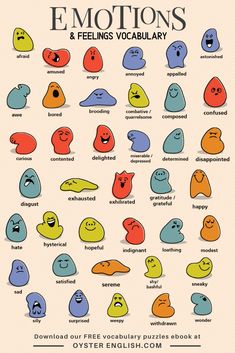
- Sorting a list into "feelings" and "traits" columns, the format that most directly addresses the confusion first graders bring to this topic
- Reflecting on personal traits in an "All About Me" format that connects academic vocabulary to students' own sense of identity
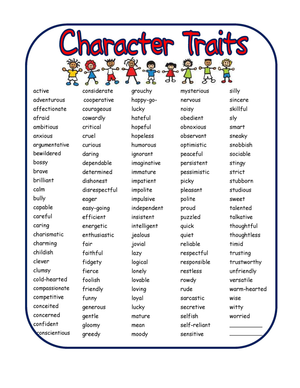
Vocabulary across the set stays within reach for early readers — kind, brave, honest, greedy, patient, determined — while including words that stretch slightly beyond casual conversation. That range is intentional: vocabulary too simple makes the sorting task feel pointless; vocabulary too complex shifts students' attention from the thinking to the decoding. The 1st grade character traits worksheets pdf in this collection vary the task format enough that students revisit the same core concept several times without feeling like they're repeating themselves.
Where Students Lose the Thread — and How to Get Them Back
The most persistent error in first-grade character trait work is treating a temporary feeling as a fixed personality quality. A student who reads that a character "cried when her dog got lost" writes "sad" in the trait box and feels completely confident she answered correctly. The feelings-vs.-traits sort addresses this directly, but the correction also needs to happen in conversation. A reliable frame for this age: feelings change like weather — sunny Monday, rainy Tuesday afternoon. Traits describe how a person generally acts over time, the way climate describes a whole region rather than a single afternoon. Most 6-year-olds understand weather, and the analogy sticks in a way that abstract definitions do not.
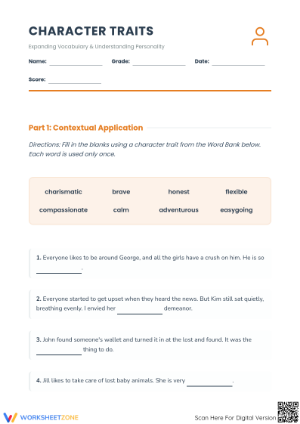
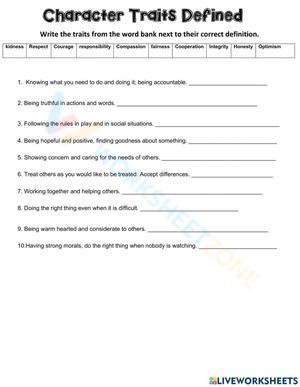
A second error that surfaces reliably: students who write the action in the trait box rather than the adjective. They put "she helped her sister" instead of "helpful." This happens because paraphrasing what happened is easier than abstracting upward to the personality label. The reteaching move that works here is a single redirect question: "What word describes the kind of person who does that?" The word-bank worksheets are particularly useful at this moment — they narrow the retrieval demand so students can focus on matching rather than generating vocabulary from scratch, which is exactly where the thinking stalls.
Standard Alignment
These worksheets address CCSS ELA-Literacy.RL.1.3, which requires first graders to describe characters, settings, and major events using key details. In instructional practice, RL.1.3 sits at the intersection of literal recall and inferential thinking: students must retrieve a specific detail and use it to support a conclusion. The passage-based evidence questions in this set practice exactly that two-step sequence. The "All About Me" reflection worksheet also connects to the CASEL SEL Competency: Self-Awareness, giving teachers a natural integration point for schools running social-emotional learning programs alongside ELA standards.
Where These Worksheets Fit in the School Day
The most effective placement for this set is alongside the read-aloud routine. Read a picture book through once for enjoyment, then return to it the following day with a worksheet in hand. Students already know the story, which reduces cognitive load enough that they can concentrate on the trait-identification task rather than processing the plot simultaneously. The evidence-circle worksheets fit in the 8–10 minutes before a morning transition; the character map and the feelings-vs.-traits sort need a full 15–20 minute block with a brief whole-class debrief to close.
A 1st grade character traits worksheets pdf also integrates naturally into small-group literacy rotations. Students who read at or above grade level can work through evidence-writing prompts independently while the teacher runs guided reading with another group. Because each worksheet stands alone, there's no required sequence — pull whichever format matches the mentor text the class is using that week rather than working through the set in a fixed order.
Tailoring the Worksheets for Students at Different Levels
For students still building reading fluency, the illustration-based worksheets — where students infer a trait from a picture sequence rather than printed text — remove the decoding barrier without removing the inferential task. A useful pre-writing move for these students: have them narrate aloud what they observe before writing anything. "Tell me what you see him doing. Now — what word describes a person who acts that way?" They write down the word they just said. That oral-to-written sequence gives students whose writing mechanics haven't caught up to their thinking a concrete path onto the page.
For students who work through trait identification quickly, add a counterfactual extension: identify the opposite trait, then write a sentence describing what the character would have done differently with that trait instead. This pushes past labeling into hypothetical reasoning that doesn't appear formally in ELA standards until second or third grade — but first graders who are ready will engage with it immediately. These students are also typically prepared for vocabulary like empathetic or resilient long before their classmates encounter those words in any structured context.
Frequently Asked Questions
Do these worksheets work for students who read below grade level?
Yes. The illustration-based and word-bank formats reduce text load while keeping the inferential work fully intact. Students who find decoding difficult are still developmentally capable of character trait reasoning — those formats let them demonstrate that capability without being blocked by print. Save the open-ended evidence-writing worksheets for students who can sustain independent reading of the passage text.
How do I explain the difference between feelings and traits to a 6-year-old?
The weather-vs.-climate comparison works reliably at this age. Feelings are the weather — they shift fast, sometimes several times in one school day. Traits describe how a person tends to act over a long stretch, the way climate describes a whole region rather than one afternoon. Ask students whether a character who felt angry once is automatically a "mean" character, or whether a person would have to hurt others repeatedly to earn that label. The distinction lands much faster when grounded in a specific character from a book students already know than when explained in the abstract.
Are these worksheets usable for home practice or family follow-up?
A 1st grade character traits worksheets pdf works well for home practice because the formats are self-explanatory — a parent doesn't need classroom context to run the activity. Someone reading a bedtime story with their child can use an evidence-circle worksheet the following morning as a five-minute discussion starter. The word banks on most worksheets give families enough vocabulary support to guide the conversation. Send home the simpler illustration-based formats first; save the character map and evidence-writing prompts for students who already have solid exposure to the vocabulary from classroom instruction.
Is there a recommended order for introducing the worksheets?
Start with the inside-vs.-outside sort and the illustration-based worksheets before moving into passage-based formats. Students need that concrete visual practice first — seeing that a picture of a child sharing her umbrella points to "generous" rather than any physical description of what she looks like. Once they make that inference reliably from pictures, they're ready to do the same work with text. The character map works best later in the unit, after students have built enough trait vocabulary to fill in the bubbles without the task stalling into blank stares.












 Interactive Worksheet Maker
 Quiz Maker
 Word Search Maker
 Crossword Puzzle Maker
 Word Scramble Generator
 Sentence Scramble Generator
 Handwriting Worksheet Generator
 Name Tracing Generator
 Fill In The Blank Generator