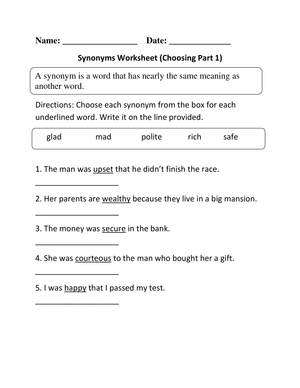
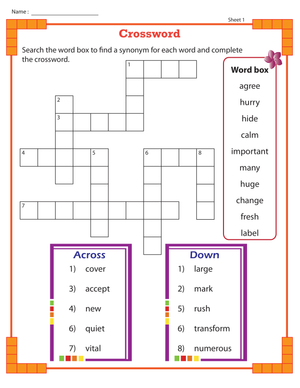
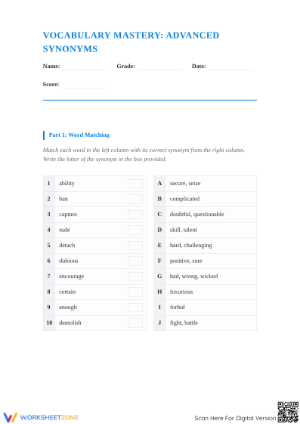
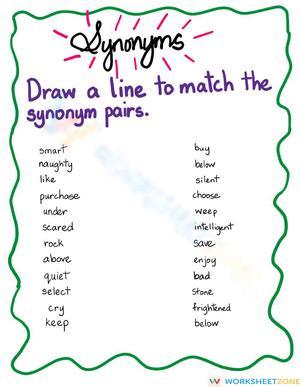
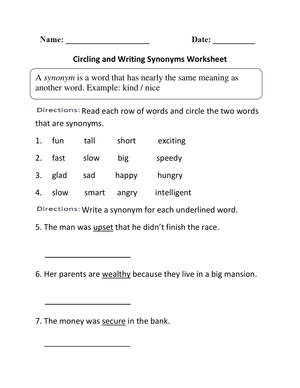
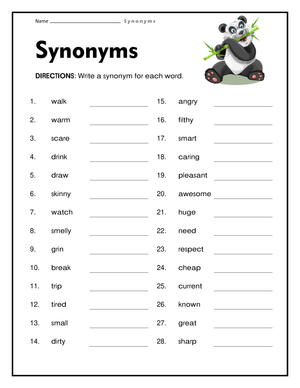
Why antonyms and synonyms worksheets earn a spot in your ELA block
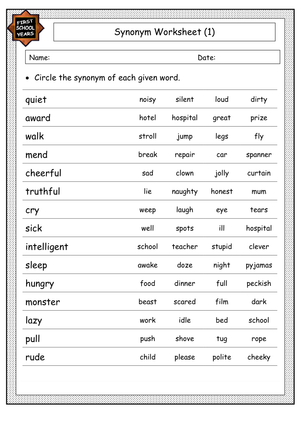
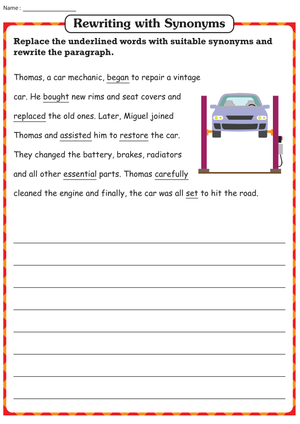
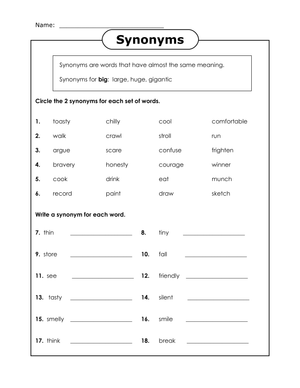
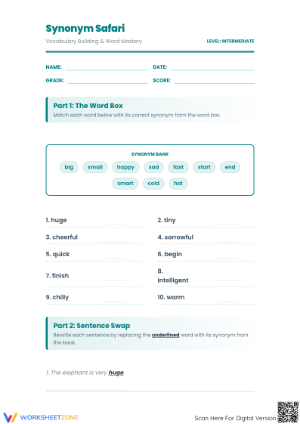
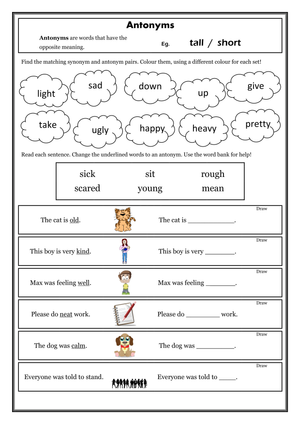
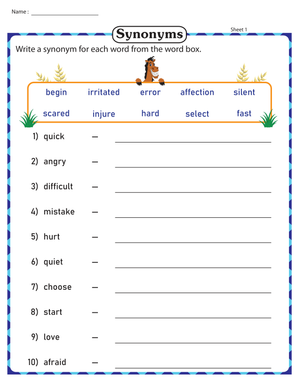
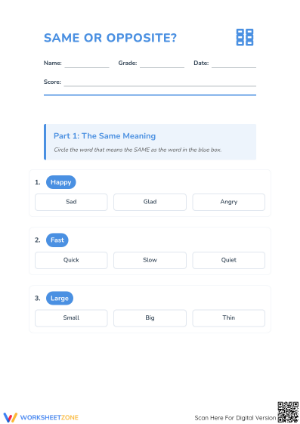
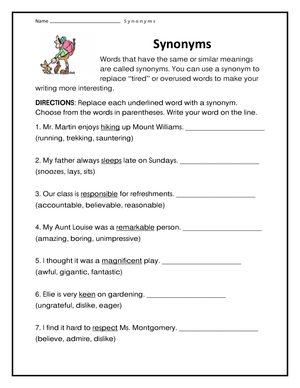
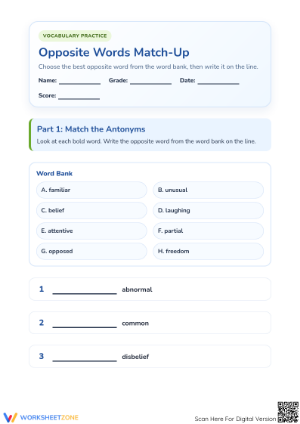
Word relationships are one of the highest-leverage vocabulary skills you can teach in elementary grades. When students can name a synonym for happy or an antonym for expand, they are doing more than matching words. They are building the flexible word knowledge that powers reading comprehension, precise writing, and confident test performance. Antonyms and synonyms worksheets give you a fast, repeatable way to put that practice in front of every student without inventing new materials each week.
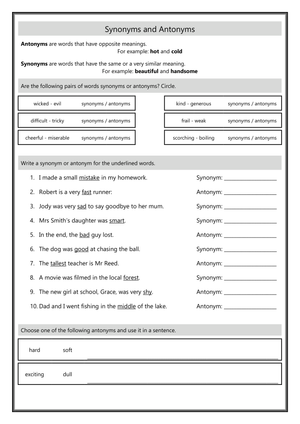
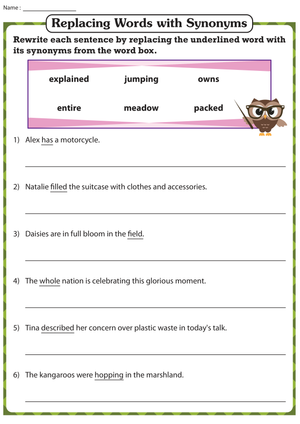
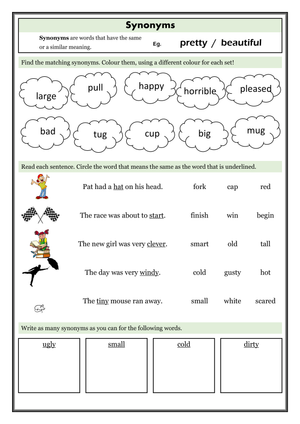
The best sheets do not just ask kids to draw lines between word pairs. They push students to explain why two words are close in meaning, or how one word flips another. That small shift, from matching to reasoning, is what turns a warm-up into real vocabulary growth.
How these worksheets map to Common Core vocabulary standards
Synonym and antonym practice sits squarely inside the Common Core language strand. By upper elementary, the standards ask students to work with word relationships on purpose. CCSS.ELA-LITERACY.L.5.5.C expects fifth graders to demonstrate understanding of words by relating them to their synonyms and antonyms, and CCSS.ELA-LITERACY.L.4.5.C sets the same expectation a year earlier with slightly simpler vocabulary. A well-built worksheet gives you documentable evidence that students are practicing exactly what those standards describe.
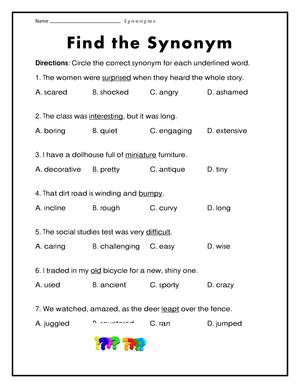
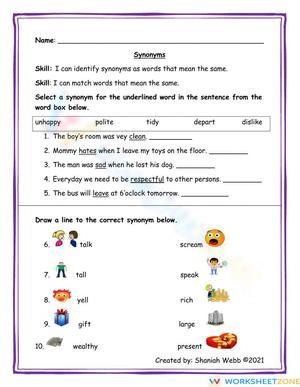
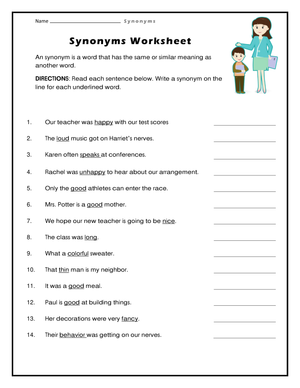
Because the skill spirals, the same worksheet format can carry a student from second grade through fifth. Early on, kids swap one plain word for another. Later, they choose the best synonym from several near-matches and justify the pick. Keeping the format familiar while raising the difficulty lets you reuse routines your class already knows.
Documentation matters when you are planning instruction or preparing for a standards review. Keeping a few completed sheets in a student folder lets you point to concrete evidence that word-relationship practice is happening on a regular schedule, not just once a unit.
Classroom Implementation
Fitting word practice into a packed schedule is easier when the worksheet does double duty. Try these routines:
- Bell-ringer: five pairs on the board or a half-sheet while you take attendance.
- Exit ticket: three synonyms and three antonyms as a quick formative check before students line up.
- Center rotation: a sorting sheet students complete independently during guided reading.
- Homework: a short sheet that reuses the week's spelling or content words.
Because the same sheet can serve as warm-up, assessment, and review, you get several instructional touches out of one prep. Collect a few exit tickets each week and you will spot the students who need a small-group reteach before it becomes a comprehension problem.
One caution: resist the urge to grade every sheet. Much of the value comes from immediate, low-stakes feedback, so projecting an answer key and letting students self-check often teaches more than a red pen. Save your grading energy for the exit tickets that actually inform your grouping.
Frequently Asked Questions
1. What grade should start teaching synonyms and antonyms explicitly?
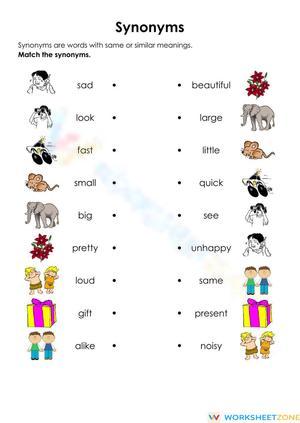
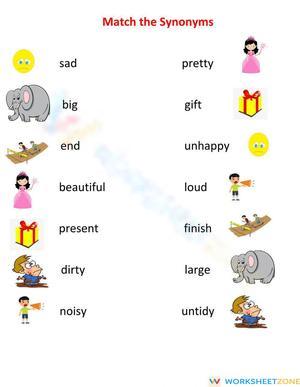
Most classrooms introduce word relationships explicitly in grades 2 and 3 with concrete, high-frequency pairs, then deepen the skill through grades 4 and 5. Starting with picture-supported matching before moving to sentence-level work keeps the progression developmentally sound and gives every student an early win.
2. How do these worksheets align with Common Core vocabulary standards?
They map directly to the language strand. CCSS.ELA-LITERACY.L.4.5.C and L.5.5.C both ask students to demonstrate understanding of words by relating them to synonyms and antonyms, so a completed sheet gives you tangible evidence of standards-based practice you can point to during planning.
3. How can I use these worksheets for small-group intervention versus whole-class instruction?
For intervention, shorten the sheet, add a word bank, and keep pairs concrete while students rehearse aloud with you. For whole-class enrichment, remove the supports and ask students to generate and rank their own synonyms and antonyms, then explain their reasoning.
4. What's the difference between teaching synonyms/antonyms and teaching shades of meaning?
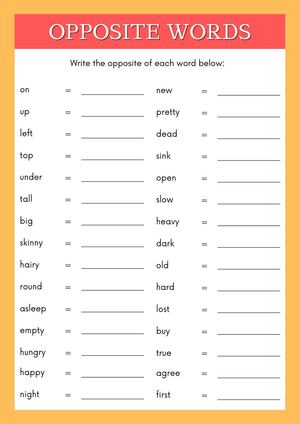
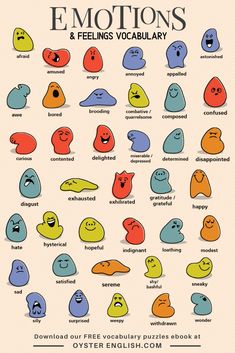
Synonym and antonym work establishes that words can be close or opposite in meaning. Shades of meaning goes further, asking students to rank near-synonyms by intensity or connotation, which is why it fits best in grades 4 and 5 as an extension of basic word-relationship practice.












 Interactive Worksheet Maker
 Quiz Maker
 Word Search Maker
 Crossword Puzzle Maker
 Word Scramble Generator
 Sentence Scramble Generator
 Handwriting Worksheet Generator
 Name Tracing Generator
 Fill In The Blank Generator