


























Views
Downloads

Grade 1 Antonyms — Printable No-Prep Worksheet
Paste this activity's link or code into your existing LMS (Google Classroom, Canvas, Teams, Schoology, Moodle, etc.).
Students can open and work on the activity right away, with no student login required.
You'll still be able to track student progress and results from your teacher account.
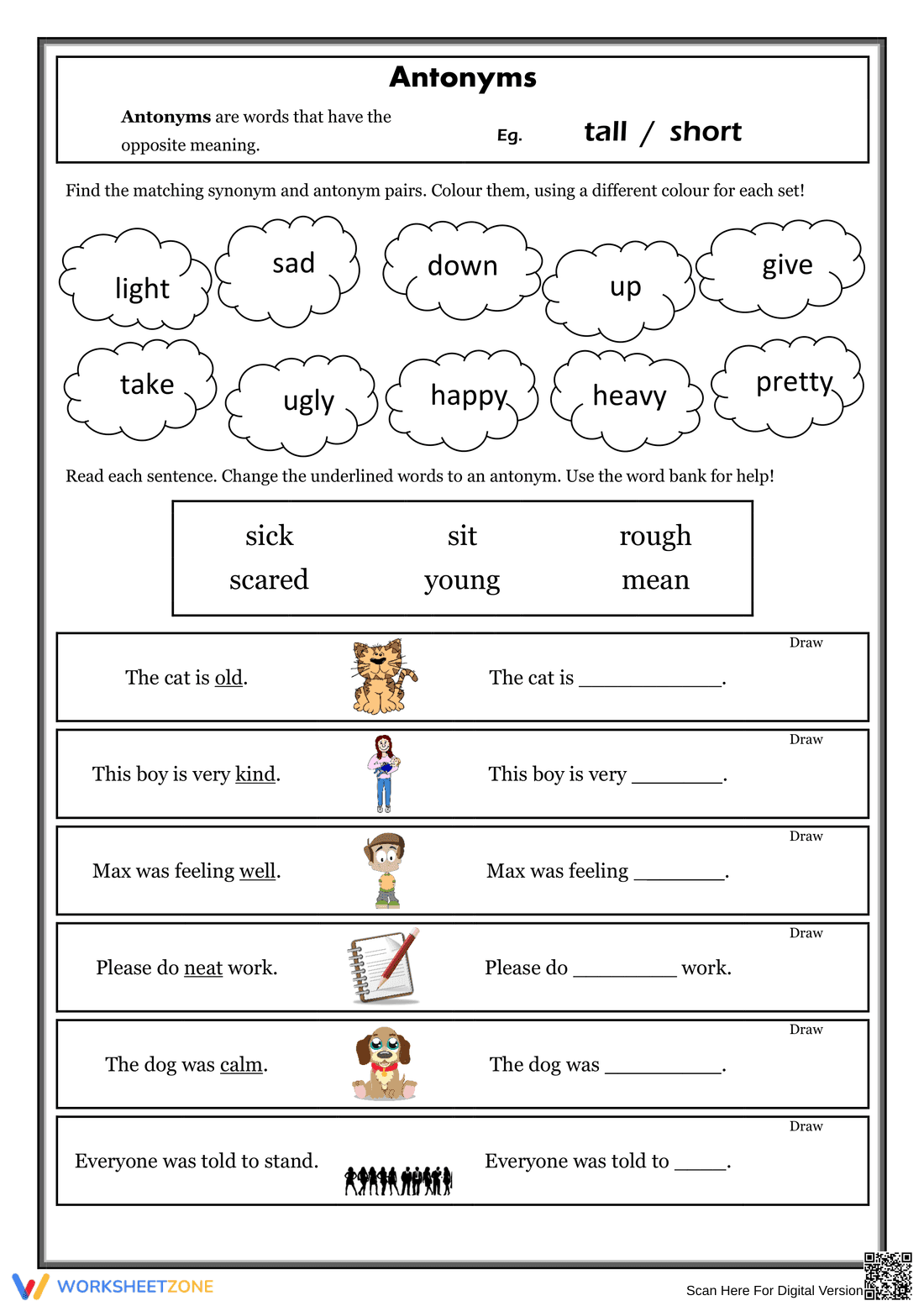
This ready-to-use worksheet helps early elementary students master antonyms by identifying opposite word pairs and applying them in context. By matching opposite adjectives and rewriting sentences, learners build essential vocabulary skills and improve reading comprehension through hands-on practice.
At a Glance
- Grade: 1 · Subject: ELA
- Standard:
CCSS.ELA-LITERACY.L.K.5.B— Relate frequently occurring adjectives to their opposites- Skill Focus: Identifying and using antonyms
- Format: 1 page · 11 problems · Answer key included · PDF
- Best For: Independent practice and vocabulary building
- Time: 10–15 minutes
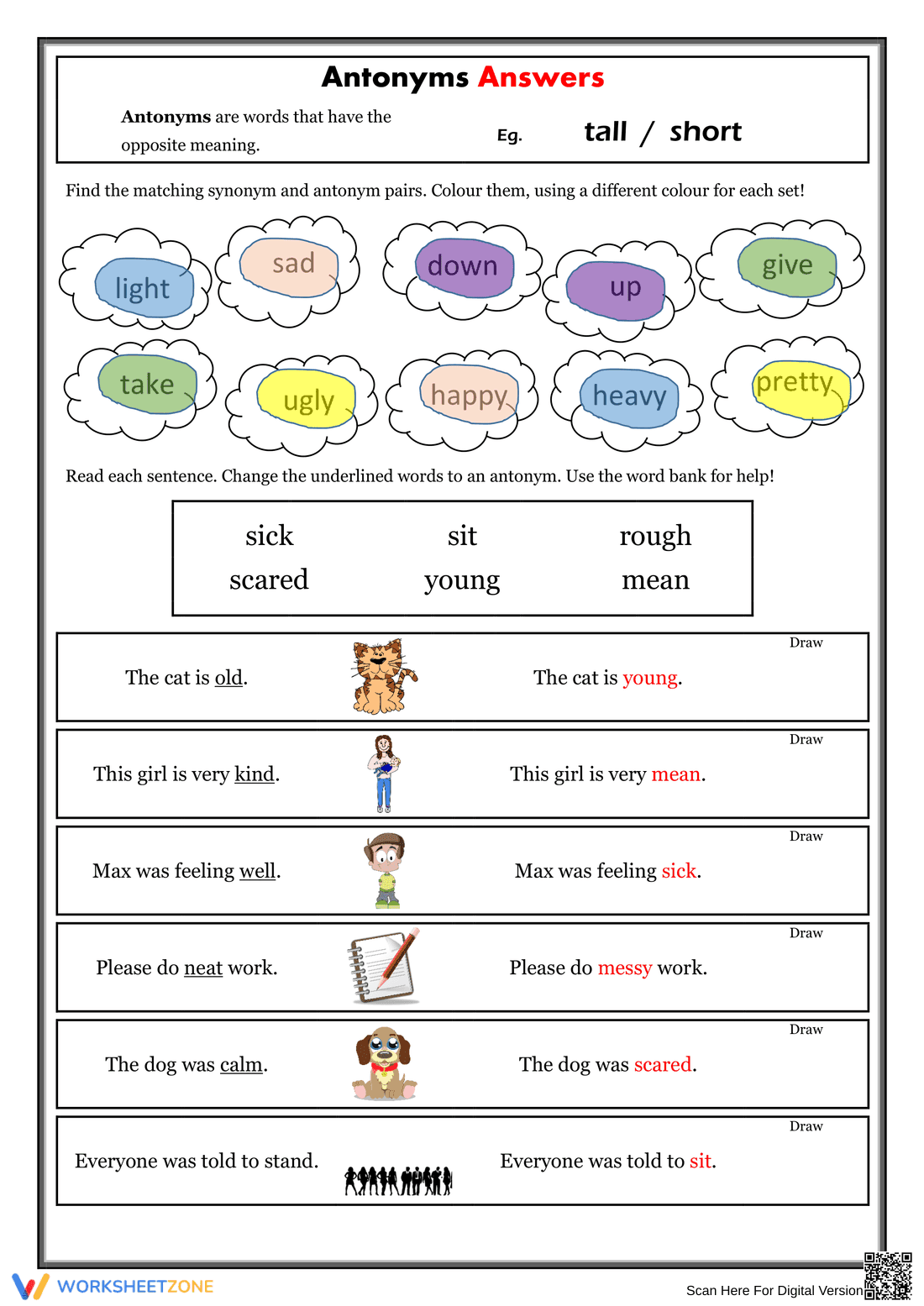
This single-page resource features two distinct task types to reinforce vocabulary. The first section includes a visual matching activity where students color-code five pairs of opposite words. The second section provides six decodable sentences and a supportive word bank, prompting students to replace underlined words with correct antonyms. A complete answer key is provided to ensure accurate grading.
This resource requires minimal teacher preparation:
- Print (1 minute): Simply download the PDF and print the student-facing page. The design ensures crisp copies.
- Distribute (1 minute): Hand out the worksheets along with crayons or colored pencils for the matching section.
- Review (3 minutes): Use the included visual answer key to quickly check student work or project it for whole-class review.
With under two minutes of total teacher prep time, this worksheet is an ideal addition to any emergency sub plan or vocabulary center.
This worksheet is tightly aligned to CCSS.ELA-LITERACY.L.K.5.B: "Demonstrate understanding of frequently occurring verbs and adjectives by relating them to their opposites (antonyms)." It also supports early Grade 1 vocabulary acquisition goals by requiring students to apply these opposites within complete sentences. Both standard codes can be copied directly into lesson plans, IEP goals, or district curriculum mapping tools.
Integrate this worksheet into your literacy block. Use it during independent center time after a direct instruction lesson on opposites, allowing students to practice their new vocabulary skills autonomously. Alternatively, deploy it as a formative assessment tool; observe how students utilize the word bank to gauge their contextual understanding. Most students will complete the activities within a 10 to 15-minute timeframe.
This resource is perfectly suited for Kindergarten and Grade 1 students developing foundational language skills. The inclusion of a word bank and visual cues provides built-in scaffolding, making it highly accessible for English Language Learners (ELLs) and students requiring additional vocabulary support. Pair this worksheet with an interactive anchor chart on opposites to solidify understanding.
Mastering antonyms is a critical component of early childhood literacy and cognitive development. Aligned with CCSS.ELA-LITERACY.L.K.5.B, this resource requires students to relate frequently occurring adjectives to their opposites, directly supporting robust vocabulary acquisition. According to a recent RAND AIRS 2024 report on early literacy interventions, explicit instruction in semantic relationships, including synonyms and antonyms, significantly accelerates reading comprehension outcomes in primary grades. By moving beyond simple memorization and requiring students to apply opposite words within sentence-level contexts, this worksheet bridges the gap between isolated vocabulary knowledge and functional language use. The structured progression from visual matching to contextual application ensures that young learners build the semantic networks necessary for advanced reading and writing tasks. This targeted practice lays the groundwork for future academic success.


