


























Views
Downloads
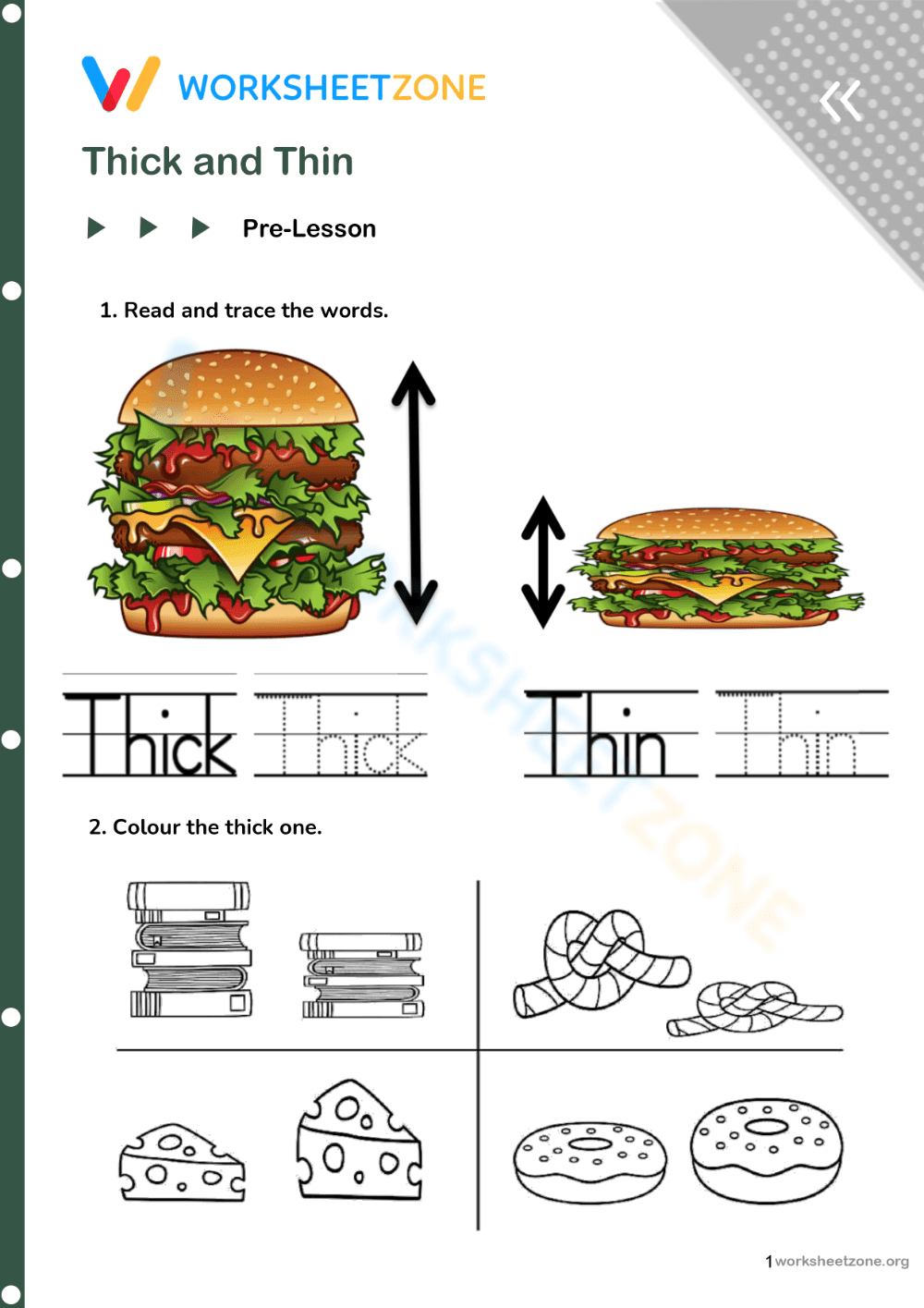


Thick and Thin Printable Vocabulary Worksheet | Grade 1
Paste this activity's link or code into your existing LMS (Google Classroom, Canvas, Teams, Schoology, Moodle, etc.).
Students can open and work on the activity right away, with no student login required.
You'll still be able to track student progress and results from your teacher account.
This Grade 1 ELA worksheet packet helps students master opposite adjectives and related descriptive vocabulary. Students identify, trace, and apply the concepts of thick and thin alongside everyday object words. The structured layout ensures young learners build foundational language skills through engaging visual exercises.
At a Glance
- Grade: Kindergarten to Grade 2 · Subject: English Language Arts
- Standard:
CCSS.ELA-LITERACY.L.K.5.B— Identify and relate common words to their opposites- Skill Focus: Opposite adjectives thick and thin
- Format: 3 pages · 6 tasks · No answer key · PDF printout
- Best For: Classroom ELA lessons and homework
- Time: 20–30 minutes
This comprehensive 3-page packet contains a structured sequence of activities divided into three distinct phases: a pre-lesson introduction, a classroom worksheet, and a homework assignment. Across these pages, students engage with 6 distinct tasks, including tracing words, coloring objects based on size attributes, circling correct vocabulary terms, and completing fill-in-the-blank sentences using a word bank.
This resource features a zero-prep workflow designed to save teachers valuable planning time:
- Print (1 minute): Select the pages you need and print copies for your entire class. No laminating or cutting required.
- Distribute (1 minute): Hand out the pre-lesson page to introduce the concept, followed by the worksheet for guided practice.
- Review (5 minutes): Walk through the completed sentences and drawings together as a whole group to check for understanding.
With a total teacher preparation time of under 2 minutes, this packet is highly suitable for emergency sub plans or quick morning work.
Standards Alignment
This worksheet aligns directly with the Common Core State Standard CCSS.ELA-LITERACY.L.K.5.B, which requires students to relate common words to their opposing terms. By identifying thick and thin objects, students build the semantic networks necessary for reading comprehension. Both standard codes can be copied directly into lesson plans, IEP goals, or district curriculum mapping tools.
How to Use It
Use this packet during direct instruction of descriptive adjectives. Start with the pre-lesson page to introduce the terms, then transition to the worksheet for independent practice. For formative assessment, observe students during the coloring task to ensure they correctly distinguish between the thick and thin items. The entire sequence takes approximately 25 minutes to complete.
Who It's For
This resource is designed for kindergarten, first grade, and second grade students learning basic antonyms. It serves as an excellent tool for English language learners who need visual support to grasp size concepts. Pair this worksheet with a physical demonstration using thick and thin books to reinforce the vocabulary.
This educational resource targets the standard code CCSS.ELA-LITERACY.L.K.5.B, focusing on the plain-English skill of identifying and relating opposite adjectives like thick and thin. According to research by Fisher & Frey (2014) on vocabulary instruction, structured exposure to word pairs and antonyms significantly enhances early reading comprehension and semantic development. By scaffolding the learning process from simple tracing to contextual sentence completion, this packet aligns with evidence-based practices for vocabulary acquisition. The inclusion of visual aids alongside written tasks supports diverse learning styles, ensuring that young students build a robust mental lexicon. Teachers can confidently integrate this print-ready resource into their daily language arts curriculum to support foundational literacy goals. The systematic progression from guided classroom practice to independent homework reinforces retention, making it a valuable asset for early childhood educators seeking to improve student outcomes in vocabulary development.


