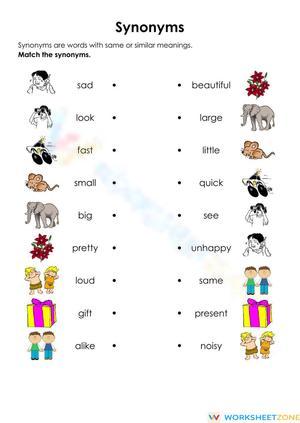
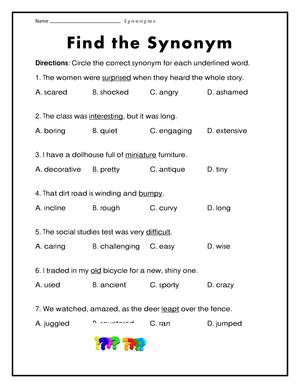
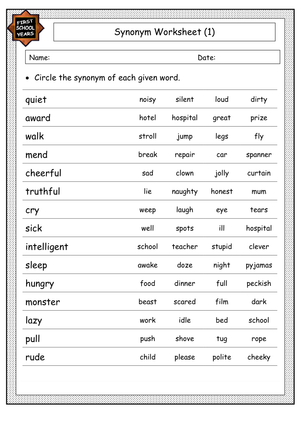
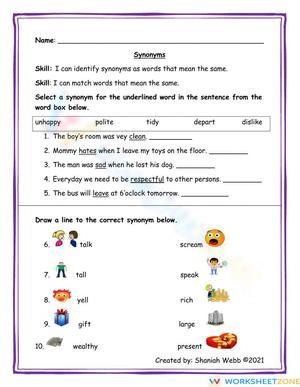
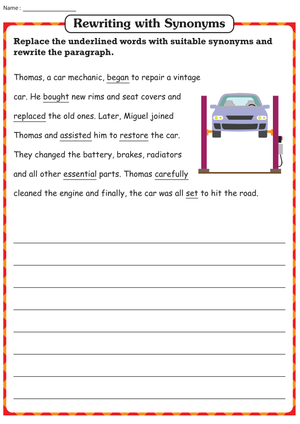
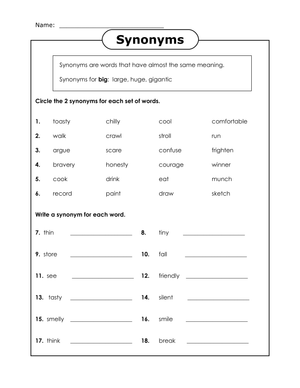
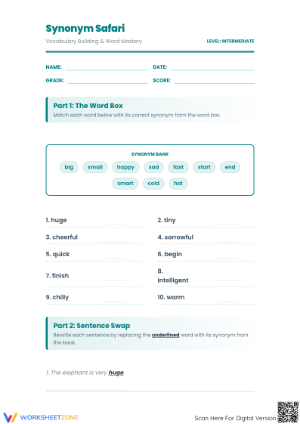
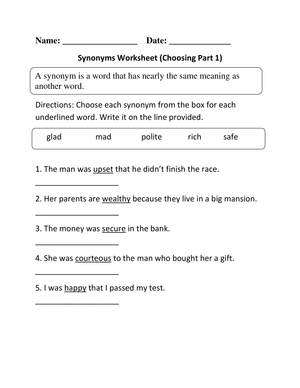
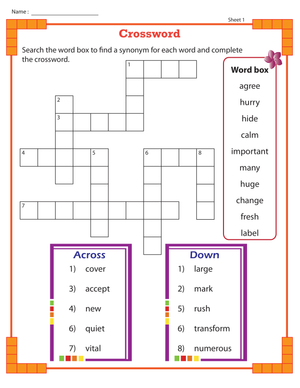
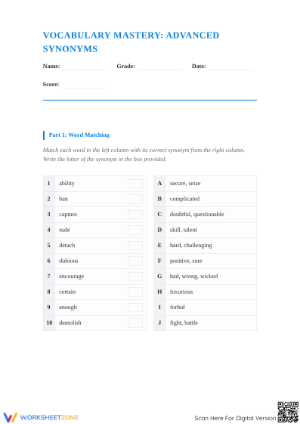
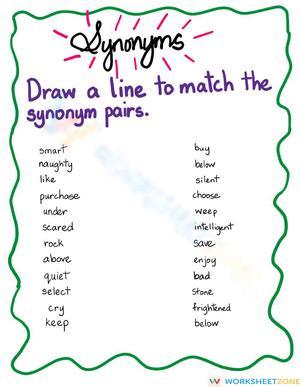
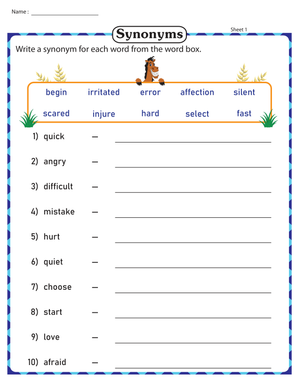
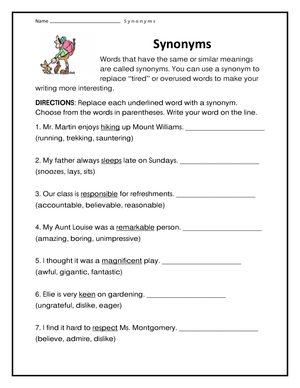
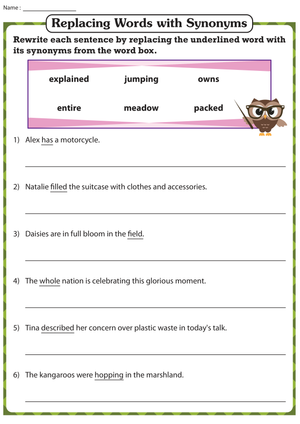
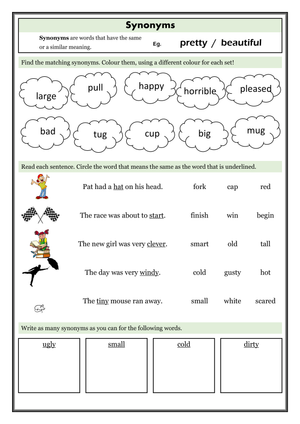
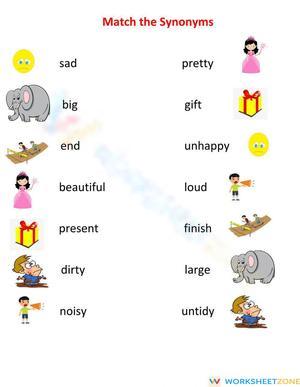
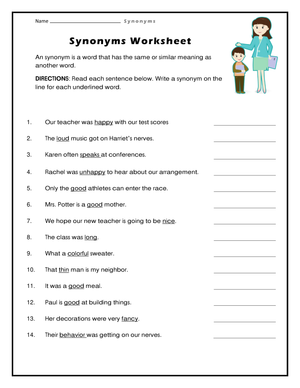
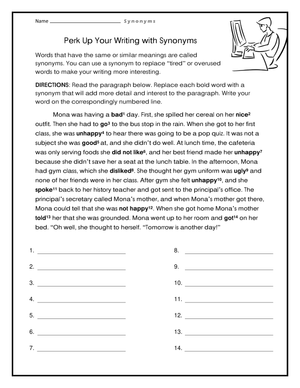
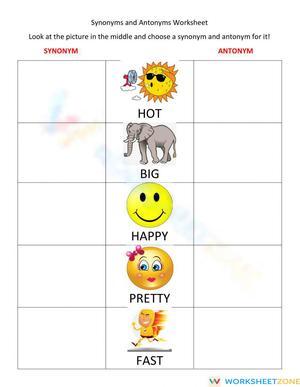
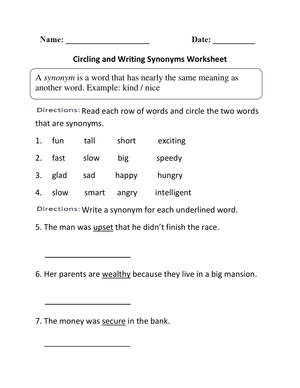
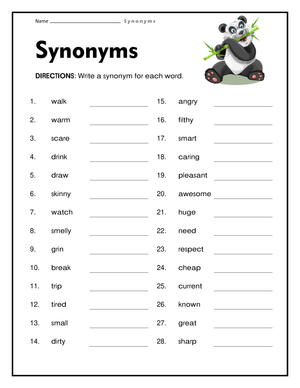
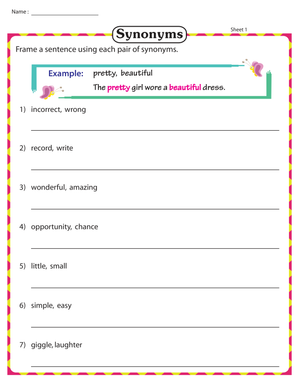
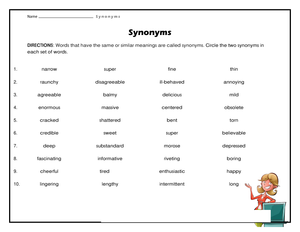
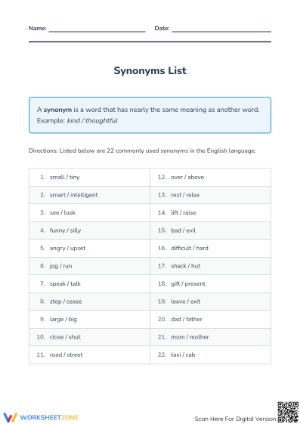
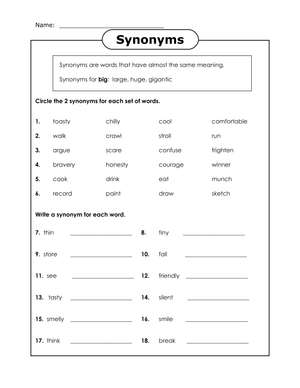
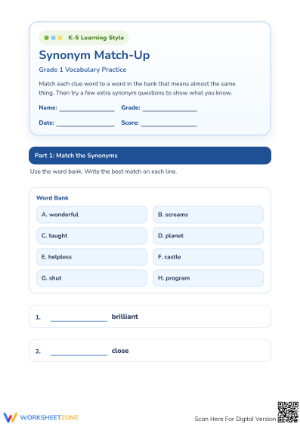
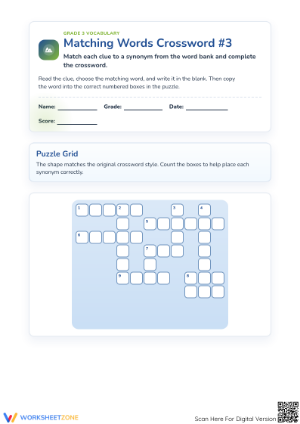
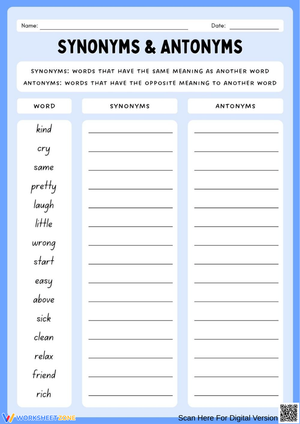
If you teach grades 2-5, you already know that a strong synonyms worksheet does more than ask students to swap one word for another. It gives readers a structured way to see how words connect, and it turns a quiet ten minutes into targeted vocabulary practice you can actually assess. Whether you're planning whole-class instruction, pulling a small group, or building a quick warm-up, the right page lets students name a shade of meaning instead of just circling the closest match.
Teachers reach for synonyms worksheets because they scale. The same core skill, recognizing that happy and cheerful point to similar meanings, stretches from a second grader matching pairs to a fifth grader ranking warm, hot, and scorching. That flexibility is why synonym practice shows up in review stations, intervention folders, and formative checks across the elementary years.
How Synonyms Worksheets Match Common Core Word-Relationship Standards
Synonym work isn't a side activity; it sits directly inside the Common Core language strand. CCSS.ELA-LITERACY.L.3.5 asks third graders to demonstrate understanding of word relationships and the nuances in word meanings, and L.4.5.c pushes fourth graders further, requiring them to relate words to their opposites and to words with similar but not identical meanings. A well-built worksheet gives you classroom evidence that students are meeting those standards.
Because the standard names both antonyms and synonyms together, many teachers plan a short synonyms unit as the on-ramp to antonyms and figurative language later in the year. Getting the similar-but-not-identical idea solid first makes the later opposite work land faster and frees class time for richer discussion.
It also gives you shared language for report cards and parent conferences. When you can point to L.3.5 or L.4.5.c and show a completed worksheet, a vague comment about vocabulary turns into concrete, standard-based evidence of what a student can and can't yet do.
Classroom Implementation
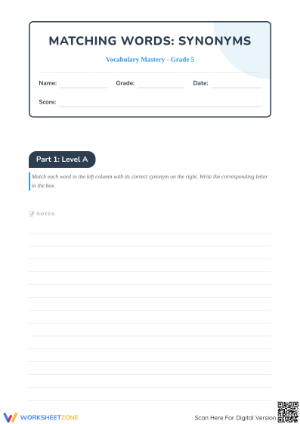
Start the week by introducing four to six target words in context, then use a synonyms worksheet as guided practice on day two rather than a cold quiz. Model one item aloud, thinking through why you rejected a near-miss answer, before students work independently or in pairs.
For small-group intervention, shrink the word list and add discussion. Ask striving readers to say each synonym in a sentence, then explain the tiny difference between the pair. That spoken rehearsal, not the worksheet alone, is what moves words into long-term memory. Keep completed word maps in a vocabulary folder so students can revisit and reuse the words in their own writing.
- Day 1: introduce target words in reading context.
- Day 2: guided synonyms worksheet with a teacher think-aloud.
- Day 3: word map plus partner discussion.
- Day 4: use the target words in a short writing task.
- Day 5: quick five-item formative check.
Frequently Asked Questions
1. What grade level are synonyms worksheets most appropriate for?
They work across K-5, but they're most common in grades 2-5. Younger students match simple pairs, while grades 4 and 5 dig into shades of meaning and context, matching the depth CCSS L.3.5 and L.4.5.c expect.
2. How do synonyms worksheets align with Common Core language standards?
They directly support L.3.5 and L.4.5.c, which ask students to understand word relationships and connect words with similar but not identical meanings. A worksheet that requires a justification gives you standards-aligned evidence you can file.
3. How can teachers use synonyms worksheets for small-group intervention?
Shrink the word list, add spoken practice, and have striving readers use each synonym in a sentence. Pair the worksheet with a word map so students get repeated, multi-angle exposure to each target word.
4. What's the difference between teaching synonyms and teaching shades of meaning?
Basic synonym work asks whether two words are close in meaning. Shades-of-meaning work asks which word fits best given tone and context, the higher-order reasoning L.4.5.c targets in upper elementary.
5. How often should synonym practice be repeated for retention?
Plan for repeated exposure across several days rather than one drill. Students need to see, say, and use a word multiple times, so revisit target words in discussion and writing throughout the week.












 Interactive Worksheet Maker
 Quiz Maker
 Word Search Maker
 Crossword Puzzle Maker
 Word Scramble Generator
 Sentence Scramble Generator
 Handwriting Worksheet Generator
 Name Tracing Generator
 Fill In The Blank Generator