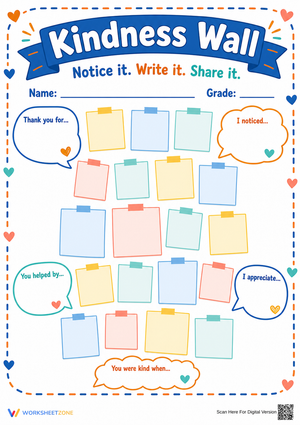
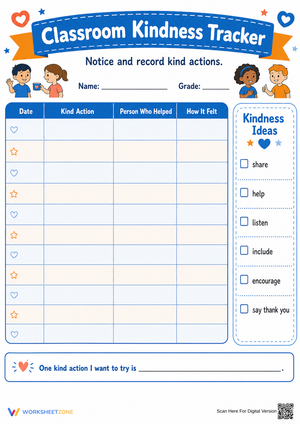
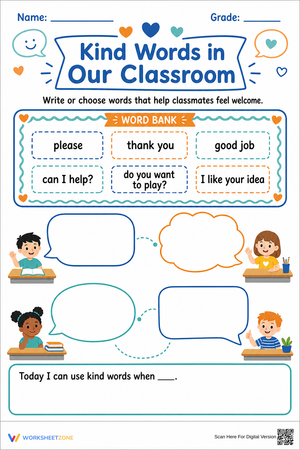
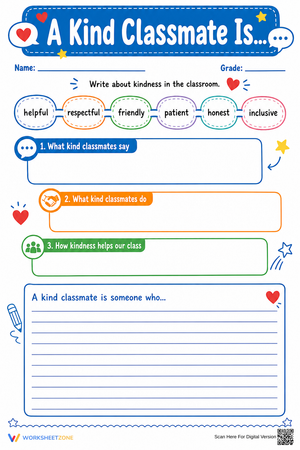
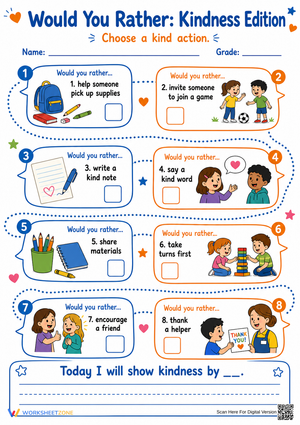
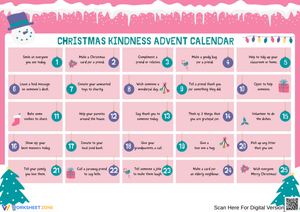
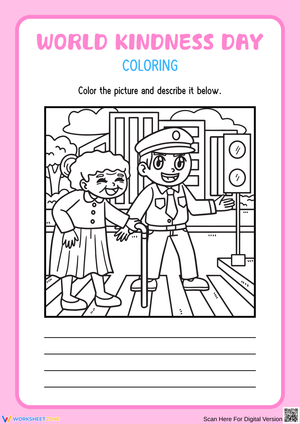
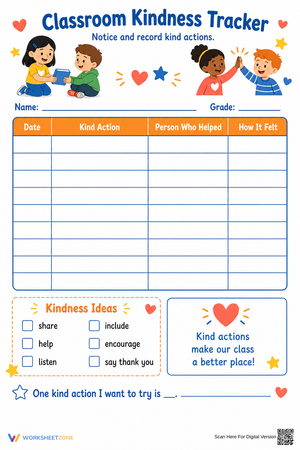
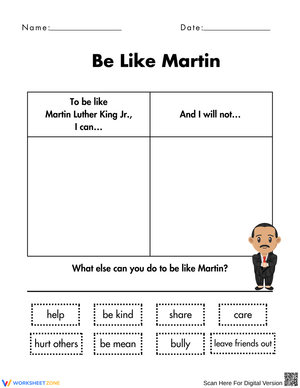
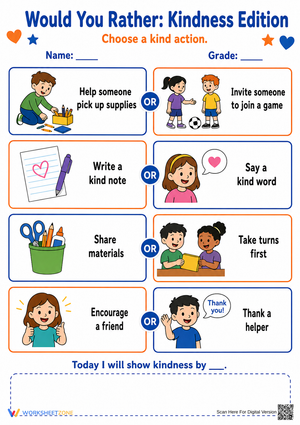
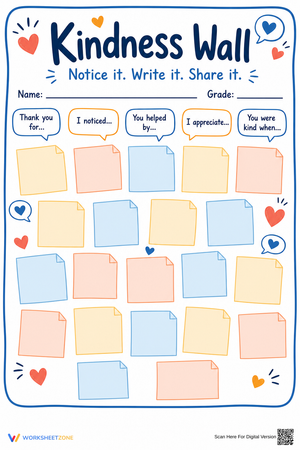
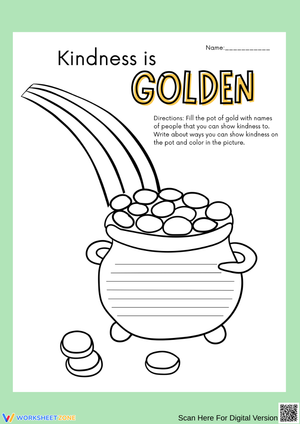
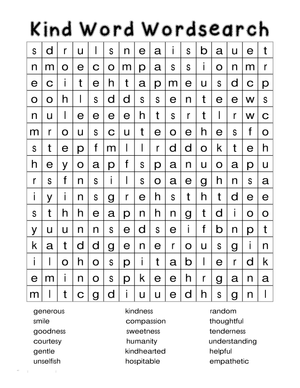
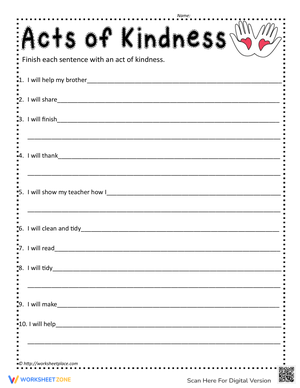
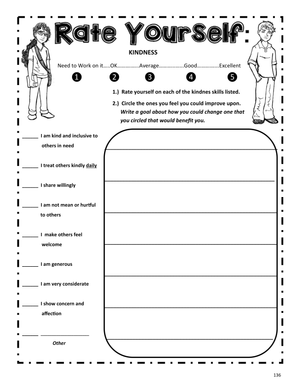
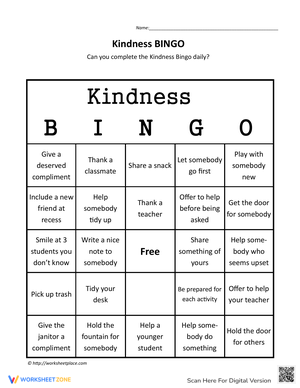
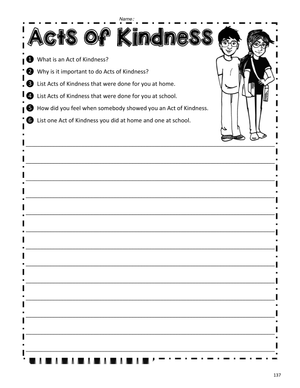
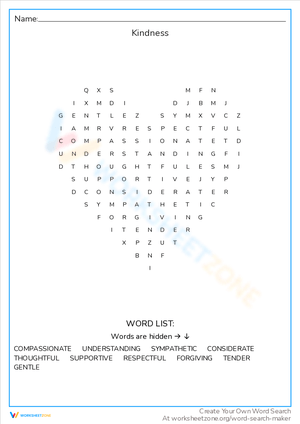
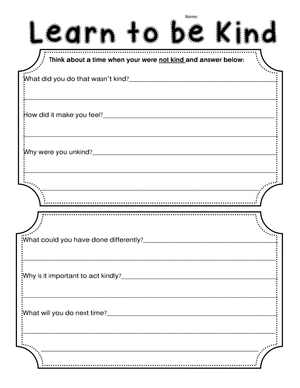
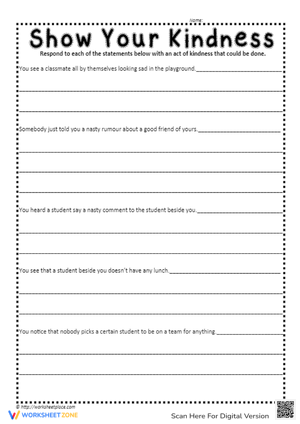
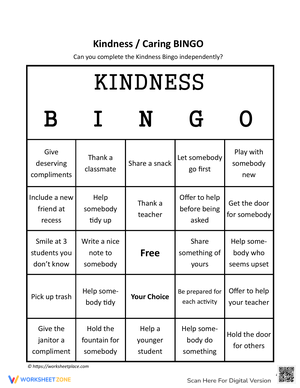
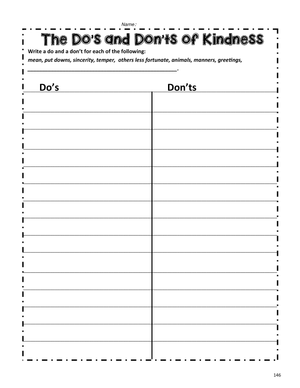
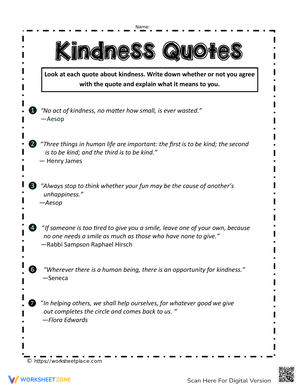
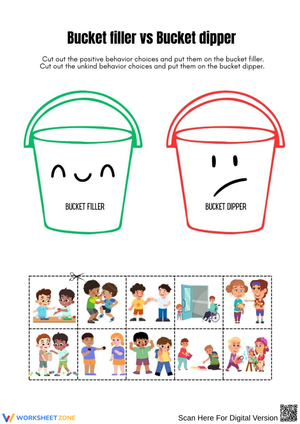
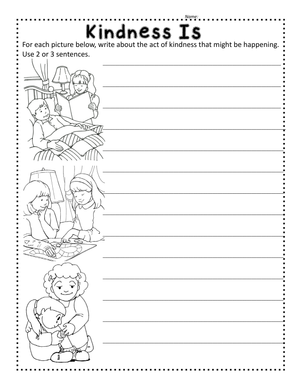
If you already run a morning meeting, advisory period, or dedicated SEL block, kindness worksheets give that time a concrete task instead of an open-ended discussion prompt. Rather than asking students to talk in the abstract about being nice, a structured worksheet asks them to identify a specific kind act, name the feeling behind it, and describe what changed for the person on the receiving end. That specificity matters more than it might seem. Vague kindness talk tends to fade by lunch; a written task that asks students to plan, reflect, and revisit builds a habit teachers can actually track across a unit.
Kindness worksheets also solve a practical scheduling problem. Most SEL curricula assume dedicated training time that many schools do not have. A single-page worksheet fits into ten minutes of morning meeting, a homeroom block, or the last few minutes before dismissal, which means you do not need a separate character education period to make measurable progress on social awareness and relationship skills.
Building Empathy and Perspective-Taking Through Structured Practice
Empathy is not a single skill; it is closer to a bundle of separate abilities, including reading another person's emotional state, taking their perspective, and predicting how an action will land before you take it. Kindness worksheets that ask students to write from another character's point of view, or to list two ways a classmate might feel in a given scenario, directly practice perspective-taking rather than simply praising kindness in the abstract.
A randomized controlled trial of the Kindness in the Classroom program with 586 fourth and fifth graders found that structured kindness lessons raised both teacher and peer ratings of prosocial behaviors, including perspective-taking, gratitude, altruism, and empathy, while also reducing antisocial behavior compared with a control group. That is a meaningful signal for teachers deciding whether a worksheet-based routine is worth classroom time: the gains showed up in how peers rated each other, not just in self-report.
Using Kindness Worksheets for Small-Group Intervention
Kindness worksheets are not only a whole-class tool. For students who struggle to read social cues, who get pulled for peer-conflict mediation often, or who are working on a behavior plan tied to relationship skills, a shorter kindness worksheet can anchor a small-group pull-out session. Because the format is short and concrete, it works well as a five-minute check-in before a student returns to the classroom after a conflict, giving them language to describe what happened and what a kinder next step could look like.
For intervention groups, pair the worksheet with a quick verbal debrief. Ask the student to read their answer aloud, then ask one follow-up question about how a peer might have felt. This turns a static worksheet into a rehearsal for the actual skill you want transferred back into the classroom.
Pairing Kindness Worksheets with an Acts-of-Kindness Tracker
Worksheets work best when they are not one-off handouts. A University of British Columbia study had 9- to 11-year-olds perform three acts of kindness per week for four weeks and found significantly larger gains in peer acceptance compared with a control group, a pattern researchers linked to reduced bullying risk. That four-week window is a useful planning unit for teachers: a single kindness worksheet plus a running tracker sheet, revisited weekly, mirrors the structure that produced measurable peer acceptance gains in that research.
- Assign one kindness worksheet per week, tied to a specific act rather than a general resolution
- Have students log the act and one sentence about the other person's reaction on a shared tracker
- Revisit the tracker briefly each Friday to close the loop and reinforce the habit
Connecting Kindness Practice to Classroom Climate and Conflict Referrals
Kindness worksheets are rarely a stand-alone fix for a classroom climate problem, but they are a low-cost, low-disruption input that compounds with your other SEL and behavior management routines. Cooperative learning structures are associated with higher rates of prosocial behavior toward classmates, which means kindness worksheets tend to work better when paired with partner or small-group tasks rather than used only as individual seatwork.
Meta-analytic SEL research shows that SEL programming improves academic achievement by an average of eleven percentile points and increases prosocial behaviors such as sharing and empathy while reducing stress and depression. That academic link is worth mentioning to colleagues or administrators who see SEL time as competing with instructional minutes rather than supporting them.
With a routine like Kindness in the Classroom, peer acceptance is usually the outcome that shows up first, often within a single grading period, well before broader climate shifts like fewer office referrals become visible. Set your expectations accordingly and track peer-acceptance style indicators, like who students choose to sit with or work with, as an early signal that the routine is working.
Frequently Asked Questions
1. How often should teachers assign kindness worksheets for measurable impact
Weekly is a reasonable starting cadence. The peer-acceptance research behind this approach used roughly three kind acts per week sustained over four weeks, so a weekly worksheet paired with a short tracker mirrors that structure without requiring daily class time.
2. What age or grade level benefits most from structured kindness activities
Upper elementary, roughly grades 3 through 5, has the strongest direct research support, since the Kindness in the Classroom trial was conducted with fourth and fifth graders. Younger and older students still benefit, but worksheet design should shift toward simpler recognition tasks in K-2 and scenario analysis in middle school.
3. Can kindness worksheets be used for behavior intervention or only whole-class instruction
Both. A short kindness worksheet works well as a whole-class morning meeting task and as a small-group or one-on-one tool during behavior intervention, especially as a debrief after a peer conflict.
4. How do kindness worksheets connect to broader SEL or character education goals
Kindness activities are a practical entry point into the broader social awareness and relationship skills competencies that character education and SEL programs target, since they give students a concrete, repeatable action tied to those larger skill areas.
5. What does the research say about kindness activities improving peer acceptance
A study of 9- to 11-year-olds performing three acts of kindness per week for four weeks found significantly larger peer acceptance gains than a control group, a pattern linked to reduced bullying risk in that research.












 Interactive Worksheet Maker
 Quiz Maker
 Word Search Maker
 Crossword Puzzle Maker
 Word Scramble Generator
 Sentence Scramble Generator
 Handwriting Worksheet Generator
 Name Tracing Generator
 Fill In The Blank Generator