What EFT Tapping Worksheets Do in a Classroom
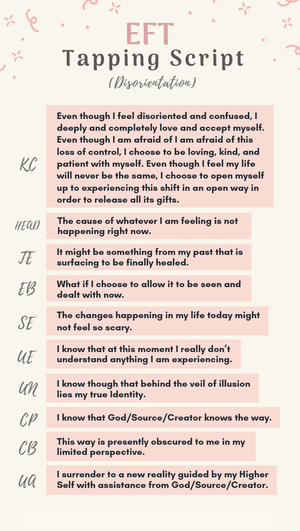
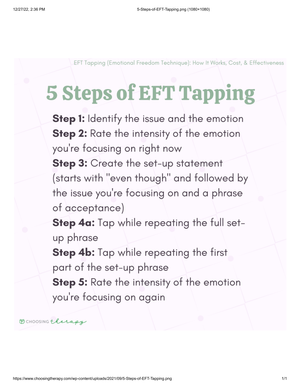
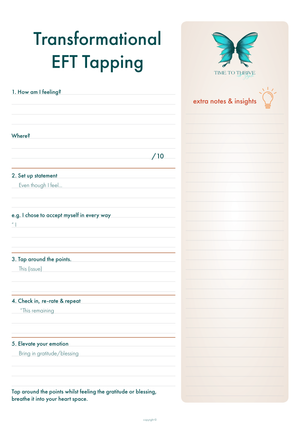
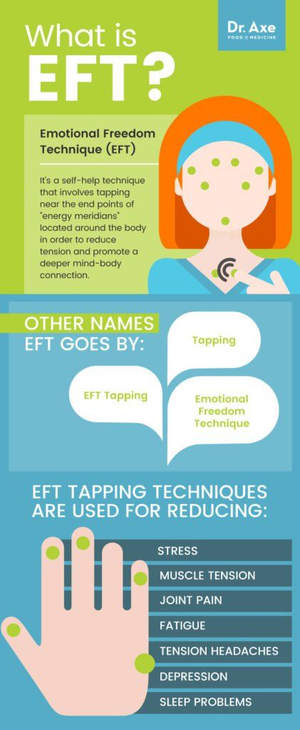
EFT tapping worksheets give you a printed, step-by-step script for guiding students through Emotional Freedom Technique tapping, a self-regulation routine that pairs light finger taps on a set of acupressure points with a short calming phrase. Instead of improvising a calm-down in the moment, you hand students a visual sequence they can follow at their desks, in a calm-down corner, or during a whole-class reset.
For US teachers and school counselors, the appeal is practical. The worksheet is low prep, needs no technology, and takes only a few minutes. Students name what they feel, tap through eight or nine points, and repeat an affirmation you can adjust for the grade you teach. Because the steps stay the same each time, the routine becomes predictable, which is exactly what an anxious student needs before a quiz or a hard transition.
These eft tapping worksheets are best treated as a supplemental calming strategy that supports your existing SEL work, not a clinical service or a replacement for counseling.
What the Research Does and Doesn't Support
Tapping has a growing evidence base with adults, and a smaller but encouraging set of findings in schools. That distinction matters when you decide how to frame the activity for families and colleagues.
In a 2015 stress study summarized by Rogers and Seers, 26 university participants completed a 20-minute group tapping session and reported a 39% drop in self-reported stress, while a sham-point control group fell just 8%—a gap that helps explain why teachers reach for structured tapping scripts during high-pressure moments.
Closer to your classroom, Lambert et al. (2022), writing in the Australian Journal of Teacher Education, studied tapping with primary students and found that the children who reported feeling anxious before tapping were the most likely to report feeling better afterward.
That last finding is the one worth planning around. Because tapping seems to help most when a student starts out visibly anxious, the highest-value moments are not calm mornings but the spikes: the minutes before a timed test, a fire drill, or a return from recess after a conflict. Targeting those windows, rather than running tapping as a daily whole-class ritual, is likely to give you the clearest return on a few minutes of instructional time.
Research with children is still emerging and relatively limited, so keep expectations honest: tapping is a calming tool, not a treatment.
The Core Tapping Sequence on the Worksheet
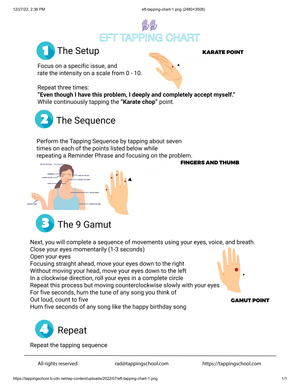
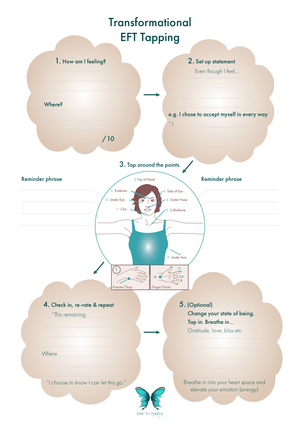
Most classroom-friendly worksheets walk students through the same eight to nine points. Model each one first, then let students mirror you:
- Name the feeling. Students say or write what is bothering them, such as "I feel nervous about this test."
- Set-up phrase. While tapping the side of the hand, they repeat a calming line like "Even though I feel nervous, I am okay and I am safe."
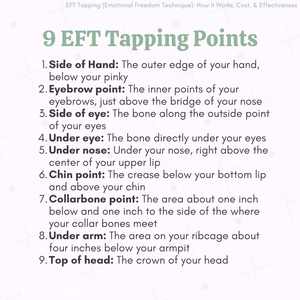
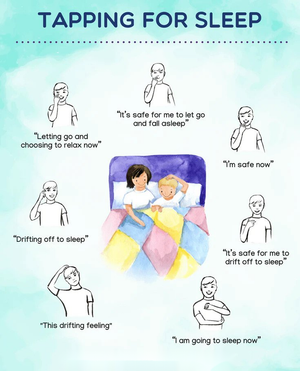
- Top of the head, eyebrow, side of the eye, under the eye. A few taps at each point while naming the feeling.
- Under the nose, chin, collarbone, under the arm. Continue the sequence, breathing slowly.
- Check in. Students rate how they feel now, often on a simple 0 to 10 scale.
The 0-to-10 rating at the start and end is the part teachers most often skip, but it turns a vague routine into quick formative data. If a student drops from an 8 to a 4, that number gives both of you evidence the reset worked and a shared language for next time.
Adapting the Worksheet by Grade Band
The same core sequence stretches across grades when you adjust the language and framing.
In early elementary, keep affirmations concrete and short—"I am calm, I am safe"—and turn the points into a game by giving them nicknames or pairing each tap with a slow breath. Picture cues on the worksheet matter more than text at this age, and 60 to 90 seconds is plenty.
In upper elementary and middle school, students can write their own feeling statements and choose affirmations that sound believable to them, which raises buy-in. This age group is also more self-conscious, so offer tapping as a private option at a desk or in a corner rather than a whole-class performance. Naming the routine a "reset" or "focus tool" rather than anything therapeutic tends to lower resistance.
Across every grade band, consistency in the steps matters more than perfect form. A worksheet students recognize week to week becomes a tool they can eventually use without you.
Using These Worksheets In Science Classrooms
Fit tapping into routines you already run rather than adding a new block to the day.
- Morning meeting: Model the sequence once so every student knows the steps before they need them under stress.
- Before assessments: Run a two-minute guided round before a quiz or standardized test to settle test anxiety.
- Transitions: Use it after recess, lunch, or specials when the room comes back overstimulated.
- Calm-down corner: Post the worksheet so a single student can self-select the routine during sensory overload or task-initiation struggles.
- Small-group and SEL time: Fold tapping into individual check-ins alongside your existing curriculum.
Keep a session short. Two to five minutes covers a full round with time to rate before and after. Introduce it on a calm day so the first exposure isn't tied to a crisis, and always frame participation as optional—a student who folds their arms can watch this round and join the next one. Send a short note home before you start so families understand tapping as a self-regulation strategy.
When to Tap and When to Refer
Tapping fits the everyday spikes of classroom life: test nerves, a rough transition, frustration at the start of a hard task, or a student who came in already dysregulated. In those moments a worksheet gives you a calm, structured response instead of a scramble.
It is not a substitute for mental health support. If a student shows signs of ongoing anxiety, trauma, or distress that a two-minute reset doesn't touch, that's a referral to your school counselor or support team, not a bigger dose of tapping. Keep your role squarely on the instructional side—leading a calming routine—and let trained staff handle clinical needs. Documenting the before-and-after ratings you collect can help that conversation, giving the counselor a concrete pattern of when and how often a student is reaching for a reset.
Frequently Asked Questions
1. What is EFT tapping and how does it work for students?
EFT tapping has students tap lightly on a series of acupressure points while naming a feeling and repeating a calming phrase. For students, it pairs a physical action with slow breathing and self-talk, which gives an anxious body something structured to do and helps shift attention away from the stressor.
2. Is there research evidence supporting EFT tapping in schools?
Evidence with adults is stronger than with children, but school findings are encouraging. Lambert et al. (2022) reported that primary students who felt anxious before tapping were especially likely to feel better afterward. Treat it as a promising, supplemental strategy while the research base with children continues to grow.
3. How long should a classroom tapping session take?
Two to five minutes is enough for a full round, including a quick 0-to-10 rating before and after. Early elementary students often need only 60 to 90 seconds. Short and consistent beats long and occasional.
4. Can EFT tapping worksheets be used for test anxiety specifically?
Yes. A brief guided round right before a quiz or standardized test is one of the most common classroom uses, giving students a predictable way to settle nerves before they pick up a pencil.
5. Who should lead tapping, the teacher or the counselor?
Teachers can lead the everyday calming routine—no clinical training is required to guide a worksheet. Refer students with ongoing anxiety or distress to your school counselor, who can decide whether more support is needed.












 Interactive Worksheet Maker
 Quiz Maker
 Word Search Maker
 Crossword Puzzle Maker
 Word Scramble Generator
 Sentence Scramble Generator
 Handwriting Worksheet Generator
 Name Tracing Generator
 Fill In The Blank Generator