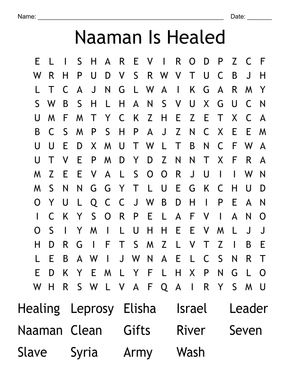
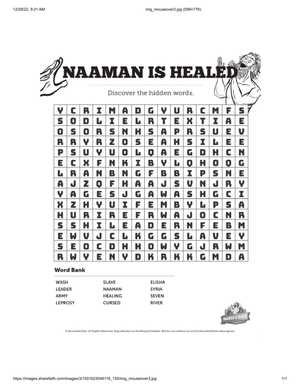
The story of Naaman gives you one of the tightest character lessons in the Bible, and these worksheets turn it into a full elementary lesson. On this page you'll find printable activities that walk students through 2 Kings 5:1-14 while reinforcing obedience, humility, and following directions from a trusted source.
What the Naaman Worksheets Cover
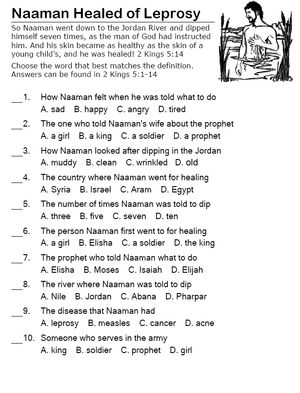
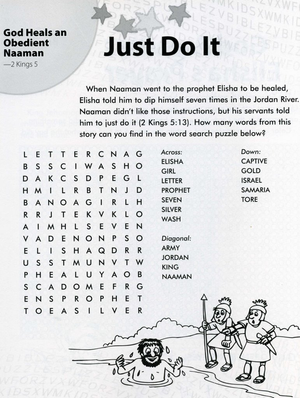
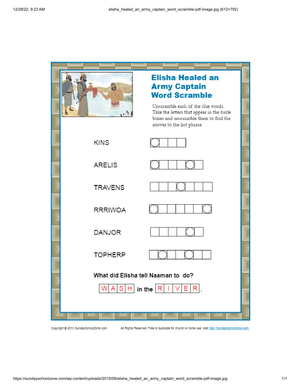
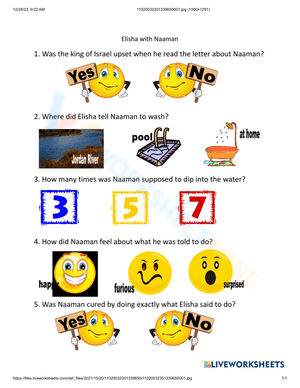
The Naaman worksheets on this page turn one short Bible narrative into a full lesson block for elementary students. Instead of reading the account aloud and moving on, you get printable pages that ask students to sequence events, answer comprehension questions, and match character traits to what Naaman actually did. That structure works whether you teach a Sunday school hour, a children's church rotation, or a Bible class inside a Christian day school.
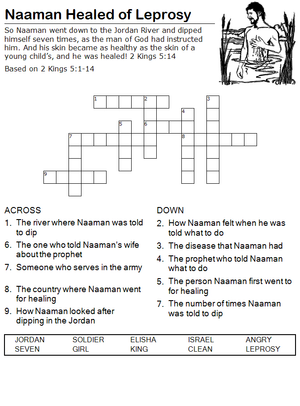
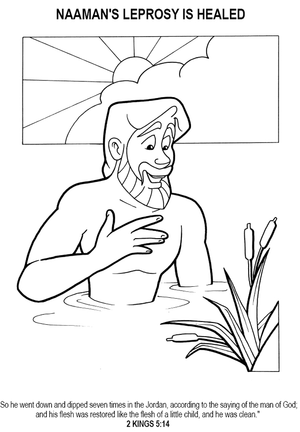
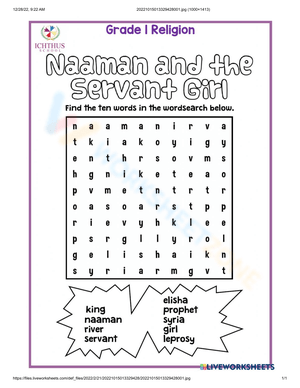
Each format targets a different skill. Sequencing pages build retelling and reading comprehension. Vocabulary and character-trait matching gives students the language of humility, pride, and obedience. Coloring pages give younger learners a way to stay with the story while older students write. You can pull one worksheet or stack several into a 30 to 45 minute plan.
The Story Behind the Worksheets
Every activity here traces back to 2 Kings 5:1-14. Naaman is a respected army commander for the king of Aram, but he has leprosy. A young Israelite servant girl tells him about the prophet Elisha, and Naaman travels to Israel expecting an impressive cure. Instead, Elisha sends a messenger with a plain instruction: wash in the Jordan River seven times.
Naaman is offended. He expected the prophet to come out, wave his hand, and heal him on the spot. His servants convince him to try the simple thing anyway. He dips seven times, and his skin is restored. The healing hinges on his willingness to follow guidance that felt beneath him. That tension is exactly what makes the story land with students who are still learning to follow directions they don't fully understand yet.
Character Themes to Teach
The Naaman account gives you three clear character lessons, and the worksheets are built to reinforce them. The first is obedience: Naaman is healed only after he does what Elisha said, exactly and completely. The second is humility—he has to set aside his rank and his own expectations before anything changes. The third is trust in a credible source, since the instruction came through Elisha's messenger rather than a display Naaman found impressive.
For character-education purposes, this is a compact case study. You can ask students to point to the moment pride almost cost Naaman his healing, then to the moment humility opened the door. Worksheets that pair a trait word with a story event help students connect an abstract virtue to a concrete choice, which is the part younger learners usually miss when a lesson stays verbal.
Worksheet Formats That Work
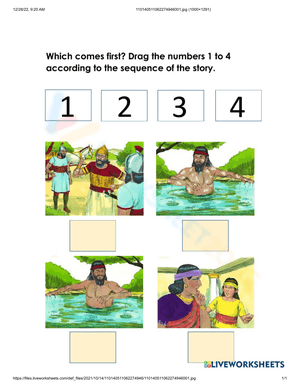
Four formats carry most Naaman lessons: sequencing, comprehension questions, vocabulary or character-trait matching, and coloring. Sequencing is the workhorse—students cut and order the key events, which forces them to retell the narrative accurately before they analyze it. Short comprehension questions then check whether they caught the details that matter, like the number seven or who first pointed Naaman to Elisha.
The detail that carries the most instructional weight is the number seven. Because Naaman washed exactly seven times—not five, not six—the story gives you a built-in check for precise obedience. Ask students to circle the number every time it appears on their comprehension page, and you turn a doctrinal point into a countable, gradeable answer that even early readers can defend.
According to Trueway Kids, the Naaman lesson centers on 2 Kings 5:1-14, where an Aramean commander washes in the Jordan River seven times to be healed of leprosy, and the free lesson set pairs the narrative with coloring, craft, and review activities designed to fill a single elementary Bible class period.
Classroom Implementation
Here's a workable 40-minute plan. Open with five minutes of setup: ask who has ever been told to do something that seemed pointless but turned out to matter. Read 2 Kings 5:1-14 aloud, or summarize it for the youngest group, in about eight minutes. Then hand out the sequencing worksheet and give ten minutes for students to order the events, working in pairs if you want quieter processing.
Spend the next ten minutes on comprehension or character-trait matching, depending on grade. Close with a seven-minute discussion using the trait words students just sorted: where did pride show up, where did humility, and what did obedience actually cost Naaman. If you have a craft or coloring station, use it as an early-finisher option so the pace stays flexible. Collect the comprehension pages as a quick formative check on whether the retelling stuck.
Frequently Asked Questions
1. What grade levels are Naaman worksheets appropriate for?
They fit preschool through upper elementary. Younger students use coloring and picture sequencing, while third through fifth graders handle written comprehension and short-response questions. The shared story lets you run a mixed-age room without splitting your lesson in two.
2. What character lessons can teachers pull from the story?
The strongest themes are obedience, humility, and trusting guidance from a credible source. Naaman is healed only after he sets aside his pride and follows Elisha's plain instruction, which makes the account a tight case study for character education.
3. How long does a typical Naaman lesson take?
Most elementary plans run about 30 to 45 minutes. That's enough time to read the passage, complete a sequencing or comprehension worksheet, and hold a short discussion, with a coloring or craft page as an early-finisher option.
4. Can these worksheets work in both Sunday school and Christian day school?
Yes. The same set adapts to a Sunday school hour, a children's church rotation, or a weekday Bible class. Day school teachers often add the written comprehension pages, while Sunday school leaders lean on sequencing and coloring.
5. Which worksheet formats work best for this story?
Sequencing is the most reliable because retelling the events in order builds comprehension before analysis. Pair it with character-trait matching and a few comprehension questions, and add coloring for the youngest learners.












 Interactive Worksheet Maker
 Quiz Maker
 Word Search Maker
 Crossword Puzzle Maker
 Word Scramble Generator
 Sentence Scramble Generator
 Handwriting Worksheet Generator
 Name Tracing Generator
 Fill In The Blank Generator