What dichotomous key worksheets ask students to do
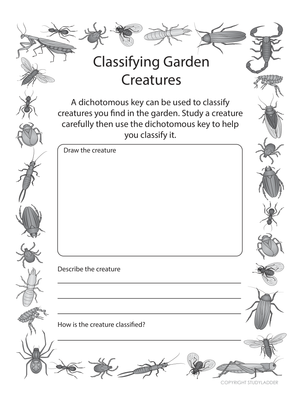
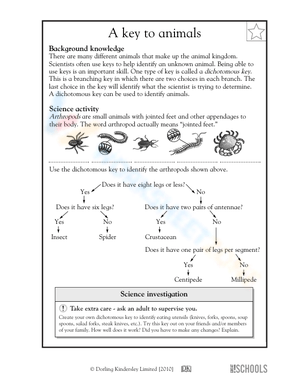
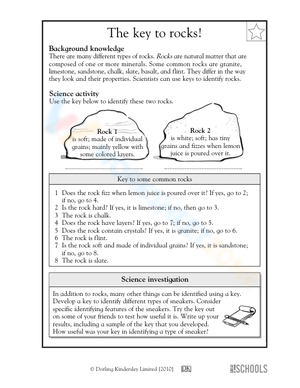
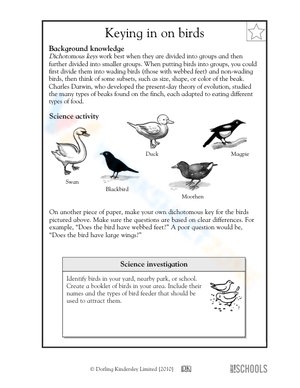
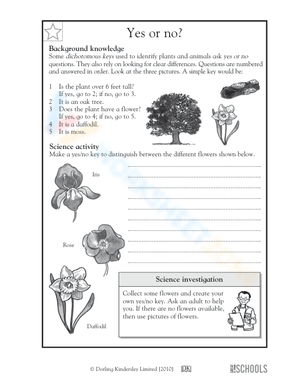
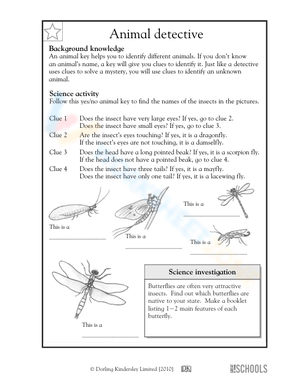
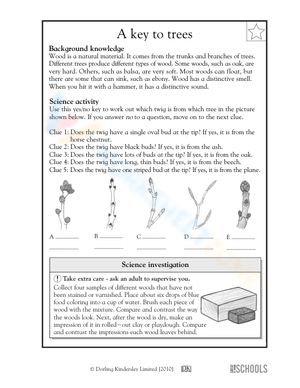
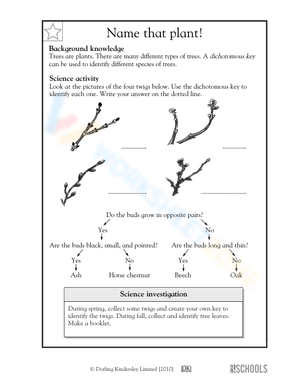
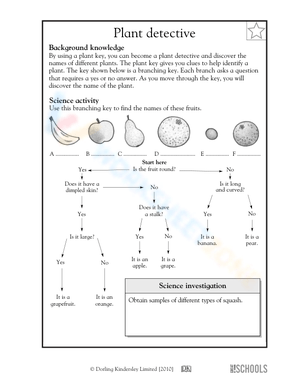
A dichotomous key worksheet hands students an unknown organism and a ladder of paired choices. At each step they read two statements about an observable trait, pick the one that matches, and follow the number that choice points to. The word dichotomous means divided into two parts, which is exactly what every step does: it splits the possibilities in half until one identification is left.
For your students, the skill on the page is not memorizing species. It is reading carefully, comparing a real specimen or image to a written description, and committing to one branch. That makes these worksheets a clean fit for middle school life science, where classification, traits, and structure-and-function vocabulary all come together. Elementary classes can run the same format with leaves, insects, or friendly made-up creatures, while high school biology can push into more technical keys.
Build background before the worksheet
Students struggle with keys when they meet the vocabulary for the first time on the worksheet itself. Spend a short warm-up naming observable traits before anyone picks up a key. Sort a handful of objects, buttons, or shoes by one visible feature at a time so students feel how a single either/or question narrows a group.
Focus on a few words your key will actually use: symmetry, segmented, jointed, lobed, smooth versus toothed edges, number of legs or fins. Model one comparison out loud so students hear how you rule an option in or out. When learners can point to the feature named in a step, they stop guessing and start reading evidence, and the worksheet moves from a puzzle to a routine.
Working a dichotomous key worksheet step by step
Teach a fixed procedure and reuse it every time. Start at step 1, never in the middle. Read both choices before deciding, since the second option often rules out a trap. Once students pick, they write the number or letter that choice sends them to, then move only to that step.
Ask students to record a short reason next to each choice, such as "six legs, so insect." That written trail turns a list of numbers into evidence you can check, and it shows you exactly where a student went off track. If a key ends at a name the student can verify, have them circle the trait that confirmed it. A worksheet worked this way gives you a visible record of reasoning, not just a final answer to mark right or wrong.
Differentiating dichotomous key worksheets by grade band
The same format stretches across grades when you change the organisms and the trait language. Upper elementary does well with a short intro key of six to eight steps using leaves or cartoon creatures. Middle school moves to real insects, fish, or reptiles with standards-aligned trait vocabulary. High school can handle longer keys and technical terms.
According to NGSS performance expectation MS-LS4-2, students use evidence from comparative anatomy to explain relationships among modern and fossil organisms. A dichotomous key puts that standard into practice: each of its paired steps forces one observable trait decision, so a 10-step key means 10 evidence-based judgments.
For intervention or small-group review before a classification assessment, shorten the key and pre-teach two or three trait words. For enrichment, hand advanced students a longer key or a set of specimens the key does not quite fit, and ask them to explain the gap.
Classroom Implementation
A two-day format works well and matches how many teachers already pace this unit. On day one, build background: define classification, sort objects by traits, and introduce the specific vocabulary your key uses. Keep it hands-on so every student practices making one either/or call before the stakes go up.
On day two, students apply a structured key to identify a set of organisms. Pair them for the first two identifications, then release them to work independently for the rest. Circulate and listen for the reason behind each choice rather than checking only final answers. As a fast extension, have students who finish early build a three-to-four step key for four classroom objects and trade with a partner to test it.
Close with a quick exit ticket: give one new organism and ask which single trait they would check first. That one question tells you who can start a key independently and who needs another round in a small group.
Extend the lesson by having students build a key
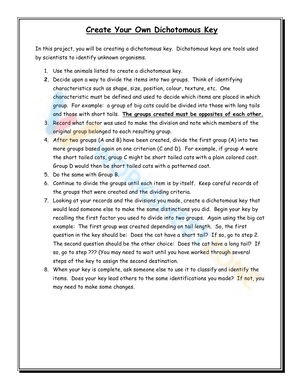
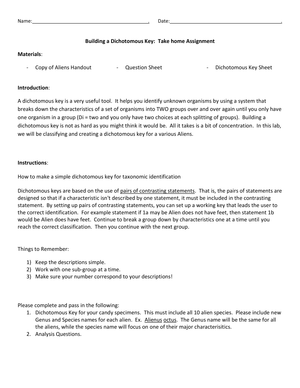
Once students can work a given key, flip the task and ask them to construct one. Give a small set of four to six objects, leaves, or creatures and have partners write paired either/or steps that lead to each item. Building a key forces them to choose traits that split the group cleanly, which is a harder and more revealing skill than following someone else's path.
Keep the first build short, three or four steps, and require a reason for each split. When two groups swap keys and try to identify each other's organisms, gaps show up fast: a vague choice like "big or small" sends testers to the wrong branch. That failure is the lesson, since it shows why keys rely on clear, observable traits rather than opinion.
Common misconceptions to watch for
The most common error is skipping ahead. Students spot a familiar animal, jump to that name, and ignore the branching path. Others read only the first of the two statements and never weigh the alternative, or they change which trait they are judging partway down the key.
In practice, most wrong identifications trace back to one move: students treat a key like a matching quiz instead of a sequence. When you audit worked sheets, roughly the same handful of steps trip up a whole class, almost always the ones where two choices differ by a single subtle trait such as segmented versus unsegmented. Marking those pinch-point steps ahead of time lets you pause the class at the exact branch where reasoning breaks, instead of reteaching the entire key.
Head these off with a quick anchor chart of the traits your key uses and a rule the class repeats aloud: start at step one, read both choices, decide, then move. A thirty-second reset at the branch where most students slip usually does more than reteaching the whole key.
Frequently Asked Questions
1. What grade level are dichotomous key worksheets appropriate for?
They work from upper elementary through high school. Younger students use short keys with leaves or invented creatures, middle schoolers use real organisms with trait vocabulary, and high schoolers handle longer, more technical keys. Match the organism and word choice to the grade rather than changing the format.
2. How does a dichotomous key worksheet align to NGSS MS-LS4-2?
MS-LS4-2 asks students to use evidence from anatomical structures to explain patterns and relationships among organisms. Each key step requires one trait-based decision, so the worksheet builds the exact evidence-to-explanation habit the standard names.
3. What is the difference between a dichotomous key and a classification chart?
A classification chart shows groups and categories all at once. A dichotomous key is a step-by-step tool that narrows to a single identification through paired either/or choices. Charts organize, keys identify.
4. How can teachers use dichotomous key worksheets for formative assessment?
Ask students to write the reason beside each choice. The trail of traits shows where reasoning breaks, and an exit ticket naming the first trait to check tells you who can start a key on their own.
5. What materials work best for a first dichotomous key lesson?
Start with familiar, high-contrast items: leaves, buttons, shoes, or simple cartoon creatures. Clear differences let students practice the either/or move before applying a key to real insects, fish, or reptiles.












 Interactive Worksheet Maker
 Quiz Maker
 Word Search Maker
 Crossword Puzzle Maker
 Word Scramble Generator
 Sentence Scramble Generator
 Handwriting Worksheet Generator
 Name Tracing Generator
 Fill In The Blank Generator