




























Views
Downloads







Essential Dichotomous Keys Worksheet | Grade 7 Science

Paste this activity's link or code into your existing LMS (Google Classroom, Canvas, Teams, Schoology, Moodle, etc.).
Students can open and work on the activity right away, with no student login required.
You'll still be able to track student progress and results from your teacher account.
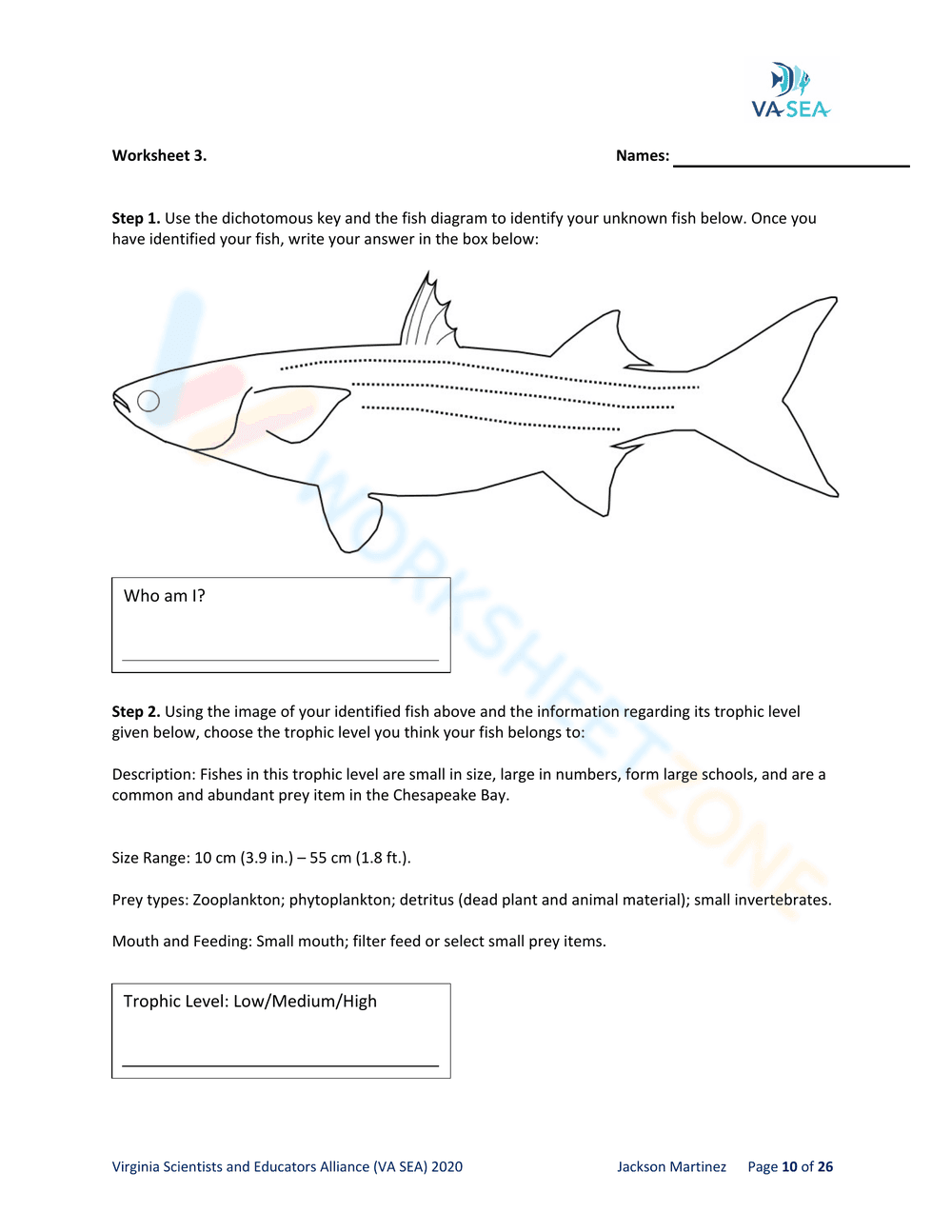
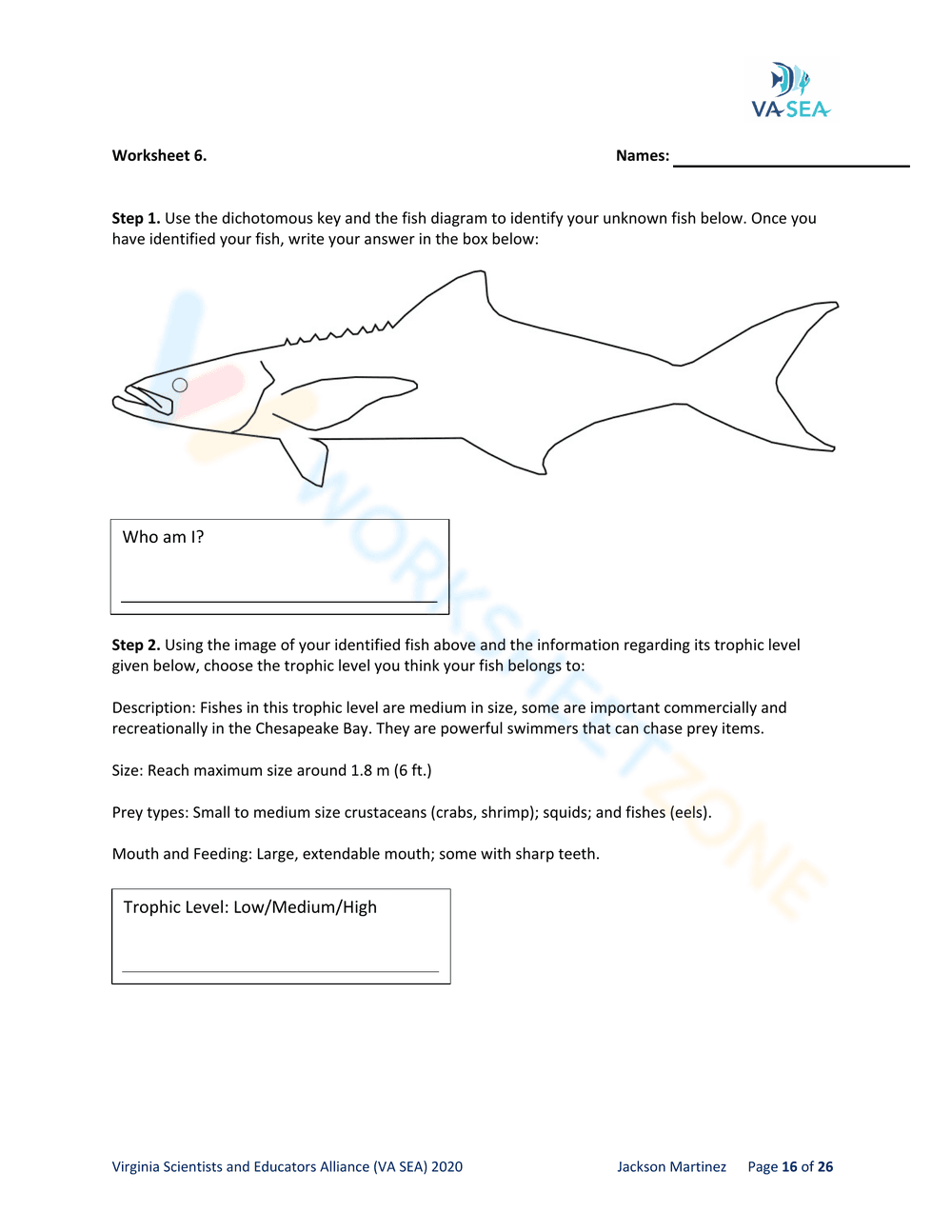
Master the art of biological classification with this comprehensive Fish Detective packet. Students take on the role of marine biologists to identify unknown fish species using morphological characteristics and a professional dichotomous key. This resource transforms complex taxonomy into an engaging investigation that results in a deep understanding of species identification and ecosystem roles.
At a Glance
- Grade: 7 · Subject: Life Science
- Standard:
LS.4— Investigate and understand how organisms can be classified based on shared traits- Skill Focus: Dichotomous key navigation
- Format: 26 pages · 9 problems · Answer key included · PDF
- Best For: Middle school biology classification labs
- Time: 45–60 minutes
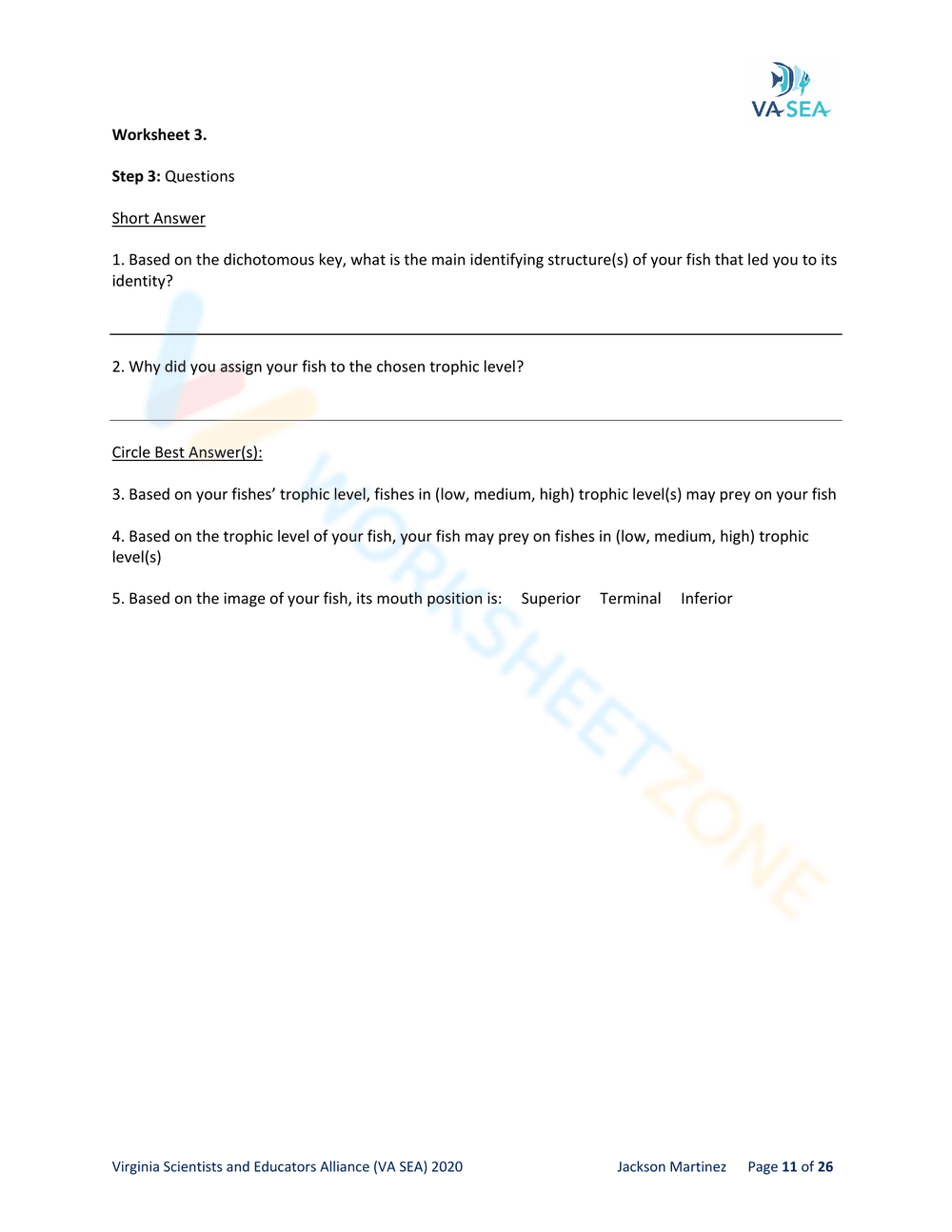
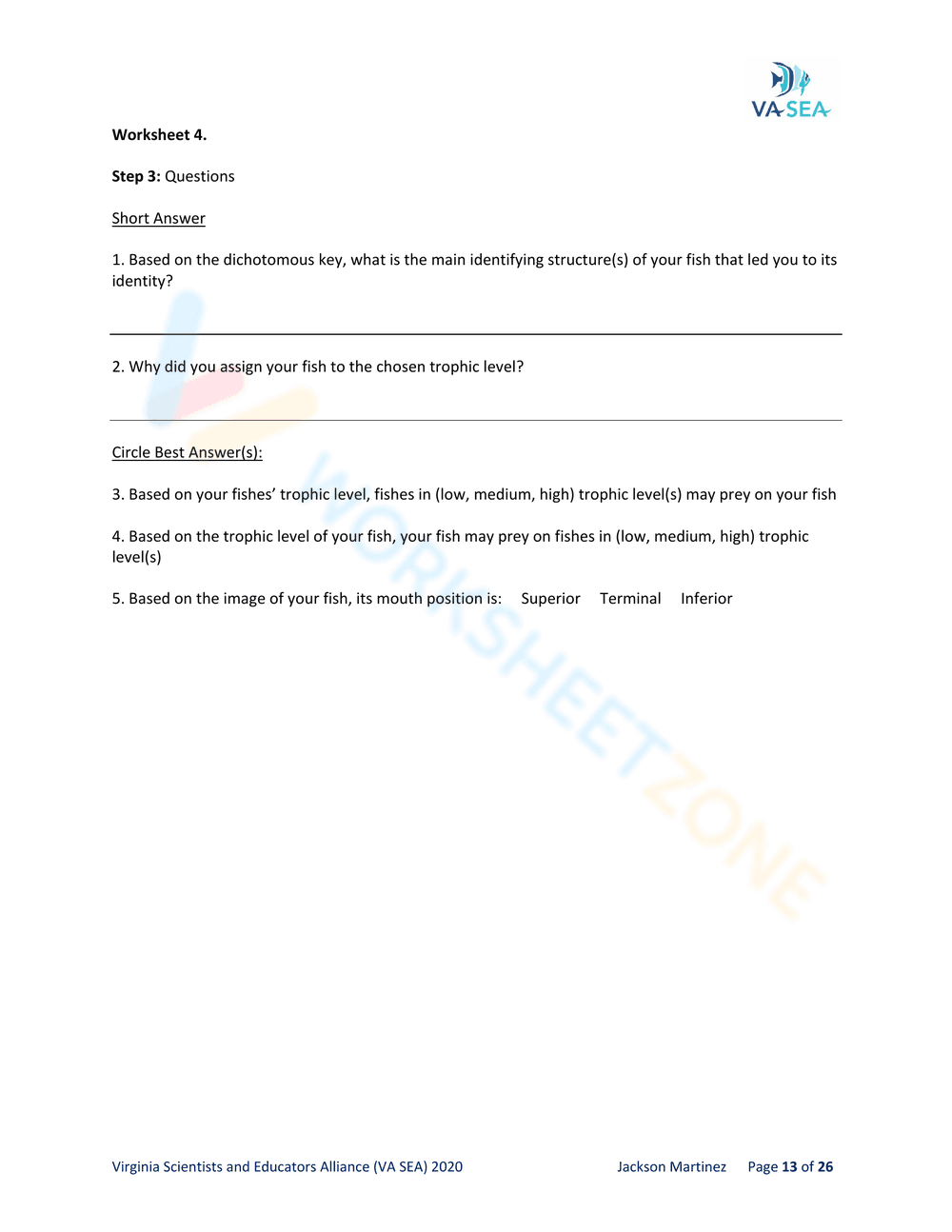
This 26-page instructional suite provides everything needed for a successful classification unit. Inside, you will find a detailed lesson plan, background information on binomial nomenclature, a master dichotomous key featuring 10 distinct fish species, and 9 individual student worksheets. Each worksheet includes a high-quality fish illustration, a trophic level analysis section, and critical thinking questions to reinforce the connection between form and function.
Zero-Prep Workflow
- Print (1 Minute): Select the master dichotomous key and the specific fish worksheets (1-9) you wish to assign to student teams.
- Distribute (30 Seconds): Hand out the materials; the self-explanatory background text allows students to begin reading immediately without a lengthy lecture.
- Review (30 Seconds): Use the included visual answer key to verify student identifications and trophic level assignments at a glance.
This resource is strictly aligned to LS.4, which requires that the student will investigate and understand how organisms can be classified. It also supports LS.6 and LS.8 by requiring students to characterize fish by trophic level and build food chain relationships. Both standard codes can be copied directly into lesson plans, IEP goals, or district curriculum mapping tools.
To use this effectively, assign it as a core laboratory activity during your classification unit. It serves as an excellent formative assessment after introducing the concept of taxonomy. For a more interactive experience, have students work in pairs to "detect" their assigned fish before presenting their findings to the class. Completion typically takes 45 minutes, including the extension questions.
This packet is designed for 7th-grade life science students but is adaptable for advanced 5th or 6th graders. It is particularly effective for visual learners who benefit from the clear anatomical diagrams. Pair this with a local aquarium field trip or a virtual tour of the Chesapeake Bay to provide real-world context for the species identified in the key.
Biological classification is a foundational skill in the life sciences, requiring students to observe minute physical differences to reach a logical conclusion. According to Fisher & Frey (2014), the use of structured tools like dichotomous keys facilitates the gradual release of responsibility, moving students from guided observation to independent scientific inquiry. This resource utilizes the LS.4 standard to bridge the gap between abstract taxonomic ranks and concrete morphological evidence. By identifying 9 different species, students practice the repetitive logic required for mastery while exploring the biodiversity of the mid-Atlantic region. The inclusion of trophic level analysis ensures that the identification process is not an isolated task but part of a larger understanding of ecological interactions and energy flow within a biological community.


