




























Views
Downloads


Printable Whale Dichotomous Key | Grade 7 Science

Paste this activity's link or code into your existing LMS (Google Classroom, Canvas, Teams, Schoology, Moodle, etc.).
Students can open and work on the activity right away, with no student login required.
You'll still be able to track student progress and results from your teacher account.
This middle school science worksheet teaches students how to use a dichotomous key to identify 10 different whale species. By observing anatomical features like dorsal fins, baleen, and body markings, learners apply classification skills to accurately name each marine mammal.
At a Glance
- Grade: 7 · Subject: Science
- Standard:
MS-LS4-2— Identify anatomical similarities and differences among organisms- Skill Focus: Using a dichotomous key
- Format: 4 pages · 10 problems · Answer key included · PDF
- Best For: Independent practice or sub plans
- Time: 20–30 minutes
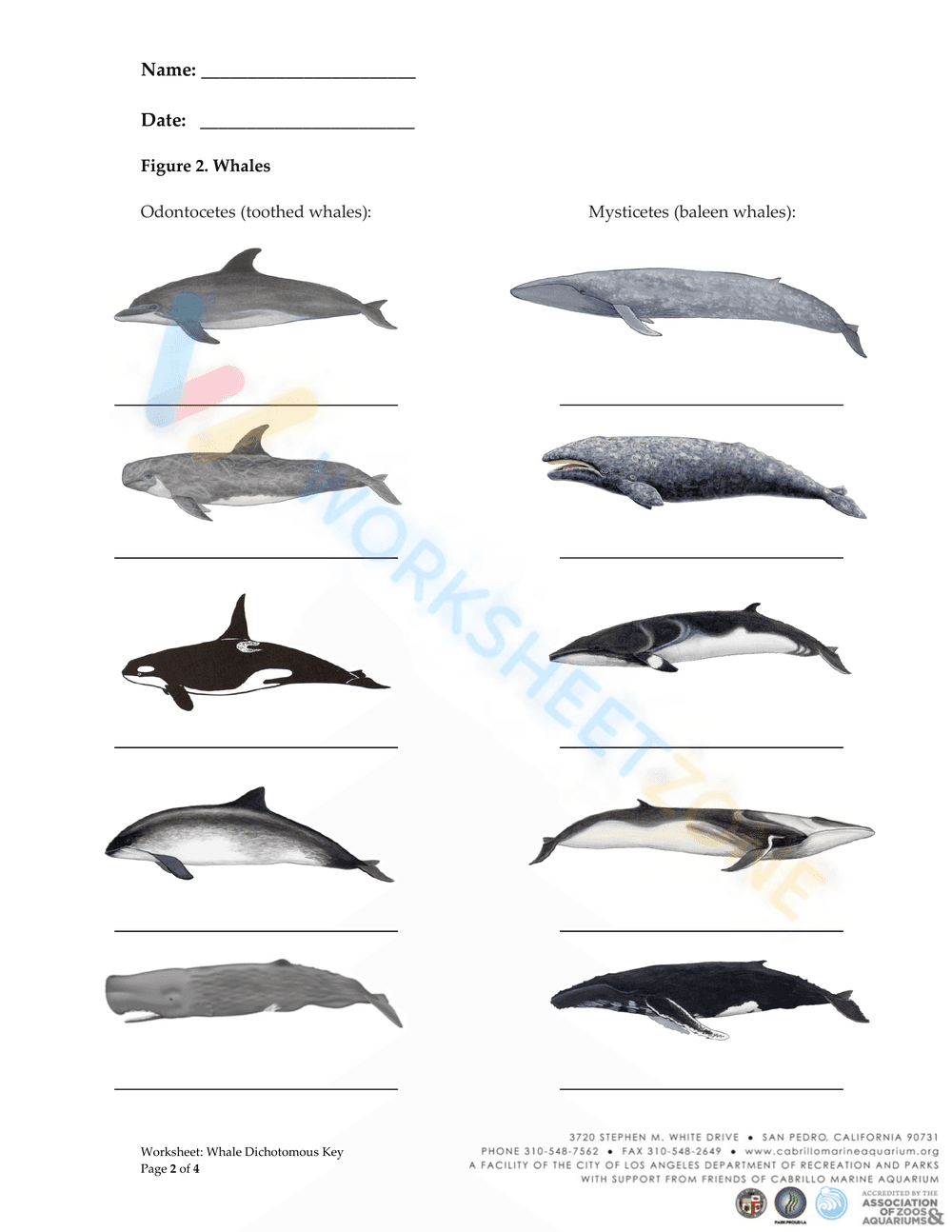
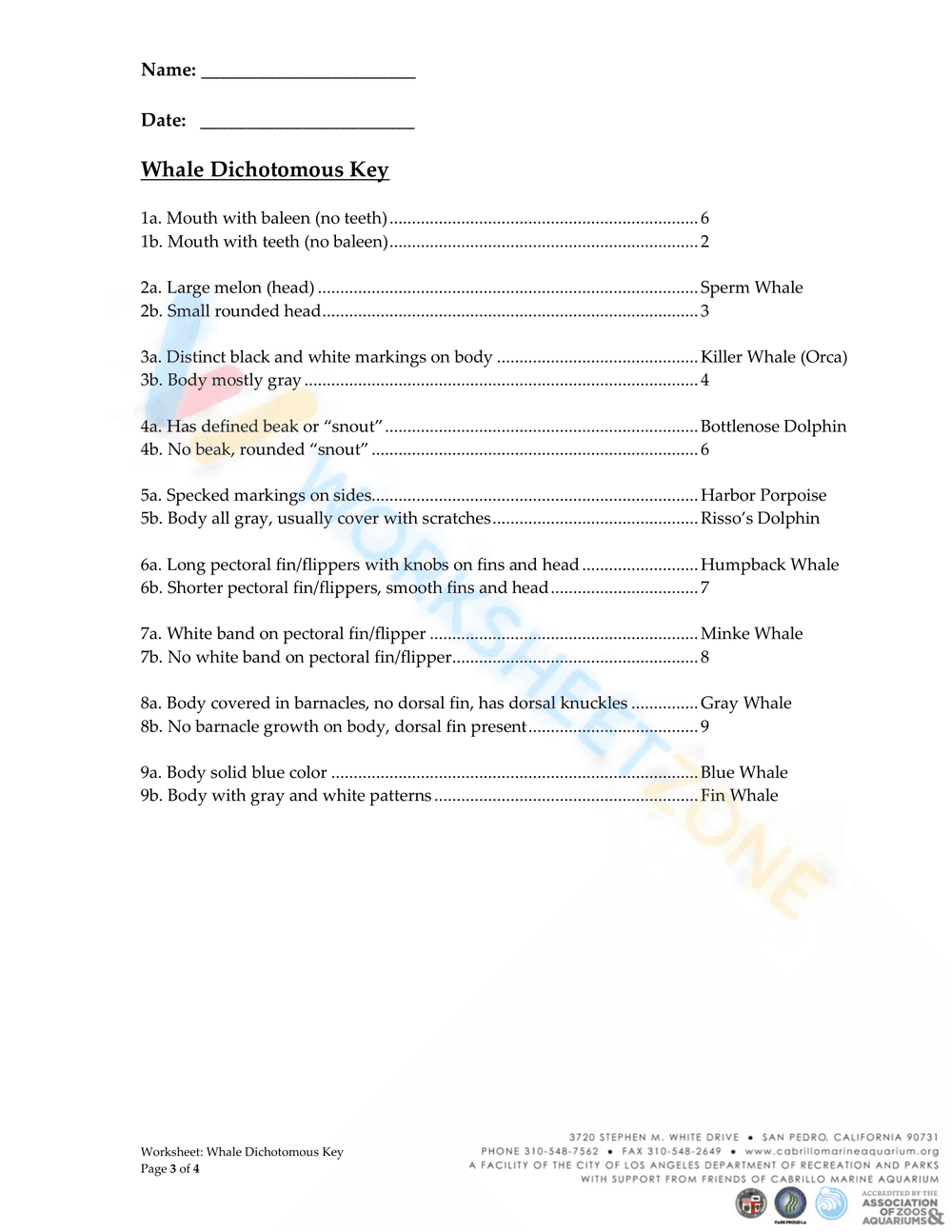
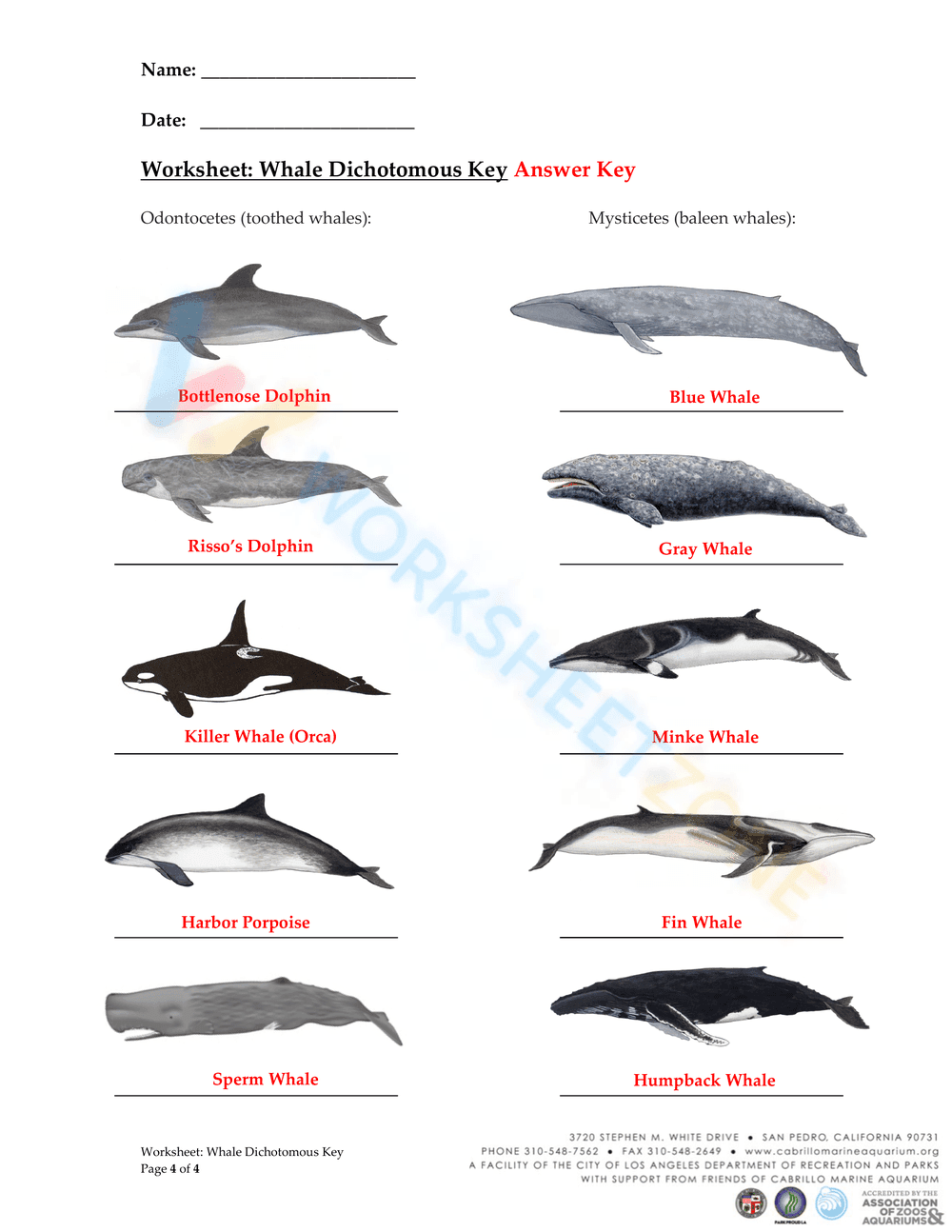
This comprehensive resource includes a detailed introductory page with a labeled whale anatomy diagram, ensuring students understand the terminology used in the key. The second page features high-quality illustrations of 10 distinct toothed and baleen whales for identification. A structured dichotomous key is provided on the third page, guiding students through a process of elimination based on physical traits. A complete answer key is included on the final page for quick grading.
Designed for immediate classroom use, this activity requires minimal teacher preparation.
- Print (1 minute): Generate copies of the four-page PDF for each student or print class sets of the anatomy guide and key to save paper.
- Distribute (1 minute): Hand out the materials and briefly review the anatomy diagram to ensure students recognize terms like "pectoral fin" and "flukes."
- Review (5 minutes): Use the included answer key to check student responses collectively or allow for self-correction.
With under two minutes of total prep time, this self-explanatory packet is an excellent option for emergency sub plans or independent science centers.
Aligned to MS-LS4-2, this activity requires students to apply scientific ideas to construct an explanation for the anatomical similarities and differences among modern organisms. By systematically evaluating physical characteristics to classify species, students practice foundational taxonomy skills. Both standard codes can be copied directly into lesson plans, IEP goals, or district curriculum mapping tools.
This worksheet is highly effective as an independent practice assignment following direct instruction on biological classification and taxonomy. Teachers can also use it as a collaborative paired activity where students debate and justify their choices using the key. For formative assessment, observe whether students are correctly interpreting the anatomical diagram before moving to the next step in the dichotomous key. Expected completion time ranges from 20 to 30 minutes.
This resource is designed for middle school life science students, particularly those in seventh grade. The visual scaffolds, including the labeled anatomy diagram, make it highly accessible for visual learners and students requiring vocabulary support. It pairs perfectly with an introductory lesson on the Linnaean classification system or a broader marine biology unit.
Mastering the use of a dichotomous key is a critical component of middle school life science curricula, directly supporting the ability to identify anatomical similarities and differences among organisms as outlined in MS-LS4-2. According to a 2024 ScienceDirect TpT Analysis, structured classification activities that pair visual diagrams with step-by-step analytical keys significantly improve student retention of taxonomic principles. By requiring learners to systematically evaluate physical traits—such as the presence of baleen or the shape of a dorsal fin—this worksheet reinforces observational skills and scientific reasoning. The integration of a reference diagram alongside the identification task reduces cognitive load, allowing students to focus on the logical progression of the key rather than memorizing anatomical terms. This evidence-based approach ensures that students build a robust foundation in biological classification, preparing them for more complex evolutionary studies in high school.


