I still remember the lesson when I first tried to introduce the nervous system to a group of restless tenth graders. They politely flipped through the textbook diagrams, but the names of neurotransmitters slid off the page without sticking. Mouse party worksheets entered my classroom that week almost by accident, and the entire conversation about the brain shifted within a single period. Suddenly the students were the ones asking questions about dopamine pathways instead of waiting for the bell.
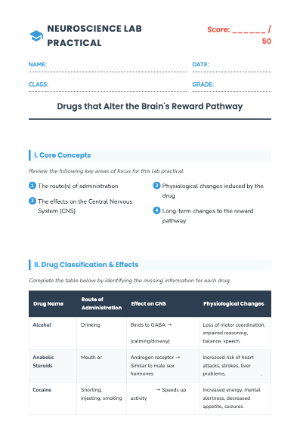
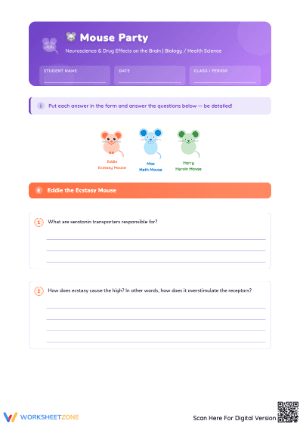
The transformation came when I paired the animated mouse party simulation with structured printable pages that gave each student a reason to slow down and notice details. As we worked through the activity, I watched learners trace how alcohol, marijuana, heroin, cocaine, and ecstasy each interact with neurons in different ways. The worksheets gave them space to compare effects, sketch synapses, and write short reflections that connected biology to real choices teenagers face every day.
What surprised me most was how curiosity began to drive the pace of the lesson. Once students realized that every mouse on the screen represented a real chemical story, they started predicting outcomes before the animation even played. I encouraged them to debate, revise, and check their notes against the printable, and the room filled with the kind of focused chatter every teacher hopes for. Pairing this resource with a strong collection of middle school science activities kept the momentum going long after the simulation ended.
Parents have told me the same magic happens at the kitchen table. One mother described her son spreading the printable next to his laptop and walking her through how each drug affects the brain, using the worksheet as a script. That kind of confident teaching back is rare, and it usually means a child has truly understood the material. For families who want to keep exploring, a quick visit to a clear brain anatomy printable from Worksheetzone turns one lesson into an ongoing study session.
If you have been searching for a way to make neuroscience feel personal, give mouse party worksheets a real chance in your classroom or at home. The combination of animation, structured note taking, and small group discussion creates the lightbulb moments that make biology unforgettable, and the printable pages from Worksheetzone keep students grounded long after the screen goes dark.
Frequently Asked Questions
Question 1: What grade level are mouse party worksheets best for?
Mouse party worksheets work beautifully with middle school and high school biology classes, especially grades seven through twelve. Younger students can use a simplified version focused on healthy choices, while older learners dive into neurotransmitters, receptor sites, and synaptic activity. Teachers often pair the printable with a health unit or a chapter on the nervous system to give the activity strong curricular roots.
Question 2: What topics do these worksheets actually cover?
The pages guide students through how five common drugs, including alcohol, marijuana, heroin, cocaine, and ecstasy, each influence brain chemistry in a different way. Learners record observations from the animated mouse party, label parts of a neuron, and answer reflection questions. The structure gives students a clear framework for comparing substances, recognizing risks, and discussing biology in respectful, fact based language.
Question 3: How long does the activity take in class?
Most teachers complete the mouse party worksheets in a single forty five to sixty minute class period. The first portion is spent watching the simulation, the middle section is reserved for filling in the printable, and the final ten minutes work well for small group sharing. If you want to extend the lesson, add a short writing prompt or a brain diagram review on the following day.
Question 4: Can parents use these worksheets at home?
Absolutely. Parents who homeschool or want to support a school assignment can sit beside their child, watch the simulation together, and walk through each section of the printable in conversation. The worksheets give families a calm, structured way to talk about drugs, brain health, and decision making. Pairing the activity with a follow up book or a documentary deepens learning even further.















 Interactive Worksheet Maker
 Quiz Maker
 Word Search Maker
 Crossword Puzzle Maker
 Word Scramble Generator
 Sentence Scramble Generator
 Handwriting Worksheet Generator
 Name Tracing Generator
 Fill In The Blank Generator