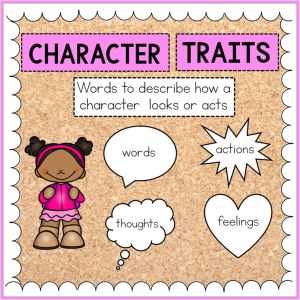
These 3rd grade character traits worksheets printable resources give teachers a concrete way to move character instruction past surface-level words like "nice" and "mean" — the two descriptors that dominate student writing through second grade — and into the specific, evidence-backed vocabulary that third graders are developmentally ready to use. The set covers trait identification, evidence-based analysis, trait-vs.-feeling sorting, and personal reflection.
The Specific Skills Targeted
Third grade is when many ELA standards first require students to analyze how a character's traits and motivations drive a plot forward, which means character vocabulary can no longer stay implicit. Each worksheet addresses one of these five skill areas:
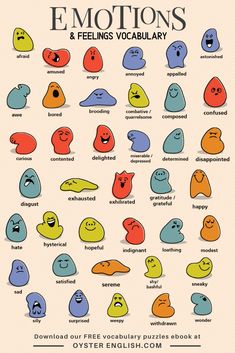
- Trait-vs.-feeling sorting: Students categorize vocabulary words and brief scenarios into two columns — temporary emotions versus lasting personality patterns. This is harder than it looks; see the error section below.
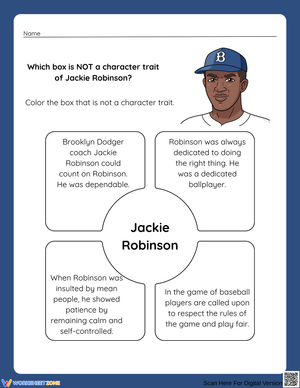
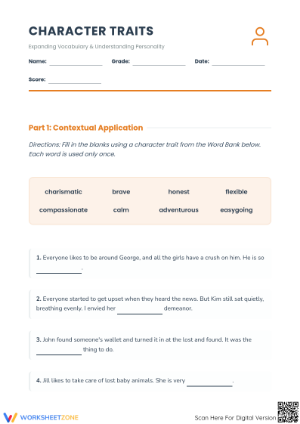
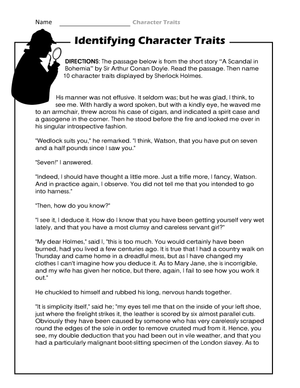
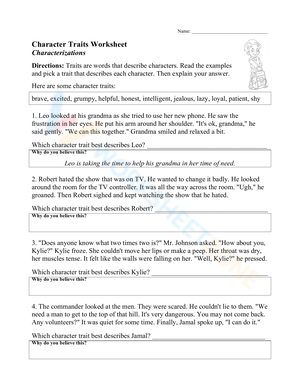
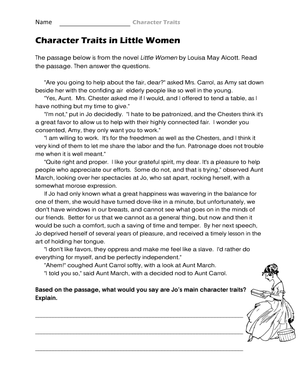
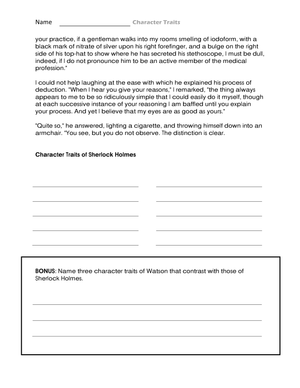
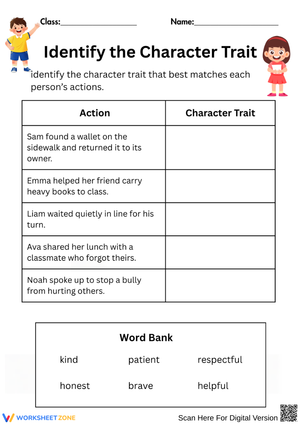
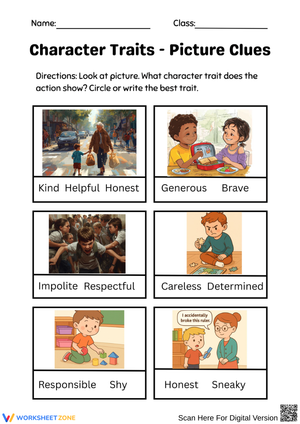
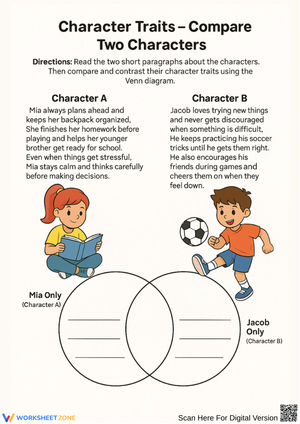
- Evidence-based trait identification: Students read a short passage or scenario, choose a fitting trait, and then cite the specific action, dialogue, or decision that supports their choice.
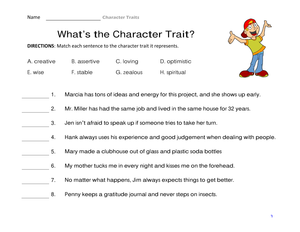
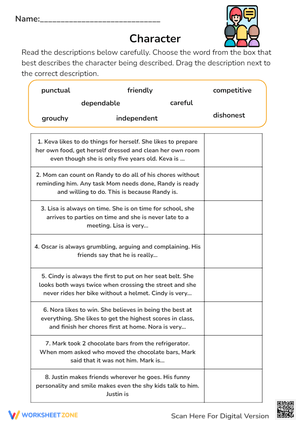
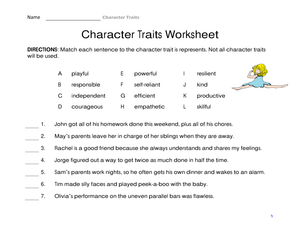
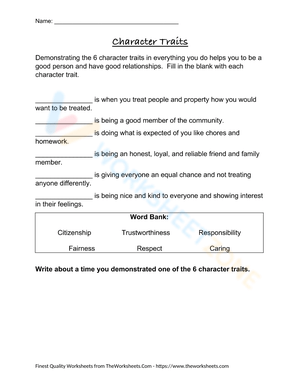
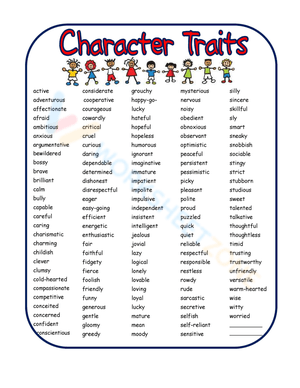
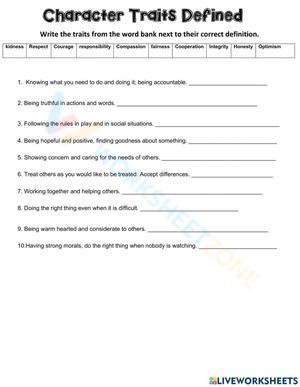
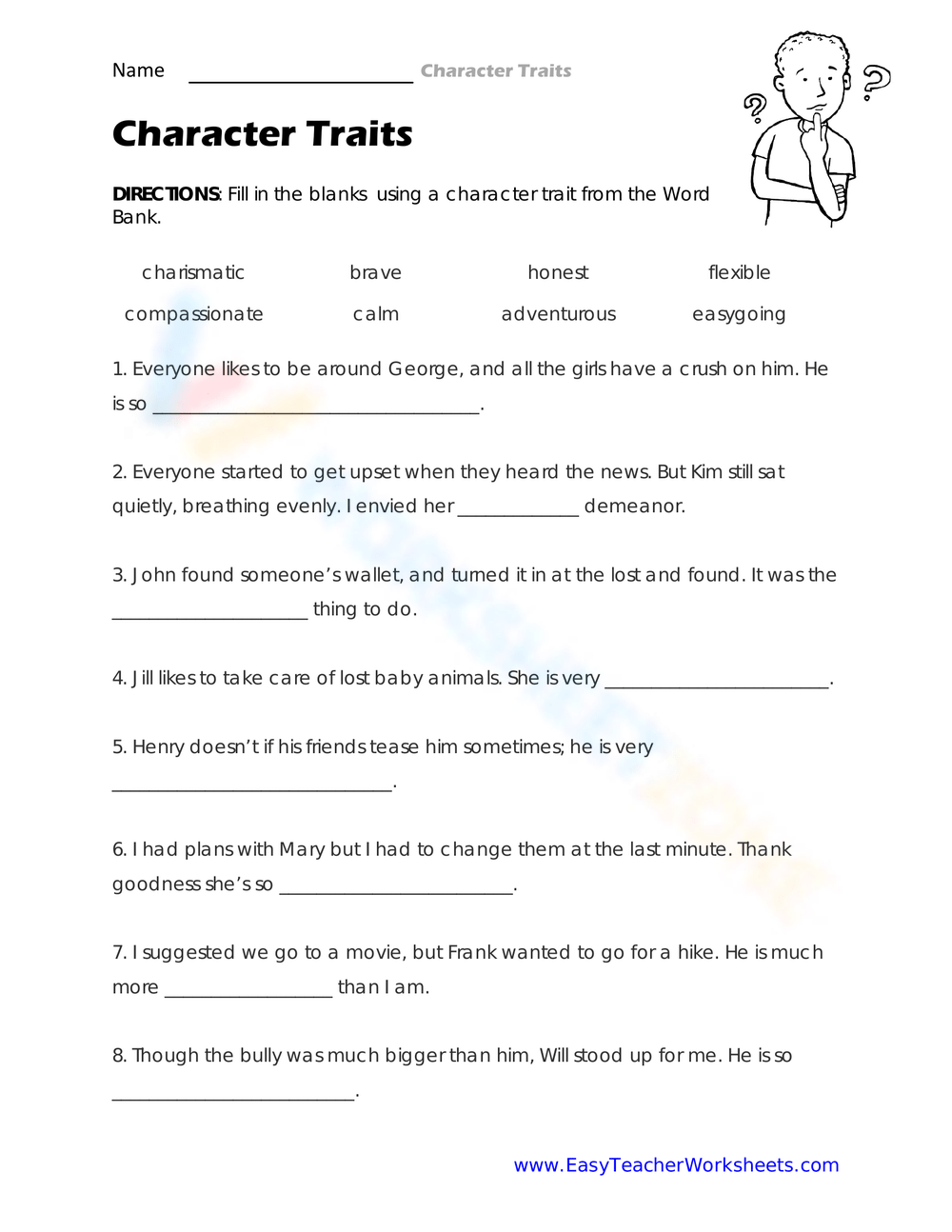
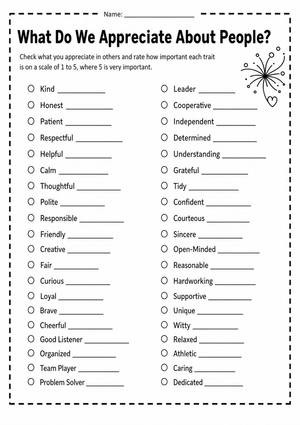
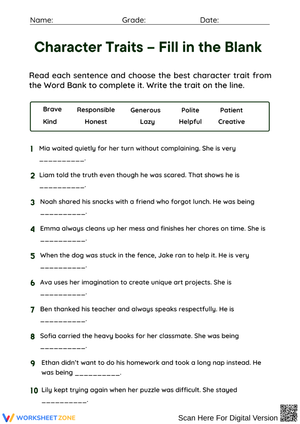
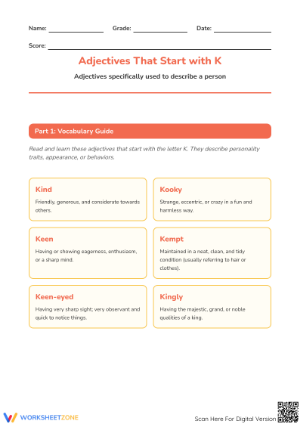
- Trait vocabulary expansion: Matching exercises pair common traits with their synonyms and antonyms — connecting "brave" to "courageous" and contrasting it with "timid" — so students stop recycling the same five words in their writing.
- FAST graphic organizers: Structured charts built around Feelings, Actions, Sayings, and Thoughts prompt students to analyze a character systematically rather than rely on gut reaction.
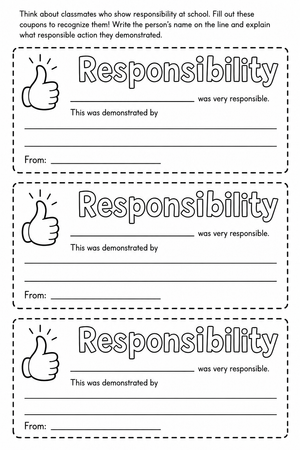
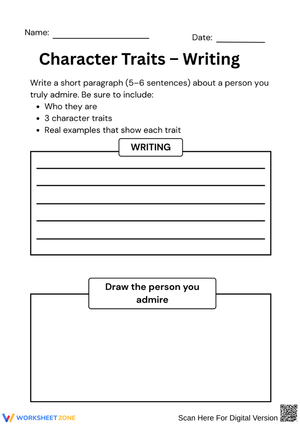
- Personal reflection sheets: Students name two or three traits they believe describe themselves, then write brief evidence from their own recent behavior to support each one.
Student Errors Worth Anticipating Before You Teach This Unit
The most consistent mistake in third-grade character work is confusing a single incident with a permanent trait. A student reads that a character shared her lunch one day and writes "generous" — but when pressed, cannot point to any other supporting evidence. This is the one-action-equals-one-trait error, and it derails accurate analysis. The evidence-based worksheets address it directly by requiring students to find at least two separate examples before they can confirm a trait claim.
The trait-vs.-feeling boundary trips up even students who seem confident. A common response: a student marks "angry" as a character trait because the character "is always angry." That student has identified a behavioral pattern — which is close — but has not yet moved from emotion language to trait language ("short-tempered" or "irritable"). The sorting worksheets make that conceptual shift explicit by asking students to rewrite emotion words as trait words in a second column, which forces the vocabulary conversion rather than leaving it abstract.
How to Build These Worksheets Into Your Weekly Routine
A Trait of the Week structure is the most practical frame for the set. On Monday, introduce the target word with the vocabulary matching worksheet: students write the definition, brainstorm synonyms, and produce a brief personal example. Tuesday or Wednesday is a natural window for the FAST graphic organizer, paired with a read-aloud where the character clearly demonstrates that trait — students fill in the chart during the reading, then discuss before writing independently. Thursday's evidence-based analysis worksheet gives students an unfamiliar scenario and asks them to apply the same process on their own. The Friday reflection sheet closes the loop: students evaluate whether they demonstrated the trait that week and name one specific moment as their evidence.
Outside that weekly structure, the sorting worksheets work as a five-minute warm-up or an exit ticket. The reflection sheets are quiet enough for the last ten minutes of a Thursday afternoon when energy is low but you still want something substantive on paper. For parent-teacher conferences, completed reflection sheets give families a student-authored, dated record of SEL growth that is far more concrete than a verbal summary.
Standard Alignment
This 3rd grade character traits worksheets printable set aligns directly with CCSS.ELA-LITERACY.RL.3.3, which requires third graders to describe characters in a story — including their traits, motivations, and feelings — and explain how those traits contribute to the sequence of events. That standard sits at the intersection of literary comprehension and social-emotional vocabulary, which is exactly where these worksheets operate. Students who name a trait and cite textual evidence meet the standard at grade level; students who also link that trait to a character's decisions are building toward the analytical demand that RL.4.3 and RL.5.3 will place on them in the next two years.
Adjusting the Set for Different Learners
For students still building reading fluency, the sorting and matching worksheets are the most accessible entry point because the tasks are self-contained and don't require extended reading. Pairing a struggling reader with a partner for the evidence-based worksheet — one student reads aloud while the other fills in the chart — maintains rigor without creating a decoding bottleneck that stops the thinking before it starts.
Students who move through the core tasks quickly can use the personal reflection sheets in a more demanding way: instead of identifying traits they already demonstrate, ask them to choose a trait they want to develop and draft a specific action plan for the following week. That extension works within the existing format without requiring a separate resource. For students receiving ELL support, the vocabulary matching exercises — which pair each trait word with a brief definition and an example sentence — make the 3rd grade character traits worksheets printable set more accessible than open-ended prompts where unfamiliar vocabulary stops students before the SEL thinking can begin.
Frequently Asked Questions
What's the difference between a character trait and a feeling, and how do I explain it to a third grader?
A feeling is temporary — it passes. A trait is a pattern that holds across different situations and different days. A student can feel nervous before a test without being a nervous person; a student who consistently avoids new challenges in multiple contexts may genuinely have "cautious" as a trait. The sorting worksheets build this distinction through repeated categorization, which works better than a one-time definition because students apply the concept instead of just memorizing a rule.
How many traits should third graders know by the end of a unit?
Depth matters more than count. A student who uses "compassionate," "determined," and "responsible" accurately — meaning they can define the word, produce evidence for it, and distinguish it from similar terms — has made more progress than a student who matches twenty words to definitions without applying any of them in context. Each worksheet in the set introduces traits systematically; the realistic expectation is that students genuinely internalize eight to ten terms by the end of the unit rather than recognizing fifteen to twenty in isolation.
Do these worksheets work for literary analysis, or are they SEL-only?
Both. The evidence-based analysis worksheets and FAST graphic organizers transfer directly to reading comprehension lessons — students use the same process with any narrative text. The personal reflection sheets are SEL-specific. Most teachers who use the 3rd grade character traits worksheets printable set move fluidly between both purposes: introduce a trait through a shared text, then circle back to the reflection worksheet as an SEL close. Building that pairing into your planning makes the instruction stick across both domains.
Can the evidence-based worksheets be used for formative assessment?
Yes, and they give clear data quickly. Either a student can cite relevant evidence for a chosen trait, or they can't — that makes sorting student work fast and identifies who needs another round of guided practice in a single pass. The reflection sheets are better suited to ongoing documentation than scored assessment. They reveal a great deal about a student's self-awareness, but that quality is difficult to grade without penalizing students who honestly identify growth areas rather than writing what they think you want to see.












 Interactive Worksheet Maker
 Quiz Maker
 Word Search Maker
 Crossword Puzzle Maker
 Word Scramble Generator
 Sentence Scramble Generator
 Handwriting Worksheet Generator
 Name Tracing Generator
 Fill In The Blank Generator