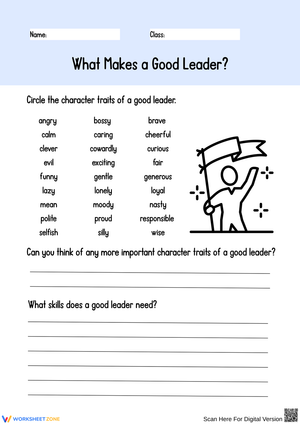
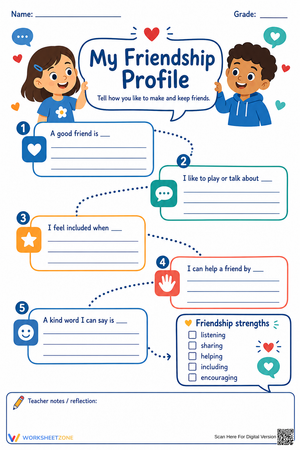
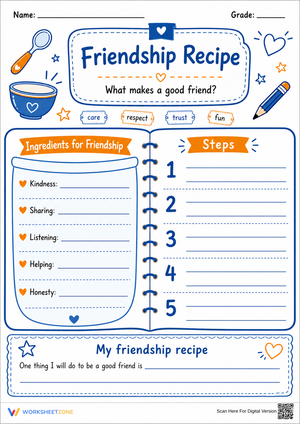
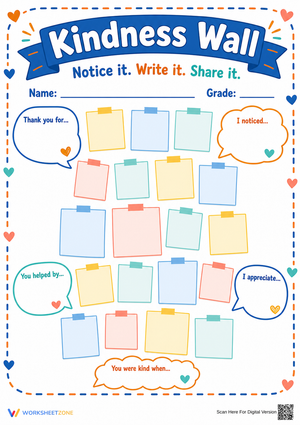
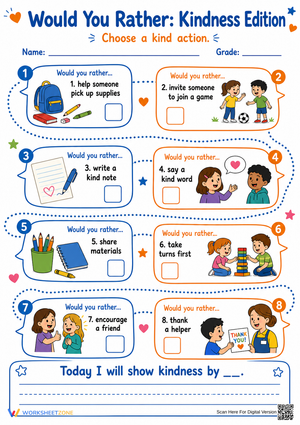
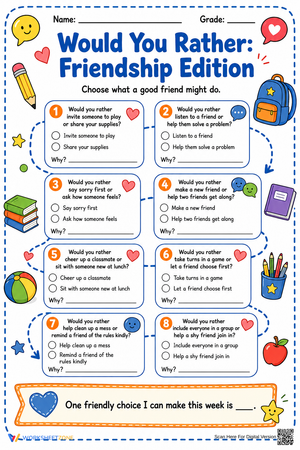
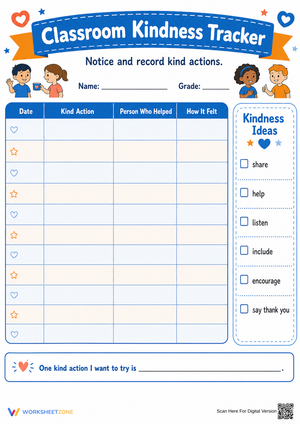
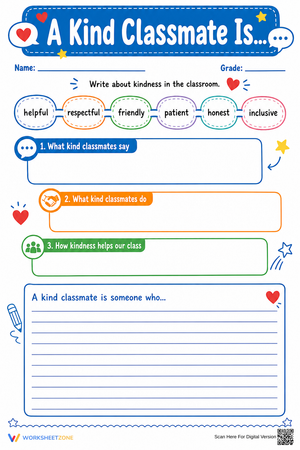
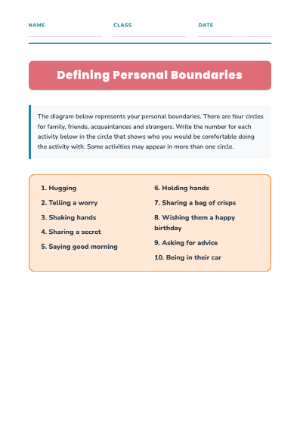
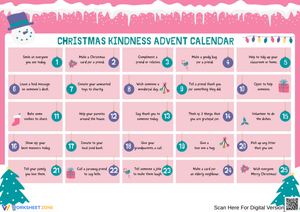
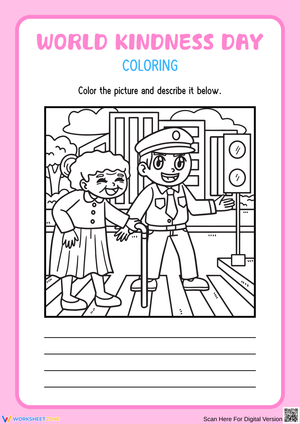
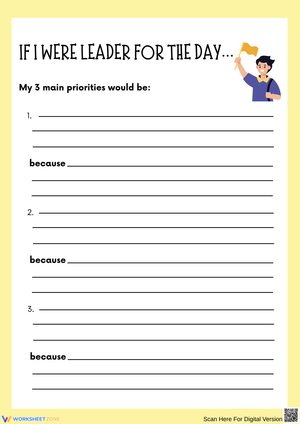
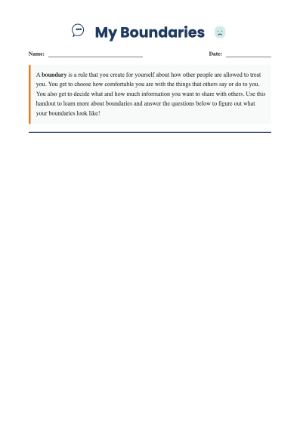
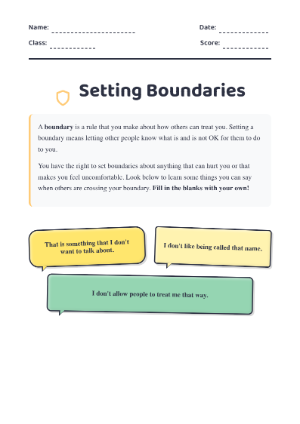
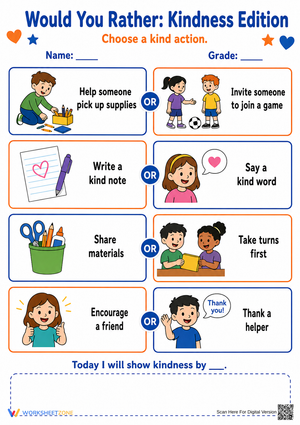
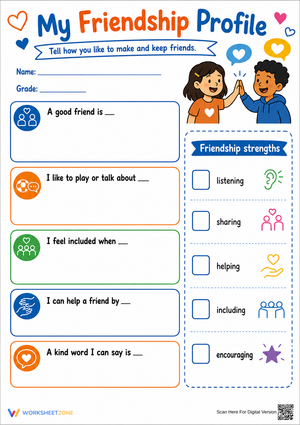
3rd grade behavior pdf worksheets give teachers a ready-to-use set of tools for directly teaching, revisiting, and reinforcing the specific social-behavioral skills that surface repeatedly in third-grade classrooms. Each worksheet targets a distinct skill — handling frustration, navigating peer conflict, taking responsibility after a mistake, or following classroom expectations — so teachers can reach for the right resource at the right moment rather than improvising a response after an incident.
What Each Worksheet Targets
The set covers the behavior skills that third graders most commonly struggle with, presented through short, direct formats that students can complete honestly without the task becoming a writing assignment.
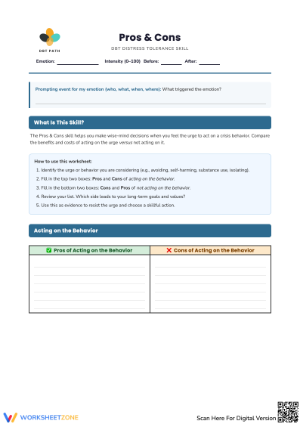
- Think sheets — students walk through what happened, who was affected, and what they would do differently. The most effective versions ask students to identify the moment before the choice, not just the outcome.
- Classroom expectations checklists — students read scenarios and sort them into expected and unexpected behavior. These work during direct instruction or morning meeting without requiring prior setup.
- Self-control reflections — students name a trigger, identify how their body felt, and choose a calming strategy from a list or recall one from memory.
- Empathy activities — students consider how an action affected a classmate, often through scenarios grounded in familiar recess or group-work situations.
- Conflict resolution worksheets — students describe both sides of a problem and write or choose a repair action. These pair well with counselor check-ins or small-group follow-up.
- Responsibility trackers — students record daily or weekly habits around materials, homework, and directions. These give teachers concrete data for intervention conversations.
Each of these formats does a different job. A teacher reaching for a think sheet after a hallway incident needs something different from one opening a whole-class empathy lesson. Keeping the full set available means the right tool is there when the moment actually arrives.
Student Responses That Tell You a Worksheet Isn't Landing
Third graders have a specific pattern on think sheets: they write "nothing" or "I don't know" in the space asking what they could do differently — not because they lack ideas, but because they are still in a defensive emotional state. A worksheet handed over before the student has had even five minutes to decompress will produce that response almost every time. The reflection section requires a regulated nervous system, not just a pencil. Knowing this, experienced teachers hold the worksheet until after a brief conversation or a walk to the water fountain — not as a reward but as practical timing.
A second pattern is students treating the "what happened" section as a chance to build a case. They write a detailed account of what the other student did and leave the "what was my part?" space blank or minimal. This isn't dishonesty; it's exactly where third graders are developmentally. Prompts that ask "what choice did you make in that moment?" rather than "what did you do wrong?" tend to produce more useful answers — and that distinction matters when the worksheet is supposed to guide a follow-up conversation rather than close one.
One honest tradeoff worth naming: students who struggle with expressive writing will sometimes fill in the shortest possible answer to avoid the discomfort of writing, which makes the worksheet look like successful completion when no real reflection happened. Paired verbal check-ins — even brief ones — close that gap better than the written format alone.
How to Build These Worksheets Into Your Lesson Plans
3rd grade behavior pdf worksheets work best when students encounter them before a problem occurs. If the first time a student sees a think sheet is after they've knocked over a classmate's project in frustration, the worksheet carries an emotional charge that gets in the way of learning. Introducing these resources during SEL block or morning meeting — using a made-up scenario, not a real incident — lets students practice the thinking process while they're calm.
A few placement strategies from actual classroom routines:
- After lunch recess: The five minutes when students walk back in is when peer conflicts arrive at the door. A brief cool-down followed by a conflict resolution worksheet, completed individually or with teacher support, keeps the incident from bleeding into afternoon instruction.
- Monday morning warm-up: A short expectations checklist at the start of the week re-establishes classroom norms without a long verbal reminder. Students mark examples of expected behavior and discuss one with a partner before the day begins.
- Small-group intervention check-ins: For students receiving extra support around calling out or work completion, a weekly responsibility tracker completed with the teacher creates a visual record that makes parent conferences more grounded and specific.
- Substitute plans: A simple expectations checklist or self-control reflection worksheet gives a substitute a ready tool that already matches your classroom language, which keeps the day more consistent when the regular teacher is out.
One strategy that reduces re-teaching time: keep two versions of the same behavior concept — a teaching version used during instruction with class discussion, and a reflection version with parallel prompts for individual use after an incident. When the language stays consistent across both, students transfer the vocabulary from instruction to actual decision-making faster than when the two formats feel unrelated.
Standard Alignment
These worksheets align with the CASEL (Collaborative for Academic, Social, and Emotional Learning) core competency framework, which most state SEL standards now reference. Specifically, they address self-awareness (identifying emotions and triggers), self-management (using calming strategies and setting behavioral goals), social awareness (perspective-taking and empathy tasks), and responsible decision-making (evaluating choices and planning repair actions). For teachers in PBIS schools, the think sheets and expectations checklists map directly onto Tier 1 explicit instruction requirements and Tier 2 individualized practice. Each worksheet supports the teach-practice-acknowledge cycle that PBIS fidelity checklists require — rather than leaving behavior instruction to hallway reminders that students forget by the time they reach the classroom door.
Differentiating the Set Across Support Levels
3rd grade behavior pdf worksheets can serve a wide range of learners without major redesign. For students who need more support, the most effective adjustment is reducing the open-ended writing requirement. Turning a "write two sentences" prompt into a two-choice question — "Did you feel frustrated or nervous?" — lowers the barrier without removing the reflection task. For students with IEPs that include behavior goals, each worksheet can be incorporated directly into the behavior intervention plan as a structured practice tool, and the teacher notes section becomes a documentation record.
For students who move through these quickly and benefit from extended thinking, the same formats hold up with one small addition: ask the student to generate a second scenario where the same strategy could apply. A student who identifies "take three deep breaths" as a coping choice and then describes using it in a different frustrating situation is doing meaningfully deeper cognitive work than the base task requires — without needing an entirely different resource.
Students who receive counseling support can complete the more intensive versions — conflict resolution and empathy activities in particular — in a pull-out session and reconnect the learning to the classroom context afterward. That two-step path works especially well when the counselor and classroom teacher use the same worksheet language, which the set makes straightforward.
Frequently Asked Questions
Are these meant to replace a behavior plan or SEL curriculum?
No. Each worksheet is a practice and reflection tool — one component of behavior instruction, not a standalone program. They work alongside existing SEL curricula, PBIS frameworks, and individual behavior plans. A student with a formal behavior intervention plan still needs that plan; these resources support consistent practice between formal check-ins.
How do I keep students from rushing through a think sheet just to be done?
The most reliable approach is a brief follow-up conversation immediately after the student completes the worksheet. When students know the teacher will read their response and ask one follow-up question, the one-word and "I don't know" answers decrease significantly. The conversation doesn't need to be long — two minutes and a single clarifying question establishes that the worksheet is the beginning of a conversation, not the end of it.
Can these be sent home for family awareness?
Yes, with some judgment about which formats travel well. Responsibility trackers and expectations checklists work as communication tools — families can see what classroom norms look like and reinforce them at home. Think sheets and conflict resolution worksheets are generally better kept in school unless the teacher has already spoken with the family, since sending a reflection worksheet home without context can read as a report of wrongdoing rather than a learning tool.
When should I use a worksheet versus just having a conversation?
Third graders who are still emotionally activated will not use a worksheet well. The written format works as a thinking tool when the student is calm enough to write — which means for acute incidents, the conversation comes first. The worksheet follows as a way to record the thinking, set a goal, and create a reference point the student can return to later. 3rd grade behavior pdf worksheets are most effective when teachers treat them as structured follow-through rather than an immediate first response.












 Interactive Worksheet Maker
 Quiz Maker
 Word Search Maker
 Crossword Puzzle Maker
 Word Scramble Generator
 Sentence Scramble Generator
 Handwriting Worksheet Generator
 Name Tracing Generator
 Fill In The Blank Generator