


























Views
Downloads

Printable Responsibility Coupons | Grade 3 SEL
Paste this activity's link or code into your existing LMS (Google Classroom, Canvas, Teams, Schoology, Moodle, etc.).
Students can open and work on the activity right away, with no student login required.
You'll still be able to track student progress and results from your teacher account.
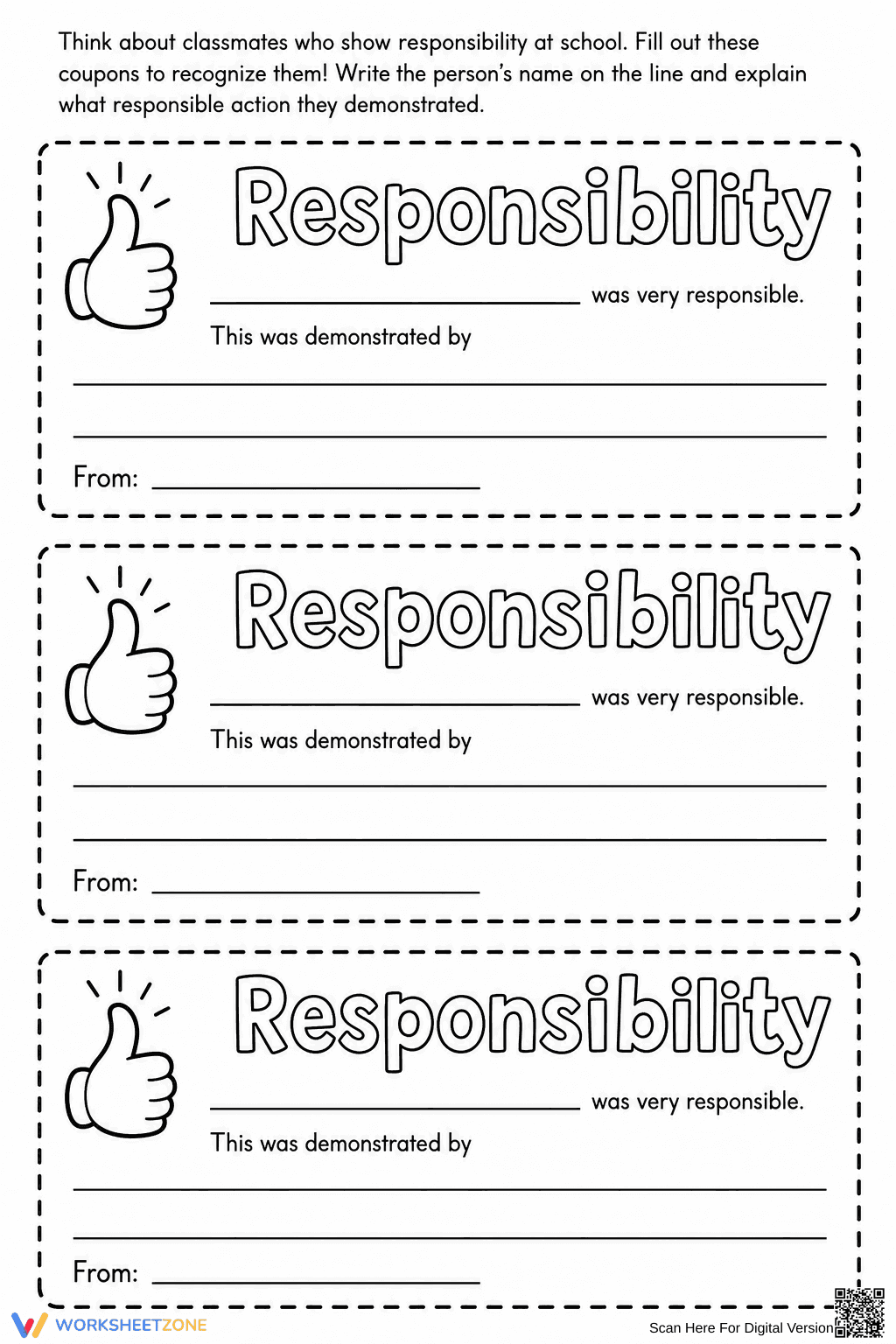
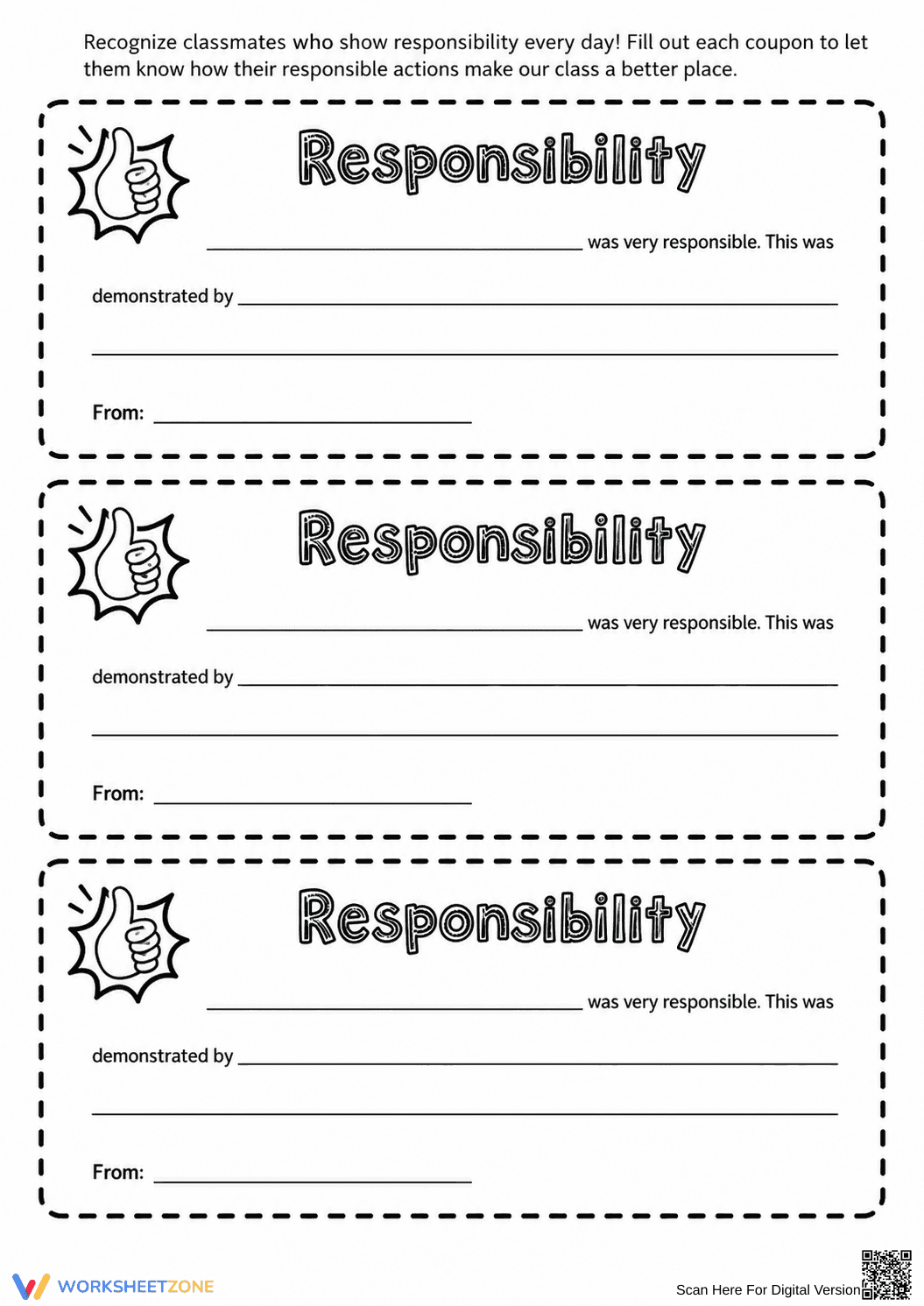
This social-emotional learning worksheet empowers students to recognize and celebrate positive character traits in their peers. By filling out these responsibility coupons, learners practice expressing gratitude and identifying specific examples of responsible behavior in the classroom, fostering a supportive and positive school environment.
At a Glance
- Grade: 3 · Subject: Social Skills
- Standard:
CCSS.ELA-LITERACY.W.3.4— Produce writing appropriate to task and purpose- Skill Focus: Peer recognition and responsibility
- Format: 2 pages · 6 problems · No answer key · PDF
- Best For: Classroom management and SEL
- Time: 10–15 minutes
This resource includes two pages of printable recognition cards, featuring a total of six fill-in-the-blank coupons. Each coupon provides a structured template where students can write a classmate's name, describe the specific responsible action they observed, and sign their own name. The dashed borders make it easy to cut out and distribute the cards, while the thumbs-up graphics add a fun, encouraging visual element.
Zero-Prep Workflow
- Print (1 minute): Simply print the two-page PDF on standard paper or cardstock for extra durability.
- Distribute (1 minute): Hand out the uncut sheets to students or pre-cut the coupons and place them in a designated classroom praise station.
- Review (0 minutes): No grading required! Students independently fill out the cards and deliver them to their peers. Total teacher prep time is under two minutes, making this an ideal, self-explanatory activity for morning meetings or a quick sub plan filler.
Aligned to CCSS.ELA-LITERACY.W.3.4: Produce writing in which the development and organization are appropriate to task and purpose. This activity also supports core CASEL competencies in Social Awareness and Relationship Skills by encouraging students to notice and validate the positive actions of others. Both standard codes can be copied directly into lesson plans, IEP goals, or district curriculum mapping tools.
How to Use It
Introduce the concept of responsibility during a morning meeting, then have each student fill out one coupon for a classmate by the end of the week. Alternatively, keep a stack of these printed coupons in a designated positive behavior station where students can independently access them after completing their main assignments. As a formative assessment observation tip, review the completed cards to gauge students' understanding of what constitutes responsible behavior versus general kindness. Expected completion time is 10 to 15 minutes.
Who It's For
This resource is designed for elementary students in grades 2 through 5 who are developing their social-emotional skills. The fill-in-the-blank sentence frames provide built-in differentiation, making the writing task accessible for students who need language support or struggle with blank-page anxiety. It pairs perfectly with a read-aloud book about responsibility or a classroom anchor chart defining positive character traits.
Integrating peer recognition activities into daily routines significantly impacts classroom climate and individual student behavior. By aligning with CCSS.ELA-LITERACY.W.3.4 to produce writing appropriate to task and purpose, this activity bridges foundational literacy skills with essential social-emotional development. Students actively practice identifying and articulating specific examples of positive character traits. According to a RAND AIRS 2024 report, structured peer-to-peer appreciation exercises improve overall classroom cohesion and reduce behavioral disruptions by fostering a culture of mutual respect. When learners are tasked with observing and documenting the responsible actions of their classmates, they internalize those same behavioral expectations for themselves. This dual-purpose approach ensures that instructional time is maximized, blending meaningful writing practice with proactive classroom management strategies that benefit the entire learning community.


