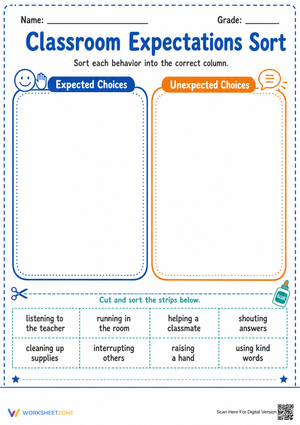
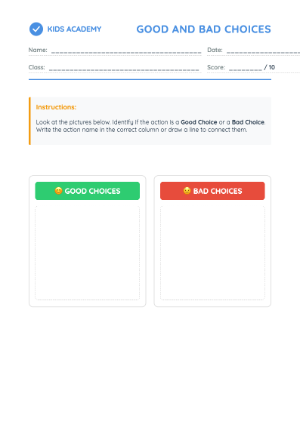
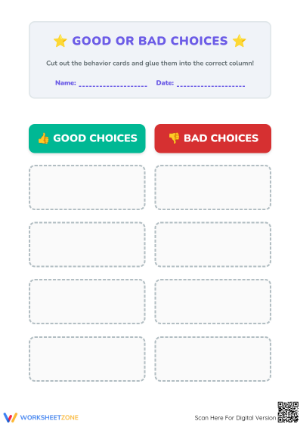
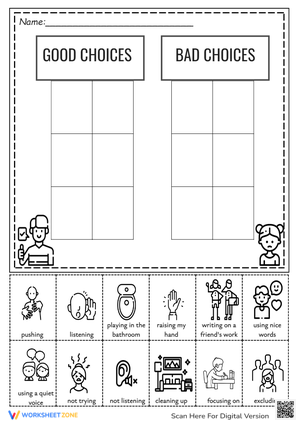
These 3rd grade good choices bad choices worksheets resources target the gap that most Grade 3 teachers know well: students who can recite expected behaviors during a calm classroom discussion but still grab a marker from a classmate the moment frustration hits. The set gives students repeated, structured practice connecting actions to consequences in familiar school situations, building the habit of pausing to think before reacting.
The Specific Decisions Students Practice
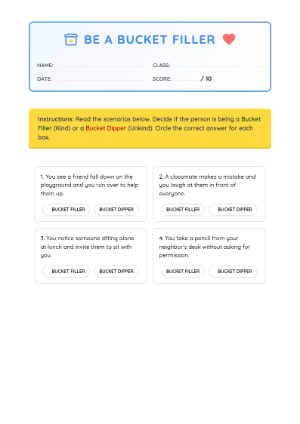
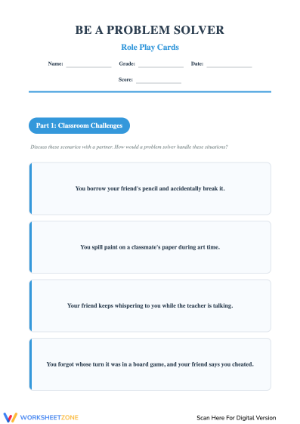
Each worksheet places students inside recognizable moments: someone cuts in the lunch line, a partner isn't sharing the glue, the teacher gives a direction during a noisy transition. Students identify which response is a good choice, which is a bad choice, and — on the more demanding worksheets — explain what would happen next either way. Situations come from three settings: the classroom, the playground, and home routines, because third graders need to see that the same decision-making applies across all of them, not just during the lesson.
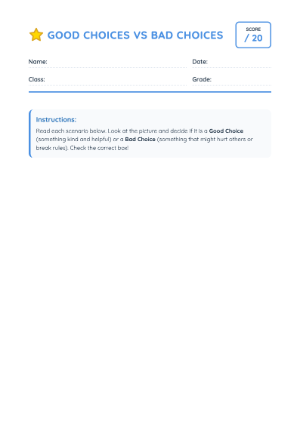
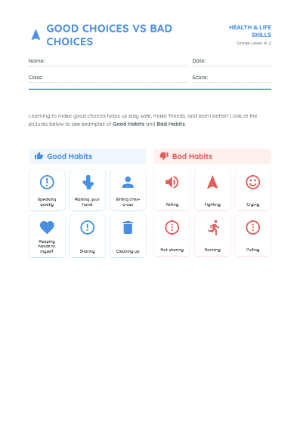
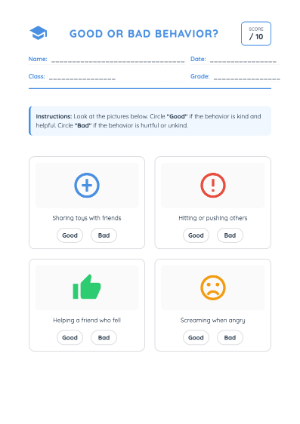
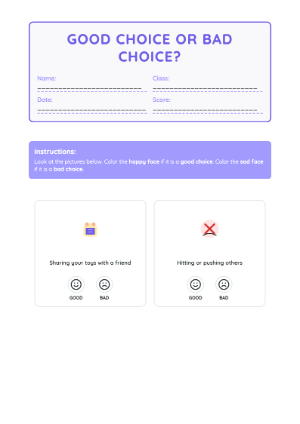
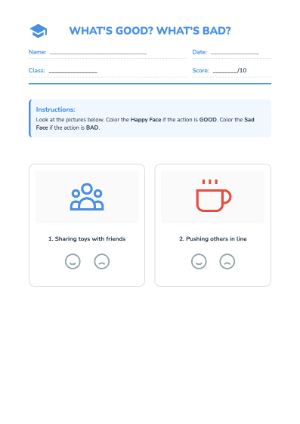
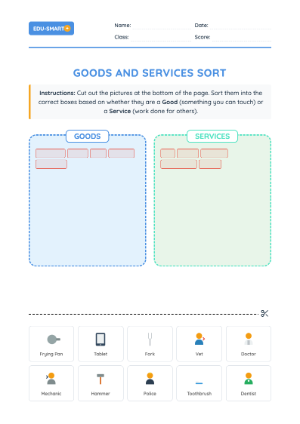
- Sorting tasks: Students read a scenario and place it in a good choice or bad choice column — works well for whole-group launch or partner practice.
- Matching tasks: An action connects to an outcome. Students who link "asking for help calmly" to "the teacher responds right away" start seeing behavior as cause and effect, not just rule-following.
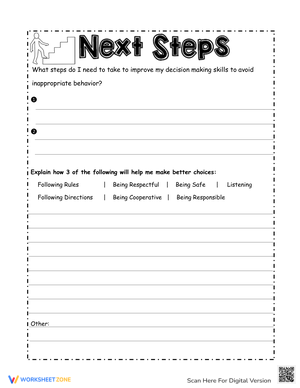
- Short written responses: One or two sentences explaining why a choice is respectful, safe, or responsible. These reveal reasoning quality, not just recognition.
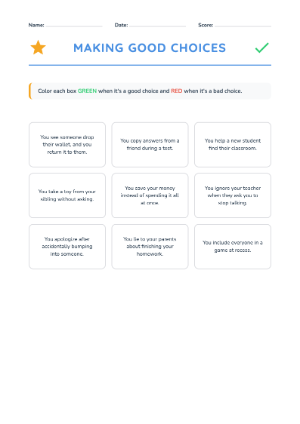
- Cut-and-paste and coloring formats: Lower-writing options that keep students focused on the decision itself, useful in small groups and counseling sessions where engagement matters more than volume of output.
The mix of formats matters because not every student demonstrates understanding the same way. A student who struggles to write "This is a bad choice because it hurt someone's feelings" may show clear reasoning when sorting picture cards. Having both formats in the set gives teachers a more accurate read of where students actually are.
Mistakes Students Make That These Worksheets Help You Catch
The most common error isn't misidentifying good versus bad — it's explaining the why in only surface-level terms. A student will correctly mark "pushing someone in line" as a bad choice, then write "because it's not nice" as the full explanation. That answer isn't wrong, but it skips the reasoning teachers are trying to build: someone could get hurt, the line slows down, the teacher has to stop the whole class. When students only reach surface labels, they're working from memorized rules rather than genuine decision-making. Short-response prompts in the set expose this pattern and give teachers a concrete follow-up question to ask before moving on.
A second pattern worth watching: students treat the worksheet as a reading task and scan for clue words — yelling, pushing, taking — rather than evaluating the full situation. This becomes most visible in scenarios involving ambiguous choices, like a student who grabs the only available pencil because no other option is visible. Teachers who spot this pattern can use those scenarios as discussion anchors rather than quick independent tasks.
Smart Ways to Work These Worksheets Into Your Week
The most effective time for this kind of practice is often Monday morning meeting or the ten minutes after lunch recess — both points in the day when behavior expectations feel most slippery. Projecting a scenario and asking the class to signal good or bad choice before handing out the worksheet takes about two minutes and primes reasoning before students put pencil to paper. That brief whole-group moment also surfaces students whose instincts are off in ways a silent individual task would never show.
When a specific classroom issue surfaces — repeated trouble during transitions, partner-work conflicts, hallway behavior — pull the scenarios that match those situations directly. Using a scenario about waiting calmly in line on the same afternoon students struggled at dismissal makes the connection explicit. Students don't automatically transfer behavior learning unless someone draws the line between the paper task and the real moment.
For counseling settings, these worksheets give a counselor or behavior support specialist a concrete entry point. Rather than opening with "tell me about what happened," starting with a relevant scenario lets a student respond to a character's choice before analyzing their own. That small distance often makes the conversation easier to enter. Substitute teachers benefit too — the format is self-evident, so the class stays productive without a detailed explanation in the sub folder. 3rd grade good choices bad choices worksheets materials are among the most sub-ready resources in a behavior support toolkit for exactly that reason.
Standard Alignment
These worksheets align to the CASEL Social-Emotional Learning framework under the Responsible Decision-Making domain, which calls on students to identify problems, analyze situations, evaluate choices, and reflect on outcomes. At the third-grade level, this competency moves beyond simply naming expected behaviors — more characteristic of K–2 work — toward explaining reasoning and considering how choices affect others. Several state SEL standards address this progression directly: Illinois Social/Emotional Learning Standards Goal 3 (Apply decision-making skills to deal responsibly with daily academic and social situations), Ohio's K–12 Social Emotional Learning Standards under responsible decision-making, and California's aligned SEL expectations introduced through district wellness frameworks. The matching and written-response formats in the set directly serve this standard's expectation that students move from identification into analysis.
Differentiating These Worksheets Across Ability Levels
Students who move through the basic sort quickly often need a different kind of challenge: the scenario where both options could be defended, or the question "What could you do instead?" rather than a simple categorization. Pushing into that territory takes less than a minute per worksheet and keeps the task genuinely engaging for students who would otherwise coast.
For students who need more support, the first adjustment is oral access. Reading the scenario aloud — or pre-recording it for centers — separates decoding from reasoning. The cognitive load of parsing a new paragraph and simultaneously evaluating a behavior decision is genuinely high for students at the lower end of third-grade reading levels. Removing the decoding demand produces better evidence of actual SEL understanding.
- Offer a sentence frame — This is a good/bad choice because... — before asking for written explanation.
- Reduce the number of scenarios on sorting worksheets for students who become overwhelmed by a full set at once.
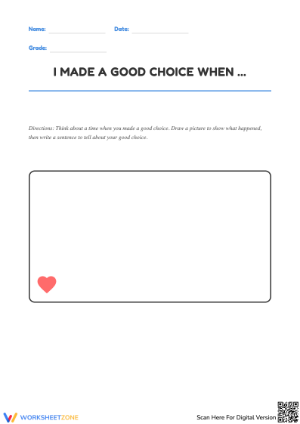
- Let students sketch the better choice rather than write a sentence — a quick drawing still demonstrates reasoning.
- Pair students strategically during partner work; explaining a choice aloud often clarifies thinking before a student writes anything down.
- Highlight key vocabulary — wait, share, ask, tell the truth — before the worksheet begins, not after students are already stuck.
Frequently Asked Questions
Are these worksheets meant to replace a full SEL lesson?
No. Each worksheet works best as a practice structure within a lesson, not as a standalone activity handed out without context. Even five minutes of modeling before students work independently changes the quality of what they do with the scenarios. The format supports instruction — it doesn't substitute for it.
What's the difference between sorting and matching worksheets in the set?
Sorting tasks ask students to categorize a choice as good or bad, which builds basic identification. Matching tasks connect a choice to a consequence, pushing into cause-and-effect reasoning. Both serve different instructional moments — sorting works well for initial exposure, matching is more appropriate after students have the concepts and are ready to think about outcomes and implications.
Can these be sent home for family practice?
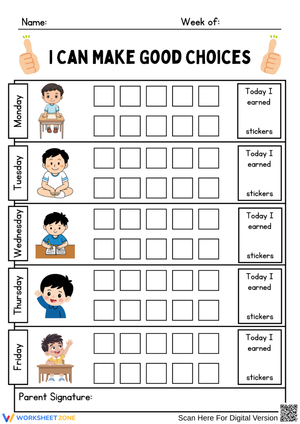
Yes, and they travel well. A family receiving a 3rd grade good choices bad choices worksheets resource at home can discuss the scenarios over dinner or during a commute without needing classroom context. Sending a brief note suggesting parents ask "What would happen next?" rather than just checking right or wrong answers helps families extend the conversation in a useful direction.
How do I use these with students who know the right answer on paper but don't follow through in real life?
That gap between knowing and doing is worth naming directly with students. After a student correctly identifies the good choice, ask: "When is it hardest to actually do this one?" That reframes the task from a quiz to a real conversation. The 3rd grade good choices bad choices worksheets set includes short-response prompts that ask students to name their own challenge — not just evaluate a character — which moves thinking in that direction and gives teachers something concrete to follow up on.












 Interactive Worksheet Maker
 Quiz Maker
 Word Search Maker
 Crossword Puzzle Maker
 Word Scramble Generator
 Sentence Scramble Generator
 Handwriting Worksheet Generator
 Name Tracing Generator
 Fill In The Blank Generator