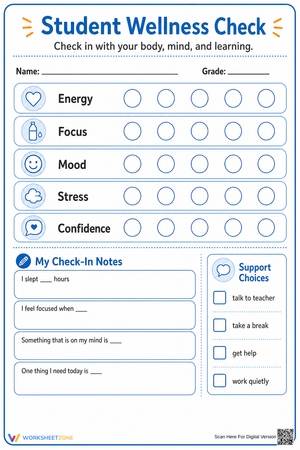
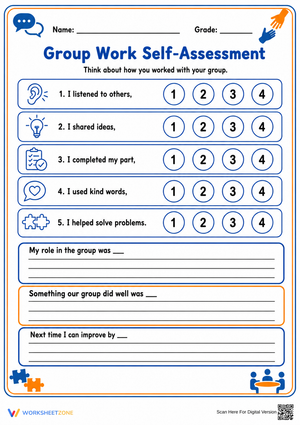
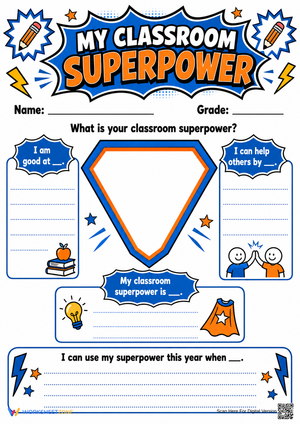
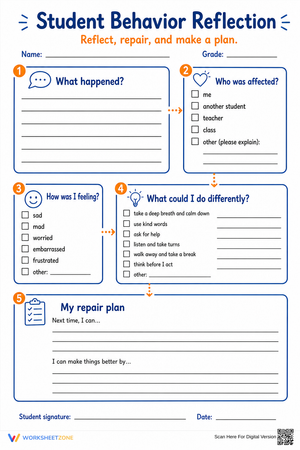
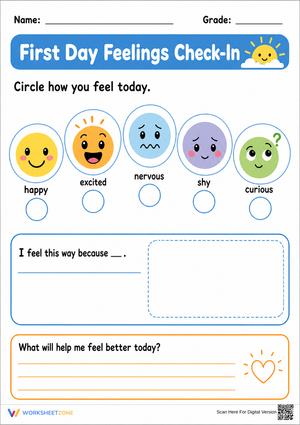
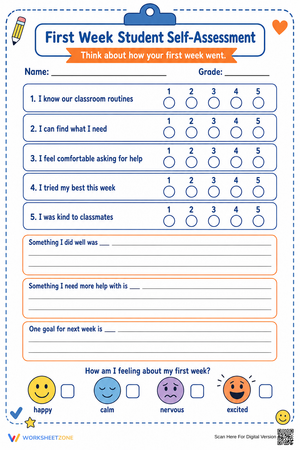
Emotions and feelings worksheets for 3rd grade give teachers a repeatable structure for moving students past surface-level emotion labels and into the specific, reflective language that actually supports self-regulation. At eight and nine years old, most students are developmentally ready to go beyond "mad" and "happy" — they can work with words like disappointed, nervous, left out, and embarrassed — but they still need guided practice connecting those words to real triggers, body signals, and concrete next steps.
What's Inside the Set
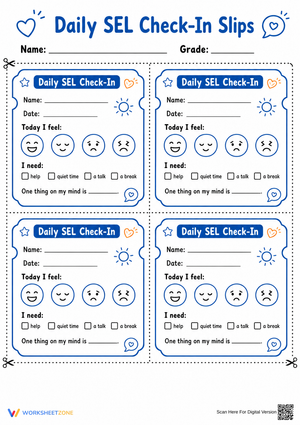
Each worksheet targets one or more of the core skills third graders need for emotional literacy: identifying a precise feeling word, tracing what triggered it, noticing physical signals like a tight chest or an urge to pull away from a situation, and choosing a response that keeps the student calm and ready to engage. The tasks move through that sequence — feel, name, trace, respond — rather than stopping at identification alone.
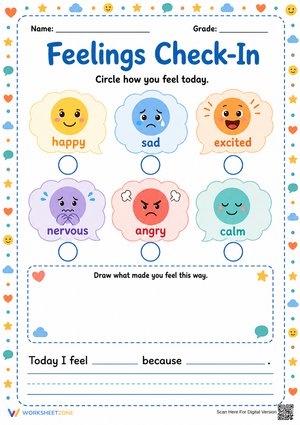
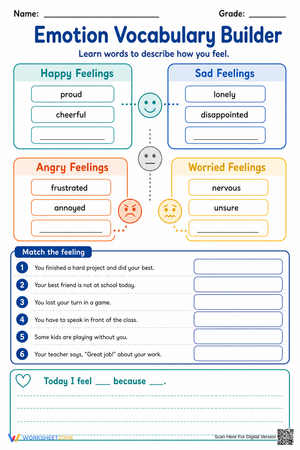
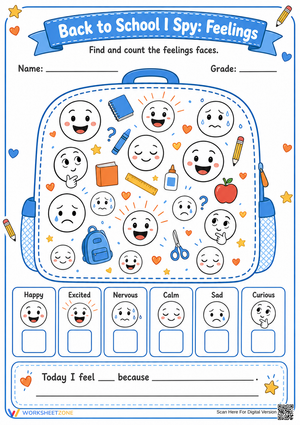
- Feeling vocabulary: Students match, sort, or write precise emotion words drawn from a word bank that includes common terms alongside less familiar ones like jealous, overwhelmed, and relieved.
- Scenario reading and response: Short school-based situations — getting a low grade after working hard, being left out during recess, making an error in front of classmates — anchor the emotion work in moments students actually recognize.
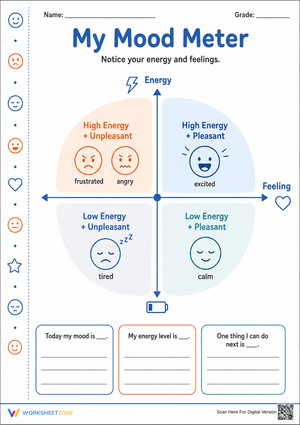
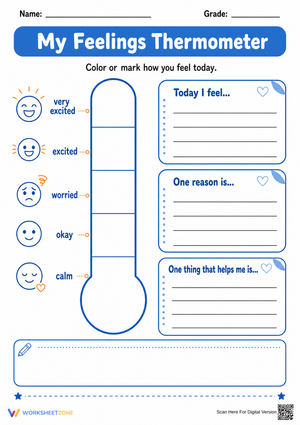
- Body signal recognition: Certain worksheets ask students to mark or describe where they notice an emotion in the body, helping them catch early warning signs before a reaction escalates.
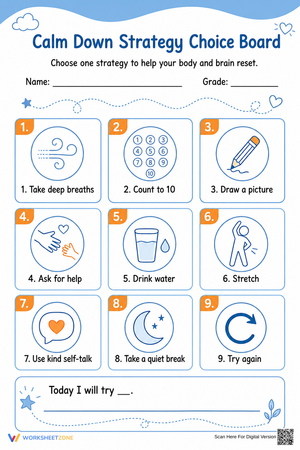
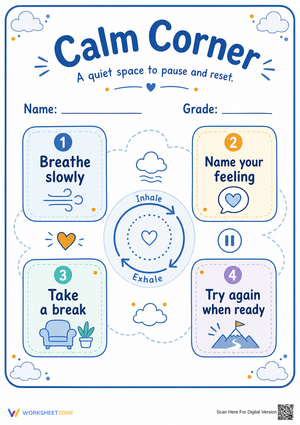
- Coping strategy selection: Students choose or write a helpful next step from options like slow breathing, self-talk, asking an adult, or taking a brief break.
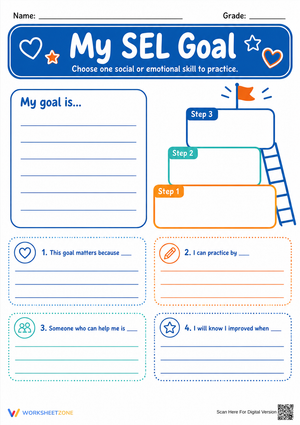
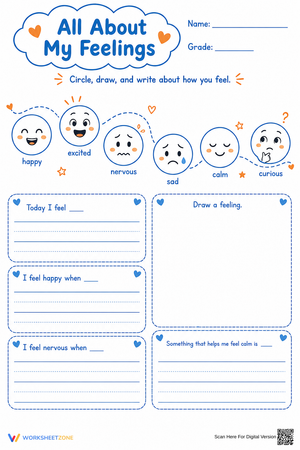
- Reflection writing with sentence stems: Prompts like I felt ___ when ___ and One thing I could do is ___ give students a fixed entry point so the cognitive demand lands on the emotional thinking, not on generating a writing format from scratch.
Because emotions and feelings worksheets for 3rd grade draw from situations students actually encounter — friendship friction, academic frustration, transition anxiety, and moments of quiet pride or relief — each worksheet in the rotation feels grounded in recognizable classroom life rather than constructed for a textbook.
Mistakes Students Make That These Worksheets Help You Catch
The most predictable error at this grade level is emotional flattening. Many third graders collapse distinct experiences into the same word — usually "mad" or "bad" — even when what they're describing is closer to embarrassed, hurt, or left out. That distinction matters instructionally: the useful response to feeling left out (asking to join, talking to a friend later, looping in an adult) is different from the useful response to genuine anger. Scenario-based worksheets surface this problem directly because they push students to choose the most precise word from a set of options rather than defaulting to the first one that surfaces.
A second pattern shows up in body signal work. Asked how their body felt when nervous, most third graders describe what they did rather than what they felt physically — writing "I didn't want to raise my hand" instead of "my stomach felt tight." That's a behavior, not a body sensation. Watching for this move tells teachers which students are still processing emotions at the behavioral level and haven't yet made the internal-sensation connection that emotional regulation actually requires.
How to Build These Worksheets Into Your Lesson Plans
The most effective use pattern for emotions and feelings worksheets for 3rd grade is built around a consistent response frame that students encounter repeatedly. When students regularly work through the same three prompts — What happened?, What did I feel?, What can I do next? — that sequence gradually becomes automatic. By mid-year, students who have practiced this frame in writing begin applying it during actual classroom conflicts without needing a worksheet in front of them. That transfer is the point.
During morning meeting, one scenario worksheet takes about ten to twelve minutes — project the situation, let partners talk through possibilities, then have students write before the class debriefs together. In centers, a sorting worksheet with emotion word cards and a recording sheet runs independently without much teacher oversight. After a recess conflict, a guided reflection worksheet slows a student's processing and creates a written record both teacher and student can revisit later. On days with a substitute, these worksheets are self-explanatory enough to run as independent work without any prior setup.
One practical limitation worth noting: reflection worksheets fall flat when students are still actively dysregulated. A student who is upset cannot do the cause-tracing and strategy-selection work these tasks require, and pushing a dysregulated student through the reflection usually produces defensive one-word answers rather than genuine thinking. Give students a few minutes to settle before the written work begins.
Adjusting the Worksheets for a Range of Learners
For students who are still building writing fluency, the sentence-stem worksheets remove the blank-page barrier without reducing the emotional thinking required. Students fill in a frame rather than generating sentences independently — that shift keeps the cognitive demand on the reflection itself rather than on writing mechanics. Students who find even sentence stems difficult can still engage meaningfully through matching and circling tasks on vocabulary worksheets, where the emotional thinking happens without a writing barrier in the way.
Students who need more challenge can extend any scenario worksheet by writing what a second character in the situation might be feeling, or by describing two possible responses and explaining which one handles the situation better and why. Perspective-taking and comparative reasoning sit right at the developmental edge for most third graders — their growing capacity for theory of mind makes this kind of extension genuinely difficult rather than just more words to fill in.
Frequently Asked Questions
Which format works best as a morning meeting warm-up?
Scenario-response worksheets are the most reliable fit. Project the situation, give students two minutes to talk with a partner, then have them write their response before the class discusses. The routine takes about ten to twelve minutes and generates real conversation. Matching and vocabulary worksheets work better as quick warm-ups when time is short or the goal is building feeling-word recognition before a read-aloud.
How do these worksheets connect to character analysis in reading?
Emotions and feelings worksheets for 3rd grade connect directly to character analysis work. After a read-aloud, students use the same emotional vocabulary they've practiced to identify how a character feels at a key moment, explain what caused that feeling, and describe how the character chose to respond. That keeps the SEL work anchored to reading skills — students are applying the same reflection framework to a text rather than switching between two unrelated tasks.
What should teachers do when a reflection worksheet reveals something concerning?
Treat the written response the way you would treat any verbal disclosure — follow your school's protocol for involving a counselor or administrator if a student writes something that signals safety concerns or acute distress. For lower-level worries like friendship difficulty or test anxiety, the worksheet becomes a natural conversation starter. Bring the student in briefly and use what they wrote as the entry point rather than starting the conversation from scratch.
Can these worksheets be used outside of a dedicated SEL block?
Many of the most useful applications happen outside formal SEL time. Reflection and scenario worksheets work well in a calm-down corner where students can process a hard moment independently. Vocabulary and matching worksheets make practical homework when a brief family conversation about emotions is the goal. The reflection-based worksheets also translate well into counseling small groups, where a counselor wants to shift from open-ended talk into structured, written thinking.












 Interactive Worksheet Maker
 Quiz Maker
 Word Search Maker
 Crossword Puzzle Maker
 Word Scramble Generator
 Sentence Scramble Generator
 Handwriting Worksheet Generator
 Name Tracing Generator
 Fill In The Blank Generator