If you are planning a life science unit on insects, grasshopper life cycle worksheets give students a concrete, sequence-based way to understand incomplete metamorphosis. Unlike a butterfly unit, where the pupal stage steals the spotlight, a grasshopper unit lets you focus on gradual change: an egg becomes a small wingless nymph, and that nymph slowly transforms into a winged adult through a series of molts. For elementary classrooms studying life cycles, this makes grasshoppers an excellent second or companion example after butterflies.
The Three Stages of the Grasshopper Life Cycle
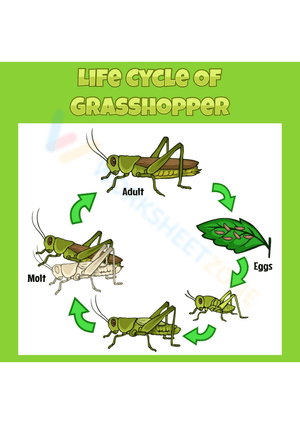
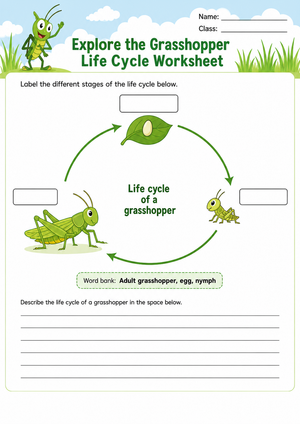
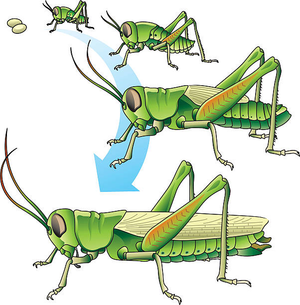
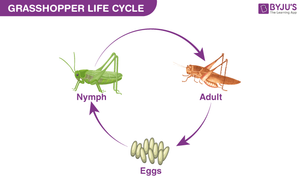
The grasshopper life cycle has three distinct stages: egg, nymph, and adult. This is the core sequencing concept your worksheets should reinforce, since it sets up the contrast with complete metamorphosis later in the unit. Each stage has a clear visual identity, which makes labeling diagrams and sequencing cards especially effective for young learners who benefit from concrete, observable differences between stages.
From egg to fully grown adult, the entire cycle takes about 40 to 60 days, depending on the species and environmental conditions such as temperature and food availability. Students often assume insect life cycles are uniform in length, so this variability is a useful discussion point when reviewing worksheet answers as a class.
Egg Stage: Laying and Dormancy
Female grasshoppers lay egg pods in soil or leaf litter, each containing roughly 10 to 300 rice-shaped eggs. A single egg pod can therefore represent an enormous range of potential offspring, which is a strong prompt for a math-meets-science estimation activity: have students calculate the difference between the low and high end of that range and discuss why so many eggs might be needed for a species to survive predation and harsh winters.
Eggs typically stay dormant for about 10 months, spanning fall and winter, before hatching in spring when conditions warm up. This dormancy period is worth highlighting explicitly, since students sometimes assume all insect eggs hatch quickly. A simple worksheet prompt asking students to calculate how many months eggs remain dormant reinforces both the science content and basic time-based reasoning.
Nymph Stage: Molting and Instars
Once hatched, a grasshopper enters the nymph stage. Nymphs look like small, wingless versions of adults, which is a helpful contrast to draw out in class since it directly counters a common misconception described below. Nymphs molt about 5 to 6 times before reaching adulthood, and each stage between molts is called an instar.
During every instar, the nymph sheds its exoskeleton, grows larger, and develops more visible wing buds, until the final molt produces a winged, sexually mature adult. Worksheets that ask students to sequence instar stages by size and wing-bud development, rather than by labeled numbers alone, push students toward genuine observational reasoning instead of memorization.
A Fully Formed Adult
After the final molt, the grasshopper is a fully winged adult, capable of flight and reproduction. Grasshoppers are herbivores throughout both the nymph and adult stages, feeding on grasses and plants, so diet does not change dramatically across the life cycle the way it does for some insects. This consistency is another useful comparison point when discussing feeding habits across different life stages in your broader unit.
Addressing a Common Misconception
A frequent misunderstanding among young learners is confusing nymphs with baby insects that look nothing like their adult form, the way a caterpillar looks nothing like a butterfly. Because grasshopper nymphs already resemble small adults, this unit is a great opportunity to directly correct that assumption. Consider a worksheet activity where students compare a photo of a grasshopper nymph to a photo of a caterpillar and describe, in their own words, why one is called a nymph and the other a larva.
Classroom Implementation
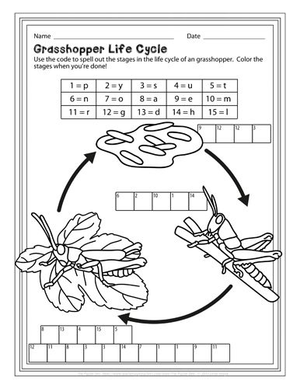
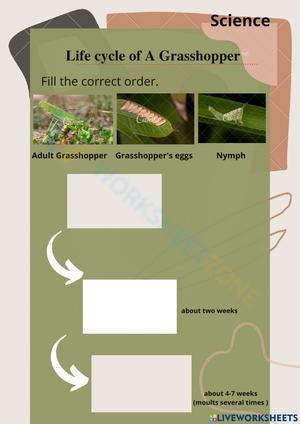
Grasshopper life cycle worksheets fit naturally into several classroom formats. Use labeling diagrams during whole-group instruction to introduce the egg, nymph, and adult stages, then move to sequencing cards for a science center where students physically order the stages and instars. For small-group intervention, a simplified three-stage worksheet with picture supports can reinforce vocabulary like molt and instar without overwhelming struggling readers.
For enrichment, pair the worksheet with an observation-based extension, such as raising grasshoppers in a classroom terrarium or having students research and record real molting events they observe. Vocabulary practice worksheets that ask students to match terms like nymph, instar, molt, and metamorphosis to definitions or images work well as a quick formative check before moving into an assessment.
Frequently Asked Questions
1. How long does the full grasshopper life cycle take?
The full cycle from egg to adult takes about 40 to 60 days, depending on the species and environmental conditions like temperature and food supply.
2. What is the difference between a nymph and an instar?
A nymph is the wingless, immature stage of a grasshopper, while an instar refers to a specific stage between molts. A nymph passes through about 5 to 6 instars before becoming a winged adult.
3. How is a grasshopper's metamorphosis different from a butterfly's?
Grasshoppers undergo incomplete metamorphosis, moving from egg to nymph to adult with no pupal stage. Butterflies undergo complete metamorphosis, which includes a larva stage and a pupa stage before adulthood.
4. What grade levels are grasshopper life cycle worksheets best suited for?
These worksheets work well for grades 1 through 4, since the three-stage sequence and clear visual differences between nymph instars suit early elementary observation and sequencing skills.
5. How can teachers use these worksheets for formative assessment?
Sequencing tasks, labeling diagrams, and short constructed-response prompts about the nymph-to-adult transition all give a quick, low-stakes check of student understanding before a summative assessment.












 Interactive Worksheet Maker
 Quiz Maker
 Word Search Maker
 Crossword Puzzle Maker
 Word Scramble Generator
 Sentence Scramble Generator
 Handwriting Worksheet Generator
 Name Tracing Generator
 Fill In The Blank Generator